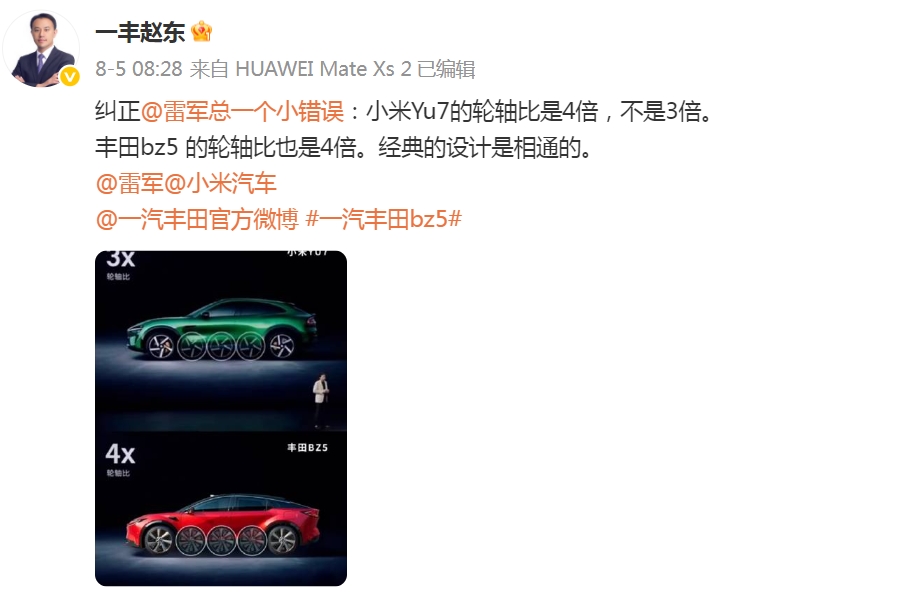
丰田BZ5

Search documents
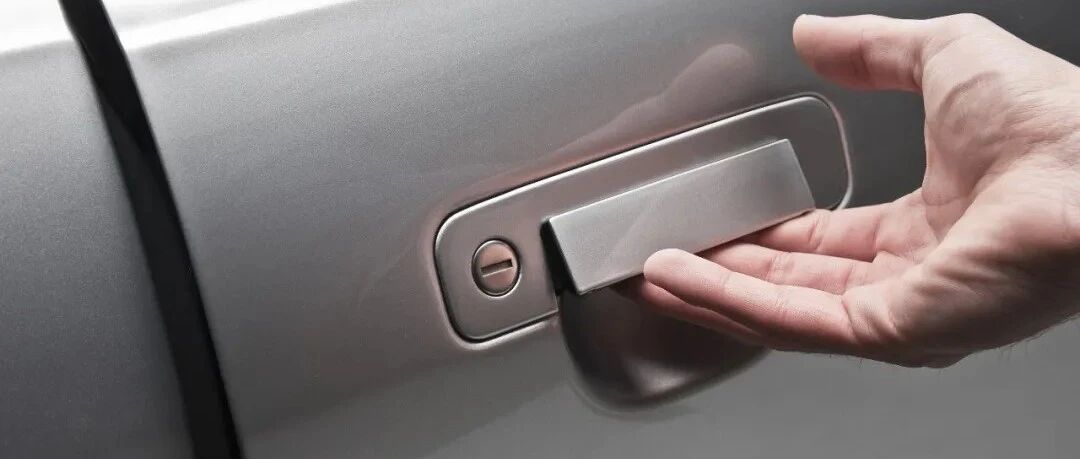
“这些车门把手是想逼疯我”!记者实测→
第一财经· 2025-10-16 05:14
Core Viewpoint - The article highlights the growing concern over the safety mechanisms of hidden door handles in vehicles following a recent explosion incident involving a Xiaomi car, prompting a market focus on the safety logic and design variations among different automotive brands [3][4]. Group 1: Vehicle Testing and Design Variations - A random test of over ten mainstream car brands, including Tesla, Xiaopeng, and Wanjie, revealed that hidden door handles are prevalent, but their safety mechanisms and opening methods vary significantly [3][5]. - The tested vehicles feature a mix of electronic and mechanical door handles, with most mechanical handles located inside the car, while hidden handles dominate the exterior design [5][9]. - Different brands employ various methods for unlocking and opening doors, such as pressing down on the handle or using touch sensors, indicating a range of design philosophies [6][7][8]. Group 2: Emergency Unlocking Mechanisms - Emergency unlocking features vary across brands, with some models automatically triggering unlock functions in emergencies, while others retain traditional mechanical handles for emergency access [8][10]. - The placement of mechanical unlocking mechanisms within the vehicle is often not intuitive, making it challenging for drivers or rescuers to locate them quickly in emergencies [10]. Group 3: Design Philosophy and Market Trends - The design choices reflect differing philosophies, with some brands like Great Wall and Volkswagen opting for traditional handle designs to prioritize energy efficiency and user experience [9][10]. - The article suggests that the automotive industry is at a crossroads, balancing innovative designs with practical safety considerations in response to consumer concerns [9].


关于汽车数据处理5项安全要求检测情况的通报(第三批)
Cai Jing Wang· 2025-08-18 11:50
Core Viewpoint - The article discusses the implementation of automotive data security compliance measures in China, aimed at protecting user rights and promoting a secure automotive industry environment starting from April 2025 [1]. Group 1: Regulatory Framework - The initiative is based on several regulations, including the "Automotive Data Security Management Regulations (Trial)" and GB/T 41871-2022 and GB/T 44464-2024 standards [1]. - The compliance checks will cover five key requirements, including anonymization of external facial information and handling of cabin data [1]. Group 2: Compliance Results - A total of 13 manufacturers, including FAW Toyota, Volkswagen, and Geely, have 49 vehicle models that meet the five compliance requirements [1]. - Specific models listed include the Toyota BZ5, Hongqi EH7, and Ideal L6, among others, with production years ranging from 2024 to 2025 [1]. Group 3: Data Security Issues - Some models were found to have data security issues, such as low anonymization detection rates for facial images and inadequate consent settings for sensitive personal information [2]. - Feedback has been provided to the relevant companies for necessary rectifications [2].
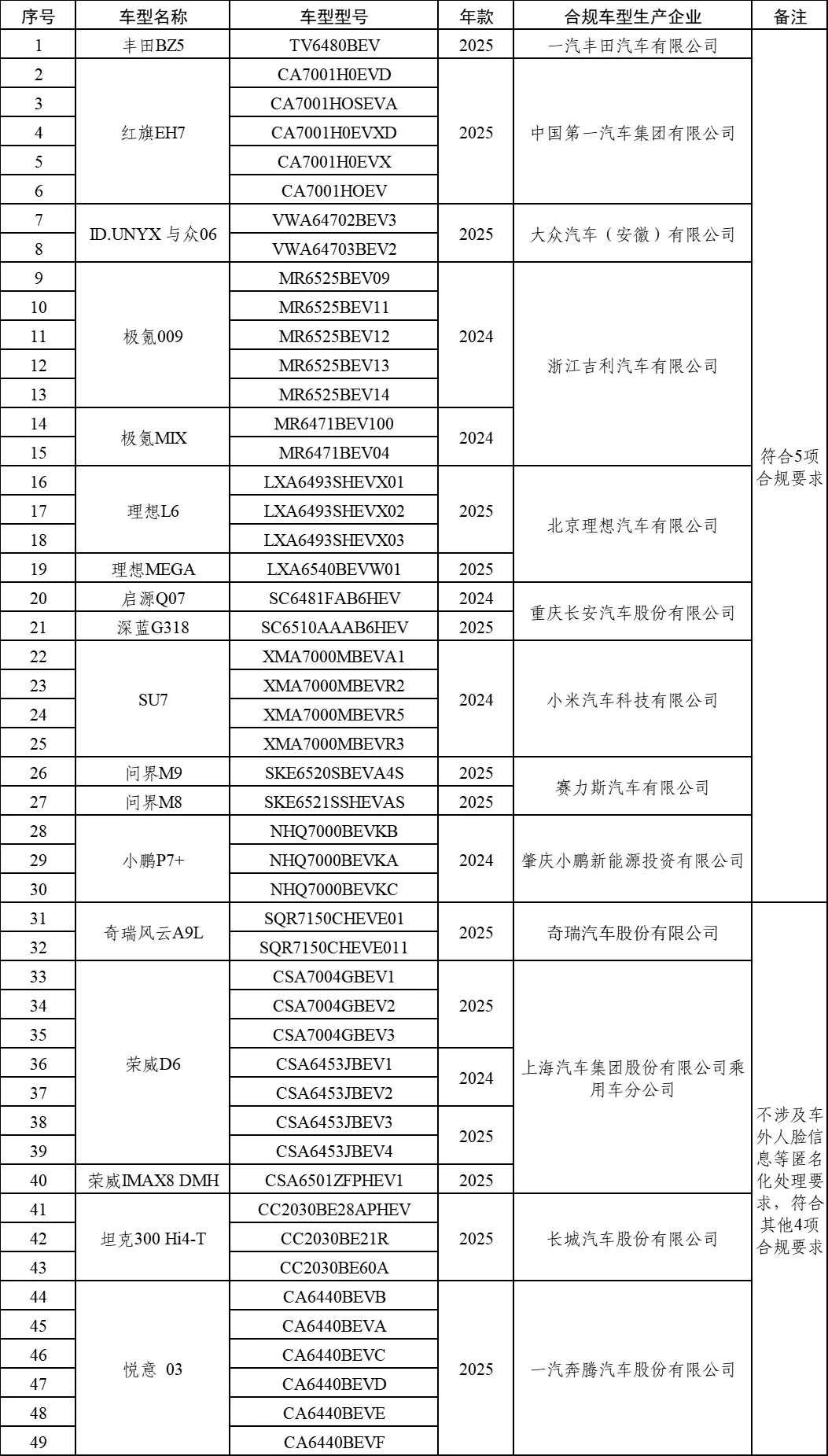
13家企业49款车型通过汽车数据安全合规检测
Xin Lang Ke Ji· 2025-08-18 08:34
Core Insights - The China Automotive Industry Association announced that 49 models from 13 manufacturers meet automotive data security compliance requirements, effective from April 2025 [1] Group 1: Compliance Findings - The compliance checks revealed that the 49 models from manufacturers such as FAW Toyota, Volkswagen, and Geely adhere to five key data security compliance requirements [1] - Some models were found to have data security issues, including a facial anonymization detection rate below 90% and improper consent settings for sensitive personal information [1] Group 2: Manufacturers and Models - The compliant models include the Toyota BZ5, various models from FAW Group, Volkswagen, Geely, and others, with specific model years primarily in 2024 and 2025 [2][3] - Notable manufacturers involved in the compliance include Xiaomi, Changan, and Great Wall Motors, among others [1][2]



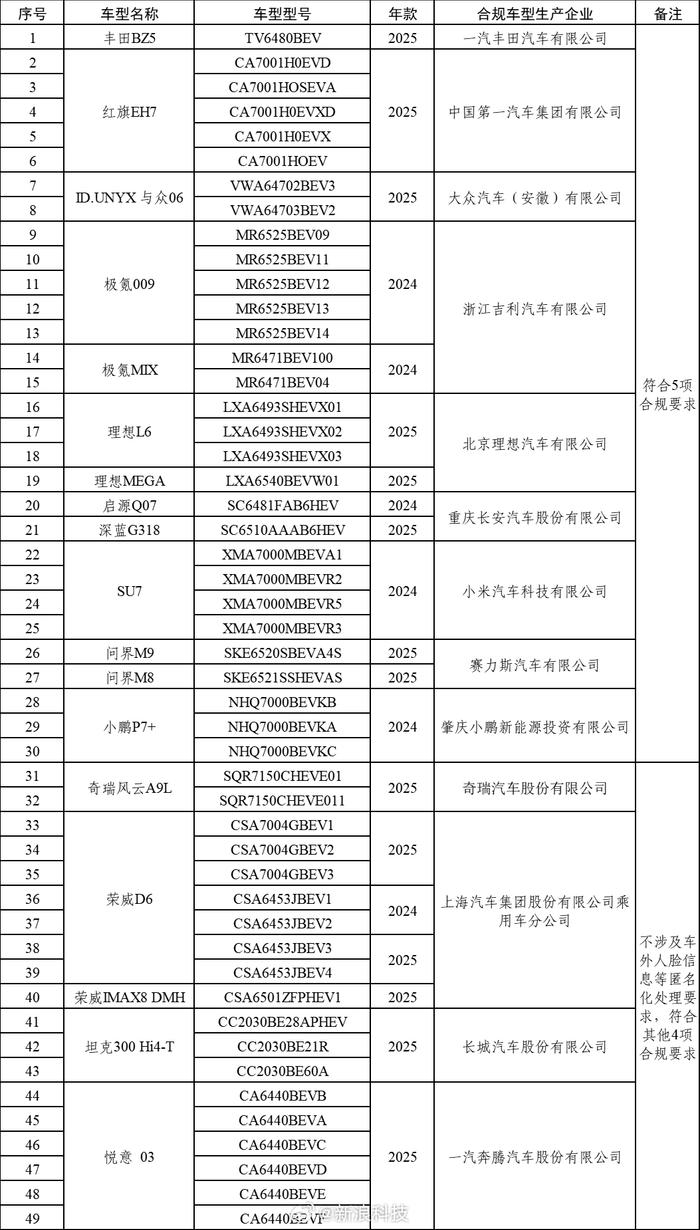
第三批汽车数据处理5项安全要求检测情况公布
Xin Lang Cai Jing· 2025-08-18 08:18
Core Insights - The China Automotive Industry Association, in collaboration with several national organizations, has released a report on the compliance of automotive data processing safety requirements, highlighting the importance of data security in the automotive sector [1][2]. Group 1: Regulatory Framework - The report is based on the "Automotive Data Security Management Regulations (Trial)" and relevant standards such as GB/T 41871-2022 and GB/T 44464-2024, which outline the safety requirements for automotive data processing [2]. - Starting from April 2025, manufacturers will be required to undergo compliance checks for five key data safety requirements, including anonymization of external facial data and proper handling of personal information [2]. Group 2: Compliance Results - A total of 13 manufacturers, including FAW Toyota, FAW Group, Volkswagen, and others, have had 49 vehicle models that meet the five compliance requirements for automotive data safety [2][3]. - Specific models listed include the Toyota BZ5, Hongqi EH7, and several models from Geely, Li Auto, and others, indicating a broad compliance across major automotive brands [2][3]. Group 3: Identified Issues - The report also identified data security issues in some models, such as low anonymization rates for facial data and inadequate consent settings for processing sensitive personal information [3]. - Feedback has been provided to the relevant companies for necessary rectifications, emphasizing the ongoing need for improvement in data handling practices [3].



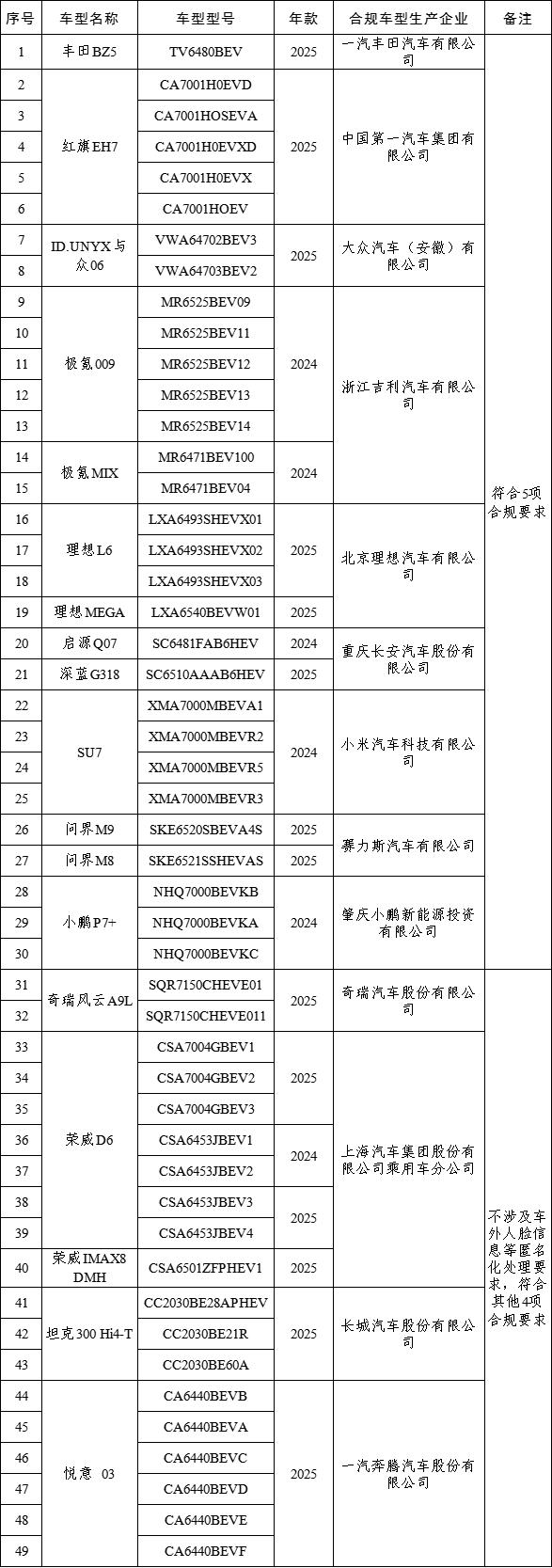
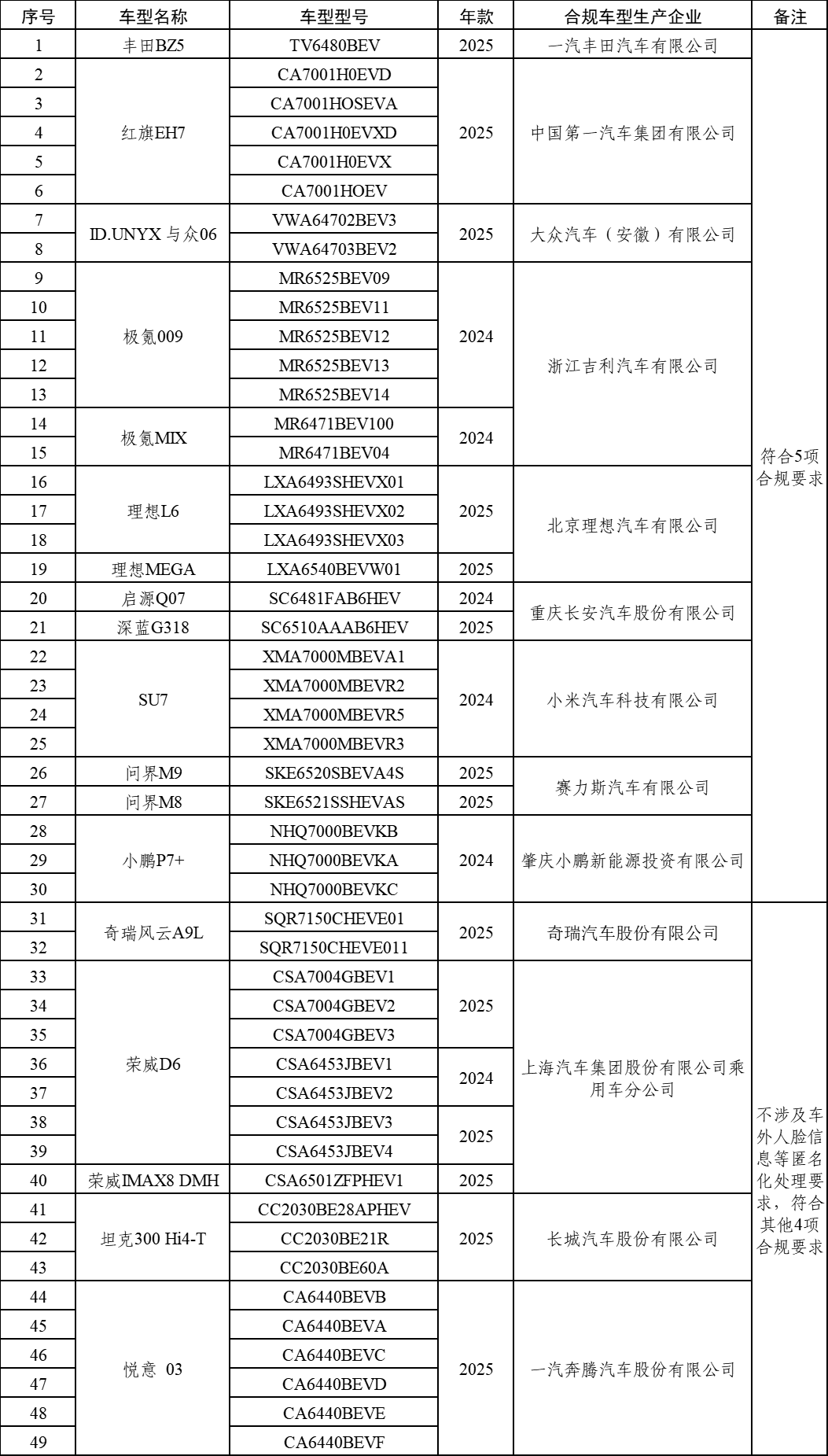
中国汽车工业协会:13家企业的49款车型符合汽车数据安全5项合规要求
Xin Lang Cai Jing· 2025-08-18 08:07
Core Points - The China Automotive Industry Association announced that starting from April 2025, it will conduct inspections on the data security compliance of automotive manufacturers' products, with 13 companies and 49 models already meeting five compliance requirements [1] - Some models were found to have data security issues, including low anonymization rates for facial recognition in video images, indefinite consent periods for sensitive personal information, and lack of privacy policies for applications on in-car systems [1] Group 1 - 13 companies including FAW Toyota, FAW Group, Volkswagen, Geely, Li Auto, Changan, Xiaomi, Seres, Xiaopeng, Chery, SAIC, Great Wall, and FAW Bestune have models that comply with data security requirements [1] - The compliance checks revealed that some models did not meet the anonymization requirement for facial data, with detection rates below 90% [1] - Companies have been notified to rectify the identified data security issues [1] Group 2 - A detailed list of compliant models includes the Toyota BZ5, Hongqi EH7, Volkswagen ID.UNYX, Zeekr 009, Li Auto L6, Xiaomi SU7, and others, with production years ranging from 2024 to 2025 [2][3] - The compliance requirements focus on five key areas, with some models not involving external facial information anonymization [2][3] - The inspection aims to enhance data security standards within the automotive industry, reflecting a growing emphasis on consumer privacy and data protection [1]
一汽丰田高管点名小米汽车“轮轴比”算错数:这个概念是雷军“发明”的
Qi Lu Wan Bao· 2025-08-13 02:33
Group 1 - Zhao Dong, an executive from FAW Toyota, publicly criticized Xiaomi Auto for incorrectly calculating the "wheel axle ratio," stating that the ratio for the Xiaomi YU7 is 4, not 3 [1][4] - Zhao emphasized that the concept of "wheel axle ratio" was invented by Lei Jun and does not exist in automotive theory, asserting that a ratio of 3 is unrealistic for passenger vehicles [4][6] - Following Xiaomi's promotion of the wheel axle ratio, many companies began to claim their vehicles also had a ratio of 3, which Zhao mockingly compared to students copying incorrect answers during an exam [6][8] Group 2 - The term "wheel axle ratio" gained popularity in the automotive industry after Xiaomi's promotion, with Lei Jun defining it in a way that lacks professional rigor [8][10] - The lack of immediate criticism from the automotive community after Xiaomi's announcement may be attributed to the complexity of the term, which ordinary consumers do not fully understand [10]