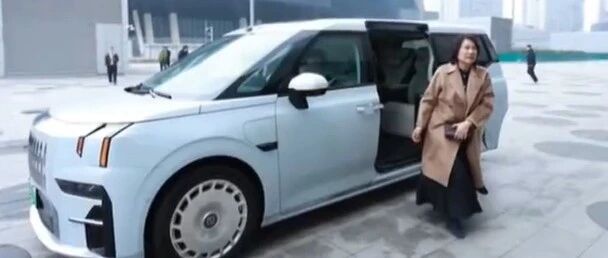
极氪009

Search documents
董明珠换车,李书福亲自出马
盐财经· 2026-03-21 09:56
Core Viewpoint - The choice of domestic luxury cars by prominent business figures like Dong Mingzhu indicates a growing acceptance and preference for Chinese brands in the high-end consumer market, suggesting a significant shift in the luxury car consumption landscape in China [5][8]. Group 1 - Dong Mingzhu, the chairwoman of Gree Electric, has been spotted using the domestic luxury car model Zeekr 009, confirming her shift to a Chinese brand [5]. - The choice of Zeekr 009 by Dong Mingzhu is seen as a reflection of the increasing popularity and acceptance of domestic luxury vehicles among top-tier consumers, contrasting with the previous trend where high-profile entrepreneurs preferred foreign luxury brands [8]. - The Zeekr 009 has quickly gained market traction, outperforming foreign competitors and achieving top sales rankings in both domestic and international markets shortly after its launch [9].


「日本最强AI」塌房!扒开代码全是DeepSeek,日本网友集体破防;腾讯年报披露:人均年薪成本超百万;网易否认「使用AI清退全部外包员工」
雷峰网· 2026-03-19 00:41
Key Points - The article discusses various significant developments in the technology and automotive sectors, highlighting trends and company performances in AI, electric vehicles, and corporate strategies [4][6][12][19][30][36][48]. Group 1: AI Developments - Japan's Rakuten AI 3.0 was criticized for allegedly copying the Chinese open-source model DeepSeek V3, leading to public backlash and discussions about the integrity of AI development in Japan [4][5]. - Tencent's annual report revealed a significant increase in employee compensation, with an average annual salary cost exceeding 1 million RMB, reflecting the company's growth and investment in talent [6][7]. - Baidu appointed He Jingzhou as the head of its App R&D center to enhance the integration of large models with search and recommendation services, indicating a strategic focus on AI advancements [10][12]. Group 2: Automotive Industry Insights - Geely's Vice President confirmed that Dong Mingzhu ordered three Zeekr 009 vehicles, highlighting a growing trend of high-profile Chinese entrepreneurs supporting domestic luxury brands [8][9]. - Chery Automobile announced its energy strategy, introducing the Rhino battery technology, which emphasizes safety and sustainability in electric vehicle production [12][13]. - Chery's financial report showed a record revenue of 300.29 billion RMB in 2025, with a 36.1% increase in net profit, driven by strong sales in both domestic and international markets [36][37]. Group 3: Corporate Strategies and Market Trends - ByteDance introduced internal security protocols for its employees, emphasizing the importance of data protection and compliance in the tech industry [19]. - The automotive sector is witnessing a shift as traditional manufacturers face pressure from domestic brands, leading to performance-based employee evaluations and potential layoffs in some companies [21][22]. - OpenAI is preparing for an IPO, focusing on enterprise-level business to strengthen its commercialization efforts, indicating a trend towards public offerings in the tech sector [54].




早报 | 美联储宣布不降息;伊朗最高领袖誓言“血债将很快得到清算”;美团回应“北大毕业送外卖”;科大讯飞辟谣向政府备案裁员30%
虎嗅APP· 2026-03-19 00:21
Economic Outlook - Federal Reserve Chairman Jerome Powell stated that the U.S. economic outlook is "extremely uncertain," with rising inflation and various geopolitical factors disrupting the inflation decline [2] - The Federal Reserve decided to maintain the federal funds rate target range at 3.5% to 3.75%, marking the second consecutive meeting without a rate change, reflecting caution regarding potential inflation risks [2] - Powell projected the U.S. PCE inflation rate for February at 2.8% and core PCE at 3.0%, acknowledging that recent inflation expectations have risen due to increasing energy prices [2] Geopolitical Developments - Iranian Supreme Leader Ali Khamenei condemned the assassination of security official Larijani, vowing that "blood debts will soon be settled" [3] - Iran launched a large-scale missile attack on U.S.-related oil and energy facilities in retaliation for attacks on its energy infrastructure, indicating a new phase of conflict [5] Market Reactions - U.S. stock indices fell over 1%, with the Dow Jones down 1.63% and the S&P 500 down 1.36%, both reaching new lows since November [10] - International oil prices rose significantly, with U.S. crude oil up 3.68% to $99.05 per barrel and Brent crude up 6.8% to $106.15 per barrel [12] Corporate Developments - Microsoft is considering legal action against Amazon and OpenAI over a $50 billion cloud deal that may violate its exclusive partnership with OpenAI [6] - Tencent reported a 13% year-on-year revenue growth in Q4, reaching 194.37 billion yuan, with an annual revenue of 751.77 billion yuan and operating profit exceeding 280.66 billion yuan [14] - Alibaba Cloud and Baidu Smart Cloud announced price increases due to surging global AI demand and rising costs of core hardware [13]






苹果CEO库克现身成都,不久前否认退休传闻;钉钉直播相机项目已暂停;微信正灰测折叠发图新功能;奇瑞汽车战略入局可控核聚变丨邦早报
创业邦· 2026-03-19 00:09
Group 1 - Apple CEO Tim Cook was spotted in Chengdu, denying retirement rumors and attending a special event for Apple's 50th anniversary [3] - Tencent's CEO Ma Huateng discussed the "shrimp" application concept, emphasizing its potential to integrate AI into various scenarios beyond traditional ChatBot applications [5] - Tencent's QClaw AI assistant announced a version update, enhancing its capabilities and expanding its internal testing [5] Group 2 - Chery Automobile announced a strategic entry into controllable nuclear fusion, aiming to harness fusion energy for long-term human use [9] - Tencent reported a record high in R&D investment of 857.5 billion yuan and capital expenditure of 792 billion yuan for 2025, with a 13% year-on-year revenue growth [9] - Ideal Auto's L series models have stopped accepting new orders as the company prepares to launch new versions [9] Group 3 - Baidu appointed He Jingzhou to lead the integration of large models with search and recommendation services, enhancing the application of cutting-edge technologies [10] - NetEase denied rumors of mass layoffs involving AI, stating that recent personnel changes were part of normal business adjustments [10] - NVIDIA's CEO Jensen Huang highlighted OpenClaw as a significant advancement in human-AI interaction, predicting it to be the next ChatGPT [10] Group 4 - GAC Group established a Powertrain Business Unit to integrate its core power business, aiming for a more agile and innovative operational model [10] - Elon Musk is negotiating a settlement with the SEC regarding undisclosed Twitter stock purchases prior to his acquisition offer [10] - Faraday Future announced a stock purchase plan for executives and employees, allowing them to defer part of their salaries for stock acquisition [10] Group 5 - Germany plans to significantly increase AI computing power by 2030, aiming to become a leading data center hub in Europe [10] - Warner Bros. Discovery's CEO David Zaslav is set to gain over $667.2 million from the sale of the company to Paramount [10] - Samsung's union announced a total strike in May, which is expected to impact chip production, particularly DRAM and NAND flash memory [10] Group 6 - Buick launched its first pure electric MPV, priced at 489,900 yuan, featuring advanced charging and driving assistance technologies [18] - ByteDance's security team released safety guidelines for OpenClaw and introduced ByteClaw for internal resource management [20] - China's semiconductor industry is projected to see an investment of approximately 784.1 billion yuan in 2025, reflecting resilience amid global industry adjustments [20]


吉利汽车2025年实现高质量发展,全年营收3452亿元,核心归母净利润劲增36%!
Ge Long Hui· 2026-03-18 23:51
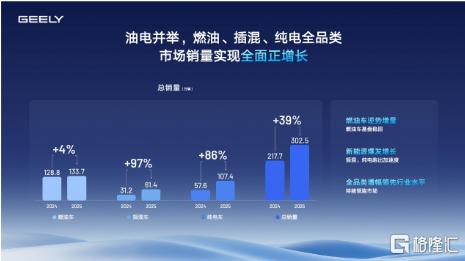
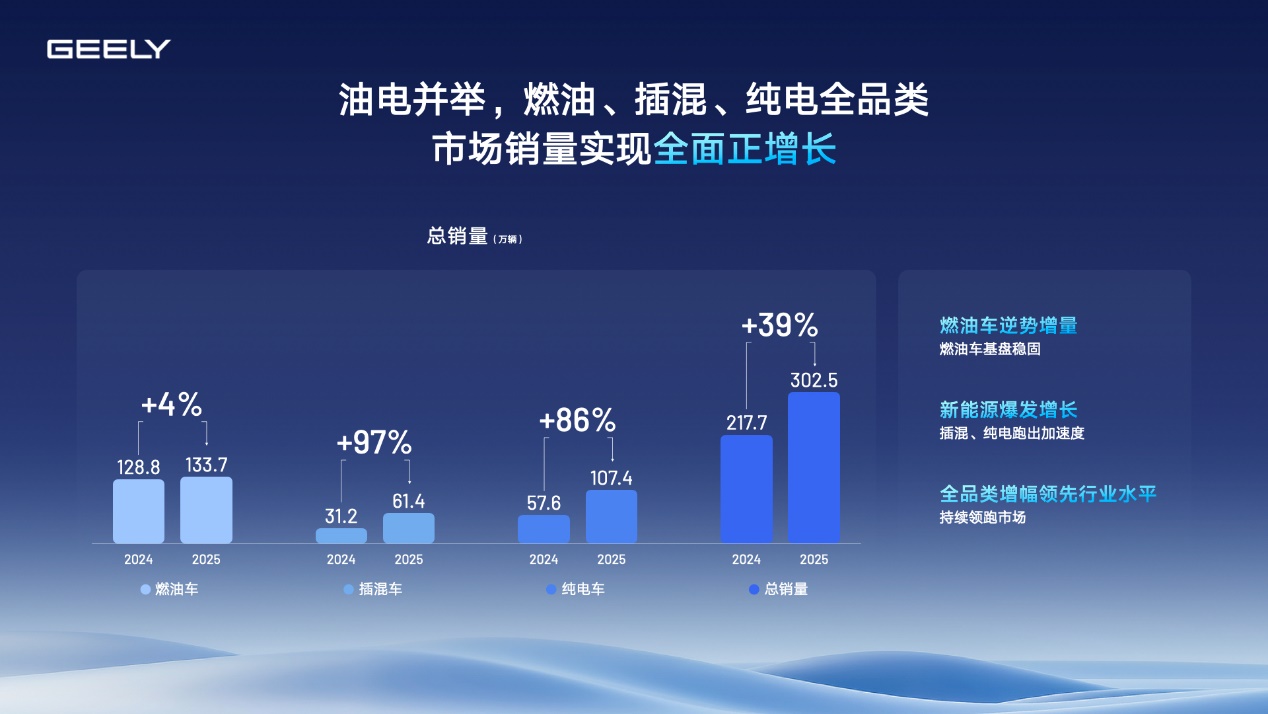
Core Insights - Geely Automobile Holdings Limited reported a record total revenue of 345.2 billion yuan for 2025, representing a 25% year-on-year increase, with core net profit rising by 36% to 14.41 billion yuan, indicating high-quality growth [1] - The company achieved a total sales volume of 3.025 million vehicles in 2025, a 39% increase, exceeding its adjusted target of 3 million units [1] - Geely's cash reserves increased by 46% to 68.2 billion yuan, allowing for a proposed dividend increase of 51.5% to 0.5 HKD per share [1] Revenue and Profit Growth - Total revenue reached 345.2 billion yuan, a 25% increase year-on-year, marking a historical high [1] - Core net profit after excluding foreign exchange impacts was 14.41 billion yuan, up 36% year-on-year, indicating a higher growth rate than revenue [1] - Gross profit increased to 57.3 billion yuan, also a 25% year-on-year rise [1] Sales Performance - Total vehicle sales reached 3.025 million units, a 39% increase, surpassing the revised target of 3 million units [1] - New energy vehicle sales exceeded 1.68 million units, a significant 90% increase, placing Geely among the top tier in new energy development [1] - In the first two months of 2026, Geely sold 476,000 vehicles, maintaining the industry's leading position [1] Brand Strategy and Market Positioning - The "One Geely" strategy was further deepened, integrating Zeekr and enhancing brand positioning across mainstream, high-end, and luxury markets [3] - Zeekr brand sales surpassed 224,000 units in 2025, with a record monthly sales of over 30,000 units in December [3] - Lynk & Co maintained strong growth with annual sales of 350,000 units, a 23% increase [5] New Energy and Technological Advancements - Geely Galaxy became a significant growth driver, achieving 1.24 million units in sales, a 150% increase [7] - The company launched the first full-domain AI technology system in the industry, marking a significant milestone in its smart and electric vehicle strategy [10] - Geely's advancements in battery technology include the ShenDun battery with industry-leading safety and fast-charging capabilities [14] Global Expansion and Market Penetration - Geely's overseas sales reached 420,000 units in 2025, with over 120,000 units being new energy vehicles, reflecting a strong global competitive advantage [17] - The brand entered 13 new markets in 2025, expanding its presence in Europe and high-potential markets in South America and Africa [19] - Geely's localization efforts included the launch of a CKD factory in Egypt and the production of new energy vehicles in Indonesia [20] Environmental, Social, and Governance (ESG) Initiatives - Geely was included in the S&P Global "Sustainability Yearbook 2026," being the only Chinese automaker among 88 selected manufacturers [22] - The company achieved a 25.5% reduction in carbon emissions per vehicle compared to 2020, exceeding its carbon reduction targets [22] - Geely continues to lead in ESG rankings, being recognized as the top Asian automaker in the Lead the Charge automotive supply chain ESG ranking [22]
黄仁勋回应中国车企如何与英伟达合作;吉利副总裁回应董明珠换车丨汽车交通日报
创业邦· 2026-03-18 12:42
Group 1 - Nvidia's CEO Jensen Huang highlighted partnerships with Chinese automakers such as BYD, Geely, Xpeng, Li Auto, and Zeekr, emphasizing the unified architecture of their Hyperion platform for sensors and computing [2] - Li Auto's L series models, including L7, L8, and L9, have stopped taking new orders as they prepare to launch new versions, with the L9 model no longer accepting orders and the L7 and L8 having limited configurations available [2] - Geely's senior vice president confirmed that business leader Dong Mingzhu has switched to a domestic luxury car, the Zeekr 009, indicating a growing acceptance of domestic luxury vehicles in the high-end consumer market [3] Group 2 - Porsche is currently testing a fuel version of the Macan SUV, with prototype images revealing a modified Audi Q5 used for testing, indicating ongoing development within the Volkswagen Group [3]

GEELY AUTO(00175) - 2025 Q4 - Earnings Call Transcript
2026-03-18 09:30
Financial Data and Key Metrics Changes - Geely's gross margin improved to 16.9% in Q4 2025, higher than the full-year average of 16.6% [60][62] - R&D expenses increased by CNY 1.5 billion quarter-on-quarter, reaching CNY 590 million in Q4 2025, with a target of maintaining around 40% utilization in 2026 [60][64] Business Line Data and Key Metrics Changes - Zeekr brand achieved annual sales of 224,000 units, with a record monthly delivery of over 30,000 units in December [1] - Lynk & Co sales volume reached 350,000 units, with new energy vehicles making up 65% of the mix [3] - Galaxy sales reached 1.236 million units, up by 150% [4] - Geely China Star ICE sales reached 1.214 million units, with Xingyue L ranked number one in China's ICE SUV segment [4] Market Data and Key Metrics Changes - Geely's export sales target for 2026 is 640,000 units, a 50% increase from 2025, with a focus on overseas markets [9][40] - New energy vehicle sales in overseas markets reached 124,000 units in 2025, growing by 240% [40][42] Company Strategy and Development Direction - Geely aims to become a global leader in smart vehicles, focusing on technology and globalization [5][10] - The company has set a five-year carbon reduction target to reduce vehicle lifecycle carbon emissions by 25.5% by the end of 2025 [5] - Geely plans to launch new models, including the Zeekr 8X and Lynk & Co zero seven wagon version, to enhance its product offerings [7][8] Management's Comments on Operating Environment and Future Outlook - Management expressed confidence in achieving higher sales volumes and net profits in 2026, building on the successes of 2025 [38] - The company highlighted the importance of safety and intelligence in vehicle development, establishing a global automotive safety center [15][16] - Geely's management acknowledged the competitive landscape and emphasized the need for continuous improvement in brand development and global market scale [34][35] Other Important Information - Geely has integrated Lynk & Co and Zeekr brands to enhance resource allocation and operational efficiency [49][50] - The company is focusing on diversifying energy inputs, covering ICE, hybrid, PHEV, and BEV technologies [29][30] Q&A Session Summary Question: What are the driving reasons for the gross margin improvement? - The gross margin improved due to higher sales of high-end products like Zeekr 9X, which accounted for a significant portion of total sales volume [60][62] Question: What is the outlook for R&D expenses in 2026? - R&D expenses are expected to maintain around 40% utilization, with a focus on improving the quality of profits [64] Question: How does Geely evaluate overseas markets and competitive edge? - Geely has laid a solid foundation for overseas markets in 2025, with plans to deepen production capabilities and focus on branding and technology export [39][40]
吉利汽车(00175) - 2025年全年业绩演示材料
2026-03-18 08:31
本档包含对吉利汽车控股有限公司("本公司")以及本公司的子公司和关联公司(与本公司合称为"本集团")一般经营计划和战略的前瞻监院 述。前瞻性陈述通常包含"将"、"预期"和"期望"以及其它类似词语。就其本质而言,前瞻性陈达具有一定风险和不确定性,因为其涉及将在 未来发生的事件和情况。许多因素都会导致实际结果与前瞻性陈述出现重大差异,包括本公司未来经营的变化与发展,竞争环境、落实经营战略及 措施的能力,应对技术变革的能力,以及本集团经营所在市场的政治、经济、规管及社会状况。本公司没有任何对这些前瞻性陈述进行更新或修改 以反映未来事件或发展的义务。 2025年全年业绩 吉利汽车控股有限公司 (于开曼群岛注册成立之有限公司) 股票代号: 175( 港币柜台 )及 80175( 人民币柜台 ) 2026/03/18 重要告示 本档之内容仅作演示用途,而任何其他人士不应利用或依赖相关信息。本档亦不应被视为替代阁下作出判断。阁下应单独负责对本演示材料之讨论 要点作独立调查及评估,吉利汽车控股有限公司对本演示材料之内容的准确性、完整性、可靠性服不作任何表示或保证。未经我方事先同意、不得 复制及/或份发本演示材料之内容。吉利汽 ...
吉利汽车2025年实现高质量发展,全年营收3452亿元,核心归母净利润劲增36%
Zhong Guo Qi Che Bao Wang· 2026-03-18 06:12
Core Insights - Geely Automobile Holdings Limited reported a record total revenue of 345.2 billion yuan for 2025, marking a 25% year-on-year increase, with core net profit rising 36% to 14.41 billion yuan, indicating high-quality growth [1] - The company plans to increase its dividend by 51.5% to 0.5 HKD per share, totaling 5.39 billion HKD, reflecting its commitment to sharing growth with shareholders [1] - Geely's total sales reached 3.025 million units in 2025, a 39% increase, with new energy vehicle sales exceeding 1.68 million units, up 90%, solidifying its position in the industry [1] Financial Performance - Total revenue for 2025 was 345.2 billion yuan, a 25% increase year-on-year [1] - Core net profit reached 14.41 billion yuan, reflecting a 36% growth [1] - Total cash reserves increased by 46% to 68.2 billion yuan, indicating strong liquidity [1] Sales and Market Position - Geely's total sales for 2025 were 3.025 million units, exceeding the adjusted target of 3 million units [1] - New energy vehicle sales reached 1.68 million units, marking a 90% increase and positioning Geely among the top players in the sector [1] - In the first two months of 2026, Geely maintained its industry-leading position with sales of 476,000 units [1] Strategic Developments - The "One Geely" strategy was further deepened in 2025, integrating Zeekr to create a comprehensive brand portfolio across mainstream, high-end, and luxury markets [3] - The Zeekr brand achieved sales of 224,000 units in 2025, with significant monthly sales milestones [4] - Lynk & Co maintained a growth trajectory with annual sales of 350,000 units, a 23% increase [6] Technological Advancements - Geely launched its first comprehensive AI technology system in 2025, enhancing its capabilities in smart and electric vehicle technology [12] - The company achieved significant advancements in battery technology, including the ShenDun JinZhuan battery and the upcoming all-solid-state battery [16] - Geely's AI-assisted driving system has gained global recognition, with successful deployments and partnerships [14] Global Expansion - Geely's overseas sales reached 420,000 units in 2025, with over 120,000 units being new energy vehicles, reflecting a strong international presence [20] - The company entered 13 new markets in 2025, expanding its global footprint significantly [22] - Geely's global manufacturing capabilities were enhanced with the launch of new plants in Egypt and Indonesia [22] Sustainability and ESG Initiatives - Geely was included in the S&P Global "Global Sustainability Yearbook 2026," highlighting its leadership in ESG practices [25] - The company achieved a 25.5% reduction in carbon emissions per vehicle compared to 2020, exceeding its carbon reduction targets [25] - Geely aims to launch multiple new products in 2026, targeting a total sales goal of 3.45 million units [25]
吉利副总裁回应董明珠换车
新华网财经· 2026-03-18 06:11
Core Viewpoint - The recent purchase of a domestic luxury car, the Zeekr 009, by Dong Mingzhu, a prominent Chinese entrepreneur, has sparked discussions about the rising acceptance and popularity of domestic luxury vehicles in the high-end consumer market [2][4]. Group 1 - Dong Mingzhu has been spotted multiple times using the Zeekr 009, confirming her choice of a domestic luxury car [2]. - The choice of a domestic brand by a top entrepreneur like Dong Mingzhu indicates a shift in consumer preferences towards domestic luxury vehicles, contrasting with the trend where top entrepreneurs typically favor foreign luxury brands [4]. - The Zeekr 009 has quickly gained popularity, outperforming foreign brands in sales across various markets, including mainland China, Hong Kong, and Malaysia [5].