乌镇

Search documents
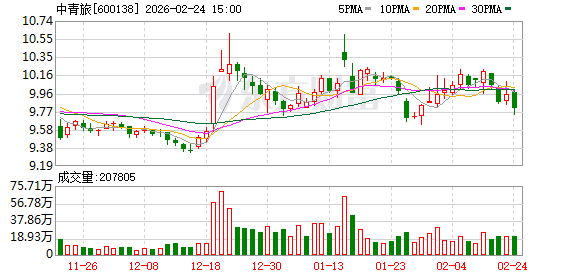
中青旅:证券简称“中青旅”综合考虑了品牌独立性、市场认知度、业务特点等多方面因素
Zheng Quan Ri Bao· 2026-02-24 11:38
Core Viewpoint - The company has developed multiple specialized platforms in tourism services, integrated marketing, and scenic area management since its listing, actively exploring the integration of tourism with other industries to enhance its core operational advantages, brand strengths, and competitive barriers [2] Business Overview - The company's existing business includes cultural tourism destination investment and operation management, comprehensive cultural tourism services, and strategic investment business [2] - The cultural tourism destination investment and operation management business is represented by Wuzhen and Gubei Water Town, providing full industry chain services within scenic areas and creating high-quality cultural tourism destinations [2] - The company is continuously experimenting with light asset output, following the principle of "front-loaded operations and prior planning," to connect top-level planning design, construction consulting, and cultural tourism operation service chains, offering full-cycle services in cultural tourism [2] - The comprehensive cultural tourism service business encompasses travel agency operations, integrated marketing, and hotel operation management [2] - The company's stock name "Zhongqing Travel" considers factors such as brand independence, market recognition, and business characteristics [2]


以客为本破局文旅存量提质 中青旅徐晓磊:精准锚定三类人群,深耕场景与文化赋能
Jin Rong Jie· 2025-12-26 12:08
Core Insights - The "2025 Financial Annual Conference" held in Beijing focused on high-quality development of listed companies, emphasizing resilience and growth through cycles [1] Group 1: Industry Trends - The tourism consumption market in China shows significant potential, with nearly 6 billion tourist visits last year and an expected increase to an average of 5 trips per person this year [3][4] - The tourism industry is shifting towards a focus on three core customer groups: youth, seniors, and inbound tourists, each with distinct needs and preferences [4][5] Group 2: Target Customer Segments - The youth segment is characterized by a desire for personalized and experiential travel, with a strong inclination towards self-directed choices and sharing experiences [4] - The senior segment, particularly the "active seniors," has different needs compared to traditional elderly groups, showing a willingness to spend on quality tourism products [4] - Inbound tourism is experiencing a revival, with younger and backpacker tourists preferring deeper experiences in smaller cities, necessitating a shift in service strategies [4][5] Group 3: Market Strategies - The company aims to extend successful projects to lower-tier cities, leveraging local culture and creating unique, immersive experiences [5] - Key strategies for developing tourism projects in lower-tier markets include deep cultural exploration, immersive experiences, and refined service quality [5]

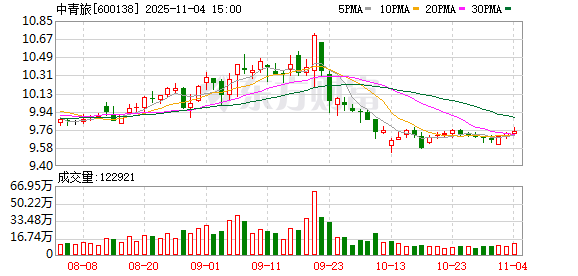
中青旅:“中青旅”品牌作为承载公司文化的主要载体,已深入渗透产品、服务、市场运作的各个环节
Zheng Quan Ri Bao· 2025-11-04 13:39
Core Insights - The company, as the first A-share listed travel agency in China and the first tourism-related listed company with a large central financial holding group background, has established a multi-product brand system over the years [2] Group 1: Brand and Market Position - The "China Youth Travel Service" brand serves as the core of the company's culture and has penetrated various aspects of product, service, and market operations, winning a broad customer base for its travel agency business [2] - The company has developed key sub-brands such as "Aoyou" for travel agency operations, "Wuzhen" and "Gubei Water Town" for scenic area operations, and "Zhongqing Bolian" for integrated marketing, enhancing its competitive edge as a comprehensive tourism service provider [2] Group 2: Strategic Advantages - The brand resource advantage is highlighted in the company's expansion of development space and strategic investment initiatives, showcasing its exceptional capabilities in the tourism industry [2]
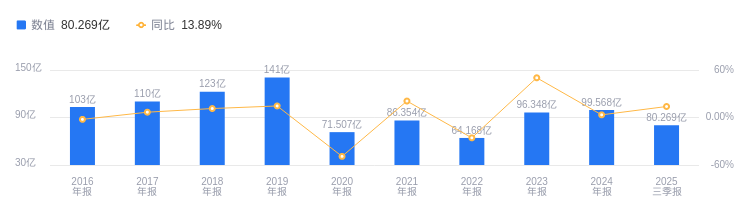
中青旅的前世今生:2025年三季度营收80.27亿行业夺冠,净利润1.86亿位居次席
Xin Lang Cai Jing· 2025-10-30 13:10
Core Viewpoint - China Youth Travel Service (CYTS) is a leading player in the domestic tourism industry, with significant investment value due to its comprehensive industry chain layout and well-known attractions like Wuzhen and Gubei Water Town [1] Group 1: Business Performance - In Q3 2025, CYTS achieved a revenue of 8.027 billion yuan, ranking first in the industry, significantly surpassing the second-ranked Songcheng Performance at 1.833 billion yuan [2] - The main business composition includes IT products at 2.146 billion yuan (44.11%), integrated marketing services at 770 million yuan (15.83%), and tourism services at 769 million yuan (15.81%) [2] - The net profit for the same period was 186 million yuan, ranking second in the industry, with Songcheng Performance leading at 793 million yuan [2] Group 2: Financial Ratios - As of Q3 2025, CYTS's debt-to-asset ratio was 51.82%, an increase from 50.44% year-on-year, but still below the industry average of 56.33%, indicating strong debt repayment capability [3] - The gross profit margin for Q3 2025 was 20.56%, down from 23.88% year-on-year, and below the industry average of 28.21%, suggesting a need for improvement in profitability [3] Group 3: Shareholder Information - As of September 30, 2025, the number of A-share shareholders decreased by 2.37% to 69,000, while the average number of circulating A-shares held per shareholder increased by 2.42% to 10,500 [5] - Notable changes among the top ten circulating shareholders include an increase of 4.4847 million shares held by the Fortune CSI Tourism Theme ETF and a decrease of 0.27397 million shares held by Hong Kong Central Clearing Limited [5] Group 4: Executive Compensation - The chairman, Ni Yangping, received a salary of 1.0176 million yuan in 2024, a decrease of 112,800 yuan from 2023 [4] - The president, Zhao Peng, earned 234,300 yuan in 2024 [4] Group 5: Market Outlook - In the first half of 2025, CYTS reported a revenue of 4.866 billion yuan, a year-on-year increase of 11.84%, while the net profit was 67 million yuan, a year-on-year decrease of 7.88% [6] - The revenue from Wuzhen and Gubei Water Town saw declines of 13.56% and 25.29% respectively, attributed to increased competition in the surrounding areas [6] - Forecasts for net profit from 2025 to 2027 are 168 million yuan, 208 million yuan, and 279 million yuan, with corresponding price-to-earnings ratios of 44X, 36X, and 27X [6]
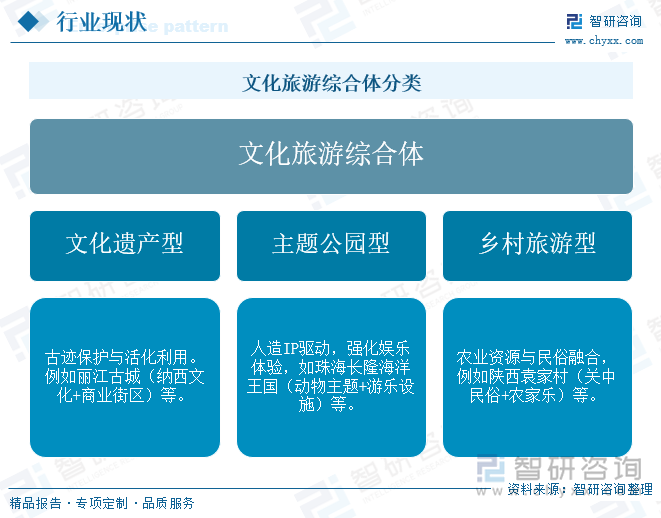
研判2025!中国文化旅游综合体行业产业链、行业现状及市场规模分析:“文旅+”模式驱动产业升级,科技赋能与IP运营助力二次消费[图]
Chan Ye Xin Xi Wang· 2025-05-16 01:36
Core Viewpoint - The Chinese cultural tourism complex industry is entering a transformation and upgrading phase, becoming a significant engine for driving domestic demand growth and promoting industrial upgrades. The market size is projected to reach 2.59 billion yuan in 2024, with a year-on-year growth of 16.11% [1][12]. Industry Overview - Cultural tourism complexes integrate culture as the core driving force, combining tourism, commerce, leisure, and residential functions into a comprehensive space. They aim to meet tourists' needs for cultural experiences, leisure vacations, and shopping while promoting regional cultural heritage and tourism industry upgrades [2]. Industry Development History - The industry has gone through four stages: 1. **Emergence Stage (1978-1999)**: Focused on sightseeing with limited cultural integration. 2. **Initial Exploration Stage (2000-2009)**: Increased emphasis on cultural tourism with early projects combining cultural performances and tourism. 3. **Rapid Development Stage (2010-2019)**: Cultural tourism complexes became key for local economic transformation, supported by national strategies. 4. **Transformation and Upgrading Stage (2020-Present)**: Shift towards high-quality, diversified, and technology-driven experiences, accelerated by the pandemic [4][5][6]. Industry Value Chain - The industry value chain includes: - **Upstream**: Resource development, planning, design, and cultural resource/IP development. - **Midstream**: Operation services of cultural tourism complexes. - **Downstream**: Tourists and consumers [8]. Market Size - The market size of the cultural tourism complex industry is expected to reach 2.59 billion yuan in 2024, with a year-on-year growth of 16.11%. The industry is witnessing trends of cross-industry integration, such as "cultural tourism + technology" and "cultural tourism + commerce" [12]. Key Enterprises - Major players in the industry include: - **China Overseas Chinese Town**: Leading enterprise with a comprehensive business model covering theme parks and cultural performances. - **Sunac Culture**: Known for its "ice and snow world + commercial complex" model. - **China Youth Travel Service**: Focuses on integrated tourism services with projects like Wuzhen and Gubei Water Town. - **Yunnan Tourism**: Leverages rich cultural resources for unique tourism projects [14][16][17]. Industry Development Trends 1. **Integration of Immersive Experiences and Smart Operations**: The industry is transitioning from resource-driven to technology-driven, utilizing advancements in 5G, AI, and the metaverse to enhance visitor experiences [20]. 2. **Demand Differentiation Driven by Generational Changes**: The Z generation and the elderly are shaping the market, leading to a focus on unique experiences and wellness tourism [21][22]. 3. **Green Concepts and Industrial Synergy**: The industry is moving towards low-carbon and industrialized upgrades, with a focus on sustainable practices and collaboration across sectors [23].