
古北水镇

Search documents
值得期待!春节到北京必打卡的20个新北京景点来了!
Bei Jing Ri Bao Ke Hu Duan· 2026-02-01 14:25
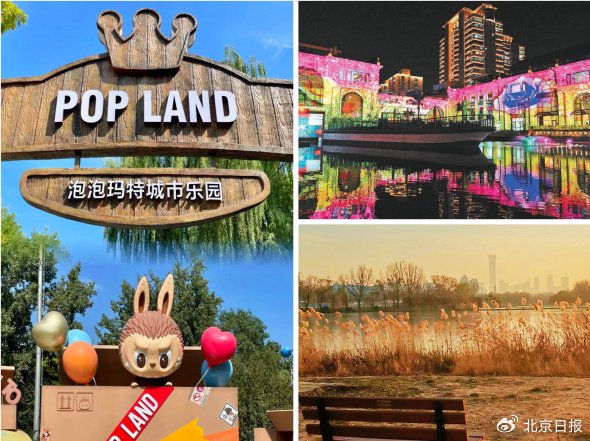
Group 1 - The integration of Liangma River International Style Waterfront, Chaoyang Park, and Pop Mart City Park creates a one-stop experience combining leisure, nature, and family-friendly activities [3][5] - Liangma River International Style Waterfront features scenic views and cultural ambiance, while Chaoyang Park is the largest urban park within the Fourth Ring Road, offering free access and various recreational facilities [3][5] - Pop Mart City Park, located within Chaoyang Park, provides an immersive experience based on popular IPs, appealing to families and trend enthusiasts [3][5] Group 2 - Beijing Universal Resort and "Wanli" International Commercial and Entertainment Complex form a micro-vacation loop, combining daytime theme park activities with nighttime leisure and shopping [5][6] - Beijing Universal Resort is a cultural landmark in Beijing, attracting millions of visitors annually with its immersive entertainment experiences based on global popular IPs [5][6] - "Wanli" includes WellTown with nearly 500 brands, a significant portion being flagship stores, and offers a comprehensive experience of entertainment, shopping, and accommodation [5][6] Group 3 - Beijing (Tongzhou) Grand Canal Cultural Tourism Scenic Area integrates historical and cultural landscapes along the Grand Canal, allowing visitors to explore ancient sites and modern ecological parks [8] - The area offers activities such as walking and cycling along the canal, showcasing the historical evolution and cultural significance of the waterway [8] Group 4 - The Wanping City, a key site of the Anti-Japanese War, features well-preserved historical structures and serves as an educational hub with various interactive experiences [11] - The site includes the Anti-Japanese War Memorial Museum and is linked to the Lugou Bridge, creating a comprehensive historical education experience [11] Group 5 - Shougang Park represents a successful transformation of industrial heritage, merging historical steel manufacturing elements with modern technology and cultural industries [13] - The area has become a new urban landmark, integrating high-end offices, trendy sports, and exhibition spaces [13] Group 6 - Modekou Historical and Cultural District combines traditional Beijing architecture with modern leisure, hosting various cultural events and activities [16] - The area is recognized as a national-level leisure tourism district, attracting visitors with its unique blend of history and contemporary experiences [16] Group 7 - The Beijing Olympic Center Area is a national 5A-level tourist attraction, featuring iconic structures like the Bird's Nest and Water Cube, and hosting various cultural and sporting events [18] - The area will enhance its offerings during the 2026 Spring Festival with themed markets and activities [18] Group 8 - Mutianyu Great Wall is renowned for its stunning scenery and well-preserved structures, providing a comfortable visiting experience year-round [20] - The site is a popular international tourist destination, known for its historical significance and natural beauty [20] Group 9 - Gubei Water Town, located near Simatai Great Wall, offers a unique vacation experience combining historical exploration with modern amenities [22][23] - Visitors can enjoy activities such as hiking the Great Wall during the day and relaxing in the town's hot springs at night [22][23] Group 10 - Beijing Yanqi Lake International Tourism Resort is a national AAAA-level scenic area known for its beautiful natural scenery and well-developed facilities [26] - The resort has hosted significant international events and remains a popular destination for family leisure and sightseeing [26] Group 11 - Beijing World Horticultural Expo International Tourism Resort combines ecological tourism with horticultural technology, offering diverse entertainment options [28] - The area serves as a large-scale rural vacation destination, promoting sustainable ecological concepts [28] Group 12 - Pinggu Kaoshanji Market is a historical market with over 600 years of history, featuring local specialties and cultural experiences [30] - The market will host special events during the 2026 Spring Festival, enhancing its appeal as a destination for traditional festivities [30] Group 13 - The Beijing Wildlife Park offers a large-scale wildlife experience, focusing on animal welfare and ecological education [42] - The park features both self-driving and walking areas, allowing close encounters with various animal species [42] Group 14 - The Yuanmingyuan Ruins Park showcases the remnants of a grand imperial garden, blending historical significance with artistic beauty [44] - The park serves as a space for patriotic education and reflection on historical events, featuring various notable ruins [44] Group 15 - Longfu Temple has transformed into a cultural consumption landmark, integrating contemporary art and lifestyle elements [46] - The area attracts a young audience with its creative offerings and regular events [46] Group 16 - Zhonghai Dajixiang aims to create a cultural hub with diverse immersive experiences, including high-end retail and dining options [50] - The project is recognized as a micro-vacation destination, enhancing urban leisure experiences [50]

市政协委员陈俊炜:借助新媒体平台让京郊文旅更有“记忆点”
Bei Jing Shang Bao· 2026-01-26 12:40
Core Viewpoint - The development of suburban cultural tourism in Beijing is essential for rural revitalization and meeting citizens' high-quality leisure demands, but it faces challenges such as homogenization, service quality, and brand influence [4]. Group 1: Current State of Suburban Cultural Tourism - Suburban cultural tourism in Beijing has shown steady growth but still has gaps compared to the capital's standards and high-quality rural revitalization requirements [4]. - Current tourism projects are primarily traditional, focusing on activities like fruit picking and outdoor barbecues, leading to low-value-added consumption and a lack of diverse experiences [4]. - Successful examples, such as the Gubei Water Town and the integration of local culture with tourism, highlight potential pathways for development [4]. Group 2: Recommendations for Improvement - Strengthening brand development is crucial to create memorable experiences in suburban cultural tourism, utilizing new media and tourism exhibitions to establish new popular destinations [5]. - Promoting the integration of various tourism formats can enhance vitality, transforming single projects into a comprehensive industry chain that meets urban residents' short-term vacation needs [6]. - Addressing service shortcomings is necessary to enhance the warmth of suburban cultural tourism, including improving transportation, service standards, and developing nighttime economy facilities [6].
以客为本破局文旅存量提质 中青旅徐晓磊:精准锚定三类人群,深耕场景与文化赋能
Jin Rong Jie· 2025-12-26 12:08
Core Insights - The "2025 Financial Annual Conference" held in Beijing focused on high-quality development of listed companies, emphasizing resilience and growth through cycles [1] Group 1: Industry Trends - The tourism consumption market in China shows significant potential, with nearly 6 billion tourist visits last year and an expected increase to an average of 5 trips per person this year [3][4] - The tourism industry is shifting towards a focus on three core customer groups: youth, seniors, and inbound tourists, each with distinct needs and preferences [4][5] Group 2: Target Customer Segments - The youth segment is characterized by a desire for personalized and experiential travel, with a strong inclination towards self-directed choices and sharing experiences [4] - The senior segment, particularly the "active seniors," has different needs compared to traditional elderly groups, showing a willingness to spend on quality tourism products [4] - Inbound tourism is experiencing a revival, with younger and backpacker tourists preferring deeper experiences in smaller cities, necessitating a shift in service strategies [4][5] Group 3: Market Strategies - The company aims to extend successful projects to lower-tier cities, leveraging local culture and creating unique, immersive experiences [5] - Key strategies for developing tourism projects in lower-tier markets include deep cultural exploration, immersive experiences, and refined service quality [5]


中青旅:“中青旅”品牌作为承载公司文化的主要载体,已深入渗透产品、服务、市场运作的各个环节
Zheng Quan Ri Bao· 2025-11-04 13:39
Core Insights - The company, as the first A-share listed travel agency in China and the first tourism-related listed company with a large central financial holding group background, has established a multi-product brand system over the years [2] Group 1: Brand and Market Position - The "China Youth Travel Service" brand serves as the core of the company's culture and has penetrated various aspects of product, service, and market operations, winning a broad customer base for its travel agency business [2] - The company has developed key sub-brands such as "Aoyou" for travel agency operations, "Wuzhen" and "Gubei Water Town" for scenic area operations, and "Zhongqing Bolian" for integrated marketing, enhancing its competitive edge as a comprehensive tourism service provider [2] Group 2: Strategic Advantages - The brand resource advantage is highlighted in the company's expansion of development space and strategic investment initiatives, showcasing its exceptional capabilities in the tourism industry [2]
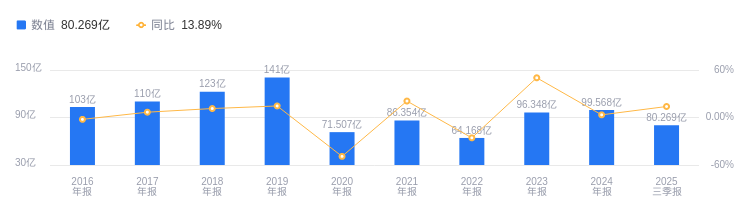
中青旅的前世今生:2025年三季度营收80.27亿行业夺冠,净利润1.86亿位居次席
Xin Lang Cai Jing· 2025-10-30 13:10
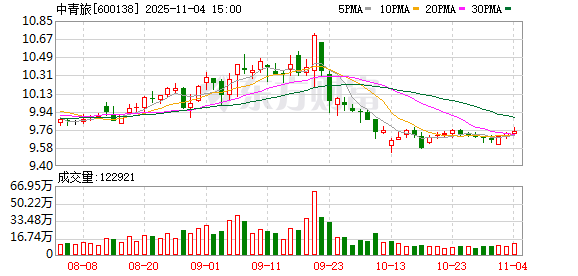
Core Viewpoint - China Youth Travel Service (CYTS) is a leading player in the domestic tourism industry, with significant investment value due to its comprehensive industry chain layout and well-known attractions like Wuzhen and Gubei Water Town [1] Group 1: Business Performance - In Q3 2025, CYTS achieved a revenue of 8.027 billion yuan, ranking first in the industry, significantly surpassing the second-ranked Songcheng Performance at 1.833 billion yuan [2] - The main business composition includes IT products at 2.146 billion yuan (44.11%), integrated marketing services at 770 million yuan (15.83%), and tourism services at 769 million yuan (15.81%) [2] - The net profit for the same period was 186 million yuan, ranking second in the industry, with Songcheng Performance leading at 793 million yuan [2] Group 2: Financial Ratios - As of Q3 2025, CYTS's debt-to-asset ratio was 51.82%, an increase from 50.44% year-on-year, but still below the industry average of 56.33%, indicating strong debt repayment capability [3] - The gross profit margin for Q3 2025 was 20.56%, down from 23.88% year-on-year, and below the industry average of 28.21%, suggesting a need for improvement in profitability [3] Group 3: Shareholder Information - As of September 30, 2025, the number of A-share shareholders decreased by 2.37% to 69,000, while the average number of circulating A-shares held per shareholder increased by 2.42% to 10,500 [5] - Notable changes among the top ten circulating shareholders include an increase of 4.4847 million shares held by the Fortune CSI Tourism Theme ETF and a decrease of 0.27397 million shares held by Hong Kong Central Clearing Limited [5] Group 4: Executive Compensation - The chairman, Ni Yangping, received a salary of 1.0176 million yuan in 2024, a decrease of 112,800 yuan from 2023 [4] - The president, Zhao Peng, earned 234,300 yuan in 2024 [4] Group 5: Market Outlook - In the first half of 2025, CYTS reported a revenue of 4.866 billion yuan, a year-on-year increase of 11.84%, while the net profit was 67 million yuan, a year-on-year decrease of 7.88% [6] - The revenue from Wuzhen and Gubei Water Town saw declines of 13.56% and 25.29% respectively, attributed to increased competition in the surrounding areas [6] - Forecasts for net profit from 2025 to 2027 are 168 million yuan, 208 million yuan, and 279 million yuan, with corresponding price-to-earnings ratios of 44X, 36X, and 27X [6]
研判2025!中国文化旅游综合体行业产业链、行业现状及市场规模分析:“文旅+”模式驱动产业升级,科技赋能与IP运营助力二次消费[图]
Chan Ye Xin Xi Wang· 2025-05-16 01:36
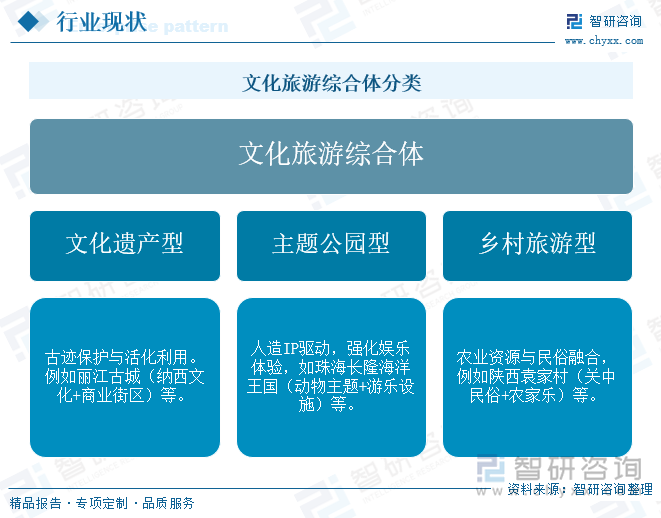
Core Viewpoint - The Chinese cultural tourism complex industry is entering a transformation and upgrading phase, becoming a significant engine for driving domestic demand growth and promoting industrial upgrades. The market size is projected to reach 2.59 billion yuan in 2024, with a year-on-year growth of 16.11% [1][12]. Industry Overview - Cultural tourism complexes integrate culture as the core driving force, combining tourism, commerce, leisure, and residential functions into a comprehensive space. They aim to meet tourists' needs for cultural experiences, leisure vacations, and shopping while promoting regional cultural heritage and tourism industry upgrades [2]. Industry Development History - The industry has gone through four stages: 1. **Emergence Stage (1978-1999)**: Focused on sightseeing with limited cultural integration. 2. **Initial Exploration Stage (2000-2009)**: Increased emphasis on cultural tourism with early projects combining cultural performances and tourism. 3. **Rapid Development Stage (2010-2019)**: Cultural tourism complexes became key for local economic transformation, supported by national strategies. 4. **Transformation and Upgrading Stage (2020-Present)**: Shift towards high-quality, diversified, and technology-driven experiences, accelerated by the pandemic [4][5][6]. Industry Value Chain - The industry value chain includes: - **Upstream**: Resource development, planning, design, and cultural resource/IP development. - **Midstream**: Operation services of cultural tourism complexes. - **Downstream**: Tourists and consumers [8]. Market Size - The market size of the cultural tourism complex industry is expected to reach 2.59 billion yuan in 2024, with a year-on-year growth of 16.11%. The industry is witnessing trends of cross-industry integration, such as "cultural tourism + technology" and "cultural tourism + commerce" [12]. Key Enterprises - Major players in the industry include: - **China Overseas Chinese Town**: Leading enterprise with a comprehensive business model covering theme parks and cultural performances. - **Sunac Culture**: Known for its "ice and snow world + commercial complex" model. - **China Youth Travel Service**: Focuses on integrated tourism services with projects like Wuzhen and Gubei Water Town. - **Yunnan Tourism**: Leverages rich cultural resources for unique tourism projects [14][16][17]. Industry Development Trends 1. **Integration of Immersive Experiences and Smart Operations**: The industry is transitioning from resource-driven to technology-driven, utilizing advancements in 5G, AI, and the metaverse to enhance visitor experiences [20]. 2. **Demand Differentiation Driven by Generational Changes**: The Z generation and the elderly are shaping the market, leading to a focus on unique experiences and wellness tourism [21][22]. 3. **Green Concepts and Industrial Synergy**: The industry is moving towards low-carbon and industrialized upgrades, with a focus on sustainable practices and collaboration across sectors [23].




中青旅副总裁范思远辞任,公司去年净利润下滑17.29%
Xin Jing Bao· 2025-04-18 14:34
Group 1 - The core point of the article is the recent management changes at Zhongqing Tourism Holdings Co., Ltd. and its financial performance, highlighting a trend of "increased revenue but decreased profit" in 2024 [1][2] - Fan Siyuan has resigned from his positions as Vice President, Board Secretary, and other roles in subsidiaries, but will continue to serve as a director [1] - In the past year, Zhongqing Tourism has experienced frequent personnel changes, with five executives leaving the company due to job adjustments [1] Group 2 - In 2024, Zhongqing Tourism's revenue increased by 3.34% to 9.957 billion yuan, while net profit decreased by 17.29% to 160 million yuan, and non-recurring net profit fell by 22.31% to 101 million yuan [2] - The decline in net profit is attributed to limited cost-cutting opportunities in labor and depreciation, as well as reduced investment income [2] - The company's main business, particularly the scenic area operations, has not performed well, with revenue from scenic area business decreasing by 7.12% [2] Group 3 - Zhongqing Tourism emphasizes the importance of maintaining and enhancing the appeal of its key attractions, such as Wuzhen and Gubei Water Town, despite recent declines in revenue [3] - The company plans to support Gubei Water Town's development and expand its market presence, leveraging its product advantages in the suburban tourism sector [3] - Zhongqing Tourism has launched several light-asset projects in the cultural tourism sector, with three new projects opening in 2024, showing promising operational results [3]