九章二号

Search documents
8省率先公开2025年经济数据:浙江第1,河南第3,上海远超北京!
Sou Hu Cai Jing· 2026-01-24 11:40
Core Insights - Gansu Province leads with a remarkable GDP growth rate of 5.2%, surpassing traditionally strong economies like Shanghai and Zhejiang, challenging the notion of "coastal prosperity and inland stagnation" [1][10] - Each province showcases unique strengths and strategies for economic development, emphasizing differentiated competition rather than simple GDP rankings [11] Group 1: Zhejiang Province - Zhejiang's GDP approaches 10 trillion, with an increase of over 450 billion, driven largely by its robust private sector, which contributes more than two-thirds of the province's GDP [1][11] - The Ningbo-Zhoushan Port has maintained its position as the world's busiest port for 15 consecutive years, supporting a high foreign trade dependency of over 60% [1] - The Hangzhou Future Technology City hosts over 2,000 high-tech enterprises, with AI patents accounting for 12% of the national total, indicating a strong focus on technological innovation [1] Group 2: Sichuan Province - Sichuan's GDP exceeds 6.7 trillion, with an increase of over 300 billion, benefiting from the Chengdu-Chongqing economic circle policy [2][11] - The Chengdu Plain Economic Zone contributes 80% of the province's GDP, with Chengdu acting as a leading force for regional development [2] - The Baihetan Hydropower Station's commissioning has raised the clean energy installed capacity to over 80%, attracting companies like CATL to establish production bases in the region [2] Group 3: Henan Province - Henan maintains a strong position in central China, with a GDP of over 66.6 trillion and an increase of over 300 billion [2][11] - Zhengzhou's cross-border e-commerce business has ranked first in the nation for eight consecutive years, showcasing the province's manufacturing and logistics strengths [2] - Foxconn's Zhengzhou base produces over 120 million iPhones annually, significantly boosting Henan's import and export totals [2] Group 4: Shanghai - Shanghai achieves a GDP growth rate of 5.16%, with a total GDP exceeding 5.6 trillion, despite a general economic slowdown [3][11] - The Tesla factory in the Lingang New Area has a production capacity exceeding 750,000 vehicles, contributing to the city's industrial output [3] - Yangshan Port's automated terminal has surpassed a throughput of 20 million TEUs, maintaining Shanghai's status as the world's busiest port for 13 years [3] Group 5: Beijing - Beijing's GDP exceeds 5.2 trillion, driven by the tech sector in Zhongguancun, which houses over 600 specialized "little giant" enterprises [5][11] - The digital economy accounts for over 40% of Beijing's GDP, highlighting the city's focus on innovation and technology [5] Group 6: Yunnan Province - Yunnan's GDP surpasses 3.2 trillion, with the China-Laos Railway achieving a freight volume exceeding 10 million tons [7][11] - The province's green aluminum-silicon production capacity accounts for 15% of the national total, indicating a focus on sustainable industries [7] Group 7: Guizhou Province - Guizhou's GDP exceeds 2.3 trillion, with the digital economy comprising over 36% of its total [8][11] - The Guiyang Big Data Exchange has an annual transaction volume exceeding 5 billion, showcasing the province's emphasis on data-driven industries [8] - Moutai's revenue reaches 150 billion, indicating the strength of the liquor industry as a key economic driver [8] Group 8: Gansu Province - Gansu's GDP growth rate of 5.2% positions it as a surprising leader among the eight provinces, with a total GDP of approximately 1.37 trillion [10][11] - The "East Data West Calculation" initiative has driven the revenue of the computing power industry to exceed 20 billion [10] - The Jinchuan Group's nickel-cobalt new materials hold a 15% share of the global market, and the province ranks first in potato exports [10]

安徽教育现代化指数位居全国12位
Xin Lang Cai Jing· 2025-12-30 17:06
Group 1 - During the "14th Five-Year Plan" period, Anhui Province has made significant achievements in education, with key indicators such as preschool enrollment rate exceeding 99%, compulsory education consolidation rate at 98.7%, and high school enrollment rate at 92%, all meeting or exceeding national averages [1] - The education modernization index improved from 18th in the nation in 2021 to 12th in 2024, indicating a substantial enhancement in educational strength [1] - A total of 15 counties (cities, districts) have been recognized for quality balanced development in compulsory education, and 24 counties (cities, districts) for universal preschool education [1] Group 2 - In the past three years, Anhui's universities have led or participated in over 95% of the provincial natural science first prizes and over 63% of the provincial science and technology progress first prizes, showcasing continuous innovation [2] - A total of 227.2 million talents have been trained by universities in the province, with a stable graduate employment rate of around 90%, providing strong support for regional development [2] - The province has established 17 "Big Ideological and Political Course" practical teaching bases and 10 red resource bases, leading the nation in the establishment of a provincial-level online ideological and political center [2] Group 3 - Three universities have been included in the second round of "Double First-Class" construction, and 18 universities have 100 disciplines ranked in the top 1% globally in ESI, representing a growth of 143.9% since the end of the "13th Five-Year Plan" [3] - The proportion of provincial universities serving emerging industries has reached 72.2%, with significant collaboration between 761 innovation teams from 78 universities and 528 leading enterprises [3] - Major scientific achievements, such as quantum computers and ultra-low temperature dilution refrigerators, highlight the innovative capabilities of Anhui's education sector [3]
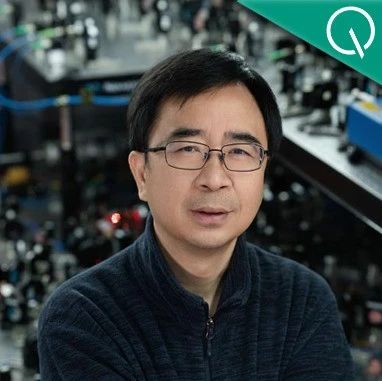
潘建伟团队突破量子操控极限!AI助力2024个原子60毫秒精准重排
量子位· 2025-08-14 09:11
Core Viewpoint - The article highlights a significant breakthrough in quantum computing, where a team led by Pan Jianwei successfully constructed a defect-free atomic array of 2024 atoms in just 60 milliseconds, setting a new world record in neutral atom systems [1][6][14]. Group 1: Research Achievements - The research team utilized AI technology to achieve a high degree of parallelism in rearranging atoms, overcoming previous limitations in traditional methods that restricted the scale of atomic arrays to hundreds of atoms [12][14]. - The system has achieved single-qubit gate fidelity of 99.97%, two-qubit gate fidelity of 99.5%, and detection fidelity of 99.92%, matching the highest international standards represented by Harvard University [6][14]. - The results of this research have been published in the international journal "Physical Review Letters" and highlighted by the American Physical Society [4]. Group 2: Technical Innovations - The new rearrangement technique allows for the rapid reconfiguration of thousands of atoms, demonstrated through a video featuring Schrödinger's cat, showcasing the dynamic arrangement of rubidium atoms in a 230×230μm optical trap array [2][8]. - The research indicates that expanding the atomic array from 2024 to tens of thousands is feasible from a computational perspective, although practical implementation requires advancements in laser power and overall platform capabilities [14]. Group 3: Future Prospects - The article suggests that while the current advancements are significant, achieving a fully functional universal quantum computer may take an additional 10 years for large-scale applications like cryptography [14]. - The collaboration involves top teams in the quantum computing field, including the Shanghai Quantum Science Research Center and the University of Science and Technology of China [14].