极低温稀释制冷机

Search documents
新材料产业:2025年总结与2026年展望(附100+种新材料与50+篇报告)
材料汇· 2026-02-20 13:34
Core Viewpoint - The article emphasizes the strategic importance of materials science in global competition, highlighting China's transition from a passive follower to an active leader in new materials by 2025, focusing on three dimensions: "fortress materials," "breakthrough materials," and "fusion materials" [2][5]. Group 1: Fortress Materials - The development of fortress materials is directly linked to national security and major engineering projects, prioritizing absolute reliability and performance under extreme conditions [7]. - Key breakthroughs in 2025 include the mass production of the fourth-generation single crystal superalloy, which enhances turbine blade temperature capacity to over 1200°C and increases lifespan by nearly 50% [10]. - The successful engineering application of continuous silicon carbide fibers marks a significant shift from experimental to stable mass production, with a focus on high-temperature applications [16][17]. Group 2: Breakthrough Materials - Breakthrough materials aim for self-sufficiency and competitiveness in critical industrial chains, particularly in semiconductors and high-end manufacturing [42]. - The domestic production rate of 12-inch silicon wafers is projected to rise from 15% to 40% by the end of 2025, significantly reducing reliance on imports [46]. - Progress in photolithography materials includes the successful supply of ArF dry photoresist and the mass production of various types of photoresists, indicating a move towards domestic alternatives [48][50]. Group 3: Fusion Materials - Fusion materials focus on interdisciplinary innovation and the redefinition of future industrial forms, with AI significantly enhancing material research efficiency [3]. - The development of bio-based materials and artificial skin technologies demonstrates the potential for cross-disciplinary applications in future industries [3][18]. - The integration of smart materials capable of self-healing and adaptive functionalities is expected to advance significantly by 2026, enhancing performance in various applications [37]. Group 4: Future Trends - The article anticipates a shift towards multi-functional and intelligent materials in 2026, with advancements in self-healing ceramics and smart polymer composites for adaptive structures [39][40]. - The exploration of materials for extreme environments, such as lunar and deep-sea applications, is expected to gain momentum, focusing on in-situ manufacturing and repair technologies [39][40]. - The establishment of a comprehensive testing platform for fusion materials is projected to enhance the engineering validation of critical components in fusion energy systems [41].


大国基座2025:新材料三重战线的突破与2026年体系化决战
材料汇· 2025-12-31 11:27
Core Viewpoint - The article discusses the strategic transformation of China's new materials industry by 2025, emphasizing a "three-dimensional war" approach that includes "fortress materials" for national security, "sovereign materials" for technological independence, and "fusion materials" for future industry definition [3]. Group 1: Fortress Materials - The development of safety dimension materials is closely tied to national core interests, focusing on absolute reliability and performance under extreme conditions rather than cost-effectiveness [5]. - A significant breakthrough in 2025 is the mass production of the fourth-generation single crystal high-temperature alloy turbine blades, which can withstand temperatures above 1200°C and have a lifespan increased by nearly 50% compared to previous generations [8][10]. - Continuous silicon carbide fibers have transitioned from laboratory preparation to stable engineering mass production, with a production capacity of hundreds of tons, marking a strategic leap in the aerospace sector [14][15]. Group 2: Sovereign Materials - Sovereign materials focus on achieving "self-control" and enhancing industrial competitiveness, particularly in strategic sectors like semiconductors and high-end manufacturing [40]. - In the semiconductor sector, the production of 12-inch silicon wafers has reached a milestone with over 500,000 monthly shipments, and significant advancements in low-oxygen high-resistivity silicon wafer technology have been made [44]. - The domestic supply ratio of 300mm semiconductor silicon wafers is expected to increase from 15% to 40% by the end of 2025, significantly reducing reliance on imports [45]. Group 3: Fusion Materials - The fusion materials dimension represents a shift towards creating new demands and defining new products, characterized by the integration of materials science with cutting-edge fields like artificial intelligence and synthetic biology [72]. - AI-driven platforms for materials research have emerged, enabling rapid property prediction and screening, significantly reducing development cycles for critical materials [74]. - The integration of intelligent materials in robotics is evolving, allowing materials to interact with their environment and make autonomous decisions, marking a shift from passive components to intelligent structures [77].







安徽教育现代化指数位居全国12位
Xin Lang Cai Jing· 2025-12-30 17:06
Group 1 - During the "14th Five-Year Plan" period, Anhui Province has made significant achievements in education, with key indicators such as preschool enrollment rate exceeding 99%, compulsory education consolidation rate at 98.7%, and high school enrollment rate at 92%, all meeting or exceeding national averages [1] - The education modernization index improved from 18th in the nation in 2021 to 12th in 2024, indicating a substantial enhancement in educational strength [1] - A total of 15 counties (cities, districts) have been recognized for quality balanced development in compulsory education, and 24 counties (cities, districts) for universal preschool education [1] Group 2 - In the past three years, Anhui's universities have led or participated in over 95% of the provincial natural science first prizes and over 63% of the provincial science and technology progress first prizes, showcasing continuous innovation [2] - A total of 227.2 million talents have been trained by universities in the province, with a stable graduate employment rate of around 90%, providing strong support for regional development [2] - The province has established 17 "Big Ideological and Political Course" practical teaching bases and 10 red resource bases, leading the nation in the establishment of a provincial-level online ideological and political center [2] Group 3 - Three universities have been included in the second round of "Double First-Class" construction, and 18 universities have 100 disciplines ranked in the top 1% globally in ESI, representing a growth of 143.9% since the end of the "13th Five-Year Plan" [3] - The proportion of provincial universities serving emerging industries has reached 72.2%, with significant collaboration between 761 innovation teams from 78 universities and 528 leading enterprises [3] - Major scientific achievements, such as quantum computers and ultra-low temperature dilution refrigerators, highlight the innovative capabilities of Anhui's education sector [3]
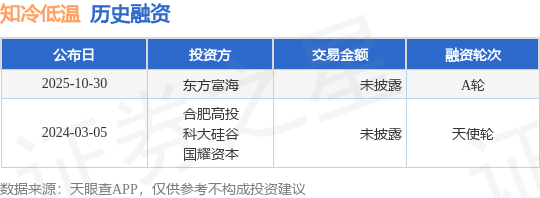
【投融资动态】知冷低温A轮融资,投资方为东方富海
Sou Hu Cai Jing· 2025-11-04 11:38
Group 1 - The core point of the article is the A-round financing of Hefei Zhiling Low Temperature Technology Co., Ltd., with the amount undisclosed and Oriental Fortune as an investor [1][2] Group 2 - Hefei Zhiling Low Temperature Technology Co., Ltd. was established based on the AHU-DR400 technology achievements from Anhui University [2] - The company focuses on low-temperature scientific research and engineering applications, addressing the demand for non-liquid helium, ultra-low temperature, large cooling capacity, large space, and high stability [2] - The developed ultra-low temperature dilution refrigerator achieves a low temperature of 8.5 mK, with a cooling capacity of 550 µW at 100 mK, and a cold plate diameter of 300 mm at 10 mK, meeting international advanced standards for ultra-low temperature equipment [2]
科学仪器:量子科技突破的关键支撑——访中国科学院院士俞大鹏
仪器信息网· 2025-08-25 04:07
Core Viewpoint - Quantum technology is not an abstract concept; it heavily relies on advanced scientific instruments for development, as emphasized by Professor Yu Dapeng, a leading figure in China's quantum technology field [4][6]. Group 1: Current State of Quantum Technology - China's quantum technology is experiencing differentiated development across three main areas: quantum communication, quantum computing, and quantum precision measurement [7]. - In quantum communication, China has transitioned from a follower to a leader, exemplified by the "Mozi" quantum satellite [7]. - The quantum computing sector has seen China achieve a "catching up" status, with significant advancements in superconducting and photonic quantum computing [7]. - However, in quantum precision measurement, China still lags behind the U.S. due to high precision requirements for scientific instruments [7][8]. Group 2: Challenges in Scientific Instrumentation - The development of quantum technology is constrained by the lack of advanced scientific instruments, which are crucial for breakthroughs [8]. - Key challenges in the autonomous development of scientific instruments include a weak industrial foundation, market environment issues, external technology blockades, and user perception problems [9]. - The reliance on imported high-end equipment poses risks, including high costs and supply chain vulnerabilities [8][9]. Group 3: Solutions for Innovation - Professor Yu proposes a "three-in-one" innovation system to address these challenges, focusing on talent cultivation, policy support, and optimizing the innovation ecosystem [9]. - The need for a talent cultivation system that produces professionals skilled in both quantum physics and engineering is emphasized [9]. - Establishing special funds for high-end instrument development and improving government procurement policies for domestic products are recommended [9]. Group 4: Innovations at Shenzhen International Quantum Research Institute - The Shenzhen International Quantum Research Institute has made significant strides in quantum technology, achieving national laboratory standards within five years [12]. - The institute focuses on solid-state quantum computing and has successfully developed domestic scientific instruments, including dilution refrigerators [12][13]. - Future plans include tackling high-end equipment such as transmission electron microscope aberration correctors and multi-beam lithography machines, which are vital for quantum research and semiconductor industries [13][14]. Group 5: Future Outlook and Talent Development - Quantum technology is viewed as a critical area for national competition, with confidence in achieving breakthroughs supported by government initiatives [14]. - The relationship between scientific instruments and quantum technology is highlighted as mutually beneficial, where advancements in one area drive progress in the other [14]. - Innovative approaches to talent development are suggested, including reforming evaluation systems and fostering interdisciplinary education [14].