乡村休闲旅游服务

Search documents
中国打造农业现代化大产业 八方面举措筑牢乡村全面振兴根基
Chang Jiang Shang Bao· 2026-02-09 01:55
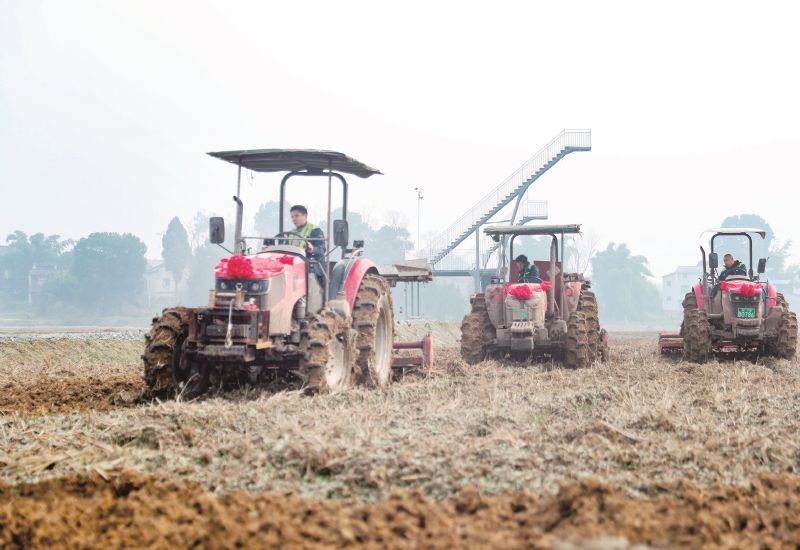
Core Insights - The modernization of agriculture and rural areas is crucial for China's overall modernization, with 2026 marking the beginning of the "14th Five-Year Plan" and emphasizing the importance of "three rural issues" [2][3] Group 1: Policy Implementation - The Ministry of Agriculture and Rural Affairs has released the "Implementation Opinions" to execute the Central Document No. 1 for 2026, outlining 40 specific measures across eight key areas to promote new development in agriculture [2][3] - The 2026 Central Document No. 1 aims to establish agriculture as a modernized major industry, focusing on rural revitalization and leveraging the "Ten Thousand Projects" experience [2][3] Group 2: Agricultural Technology and Innovation - The implementation plan emphasizes enhancing agricultural technology and equipment support, proposing five specific measures to boost agricultural innovation and productivity [3][4] - The contribution rate of agricultural technology to production has increased from 54.5% in 2012 to over 64% in 2025, while the comprehensive mechanization rate of crop farming has risen from 57% to 76.7% in the same period [4] Group 3: Rural Industry Development - The document highlights the importance of cultivating and expanding county-level industries to promote rural prosperity, integrating technology, green practices, quality, and branding in agriculture [6][7] - The goal is to enhance the agricultural product processing and circulation industry, creating modern agricultural processing parks and improving the efficiency of agricultural value chains [6][7] Group 4: Enhancing Rural Livelihoods - The plan aims to increase farmers' income through stable employment opportunities and the development of new industries such as rural tourism and e-commerce, with rural residents' disposable income reaching 24,456 yuan in 2025, a 6% increase from the previous year [6][7] - The focus is on creating a fair mechanism for sharing the benefits of industrial development with farmers, ensuring a positive cycle of industry growth and income increase [7]

我国前10个月乡村消费品零售额5.5万亿元
Xin Lang Cai Jing· 2025-11-29 11:26
Core Viewpoint - The rural industrial revitalization in China has shown a strong development momentum in 2023, with the agricultural processing industry experiencing steady growth and resilience [1] Group 1: Agricultural Processing Industry - From January to October, the added value of the agricultural and sideline food processing industry above designated size increased by 6.3% year-on-year [1] - The processing layout is continuously optimized, with production capacity increasingly concentrating in main production areas [1] - The number of leading enterprises in the industry has grown, with over 98,000 county-level leading enterprises, more than 80% of which are involved in agricultural processing [1] Group 2: New Industries and Business Models - There is a robust development of new industries and business models, with deep integration of agriculture with tourism, culture, sports, and e-commerce [1] - New business models such as rural leisure tourism and rural e-commerce have emerged as significant growth points for the industry and new highlights for farmers' income [1] Group 3: Rural Consumption and Retail - From January to October, the retail sales of consumer goods in rural areas reached 5.5 trillion yuan, a year-on-year increase of 4.6%, outpacing urban growth by 0.4 percentage points [1] - The online retail sales of rural products increased by 7.5% year-on-year, while the online retail sales of agricultural products rose by 9.5% [1] Group 4: Development of Specialty Industries - This year, support has been provided for the establishment of 40 advantageous specialty industrial clusters, 50 modern agricultural industrial parks, and 200 strong agricultural towns, fostering the cultivation of 398 strong industrial villages [1] - A number of "small but exquisite" and "special but beautiful" specialty products have been developed, promoting small specialties to become large industries [1]
十部门共促农产品消费 挖掘个性化、互动性消费新空间
Bei Jing Shang Bao· 2025-07-29 13:41
Core Viewpoint - The Ministry of Agriculture and Rural Affairs emphasizes that agricultural product consumption is crucial for improving people's well-being, stabilizing the agricultural market, increasing farmers' income, and promoting high-quality agricultural development through a newly released implementation plan [1] Group 1: Consumption Trends - Agricultural product consumption is increasingly focused on quality and personalization, with a rapid growth in demand for branded products and functional foods [3] - The implementation plan aims to enhance the supply of green and high-quality agricultural products, improve quality evaluation, and develop new processed products to meet consumer demands [3] - There is significant growth potential in dairy and soybean consumption, with current per capita dairy consumption at 40.5 kg, well below the recommended 110-183 kg [3] Group 2: Consumption Scenarios - Consumers are placing more emphasis on experiential and interactive consumption, leading to the creation of various promotional activities and events to stimulate urban and rural markets [4] - The Ministry has promoted 240 key leisure agricultural counties and over 2,195 beautiful leisure villages, aiming to enhance rural tourism and create new consumption growth points [4] - By 2024, leisure agriculture is projected to generate nearly 900 billion yuan in revenue, becoming a vibrant area for tourism innovation and integration [4] Group 3: Consumption Assurance - The implementation plan focuses on improving the efficiency of agricultural product circulation and enhancing collaboration between production and sales [5] - It proposes the establishment of a comprehensive circulation network, including cold chain logistics, to address the "last mile" issue in agricultural product distribution [5] - The Ministry of Commerce supports the construction of nearly 20 million cubic meters of cold chain facilities by the end of 2024, aiming to enhance rural e-commerce and promote digital transformation in the agricultural supply chain [6]