乡村文创产品

Search documents
台湾青年探访福州熊猫世界 聆听两岸交流故事
Xin Lang Cai Jing· 2026-02-14 03:00
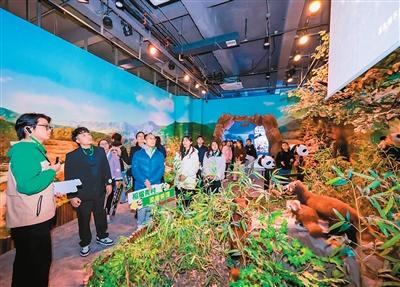
据新华社福州电(记者邓倩倩)大熊猫"荣耀"趴在木架旁慵懒地舒展身姿,"艾伦"悠闲地啃着翠绿竹 叶,双胞胎大熊猫"启程"和"启航"在园区内追逐嬉戏,吸引参观者不断拍照留影。日前,40名榕台青年 走进新近开放的福州熊猫世界,近距离观赏大熊猫,探寻两岸共同守护大熊猫的动人故事。 走进大熊猫科普馆,柔和的灯光照亮了一幅幅承载着两岸情谊的珍贵影像。讲解员介绍,大陆赠台大熊 猫"团团"患病期间,福州熊猫世界毫无保留地分享了珍贵治疗经验,为台北动物园的救治提供关键技术 支撑。 《人民日报海外版》(2026年02月14日 第 04 版) "榕台协作治疗大熊猫'团团'的故事,让我真切感受到两岸同胞间守望相助的真挚情谊。"台湾青年龚钰 婷感慨道,"今天亲眼见到这些可爱的大熊猫,聆听两岸专家同心协力、守护生命的故事,正是两岸融 合发展最生动而美好的模样。" 台青洪阡嫚说:"大熊猫不仅是珍贵的动物瑰宝,更是联结两岸的友好使者。两岸同胞对美好事物的热 爱是相通的,这份共同的情感正是我们携手前行的坚实基础。" 此次参访是福州市"榕耀青村"品牌系列活动之一。参观结束后,福州市青年创业促进会项目部负责人为 台湾青年深入解读2026年福州市最 ...

山西邀客“游购乡村 晋享中国年”
Xin Lang Cai Jing· 2026-02-10 23:13
本报讯(王文华)由山西省文化和旅游厅主办的"游购乡村 晋享中国年"活动近日在高平启动。活动通 过好物展示与沉浸式体验,为市民游客打造了一场集观赏、娱乐、消费于一体的新春文旅盛宴。 (来源:中国旅游报) 转自:中国旅游报 活动现场,市民游客跟着面塑传承人捏制生肖马造型,向剪纸传承人学习剪窗花,了解传统年俗。晋南 威风锣鼓、高平板书等非遗表演轮番登场,尽显三晋文化魅力。云丘山等景区代表纷纷展示康养产品, 介绍新春年俗活动,并推出优惠套票,为市民游客假期出行提供多元选择。 据介绍,此次活动依托喜镇苏庄的乡村文化空间,将物产展销、文化体验、旅游推介和年俗庆典有机结 合,旨在进一步推进乡村旅游提质增效。活动通过"白+黑"模式,延长体验时段,白天以展销、互动体 验为主,夜间可赏灯会、品高平特色美食,从视觉、听觉、嗅觉、味觉、触觉等多维度为市民游客带来 丰富体验。 活动主场地设在喜镇苏庄广场。现场,明清古建错落有致,大红灯笼高悬,处处是浓浓的年味。乡村文 创、非遗手工、特产美食、旅游产品等主题展区汇聚了山西省各地市的千余款乡村好物,吸引众多市民 游客驻足选购。 ...
数字经济赋能乡村文化高质量发展
Xin Lang Cai Jing· 2026-01-16 16:00
Core Viewpoint - The integration of digital economy into rural cultural ecology is essential for revitalizing cultural confidence, awakening local memories, and stimulating industrial vitality in the context of China's modernization and rural revitalization strategies [1] Group 1: Digital Empowerment of Rural Cultural Resources - Digital technology addresses the preservation challenges of traditional rural cultural resources by creating permanent backups and structured analyses through high-precision digitization methods [2] - Techniques such as 3D laser scanning and multispectral imaging enable the digital replication of cultural heritage, transforming physical forms into computable, storable, and retrievable digital assets [2] Group 2: Globalization of Rural Culture through Media - The digital economy era's media matrix breaks the traditional one-way communication structure, allowing rural culture to gain a decentralized and interactive dissemination ecosystem [3] - Algorithms and social platforms facilitate precise distribution of rural cultural content based on user interests, overcoming geographical and media limitations [3] Group 3: Innovation in Rural Cultural Industry - E-commerce models are pivotal in transforming cultural resources into market value, addressing the "supply without demand" issue faced by traditional handicrafts and specialty agricultural products [4] - E-commerce platforms not only serve as sales channels but also guide production through consumer data analysis, enabling rural producers to align with market trends and develop culturally rich products [4] Group 4: Immersive Experiences in Rural Tourism - The rise of immersive technologies like virtual reality and augmented reality is reshaping rural tourism consumption, moving beyond traditional sightseeing to deeper cultural experiences [5] - These technologies allow for the presentation of historical scenes and cultural rituals, transforming visitors from passive observers to active participants, thus extending the consumption chain and enhancing the value of rural tourism [5] Conclusion - The digital economy is fundamentally transforming rural cultural revitalization by activating cultural vitality through technological rationality and reshaping cultural productivity through industrial logic [6] - The emergence of new business models like rural e-commerce and immersive tourism represents a dialectical unity of cultural and economic value, turning cultural resource advantages into competitive advantages [6]
培育乡村新产业新业态要打好“四张牌”
Xin Lang Cai Jing· 2025-12-30 23:17
Core Viewpoint - The modernization of agriculture and rural areas is crucial for China's overall modernization, and cultivating new industries and business formats in rural areas is an effective way to create new economic momentum and development models [1] Group 1: Regional Characteristics - Different regions in China have significant disparities in natural resources, location, industrial foundation, and human capital, necessitating a tailored approach to rural industrial development to avoid homogenization [2] - It is essential to assess local resources and capabilities accurately, highlighting strengths and addressing weaknesses to inform future industrial development directions [2] - Strategies should be categorized based on market principles, with government playing a precise role in policy implementation, such as developing specialty agricultural clusters in resource-rich areas [2] Group 2: Technological Empowerment - Emphasizing technological innovation is key to attracting advanced production factors and fostering new industries and business formats in rural areas [3] - Strengthening agricultural technology innovation and accelerating the transformation of technological achievements into productive forces is vital for enhancing agricultural productivity [3] - The development of smart agriculture and digital services is crucial for improving rural marketing capabilities and creating a comprehensive technology-application ecosystem [3] Group 3: Cultural and Tourism Integration - Deep decoding and revitalization of rural culture can enhance the integration of culture and industry, making rural business formats more relatable and appealing [4] - Creating rural cultural IP by preserving authentic local culture and innovating through digital arts and products can attract new consumer flows [4] - Promoting multi-industry integration in rural areas, such as agriculture, culture, and tourism, can develop diverse and engaging rural tourism experiences [4] Group 4: Policy Support and Services - Optimizing the rural business environment and innovating the combination of human, capital, and land resources is essential for achieving production function upgrades [5] - Establishing a talent service system for young entrepreneurs in rural areas can attract and retain talent, fostering a new generation of rural leaders [5] - Financial services should be improved to support rural industries, including the establishment of development funds and innovative financial products tailored to local needs [5][6]