
云桥跨境

Search documents
数币在跨境金融中的优势
Sou Hu Cai Jing· 2026-01-20 19:14
Group 1 - The core advantage of digital currency in cross-border finance is the significant improvement in settlement efficiency, allowing for near real-time fund transfers and accelerating capital turnover for enterprises [4][10] - Digital currency applications help reduce various fees and exchange costs associated with traditional cross-border payments, optimizing financial expenditures for businesses [4][10] - The use of smart contracts enhances the transparency, security, and automation of cross-border fund flows, while also aiding in the establishment of a credit system based on real data, improving the cross-border financing environment for small and medium-sized enterprises [5][7][10] Group 2 - Digital currency provides greater financing opportunities for cross-border trade enterprises, particularly small and medium-sized businesses, by lowering financing thresholds and costs through improved credit evaluation models [7][10] - The application of digital currency contributes to the construction of a more comprehensive financial service ecosystem, integrating various services such as financing, insurance, and logistics, thereby supporting enterprises in navigating international trade challenges [8][10]


出海经验分享
Sou Hu Cai Jing· 2025-12-28 08:15
Group 1 - The core viewpoint emphasizes the increasing interest of companies, especially SMEs, in exploring overseas markets, while highlighting the challenges associated with cross-border operations due to varying market environments, regulations, and processes [1] Group 2 - Thorough preparation and market research are crucial before entering an overseas market, which includes understanding local consumer preferences, business culture, legal regulations, industry standards, competitive landscape, and potential partners [3] - Engaging in professional international exhibitions can provide direct access to potential customers and partners, as well as insights into industry dynamics and market demands [3] Group 3 - Understanding and effectively utilizing cross-border financial service tools is essential, as traditional payment methods may pose challenges such as long transaction times and high fees [4] - Financial technology platforms, like "Yunqiao Cross-border," offer optimized solutions for SMEs, integrating various functions to support businesses throughout their international operations [4][5] - New payment tools, such as digital RMB, can enhance transaction speed and reduce costs, improving cash flow management for enterprises [4] Group 4 - Establishing localized operations and risk management systems is vital for successful overseas expansion, requiring not just language translation but also product adaptation, marketing strategies, customer service, and team management [6] - A systematic risk management framework is necessary to address diverse risks such as currency fluctuations, payment defaults, legal disputes, cultural conflicts, and logistics delays [8] - Companies should proactively identify risk points and develop corresponding strategies, such as purchasing credit insurance and seeking legal advice to protect their interests [8] Group 5 - Key takeaways for companies looking to expand internationally include the importance of in-depth market research and preparation, mastery of modern cross-border financial tools, and the establishment of a robust risk management framework [8]
一站式贸易金融服务平台
Sou Hu Cai Jing· 2025-12-18 23:43
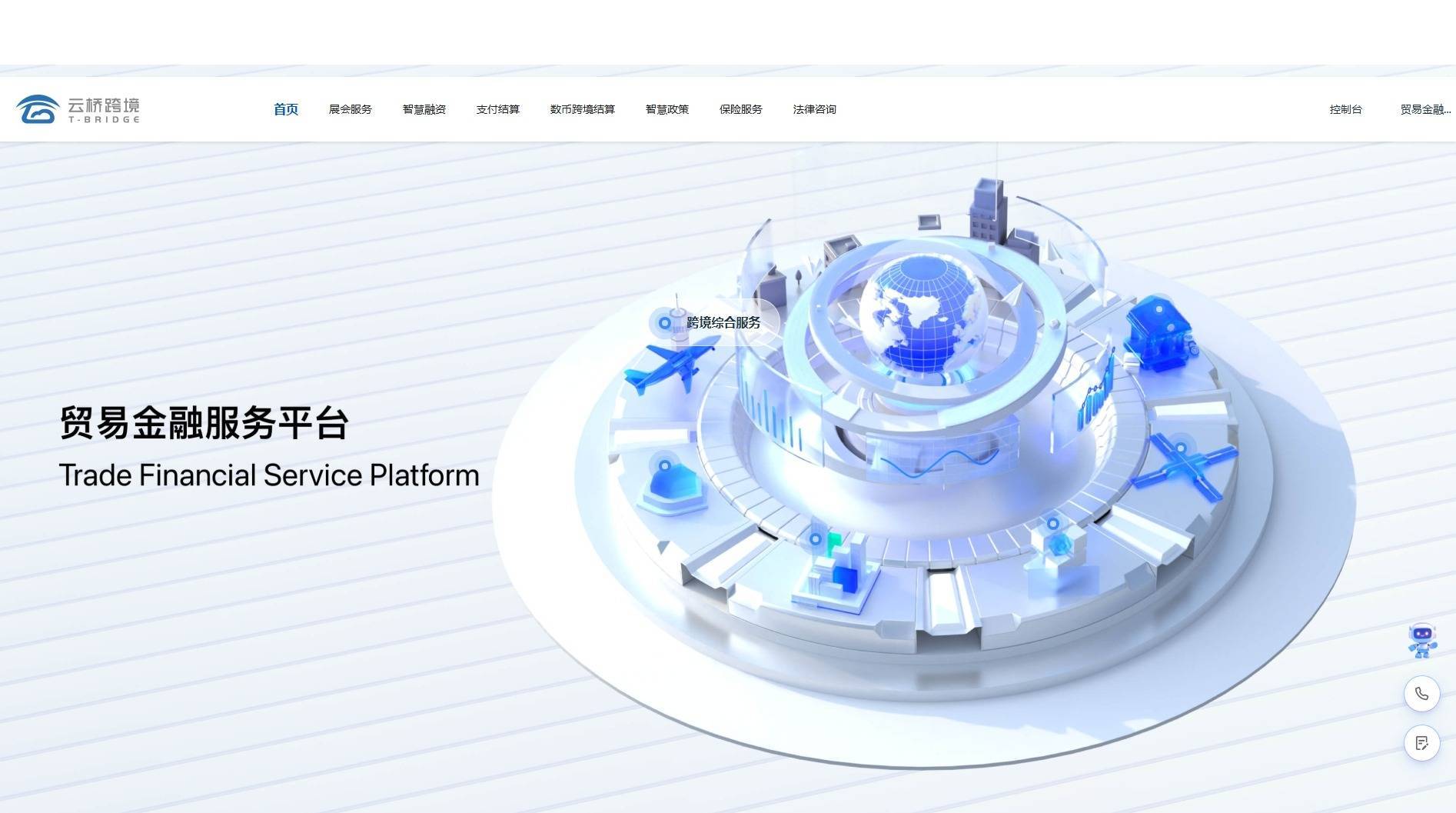
Core Insights - The emergence of one-stop trade finance service platforms aims to systematically address various challenges faced by small and medium-sized foreign trade enterprises, streamlining complex processes in cross-border trade [1] Group 1: Comprehensive Service Matrix - A mature one-stop platform, such as "Yunqiao Cross-Border," offers a broad and deep service matrix, covering multiple aspects of trade, including smart financing, exhibition services, payment settlement, digital RMB cross-border settlement, insurance support, and comprehensive cross-border services [3] Group 2: Full Lifecycle Service Concept - The platform's services are designed around the entire lifecycle of a business's international expansion, providing support from the preparation phase through to the upgrading phase [5][6] - Preparation Phase: Offers exhibition information services and assists in applying for relevant exhibition subsidies [6] - Execution Phase: Provides smart financing, convenient payment, and insurance services to support ongoing trade activities [6] - Upgrading Phase: Addresses higher demands for fund settlement efficiency and complex cross-border services as businesses grow [6] Group 3: Technological Features - The platform leverages the characteristics of digital RMB, particularly its smart contract functionality, to enhance the security and efficiency of fund usage while reducing operational costs [8] Group 4: Targeted Financing Solutions - One-stop platforms innovate financing solutions by developing evaluation models tailored to the foreign trade industry, which consider trade flows and credit history, helping to lower financing barriers for enterprises [9] Group 5: Optimization of Cross-Border Settlement Models - New cross-border settlement methods using digital RMB offer advantages over traditional SWIFT systems, such as same-day fund availability and reduced transaction fees, enhancing financial efficiency for enterprises [10] Group 6: Comprehensive Cross-Border Service Ecosystem - A true one-stop platform integrates a wide range of non-financial cross-border service resources, including background checks on overseas buyers, international legal consulting, logistics coordination, and intellectual property management, to help businesses navigate non-financial challenges in international trade [11]
国际打款结算
Sou Hu Cai Jing· 2025-12-07 00:07
Core Insights - International remittance settlement is an essential part of cross-border trade, involving the transfer and clearing of funds between different countries or regions [1][3] - The evolution of international remittance methods provides businesses with more diversified options as global economic ties become increasingly close [1] Summary of Key Points 1. Basic Concept of International Remittance Settlement - International remittance settlement refers to the currency payment behavior completed through banks or other financial institutions, involving currency exchange and the transfer of funds from the payer's account to the payee's account [3] - The core goal is to ensure the safe and efficient arrival of funds at the designated account while reducing transaction costs and exchange rate risks [3] 2. Main Settlement Methods and Their Characteristics - **Wire Transfer**: A common method that allows for relatively fast processing but may incur certain fees and exchange rate differences [4] - **Letter of Credit**: Widely used in international trade, providing high transaction security but requiring a complex process with complete documentation [4] - **Collection**: Involves the seller entrusting the bank to collect payment from the buyer, balancing risk but potentially leading to longer fund arrival times [4] - **Emerging Platforms**: New settlement channels based on digital technology are emerging, optimizing settlement processes and improving fund circulation efficiency [4][5] 3. Factors Affecting the Efficiency of International Remittance Settlement - Financial regulatory policies in different countries can impact the speed and cost of fund transfers, making it essential for businesses to understand relevant regulations [6] - Currency exchange is a necessary part of international remittance, with exchange rate fluctuations affecting the final amount received [6] - The technical level and processing capabilities of settlement channels directly influence the speed of fund arrival [6] - The size of the transaction can affect the choice of settlement method and associated costs [6] 4. Considerations During the Settlement Process - Ensuring accurate recipient information is crucial to avoid delays or returns of funds [6] - Understanding the composition of various fees, including transaction fees and exchange costs, is important [6] - Monitoring fund arrival times is necessary to select the appropriate settlement method based on business needs [6] - Keeping complete transaction records and receipts is essential for future inquiries and reconciliations [6] 5. Impact of Emerging Technologies on International Remittance Settlement - Platforms like "Cloud Bridge Cross-Border" utilize digital RMB for cross-border settlements, offering alternatives to traditional payment methods, including same-day fund arrival and no transaction fees [7] - The platform employs smart contract technology for automated processing in various areas, enhancing transparency and efficiency [7] - It integrates various cross-border services, forming a comprehensive ecosystem to help businesses navigate international trade challenges [7] 6. Factors to Consider When Choosing Settlement Methods - Businesses should consider security, efficiency, cost, and convenience when selecting international remittance methods [8] 7. Future Development Trends - The international remittance settlement sector is continuously evolving, with technological advancements promising faster and lower-cost solutions [9] - Optimized regulatory environments will enhance cross-border payment efficiency [9] - The diverse needs of businesses for settlement services will drive innovation among service providers [9] 8. Role of Financial Service Platforms - Financial service platforms will play a crucial role by integrating resources and optimizing processes to provide comprehensive cross-border financial solutions [11] - The development of these platforms will help reduce operational costs for businesses and improve fund utilization efficiency [11] 9. Importance of International Remittance Settlement - International remittance settlement is a vital foundation supporting global trade, with methods continuously evolving to meet market demands [13] - Businesses need to choose suitable settlement channels based on their needs and stay updated on industry trends to manage cross-border fund flows effectively [13]
专属融资方案
Sou Hu Cai Jing· 2025-11-20 00:20
Core Insights - The article emphasizes the need for businesses to design financing solutions tailored to their specific characteristics due to the diverse funding requirements in the current business environment [1] Financing Demand Analysis - Businesses must clearly define their funding needs, including the purpose, amount, duration, and repayment capacity before seeking financing [2] - Different industries have varying cash flow requirements, with trade companies typically needing short-term liquidity and manufacturing firms focusing on long-term investments [2] Financing Channel Comparison - Common financing channels include bank loans, commercial factoring, and leasing, each with distinct characteristics [3] - Bank loans are generally more regulated but may have longer approval times, while commercial factoring is suitable for companies with stable trade relationships [3] Financing Plan Design Key Points - A comprehensive financing plan should consider the alignment of financing terms with the business cycle, cost control, and repayment flexibility [4] - Short-term loans usually do not exceed one year, while medium to long-term loans may span multiple accounting periods [4] Risk Management Measures - Companies need to establish risk management mechanisms to address financial risks associated with financing activities, including market and credit risks [5] - Maintaining a reasonable debt level and diversifying financing sources are recommended to enhance resilience against market fluctuations [5] Supporting Services - In addition to financial support, businesses often require complementary services such as settlement, insurance, and logistics [6] - Platforms like Yunqiao Cross-Border provide integrated financial services for small and medium-sized cross-border trade enterprises, focusing on smart financing and digital currency applications [6][7] Plan Implementation and Adjustment - The implementation of financing plans should be dynamic, adapting to changes in business conditions and market environments [8] - Regular evaluations of the financing plan's effectiveness, including cost control and risk exposure, are essential [8] Long-term Funding Planning - Companies should incorporate financing strategies into their long-term development plans, focusing on stable banking relationships and maintaining good credit records [9] - As businesses grow, financing efforts should evolve from merely acquiring funds to optimizing financial management [9]