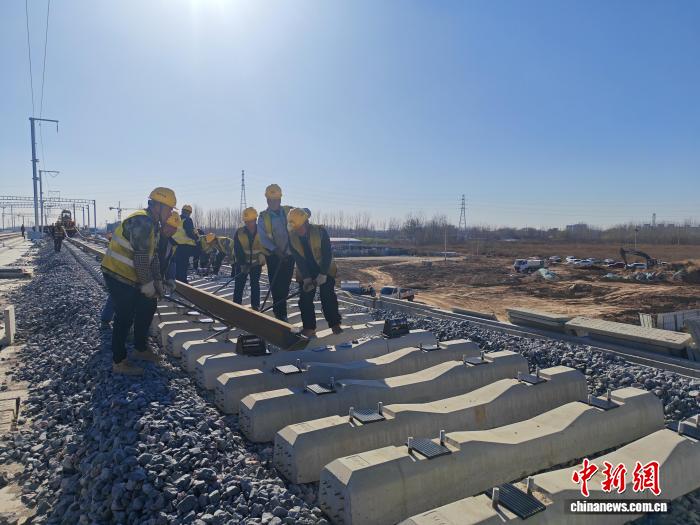
京港高铁雄商段

Search documents
“轨道上的京津冀”越织越密
Xin Lang Cai Jing· 2026-01-03 22:19
Core Insights - The China Railway Beijing Bureau Group Co., Ltd. has focused on serving national strategies and regional economic development since the start of the 14th Five-Year Plan, achieving significant results in expanding the railway network and improving transportation quality [1][2]. Group 1: Railway Network Expansion - During the 14th Five-Year Plan, the railway network layout has been continuously optimized, with an addition of 710 kilometers of operational railway, bringing the total operational mileage to 10,394.9 kilometers by the end of the plan, including 2,795.6 kilometers of high-speed rail and an electrification rate of 85.4% [1]. - Key high-speed rail projects, such as the Xiong'an-Shijiazhuang and Tianjin-Weifang lines, are under construction, further enhancing the regional high-speed rail backbone [1]. Group 2: Intercity Railway Development - The intercity railway network in the Beijing-Tianjin-Hebei region has been continuously optimized, with several lines like the Jing-Tang and Jing-Bin (Baodi to Beichen) now operational, creating a "four axes and eight radiations" railway layout [2]. - The region's major cities now have full coverage of high-speed and intercity rail services, establishing a 0.5-1 hour transportation circle between Beijing, Xiong'an, and Tianjin [2]. Group 3: Passenger Services Enhancement - By the end of the 14th Five-Year Plan, the scheduled passenger trains operated by the bureau reached 1,035 pairs, a 22.7% increase from the beginning of the period, with high-speed trains seeing a 68.8% increase [3]. - The coverage of train services in the Beijing-Tianjin-Hebei region now extends to 32 provincial-level administrative regions and 266 cities, significantly improving connectivity within the urban agglomeration [3].


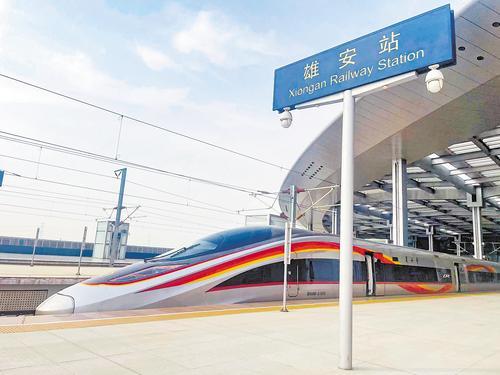
京雄城际铁路开通运营五周年 累计运送旅客超1300万人次
Zhong Guo Jing Ji Wang· 2025-12-31 07:45
Core Insights - The Beijing-Xiong'an Intercity Railway has been operational for five years, transporting over 13 million passengers and increasing train services from 32 to 59 daily, becoming a vital transportation link for the Beijing-Tianjin-Hebei coordinated development [1][2] Group 1: Operational Achievements - The railway has significantly improved service quality, addressing the "last mile" travel challenges by establishing real-time communication with Xiong'an Group's transportation company to optimize bus, taxi, and ride-hailing resources [1] - The railway connects key locations including Beijing West Station, Daxing Airport Station, and Xiong'an New Area, creating a multi-dimensional transportation network [1] Group 2: Future Developments - The upcoming opening of the Tianjin-Xiong'an Intercity Railway will connect with the Beijing-Xiong'an line at East Gu'an, enhancing the high-speed rail corridor between Beijing and Tianjin [2] - Future expansions, such as the Beijing-Hong Kong high-speed rail's Xiong'an section and the Xiong-Xin high-speed rail, will further integrate Xiong'an with East China, South China, and Central regions, emphasizing the railway's growing importance in the network [2]
全线累计运送旅客超1300万人次
Xin Lang Cai Jing· 2025-12-27 21:47
Core Insights - The Beijing-Xiong'an Intercity Railway has transported over 13 million passengers in its first five years of operation, highlighting its significance as a transportation link between Beijing and the Xiong'an New Area [3][4] - The number of trains operating daily has increased from 32 to 59, indicating a growing demand for this transportation service [3] - The railway has enhanced service quality, including the establishment of a dedicated service team for vulnerable passengers, which has assisted nearly 7,000 individuals and recovered over 2,500 lost items [3] Group 1 - The railway connects key locations including Beijing West Station, Daxing Airport Station, and Xiong'an Station, forming an integrated transportation network [3] - The fastest travel time from Xiong'an Station to Daxing Airport is now 19 minutes, providing efficient options for business travel and international connections [3] - Daxing Airport Station has implemented service upgrades, including improved signage and free charging facilities, to enhance passenger experience [4] Group 2 - The upcoming opening of the Tianjin-Xiong'an Intercity Railway at the end of 2023 will create an additional high-speed rail link between Beijing and Tianjin [4] - Future connections, such as the Beijing-Hong Kong High-Speed Railway and the Xiong-Xin High-Speed Railway, will further integrate Xiong'an with various regions, enhancing its role in the national rail network [4]
京港雄商段铺轨收官 为京津冀协同注入“铁动力”
Zhong Guo Jing Ji Wang· 2025-12-22 06:58
Core Viewpoint - The successful completion of the rail laying for the Beijing-Hong Kong High-Speed Railway Xiongshan section marks a significant milestone in China's ambitious "Eight Vertical and Eight Horizontal" high-speed rail network, enhancing regional connectivity and economic development [1][3]. Group 1: Project Completion and Significance - The final pair of 500-meter long steel rails has been successfully laid in Qinghe County, Xingtai City, Hebei Province, completing the track laying for the Xiongshan section of the Beijing-Hong Kong High-Speed Railway [1]. - The Xiongshan section, which spans 552 kilometers and is designed for speeds of up to 350 kilometers per hour, will connect key cities in the Beijing-Tianjin-Hebei region, facilitating closer ties and collaborative development among them [1][3]. Group 2: Technological Innovations in Construction - The construction process has utilized a "dual-machine collaborative" operation model, significantly improving track laying efficiency and creating a streamlined workflow [2]. - Advanced welding technology for switches has been employed to ensure precision in rail welding, enhancing the smoothness of high-speed train operations [2]. - An intelligent engineering scheduling information platform has been implemented for real-time monitoring and management of construction safety and quality, showcasing the integration of innovative technologies in high-speed rail construction [2]. Group 3: Economic and Social Impact - The opening of the Xiongshan section is expected to inject strong momentum into the coordinated development of the Beijing-Tianjin-Hebei region, facilitating rapid movement and efficient allocation of talent, materials, and information [3]. - For the Xiong'an New Area, the high-speed railway will play a crucial role in establishing a modern transportation hub, supporting the relocation of non-capital functions from Beijing, and promoting the agglomeration of high-end industries [3]. - The railway's operation will enhance travel convenience, break down spatial barriers, and foster more frequent exchanges and cooperation among cities, contributing to high-quality economic development in China [3].
我国“八纵八横”铁路网越织越密
Xin Lang Cai Jing· 2025-12-21 07:20
Group 1: Beijing-Hong Kong High-Speed Railway (京港高铁) - The completion of the track laying for the Xiongshan section of the Beijing-Hong Kong High-Speed Railway marks a significant milestone, connecting various regions and forming a new north-south high-speed rail corridor in China [2][3] - The Xiongshan section, which spans 552 kilometers and is designed for a speed of 350 km/h, employs an innovative "dual-machine collaboration" construction model, improving track laying efficiency by 40% to 50% [2] - Advanced welding technology and a smart engineering scheduling platform have been implemented to ensure high precision and safety in the construction process, enhancing the overall operational reliability of the railway [2] Group 2: Baoyin High-Speed Railway (包银高铁) - The Baoyin High-Speed Railway, which connects Baotou and Yinchuan, has achieved full-line operation with the opening of the Baotou to Huinong section, covering a total length of 519 kilometers and designed for a speed of 250 km/h [4][5] - The newly opened section includes 10 stations, with travel times significantly reduced; for instance, the journey from Baotou to Huinong takes approximately 2 hours and 7 minutes, cutting down travel time by over 2 hours compared to conventional trains [4] - The Baoyin High-Speed Railway plays a crucial role in the national "eight vertical and eight horizontal" high-speed rail network, enhancing connectivity in Inner Mongolia and facilitating regional economic development [5] Group 3: Guangzhou-Zhanjiang High-Speed Railway (广湛高铁) - The Guangzhou-Zhanjiang High-Speed Railway is set to open, connecting major cities and significantly reducing travel time, with the fastest journey from Guangzhou to Zhanjiang taking just 1 hour and 32 minutes [7] - The railway spans 401 kilometers and is designed for a speed of 350 km/h, with an initial operation plan of up to 64 train services daily [7] - The implementation of a flexible pricing mechanism aims to support regional economic growth and improve accessibility within the Guangdong-Hong Kong-Macau Greater Bay Area [7]
京港高铁雄商段完成正线铺轨
Xin Lang Cai Jing· 2025-12-21 00:07
Core Viewpoint - The successful completion of the track laying for the Xiong-Shang section of the Beijing-Hong Kong High-Speed Railway marks a significant milestone, ensuring the line will open on schedule and strengthen the high-speed rail network in China [1] Group 1: Project Overview - The Xiong-Shang section of the Beijing-Hong Kong High-Speed Railway spans 552 kilometers, with a designed speed of 350 kilometers per hour, and construction began in October 2022 [1] - This section connects key cities including Xiong'an, Cangzhou, Hengshui, Xingtai, Liaocheng, Jining, Heze, and Shangqiu, forming an important part of China's "eight vertical and eight horizontal" high-speed rail network [1] Group 2: Strategic Importance - The completion of the Xiong-Shang section will enhance the connectivity of the Beijing-Tianjin-Hebei rail transit network, supporting the national strategy for coordinated development in the Beijing-Tianjin-Hebei region [1] - The line will also facilitate the construction of the Xiong'an New Area and promote economic and social development along the route [1] Group 3: Connectivity - The Xiong-Shang section has achieved interoperability with the Shijiazhuang-Jinan Passenger Dedicated Line, allowing trains from this section to transfer at Hengshui North Station [1]
“八纵八横”京港通道有新进展
Xin Lang Cai Jing· 2025-12-19 19:25
Core Points - The completion of the track laying for the Xiongshan section of the Beijing-Hong Kong High-Speed Railway marks a significant milestone, ensuring the line will open on schedule [1] - The Xiongshan section is a crucial part of China's "Eight Vertical and Eight Horizontal" high-speed railway network, enhancing the rail transit system in the Beijing-Tianjin-Hebei region [1] - The project is expected to play an important role in the development of the Xiong'an New Area and the economic and social growth of the surrounding areas [1]
一批重大交通工程建设捷报频传 “人畅其行、货畅其流”美好愿景正逐步变为现实
Yang Shi Wang· 2025-12-19 10:06
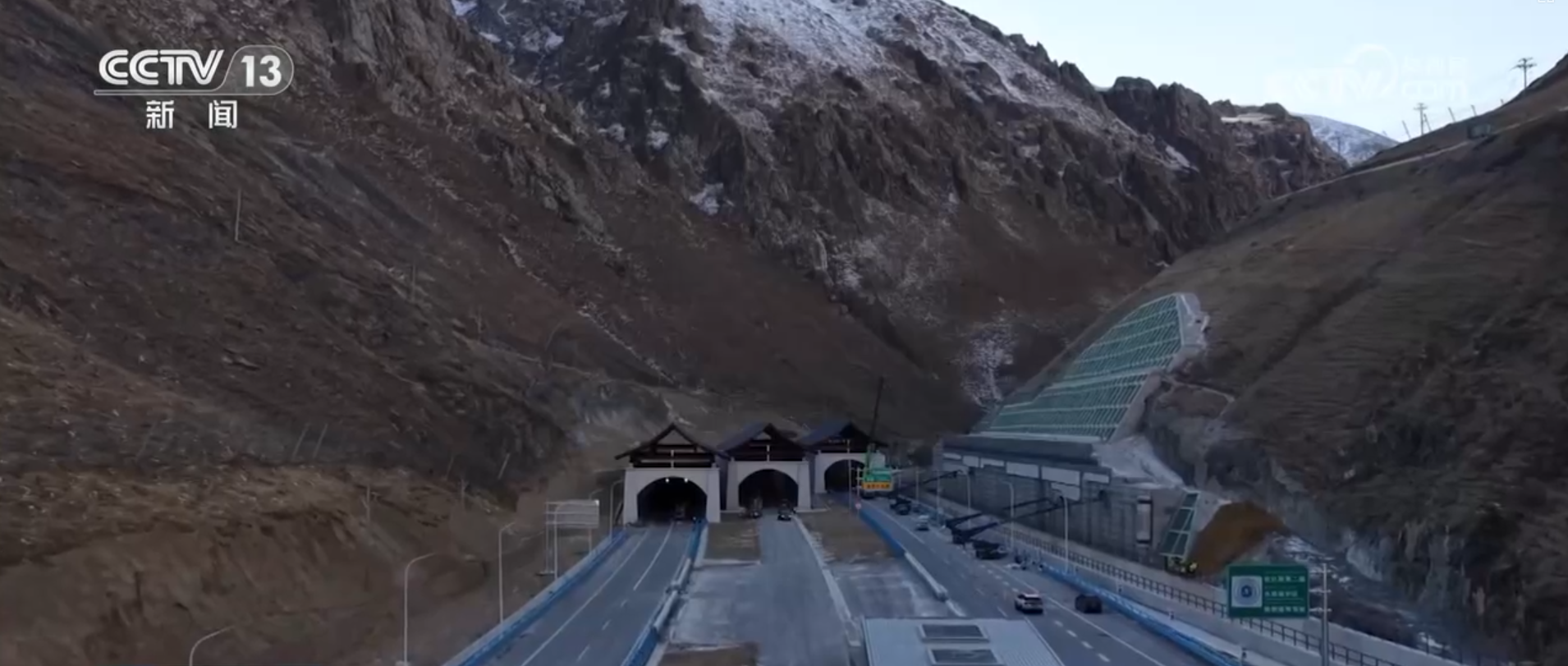
Core Viewpoint - The Urumqi to Baluntai section of the Wuwei Expressway has passed the acceptance inspection and is ready for operation, marking a significant infrastructure development in Xinjiang [1][5]. Group 1: Project Overview - The Wuwei Expressway project commenced construction in 2020 and began acceptance testing in September of this year [3]. - The project includes complex geological conditions, with a high ratio of bridges and tunnels, particularly the Tianshan Victory Tunnel, which is the longest expressway tunnel in the world [7][8]. Group 2: Acceptance and Quality Assessment - The acceptance committee evaluated the project and deemed the engineering quality to be qualified, allowing for the official acceptance report to be issued [5]. - The Urumqi to Baluntai section is noted as the most technically demanding segment of the entire expressway due to its challenging terrain [8]. Group 3: Economic and Logistical Impact - Once operational, the Wuwei Expressway will connect the "Northern Xinjiang Urban Belt" with the "Southern Xinjiang Urban Cluster," facilitating trade logistics and cultural tourism between the regions [10]. - The expressway will also link with major highways such as the Beijing-Xinjiang Expressway and the Lianhuo Expressway, enhancing connectivity between China's eastern economic zone and Eurasian countries [10].
京港高铁雄商段山东境内正线铺轨贯通
Zhong Guo Xin Wen Wang· 2025-11-28 09:21
Core Viewpoint - The successful completion of the rail laying for the Xiong'an to Shangqiu section of the Beijing-Hong Kong High-Speed Railway in Shandong marks a significant milestone, transitioning the construction focus from Shandong to Henan, and setting the stage for the entire line's completion by the end of the year [1][3]. Group 1: Project Progress - The rail laying operation has passed through eight stations including Liaocheng, Heze East, and Yuncheng, with a total of 532 kilometers of track laid, accounting for 93% of the total rail laying work [3][4]. - The Yuncheng rail laying base has been operational for 88 consecutive days, employing a "direct laying + side laying" simultaneous advancement model [3]. Group 2: Project Management and Safety - The construction team has implemented a scientific scheduling approach, integrating self-built labor teams and innovating a mechanism of "own workers + cooperative teams + temporary workers" to optimize the construction process [3]. - A special task force has been established to address technical challenges, ensuring precision and quality in rail laying while maintaining a zero-accident safety record throughout the project [3][4]. Group 3: Technological Advancements - The project utilizes intelligent equipment, including smart cranes capable of automatic rail handling, and a real-time monitoring system to enhance operational efficiency and standardization [4]. Group 4: Economic and Social Impact - Upon completion, the Xiong-Shang section will enhance the rail transport network in the Beijing-Tianjin-Hebei, Central Plains, and South China regions, facilitating regional economic development and resource sharing [4].