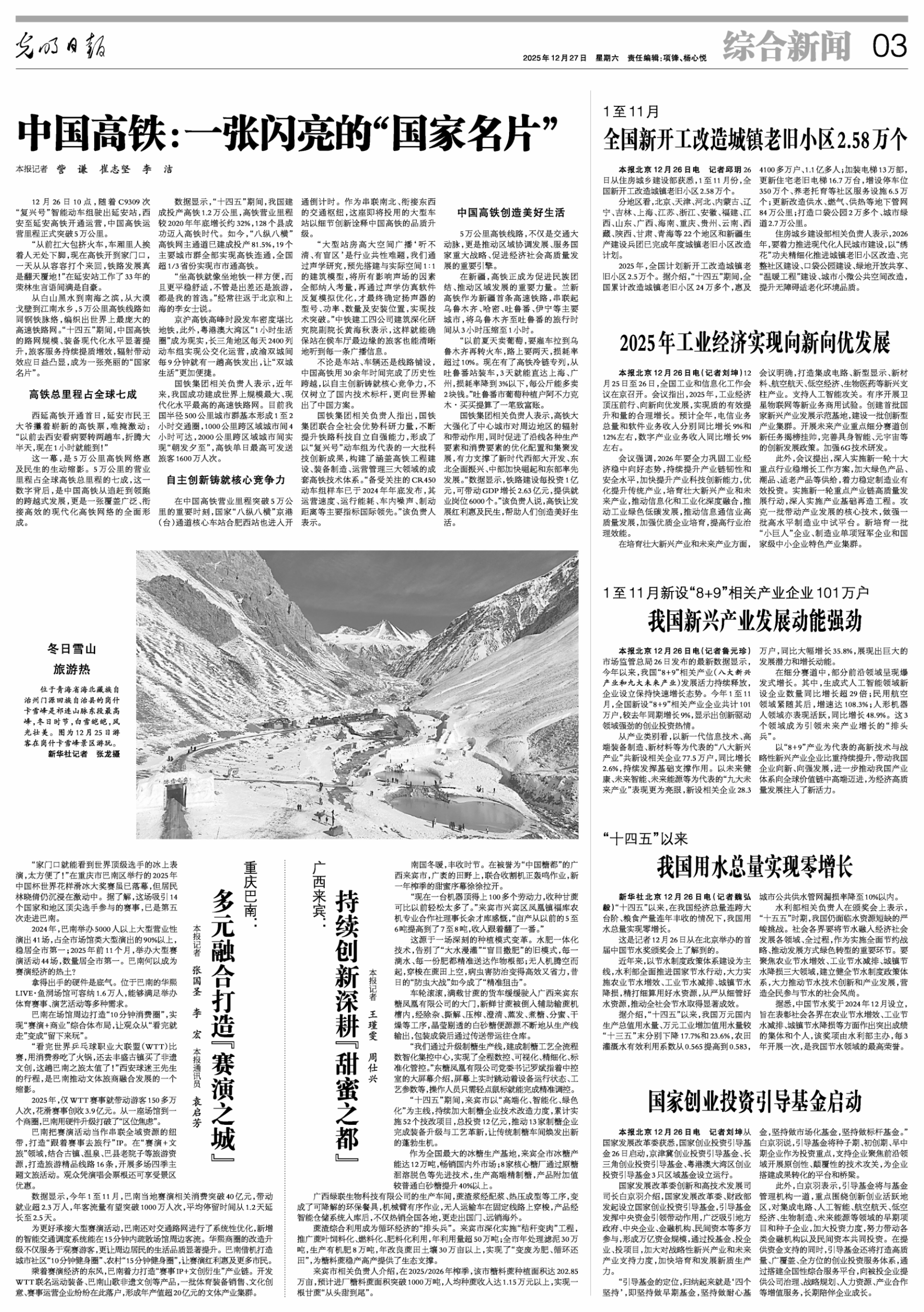
复兴号智能动车组

Search documents
(新春见闻)从北京到长白山——G3551次的“慧心”守护
Zhong Guo Xin Wen Wang· 2026-02-13 08:07
Core Viewpoint - The G3551 train, part of the Beijing-Harbin high-speed railway, exemplifies the commitment of the Shenyang Passenger Segment to service excellence during the Spring Festival travel season, showcasing innovative service methods like the "Colorful Ribbon" service approach developed by train conductor Wang Baihui [2][4][6]. Group 1: Service Innovation - The "Colorful Ribbon" service method uses different colored ribbons to create a "silent green channel" for key passengers, enhancing their travel experience [2][4][6]. - Wang Baihui, the train conductor, leads the implementation of this service innovation, demonstrating a proactive approach to customer service [8][10][12]. Group 2: Operational Details - The G3551 train departs from Beijing Chaoyang Station and heads towards Changbai Mountain Station, operating on the high-speed rail line [2][4][6]. - The train is operated by the Shenyang Passenger Segment of China Railway Shenyang Group, utilizing the Fuxing intelligent train model [2][4][6]. Group 3: Commitment to Service - The operation of the G3551 train reflects the motto "People's Railway for the People," emphasizing the dedication of the railway service to its passengers [2][4][6]. - The service provided during the Spring Festival is a testament to the enduring spirit of customer care within the railway industry [8][10][12].


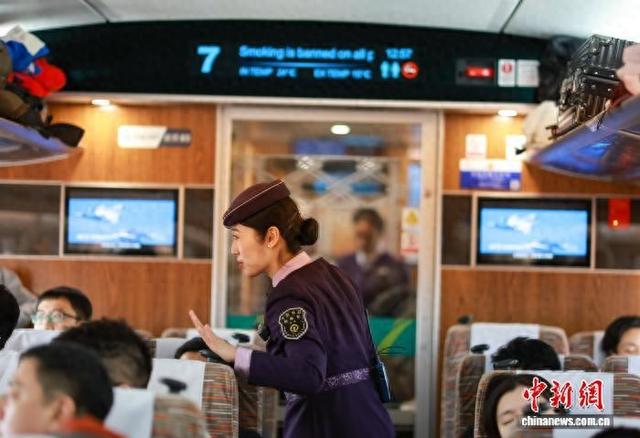
95亿人次超级春运登场!高铁如何为区域经济接住这波流量?
2 1 Shi Ji Jing Ji Bao Dao· 2026-02-06 07:47
Core Insights - The Spring Festival travel rush in 2026 is expected to see a record 9-day holiday, with an estimated 9.5 billion trips across the country, marking a historical high in passenger flow [1] - The high-speed rail network is significantly enhancing regional economic development by facilitating efficient movement of people, capital, and technology, thus promoting urban-rural integration and regional collaboration [1][9] Group 1: Passenger Flow and Travel Trends - The 2026 Spring Festival travel period, from February 2 to March 13, is projected to break historical records in passenger flow, with major urban areas optimizing railway services to ensure smooth travel for passengers [2] - The Shanghai Railway Group anticipates sending over 10.3 million passengers during the Spring Festival, a 4% increase from the previous year, with daily averages reaching 2.575 million [5] - In the Beijing-Tianjin-Hebei region, the expected passenger flow is 41.47 million, reflecting a 2.5% increase compared to 2025 [5] Group 2: Infrastructure Improvements - Guangzhou Station has undergone significant upgrades to enhance passenger experience, including improved access and integration with urban transport systems [2] - Shenzhen North Station has implemented advanced security measures, including AI systems, to streamline passenger entry and enhance safety [4] - AI technology is being utilized in various stations, such as Beijing Chaoyang Station and Hangzhou East Station, to improve customer service and navigation for travelers [4][8] Group 3: Regional Economic Impact - The opening of new high-speed rail lines, such as the one connecting Zhanjiang North Station to Guangzhou, is expected to enhance connectivity and stimulate economic activity in the Guangdong-Hong Kong-Macao Greater Bay Area [9] - The integration of high-speed rail has led to the formation of a "2-hour living circle" in eastern Guangdong, significantly reducing travel times and boosting tourism and local economies [10] - The cumulative passenger flow on the Guangzhou-Shenzhen-Hong Kong high-speed rail reached 35.794 million in 2025, a 17.8% increase from the previous year, highlighting the growing importance of rail in regional tourism and economic development [10] Group 4: Tourism and Cultural Integration - The synergy between high-speed rail and tourism is evident, with new travel routes being developed to cater to cultural and entertainment events, enhancing the overall travel experience [12] - The launch of dedicated tourism trains, such as the "Leisure Tour" train in the Yangtze River Delta, reflects the growing trend of integrating rail travel with cultural tourism [12] - The opening of the Hangzhou-Wenzhou high-speed rail has led to increased visitor numbers to local attractions, demonstrating the positive impact of improved transport links on tourism [11]
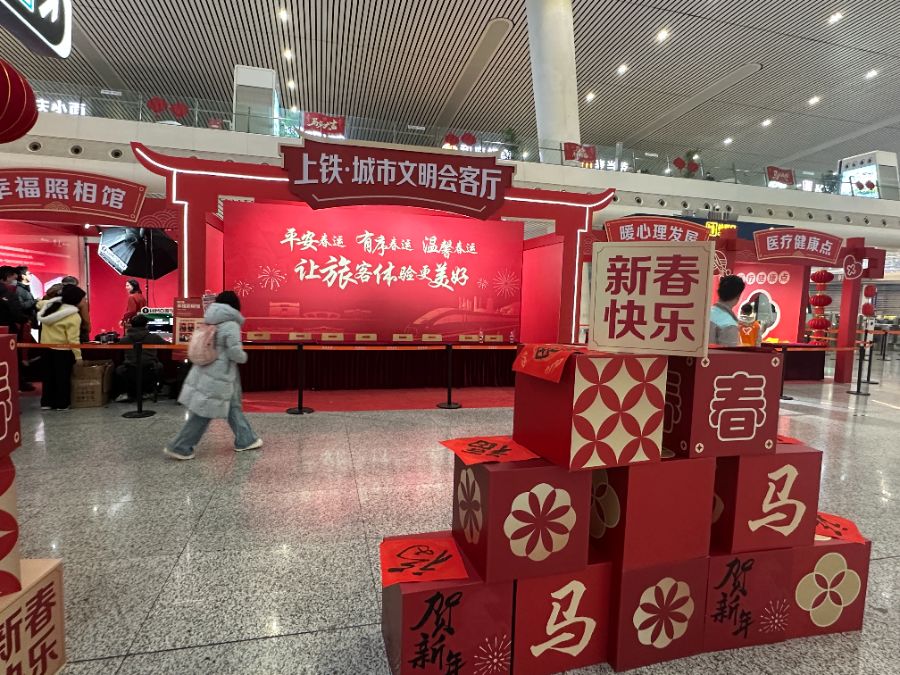
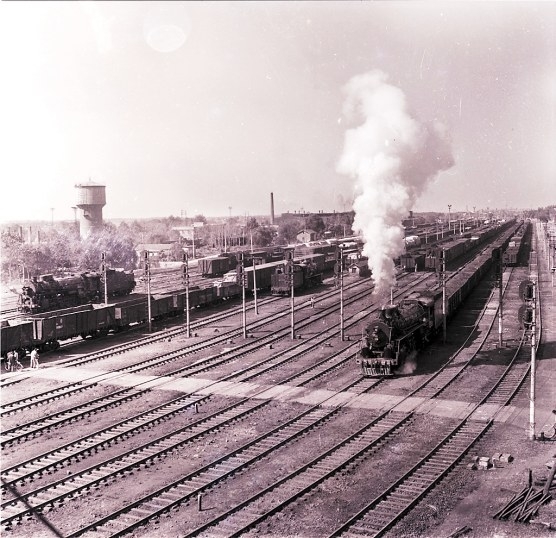
从“那时”到“这时”丨铁路从“米”到“环”再提速
He Nan Ri Bao· 2026-01-27 23:17
Core Viewpoint - The article highlights the significant transformation of the Zhengzhou railway hub, emphasizing the development of a "cross" high-speed rail network in Henan province, which enhances connectivity and supports economic growth in the region [4][5][6]. Group 1: Railway Development - Zhengzhou has evolved from a city reliant on steam locomotives to a modern hub with advanced high-speed trains, showcasing the dramatic changes in railway services over the years [4][5]. - The province has established a "cross" high-speed rail network, making high-speed rail stations accessible in all provincial cities, covering over 53% of the national population within a 3-hour travel radius [5][6]. Group 2: Economic Impact - The high-speed rail network facilitates direct connections between cities, allowing for resource sharing among various industries such as equipment manufacturing, new energy materials, modern food production, and deep processing of agricultural products [6]. - Projects like the Jiaozuo-Jiyuan and Pingdingshan-Luoyang high-speed rail lines are accelerating, with the potential to create a closed-loop network linking multiple cities, enhancing regional economic collaboration [6][7]. Group 3: Future Plans - The government work report for 2026 outlines plans to expedite the construction of several high-speed rail projects, including the Pingdingshan-Luoyang and Zhengzhou South Station lines, aiming to foster inter-city cooperation and economic development [7]. - The proposed circular high-speed rail line is expected to serve as a new engine for high-quality development in the Central Plains, promoting efficient movement of people, goods, and information within the region [7].
5万公里高铁织就中国发展新经纬
Yang Zi Wan Bao Wang· 2026-01-20 04:27
Core Insights - The article highlights the significant milestone of China's high-speed rail (HSR) network reaching over 50,000 kilometers, marking a new phase in connectivity for regions like Yan'an, a historical revolutionary area [1] - The development of the HSR network is portrayed as a transformative force for regional economic growth, social welfare, and innovation, serving as a vital link for various sectors [2][3] Group 1: HSR Network Development - The HSR network has evolved from a framework of "Four Verticals and Four Horizontals" to "Eight Verticals and Eight Horizontals," achieving rapid expansion and establishing a comprehensive and efficient transportation network across the country [1] - The HSR has drastically reduced travel times, enabling same-day travel across vast distances, thus facilitating urban commuting and regional integration [1] Group 2: Economic and Social Impact - The HSR acts as a catalyst for economic growth, enhancing the distribution of local agricultural products and boosting tourism in areas like Yan'an, where local specialties can now reach major markets [2] - In regions such as the Yangtze River Delta, the HSR fosters collaboration in high-end manufacturing and technological innovation, creating competitive industrial clusters [3] Group 3: Technological Advancements - The success of China's HSR is attributed to continuous technological breakthroughs and innovation, transitioning from reliance on foreign technology to independent research and development [4] - Advanced technologies such as CR450 trainsets and smart construction methods have improved the safety, speed, and comfort of HSR services, establishing a global reputation for Chinese high-speed rail [4] Group 4: Future Prospects - The article emphasizes that the HSR will continue to play a crucial role in promoting high-quality economic development and enhancing connectivity between urban and rural areas, as well as domestic and international markets [4]
从技术突破到经济赋能:5万公里高铁开启“十五五”新篇
Zhong Guo Jing Ying Bao· 2026-01-16 18:34
Core Insights - The opening of the Xi'an to Yan'an high-speed railway marks a significant milestone, pushing China's high-speed rail operational mileage to over 50,000 kilometers, maintaining its position as the world's leader in high-speed rail infrastructure [3][10] - The China National Railway Group has set a target of reaching 60,000 kilometers of high-speed rail by 2030, emphasizing the importance of innovation and technology in maintaining its competitive edge [3][15] Technological Advancements - China has transitioned from following to leading in high-speed rail technology, achieving breakthroughs in key core technologies and establishing international standards [4][5] - The Fuxing bullet train, developed entirely through domestic innovation, incorporates over 40,000 components, with 84% of its critical standards being Chinese [4][5] Economic Impact - The extensive high-speed rail network has significantly enhanced regional economic development, facilitating efficient movement of people, goods, and information, thus promoting balanced economic growth across various regions [6][10] - High-speed rail has transformed agricultural logistics, reducing transportation time and costs for perishable goods, thereby boosting local economies and agricultural productivity [7][8] Future Development Goals - The railway sector aims to deepen reforms and enhance safety and development strategies, with a focus on achieving a strong start for the 14th Five-Year Plan [13][15] - The introduction of the CR450 high-speed train, capable of reaching speeds of 400 kilometers per hour, represents a new era in high-speed rail technology, further solidifying China's leadership in this field [14][15] Market Dynamics - The high-speed rail network has stimulated growth in related industries such as tourism, hospitality, and retail, creating new business opportunities and enhancing consumer experiences [11][12] - The integration of high-speed rail into urban planning has led to the emergence of new economic corridors, facilitating resource optimization and urban development [12][15]
中车唐山公司:质量为基 坚守品质
Xin Lang Cai Jing· 2026-01-11 01:44
Group 1 - The establishment of the Hebei Provincial Rail Transit Product Quality Inspection and Testing Center in Tangshan is a significant development for local rail transit companies, providing convenient and cost-effective testing services [1] - The center is the first provincial-level rail transit product quality inspection center in Hebei, equipped with advanced testing equipment and a professional team, capable of conducting inspections on various performance parameters [1] - The center aims to address issues of high costs and difficulties in testing for local companies, enhancing the overall quality of the rail transit industry in the region [1] Group 2 - CRRC Tangshan Company has implemented a Chief Quality Officer system and developed a comprehensive quality management model known as "Dual Line, Four Controls, Three Capabilities," which is recognized as an industry benchmark [2] - The company has integrated digital welding technology in the production of the Fuxing intelligent EMU, significantly improving welding stability and precision through real-time monitoring [2] - The quality management process includes four key controls: planning, control, assurance, and improvement, creating a complete closed-loop management system [3] Group 3 - Advanced testing equipment is utilized in the production process to monitor product quality in real-time, allowing for the timely identification of potential quality issues [3] - The "Dual Line, Four Controls, Three Capabilities" quality management system effectively addresses challenges in project quality management and has initiated a preliminary digital transformation in quality control [3] - The company's product satisfaction rate has increased from 97.45% to 98.1%, reflecting its strong market recognition and the effectiveness of its quality management practices [4] Group 4 - CRRC Tangshan Company plans to continue innovating its quality management models and testing technologies to contribute to the development of China's rail transit sector [5]
高铁发展更上一层楼
Jing Ji Ri Bao· 2026-01-01 22:16
Core Viewpoint - The opening of the Xi'an to Yan'an high-speed railway marks a significant milestone as it brings the revolutionary old area of Yan'an into the "high-speed rail era," contributing to China's high-speed rail network exceeding 50,000 kilometers, thus elevating the development of high-speed rail to a new level [1] Group 1: Macro Planning - There is a need for forward-looking optimization of the national comprehensive transportation network layout based on the high-speed rail expansion, enhancing the support of high-speed rail lines for regional development strategies [1] - The goal is to guide the efficient aggregation of production factors through this optimized layout [1] Group 2: Regional and Industrial Development - Local governments are encouraged to deeply integrate regional industrial planning and urban function upgrades into the national high-speed rail economic map [1] - This integration aims to promote a new pattern of complementary advantages and coordinated development [1] Group 3: Technological Innovation - It is essential to consolidate existing leading advantages while advancing towards more intelligent, greener, and safer technological frontiers through the improvement of an independent innovation system [1] - This technological advancement is intended to inject stronger and more sustainable momentum into high-quality economic and social development [1]
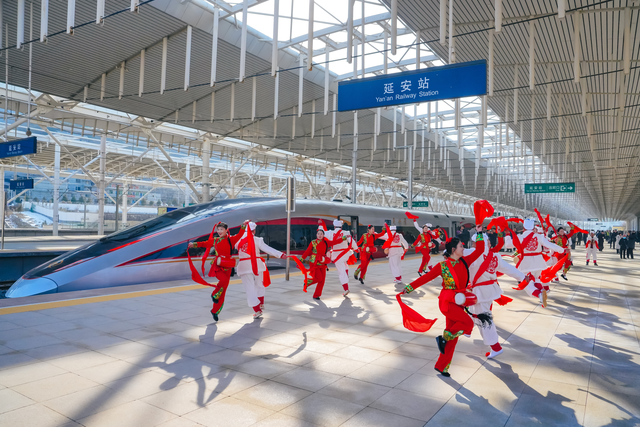
高铁,从延安出发
Ren Min Ri Bao Hai Wai Ban· 2025-12-30 22:54
Core Viewpoint - The opening of the Xi'an to Yan'an high-speed railway marks a significant milestone for the Shaanxi revolutionary area, enhancing regional economic development and connectivity, while contributing to China's high-speed rail network expansion [4][7]. Group 1: High-Speed Railway Details - The Xi'an to Yan'an high-speed railway officially opened on December 26, with a total length of 299 kilometers and a design speed of 350 km/h, making it the highest-speed railway crossing the Loess Plateau [7]. - The railway reduces travel time from Xi'an to Yan'an to 68 minutes, a significant decrease of 62 minutes compared to the fastest previous service [7]. - The line features 47 tunnels and 67 bridges, with a bridge-tunnel ratio of 91%, showcasing advanced engineering solutions to navigate complex geological conditions [7]. Group 2: Economic and Social Impact - The high-speed railway is expected to boost local economies, particularly in the apple industry of Luochuan, where the improved transport will facilitate faster distribution of apples, enhancing sales opportunities [10][11]. - The railway's opening is seen as a catalyst for tourism, making travel more convenient and promoting local agricultural products, thus expanding the market for local farmers [11]. - The high-speed connection is anticipated to create a "1-hour economic circle," significantly improving the quality of life for residents in the region [9][11]. Group 3: Community Sentiment - Local residents express excitement and optimism about the railway, viewing it as a transformative development that fulfills long-held aspirations for better connectivity [8][9]. - The emotional connection to the railway is highlighted by personal stories, such as a 92-year-old man who has long awaited this moment, symbolizing the broader community's hopes for progress [8].

京雄城际运行五载运送旅客超1300万人次
Xin Lang Cai Jing· 2025-12-27 23:52
Core Insights - The Beijing-Xiong'an Intercity Railway has celebrated its fifth anniversary, having transported over 13 million passengers since its inception, with daily train services increasing from 32 to 59, highlighting its role as a vital transportation link in the Beijing-Tianjin-Hebei region [1][2] Group 1: Operational Highlights - The railway connects Beijing with Xiong'an New Area and Daxing International Airport, creating a multi-dimensional transportation network that enhances business travel and international connectivity [2] - The fastest travel time from Xiong'an Station to Daxing International Airport is now 19 minutes, providing efficient options for travelers [2] Group 2: Service Enhancements - Daxing Airport Station has implemented service upgrades, including improved signage systems and the addition of free charging stations, facilitating seamless transfers between high-speed rail and air travel [2] - The "Xingxin Xiangyin" initiative has been established to enhance cooperation between the railway and airport, ensuring a smooth transition for passengers [2] Group 3: Future Developments - The upcoming opening of the Tianjing-Xiong'an Intercity Railway by the end of 2023 will further enhance connectivity between Beijing and Tianjin, establishing a new high-speed rail corridor [2] - Future projects, such as the Beijing-Hong Kong High-Speed Railway and the Xiong'an-Xinzhou Railway, will strengthen Xiong'an's connections to East China, South China, and Central regions, emphasizing the railway's growing importance in the transportation network [2]
1至11月新设“8+9”相关产业企业101万户 我国新兴产业发展动能强劲
Xin Lang Cai Jing· 2025-12-27 13:35
Core Points - China's high-speed rail (HSR) network has officially surpassed 50,000 kilometers, accounting for 70% of the global total, marking a significant leap from following to leading in HSR development [2][3] - The "14th Five-Year Plan" period has seen the completion of 12,000 kilometers of new HSR, with operational mileage increasing by approximately 32% since the end of 2020, enabling 128 counties to enter the HSR era [3][4] - The HSR network has created efficient transportation links, with major city clusters achieving high-speed connectivity, facilitating a "1-hour living circle" in the Guangdong-Hong Kong-Macao Greater Bay Area and a 9-minute interval between trains in the Chengdu-Chongqing area [3][4] Infrastructure and Innovation - The upcoming Hefei West Station, part of the "Eight Vertical and Eight Horizontal" HSR network, exemplifies innovation in design and technology, addressing common industry challenges through acoustic research [4][5] - The China State Railway Group has emphasized self-reliance in railway technology, leading to the development of the CR450 train model, which boasts international leadership in speed, energy consumption, noise levels, and braking distance [5] Economic Impact - The HSR network serves as a crucial engine for regional development and economic growth, with significant reductions in travel time, such as cutting the journey from Urumqi to Turpan from 3 hours to 1 hour [6] - The railway sector is projected to boost GDP growth by 2.6%, creating approximately 6,000 jobs, thereby enhancing the overall economic landscape [6]