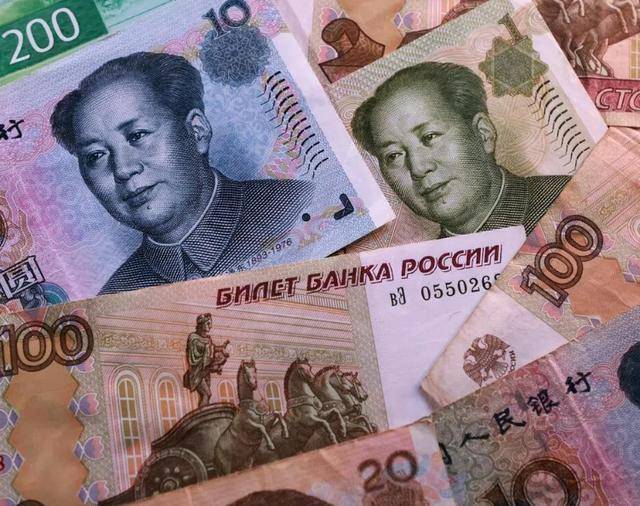
人民币计价主权债券

Search documents
远东国际观察:俄罗斯首支人民币主权债落地 助推去美元化
Xin Lang Cai Jing· 2025-12-24 02:17
Core Viewpoint - Russia's Ministry of Finance has officially launched its first sovereign bond issuance denominated in RMB, marking a significant step in its financial strategy amid prolonged Western sanctions and limited access to USD and EUR financing [2][3]. Group 1: Bond Details - The bond issuance consists of two tranches: a 3.2-year tranche with a target coupon rate of 6.25% to 6.5%, and a 7.5-year tranche with an upper limit of 7.5% [2][3]. Group 2: Strategic Significance - The issuance is strategically important as it expands Russia's financing channels and supports its de-dollarization efforts [3]. - It provides investors with a RMB investment tool, allowing for effective allocation of accumulated RMB funds [3]. - The issuance serves as a benchmark for other enterprises looking to issue RMB-denominated bonds, enhancing market pricing efficiency [3]. Group 3: Financial Cooperation and RMB Internationalization - The deepening financial cooperation between China and Russia is evident, with the share of RMB in Russia's sovereign wealth fund increasing from 31% in early 2022 to 57% by November 2025 [3]. - The usage of RMB in cross-border settlements is also on the rise, indicating an expanding application of RMB in actual financing and investment scenarios, positively impacting the internationalization of the RMB [3].
尘埃落定,中美实力步入对等新阶段,黄金储备数据公布,美元主导地位受冲击
Sou Hu Cai Jing· 2025-12-08 22:11
Group 1 - The latest U.S. National Security Strategy acknowledges China as a world power nearly equal to the U.S., marking a significant shift in U.S. foreign policy [1][3] - The U.S. is strategically retracting its global influence, focusing more on its own hemisphere, which has been humorously referred to as a transition from "global leader" to "hemispheric leader" [1][3] - This acknowledgment of China's status is seen as a tactical move to foster domestic political unity against China and to pressure allies in Europe and the Indo-Pacific to take a stand [3] Group 2 - China's central bank has been increasing its gold reserves, with a total of 74.12 million ounces as of November 2025, reflecting a clear strategy to hedge against risks and reduce reliance on U.S. Treasury bonds [5][7] - The share of gold in China's foreign exchange reserves has risen to 7%, indicating a significant increase in the importance of gold as a financial asset for China [7] - The trend of "buying gold and selling U.S. debt" is not merely an investment adjustment but a strategic move to counter U.S. financial dominance and enhance the credibility of the Chinese yuan [7][9] Group 3 - The issuance of sovereign bonds denominated in yuan by Russia signifies a shift in global financial dynamics, moving away from traditional currencies like the dollar and euro [9] - Over 75% of trade between China and Russia no longer uses the dollar, indicating a broader trend of "de-dollarization" that is causing concern in the U.S. [9][12] - The U.S. faces significant economic challenges, including a national debt exceeding $37 trillion, which is prompting a shift in global financial strategies [12][14] Group 4 - China's approach to countering U.S. challenges is characterized by patience and strategic depth, focusing on reducing U.S. debt holdings while enhancing trade relationships with Southeast Asia and the EU [14][15] - The gradual decline of the dollar's dominance in global reserves is evident, with countries increasingly diversifying their reserves and exploring local currency settlements in trade [17] - The ongoing changes in the global financial landscape suggest a slow but certain transition away from dollar dependency, as countries like India and Brazil increase their gold reserves and explore alternative currencies [17]

俄罗斯一招破局!豪掷4000亿卢布人民币债券,急抱中国大腿
Sou Hu Cai Jing· 2025-12-06 04:34
Core Viewpoint - Russia's Ministry of Finance has announced the issuance of its first sovereign bonds denominated in RMB, amounting to 400 billion rubles, marking a significant shift in global financial dynamics and a strategic move towards de-dollarization [1][3][9] Group 1: Issuance Details - The bonds will be issued in three maturities: 3 years, 5 years, and 10 years, with the issuance expected to begin in early December [1] - The total amount of 400 billion rubles is approximately 30 billion yuan, making it a substantial issuance in the context of emerging market RMB bonds [1] Group 2: Reasons for Choosing RMB - The decision to issue bonds in RMB is largely a response to unprecedented financial sanctions imposed by the West following the Ukraine conflict, which have severely restricted Russia's access to traditional currencies like USD and EUR [3][5] - Over 95% of trade between China and Russia is already settled in RMB, with bilateral trade reaching a record high of 220 billion USD in 2023, primarily driven by energy exports [3][5] Group 3: Strategic Implications - This issuance represents a significant endorsement of the RMB as a reliable international currency, potentially encouraging other emerging markets to follow suit, thereby enhancing the RMB's status in the global monetary system [7][9] - The move is seen as a demonstration of deepening Sino-Russian cooperation, extending beyond trade to financial integration, which could have broader implications for global multipolarity and resistance to unilateral sanctions [9][10] Group 4: Market Reception - There is strong demand for RMB-denominated bonds from domestic Chinese institutional investors and interest from other emerging market countries looking to mitigate USD risks [9] - Despite Western downgrades of Russia's sovereign credit rating, its debt repayment capacity remains robust due to stable income from energy exports [9]

人民币受青睐是现实选择,不是对抗游戏
Sou Hu Cai Jing· 2025-12-02 01:13
Core Viewpoint - The issuance of sovereign bonds denominated in RMB by Russia marks a significant step in the internationalization of the Chinese currency, driven by market logic and global trade dynamics rather than geopolitical confrontation [2][4]. Group 1: RMB Internationalization - Russia will issue its first sovereign bonds in RMB on December 8, with subscription starting on December 2, highlighting the growing acceptance of RMB in global markets [2]. - The internationalization of RMB is a historical process driven by market demand and the reshaping of global trade patterns, rather than a unilateral push by China [2][5]. - As of Q4 2024, RMB assets in global foreign exchange reserves are approximately $247 billion, with over 80 countries incorporating RMB into their reserves [3]. Group 2: Global Market Trends - The issuance of RMB-denominated bonds is becoming more common, with countries like Hungary, UAE, and Indonesia participating, while the scale of "Panda bonds" issued by foreign institutions in China continues to grow [3]. - In October, RMB's share in global trade financing reached 8.5%, making it the second most used currency in this sector [3]. - The preference for RMB is driven by economic considerations, as it offers relative stability and lower volatility compared to other currencies amid fluctuating interest rates and rising debt risks in developed economies [4]. Group 3: Economic Considerations - The increasing global interest in RMB reflects a market-driven trust, as investors seek to optimize portfolios and diversify risks rather than align with any ideological stance [4]. - The international status of a currency is built on long-term economic strength, institutional trust, and market acceptance, with RMB's rise supported by China's economic resilience and ongoing financial openness [4]. - The current global monetary system is undergoing structural changes, transitioning from a dollar-dominated framework to a multi-centered system, with RMB contributing to this evolution [4]. Group 4: China's Approach - China maintains a calm and steady approach to RMB internationalization, emphasizing market-driven and voluntary participation rather than seeking currency hegemony [5]. - The internationalization of RMB is a natural outcome of China's economic development and openness, contrasting with other nations that rely on military alliances and political pressure to maintain currency status [5]. - The preference for RMB is seen as a realistic choice in a complex world, highlighting the need for more options rather than confrontation [5].

普京破局!俄主权债首用人民币,中美争锋下这步棋有多狠?
Sou Hu Cai Jing· 2025-11-22 17:58
Core Viewpoint - Russia's issuance of sovereign bonds denominated in RMB marks a significant shift in its financial strategy amid Western sanctions, indicating a strategic alignment with China and a move towards de-dollarization in global finance [1][9]. Group 1: Financial Context - Russia's fiscal deficit has surged to 5.7 trillion rubles (approximately 703 billion USD), which is 2.6% of its GDP, exceeding the initial target by five times [3]. - Oil and gas revenues have plummeted by 20% year-on-year, while customs revenue has decreased by 19%, exacerbating the financial crisis [3]. - The Russian Central Bank's benchmark interest rate has soared to 20%, making it unsustainable to issue bonds in rubles due to high interest costs [3]. Group 2: Strategic Implications - The issuance of RMB-denominated bonds is not merely a financial maneuver but a strategic positioning in the context of U.S.-China financial rivalry, providing a counterweight to U.S. dollar dominance [5]. - The Russian Ministry of Finance plans to issue bonds in two maturities: 3 years and 7 years, with a face value of 10,000 RMB, and expects demand to reach 100 billion rubles [5]. - This move is expected to stabilize domestic expectations and strengthen the non-aligned, deep cooperation relationship between Russia and China [5]. Group 3: Global Impact - Russia's decision to issue sovereign debt in RMB challenges the long-standing reliance on the U.S. dollar for sovereign debt issuance, potentially serving as a model for other nations wary of Western sanctions [7]. - The internationalization of the RMB is accelerating, with China having signed currency swap agreements with 43 countries, amounting to over 4.5 trillion RMB [7]. - The shift towards de-dollarization may lead to a more diversified global financial system, reducing the risks associated with single currency fluctuations and promoting economic stability [7][9].
中美争锋无可避免,普京终于要站队,俄罗斯主权债券用人民币计价
Sou Hu Cai Jing· 2025-11-22 11:39
Core Viewpoint - Russia's issuance of its first RMB-denominated sovereign bonds is a strategic move to address its financial crisis while simultaneously challenging the dominance of the US dollar in the global financial system [3][5][46] Group 1: Financial Context - By the end of 2025, Russia's fiscal deficit is projected to reach a historical high of 5.7 trillion rubles, approximately 70.3 billion USD, which is 2.6% of its GDP, significantly exceeding initial targets by nearly five times [7] - Revenue from oil and gas, traditionally a major source of income for Russia, has declined by 20% in the first nine months of 2025, with customs duties also dropping by 19% [9] - The Russian government has been effectively cut off from international financing options in USD and EUR due to Western sanctions following the Ukraine conflict, making borrowing a necessity [11] Group 2: Strategic Shift - The decision to issue RMB-denominated bonds reflects a deliberate strategic choice rather than a desperate measure, indicating Russia's alignment with China amid escalating US-China tensions [21][33] - The Russian Finance Minister noted that over 99% of bilateral trade with China in 2025 will be settled in rubles and RMB, up from 90% in 2024, highlighting a significant shift towards using the RMB in trade [23] Group 3: Market Implications - The issuance of RMB bonds is expected to create a closed loop of "RMB financing → RMB investment → RMB settlement," allowing domestic institutions and individuals to absorb the bonds without relying on Chinese investors [27] - This move is anticipated to have a ripple effect on global financial markets, providing a model for other countries seeking alternatives to USD financing, thereby encouraging a broader trend of de-dollarization [35][39] - As of mid-2025, China has signed currency swap agreements with 43 countries, totaling over 4.5 trillion yuan, indicating a growing global influence of the RMB [40]

绕开美元霸权,俄罗斯大动作!首次发行人民币主权债券,多达4000亿
Sou Hu Cai Jing· 2025-11-01 13:19
Core Insights - The Russian Ministry of Finance plans to issue RMB-denominated sovereign bonds in the domestic market for the first time, aiming to create new investment channels for the substantial RMB funds accumulated by domestic exporters and banks in energy trade with China, thereby deepening financial cooperation between Russia and China [1][4] - The bond issuance is expected to be significant, with a total scale of up to 400 billion rubles (approximately 35.2 billion) planned to be released in four batches, with maturities ranging from 3 to 10 years to cater to various investor needs [1][3] - The issuance is set to officially start in early December, targeting a wide range of investors, including banks, asset management companies, and retail brokers [1][3] Trade and Financial Context - Approximately 90% of trade settlements between Russia and China are conducted in rubles and RMB, with the proportion of local currency settlements reaching 92%, reflecting a pragmatic advancement in the "de-dollarization" process [3] - The trade volume between Russia and China is projected to reach a historical high of 245 billion dollars in 2024, with energy trade being a core component and a primary source of RMB accumulation [3] - The bonds will be issued on the Moscow Exchange, which has ceased trading in US dollars and euros since June 2024 due to Western sanctions, limiting participation from foreign investors, including those from China and other Asian countries [3] Strategic Considerations - The push for RMB bond issuance is part of Russia's strategy to evade sanctions and optimize foreign exchange asset allocation, with the RMB's role in trade settlements rising to over 95% by mid-2025 [4] - The issuance aims to activate dormant RMB funds and enrich the domestic financial market product system [4] - Russia is negotiating with China to establish a financial market bridge mechanism to allow Chinese investors to invest in Russian assets without Western regulatory constraints, which could facilitate future financial market connectivity between the two countries [4]