
智能无人机

Search documents
基期轮换:确保CPI数据更准确反映消费新变化
Sou Hu Cai Jing· 2026-02-12 04:29
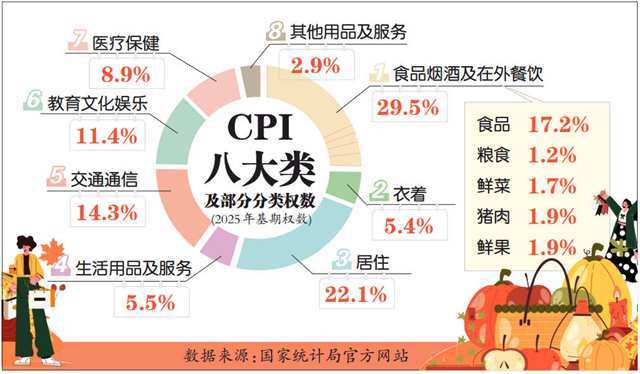
Group 1 - The core idea of the news is the upcoming price index base period rotation in China, which is a fundamental statistical practice to ensure that the Consumer Price Index (CPI) accurately reflects current consumer behavior and economic conditions [2][3]. - The base period rotation will update the reference point for price comparisons from 2020 to 2025, allowing for a more accurate representation of the changes in consumer spending patterns [2][3]. - The CPI is designed to reflect the price level changes of a representative basket of goods and services consumed by residents over a certain period [2]. Group 2 - The rotation will involve adjustments to the CPI survey classification directory, survey points, representative specifications, classification weights, and price comparison base periods [4]. - New categories reflecting current consumption trends will be added, such as housing security equipment, elderly products, dishwashers, electric vehicle charging, photography services, internet medical services, and medical beauty services [4]. - The name of the "Food, Tobacco, and Alcohol" category will be changed to "Food, Tobacco, Alcohol, and Dining Out," and "Tourism" will be renamed to "Travel Agency and Other Tourism Services" to better reflect consumer spending [4]. Group 3 - The national CPI survey will cover approximately 120,000 points and about 620,000 specifications, expanding the coverage compared to the previous base period [6]. - New retail formats, such as membership-based supermarkets and flash sales platforms, will be included in the survey points, along with new representative specifications like smart drones [6]. - The data collection methods for CPI will be optimized, with an increased use of big data applications, including online transaction prices and administrative records [6]. Group 4 - The CPI weights, which represent the expenditure share of each category in the fixed basket, will see minor overall changes compared to the 2020 base period, with service weights increasing and consumer goods weights decreasing [7]. - Specific categories such as Food, Tobacco, and Alcohol; Transportation and Communication; Education, Culture, and Entertainment; Medical Care; and Other Goods and Services will see an increase in their weights [7]. Group 5 - The base period rotation will impact various policies linked to the CPI, such as price subsidy mechanisms for low-income groups when CPI growth exceeds certain thresholds [8]. - A more accurate CPI will also provide a reference for adjustments in interest rates, minimum pensions, and other livelihood policies [8].

(经济观察)中国CPI“篮子”更新映射消费新风向
Zhong Guo Xin Wen Wang· 2026-02-11 11:49
Core Viewpoint - The update of China's Consumer Price Index (CPI) "basket" reflects new consumption trends and changes among Chinese residents, aiming to provide a more accurate representation of price movements in the consumer market [1][2]. Group 1: CPI and PPI Update - The CPI and Producer Price Index (PPI) undergo a base period rotation every five years, with the latest data based on 2025 as the new base year [1]. - The National Bureau of Statistics has released the first data following this base period rotation, indicating a new "price coordinate system" is in place [1]. Group 2: Changes in Consumption Patterns - The CPI basket has been updated to include new categories reflecting changes in consumer preferences, such as electric vehicle charging, home security devices, and internet medical services [2]. - The updated CPI basket now includes 268 basic classifications across eight major categories, maintaining the overall number while adjusting specific classifications to better capture new economic trends [2]. Group 3: Weight Adjustments - The weight adjustments in the CPI reflect the proportion of spending on various categories, with food, housing, and transportation being the largest components [3]. - The weight for services has increased while the weight for consumer goods has decreased, aligning with the trend of consumers shifting from purchasing goods to services [3]. - The impact of the base period rotation on the CPI and PPI monthly year-on-year indices is estimated to be minimal, averaging about 0.06 and 0.08 percentage points respectively [3]. Group 4: Recent CPI Data - In January, the CPI year-on-year growth rate fell to 0.2%, influenced by the timing of the Spring Festival, while the core CPI, excluding food and energy, rose by 0.8%, indicating a continued recovery in consumer demand [3].
最新公布!CPI统计口径调整,新增洗碗机、医美服务等新消费分类
券商中国· 2026-02-11 06:18
Core Viewpoint - The article discusses the release of the Consumer Price Index (CPI) and Producer Price Index (PPI) data by the National Bureau of Statistics, marking the first data release based on the new 2025 benchmark, indicating a slight impact on the indices due to the benchmark rotation [1][3]. CPI Summary - In January, the CPI increased by 0.2% month-on-month and year-on-year, with core CPI (excluding food and energy) showing a moderate increase [2][6]. - The CPI's year-on-year growth was affected by the Spring Festival's timing and international oil price fluctuations, with food prices decreasing by 0.7%, impacting the CPI by approximately 0.11 percentage points [6][7]. - The core CPI rose by 0.8% year-on-year, indicating a continued recovery in consumer demand [7]. PPI Summary - The PPI rose by 0.4% month-on-month, marking the fourth consecutive month of increase, while the year-on-year decline narrowed to 1.4% [2][8]. - The increase in PPI is attributed to the ongoing construction of a unified national market, which has led to price increases in certain industries, such as cement and lithium-ion battery manufacturing [8][9]. - Input factors have caused price divergence in the non-ferrous metals and petroleum-related industries, with international metal prices driving domestic price increases [9]. Benchmark Rotation Changes - The benchmark rotation introduced new categories and adjusted weights to better reflect current consumption patterns, with the CPI's service weight increasing and consumer goods weight decreasing [3][5]. - New categories include housing security equipment, elderly products, dishwashers, and internet medical services, expanding the coverage of new economic sectors [3][4]. - The number of survey points for CPI has increased to approximately 120,000, covering around 620,000 specifications, enhancing the data collection process [3][4].

烟台市低空医疗配送首飞成功
Qi Lu Wan Bao· 2026-02-03 10:35
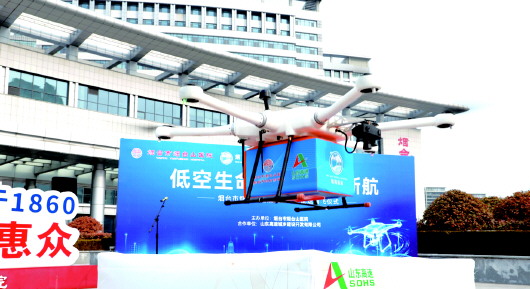
Core Viewpoint - The successful first flight of low-altitude medical delivery in Yantai marks a significant upgrade in medical services, transitioning from ground coverage to air-ground collaboration, providing a replicable model for the integration of "medical + transportation" in Shandong Province [2][3]. Group 1: Low-altitude Medical Delivery Implementation - The first flight of the low-altitude medical delivery system was conducted on January 26, showcasing the efficient transport of medical supplies, including emergency materials, blood products, and pathological samples [2]. - The project is a response to the low-altitude economic development strategy of Shandong Province and aligns with the goals of building a green, low-carbon, high-quality development demonstration city [2][3]. - The low-altitude medical delivery system aims to significantly reduce transport time for critical medical supplies, especially in emergencies, adverse weather, or traffic congestion, thereby enhancing patient care [3][4]. Group 2: Technical and Operational Details - The drone used in the delivery system can fly at a speed of 1 kilometer per minute and has a maximum payload capacity of 9 kilograms, effectively meeting the transport needs between different hospital campuses [3]. - The first flight successfully transported medical supplies from Yantai Mountain Hospital East Campus to the High-tech District Hospital in 7 minutes, demonstrating a substantial improvement in efficiency compared to traditional ground transport methods [3]. - Future plans include extending the logistics network to the entire Yantai Mountain Medical Group, creating a closed-loop model that enhances resource sharing among healthcare institutions [4].
义乌市场再升级:第六代“全球数贸中心”有哪些颠覆?
Sou Hu Cai Jing· 2025-12-31 23:29
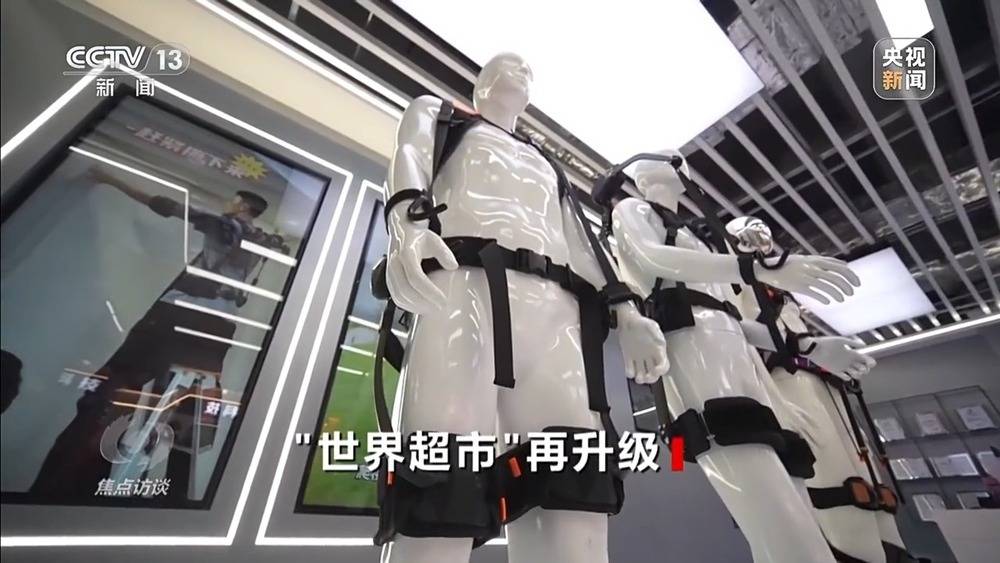
Core Insights - The newly opened Yiwu Global Digital Trade Center represents the sixth generation of markets in Yiwu, focusing on digitalization to expand global trade [1][10] - The transition from the fifth to the sixth generation market is driven by the need to enhance the quality of international trade in Yiwu [5] Group 1: Market Evolution - Yiwu has undergone six relocations and thirteen expansions over 40 years, evolving from street vendors to a global digital trade center [10] - The sixth generation market introduces significant upgrades in both hardware and environment to support the transition of Yiwu's manufacturing from low-end to mid-to-high-end products [8] Group 2: Technological Advancements - The sixth generation market features a dedicated Smart Equipment Zone with nearly 200 top domestic companies showcasing cutting-edge products, including drones, automation equipment, and AR/VR technologies [3] - A comprehensive digital upgrade has been implemented, introducing 13 AI tools designed for buyers and sellers, enhancing communication and design capabilities [7] Group 3: Trade Transformation - The digitalization of the entire trade chain is reshaping Yiwu's market, transitioning from traditional manufacturing to high-end intelligent manufacturing [10] - The market aims to shift from merely exporting products to building international brands and enhancing emotional value in trade [10]
焦点访谈|从“马路货郎担”到“全球数贸中心”,“世界超市”再升级
Yang Shi Wang· 2025-12-31 13:50
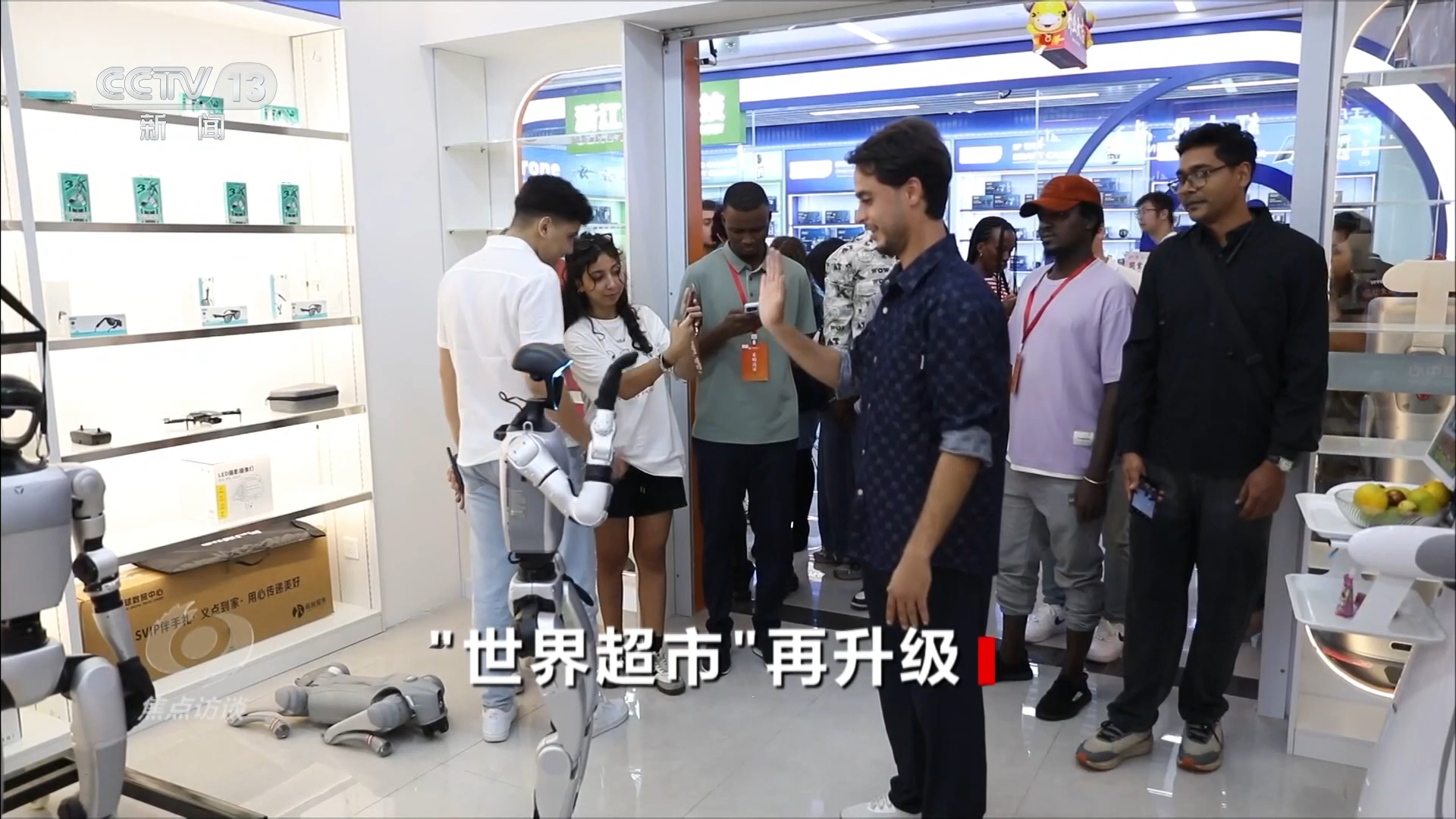
Core Insights - The Yiwu Global Digital Trade Center, the sixth-generation market, is set to open by the end of 2025, focusing on digitalization to enhance global trade dynamics [1] - The evolution of Yiwu's markets from street stalls in 1982 to the current sixth-generation market reflects a significant transformation in trade practices and infrastructure [10] Group 1: Market Evolution - The sixth-generation market represents a new phase in Yiwu's market development, moving from traditional trade to a more advanced digital trade model [4] - Yiwu has undergone six relocations and thirteen expansions over 40 years, transitioning from domestic to global trade [10] Group 2: Technological Advancements - The sixth-generation market features a dedicated Smart Equipment Zone with nearly 200 top domestic companies showcasing cutting-edge products, including drones and robotics [3] - A comprehensive digital upgrade has been implemented, introducing 13 AI tools designed to assist buyers and sellers, enhancing communication and design capabilities [8] Group 3: Strategic Goals - The upgrade aims to facilitate Yiwu's transition from low-end manufacturing to mid-to-high-end production, aligning with global market demands [6] - The establishment of the sixth-generation market is seen as a pivotal move for China to break traditional trade models and ascend the global value chain [10]
2035年我在海南自贸港的一天
Xin Lang Cai Jing· 2025-12-21 17:39
Core Viewpoint - The article envisions the future of Hainan Free Trade Port in 2035, highlighting significant technological advancements and innovations that will transform the region into a hub of smart technology and international collaboration [1] Group 1: Technological Advancements - In 10 years, Hainan Free Trade Port is expected to showcase a robust technological landscape, featuring smart signposts and innovative infrastructure [1] - The presence of autonomous vehicles and intelligent robots is anticipated to enhance security and transportation efficiency within the port [1] - Drones are projected to monitor and report violations, indicating a shift towards automated regulatory enforcement [1] Group 2: Economic and Academic Development - The future scenario includes Hainan becoming a center for international academic exchange, where innovations from the free trade port are shared globally [1] - The construction of high-rise buildings using nanomaterials signifies a commitment to modern and sustainable urban development [1] Group 3: Youth Engagement - The article emphasizes the role of the younger generation in contributing to the technological development and construction of Hainan Free Trade Port [1]
八大核心展区全覆盖:2026北京国际消费电子博览会,从智能家居到宠物科技
Sou Hu Cai Jing· 2025-11-30 13:15
Core Insights - The 2026 Beijing International Consumer Electronics Expo will take place from June 10 to 12, 2026, focusing on "full-scenario technology coverage, empowering global outbound" [2] - The expo will feature eight core exhibition areas, covering smart home, whole-home intelligence, low-altitude economy, artificial intelligence, outdoor intelligence, and pet technology, creating a comprehensive display platform for the consumer electronics industry [2][3] - The event aims to facilitate global resource linkage and international market expansion for participating companies [2] Exhibition Areas - The smart home area will showcase innovations in smart lighting, security, and kitchen products, addressing consumer needs for convenience in home life [2] - The whole-home intelligence area will highlight system integration and collaborative interaction, demonstrating an immersive smart living experience through unified control [2] - The low-altitude economy area will feature electric vertical takeoff and landing vehicles, drones, and low-altitude traffic management systems, exploring commercial applications in low-altitude travel and logistics [3] - The artificial intelligence area will focus on AI model deployment, multimodal interaction, and smart algorithms, showcasing products like AI smartphones and intelligent driving assistance systems [3] - The outdoor intelligence area will include portable energy storage, smart sports equipment, and environmental monitoring devices for outdoor activities [3] - The pet technology area will present smart wearables and health monitoring devices for pets, catering to the trend of refined pet care [3] Market Opportunities - The expo will provide a platform for 36,000 paid professional visitors and over 50 international purchasing groups, enabling efficient connections between exhibitors and global market demands [4] - The global consumer electronics market reached $1.2 trillion in 2025, with the Asia-Pacific region accounting for over 40%, indicating significant growth potential for participating companies [4] - The organizing committee is optimizing exhibition area functions and service systems to enhance synergy and resource aggregation, supporting companies in technology exchange, business cooperation, and brand internationalization [4]
宁夏银川:智能无人机巡视保障线路迎峰度冬
Zhong Guo Neng Yuan Wang· 2025-11-14 02:35
Core Insights - The company is utilizing advanced drone technology for the inspection and monitoring of power transmission lines to ensure safety and efficiency in operations [1][3]. Group 1 - Since the beginning of winter, the company has implemented various measures, including "smart drones + remote monitoring," to conduct comprehensive inspections of 209 power lines [3]. - The use of smart drones and remote monitoring equipment with high-definition imaging and infrared temperature measurement capabilities has significantly improved inspection efficiency [3]. - These technological advancements are aimed at quickly and accurately identifying and addressing equipment hazards, thereby enhancing the safety and stability of the power grid during the winter season [3].

武汉市江汉区中鑫智能设备工作室(个体工商户)成立 注册资本1万人民币
Sou Hu Cai Jing· 2025-10-29 05:13
Core Insights - A new individual business named Wuhan Jianghan District Zhongxin Intelligent Equipment Studio has been established, with a registered capital of 10,000 RMB [1] Company Overview - The legal representative of the company is Hu Yang [1] - The business scope includes sales of mechanical equipment, industrial automation control systems, intelligent drones, mechanical parts, computer hardware and software, sports goods, arts and crafts, stationery, toys, daily necessities, and agricultural products [1]