体重管理食品

Search documents
卖蛋白粉年入16.9亿,湖南富豪跑出一个IPO
3 6 Ke· 2026-02-26 03:03
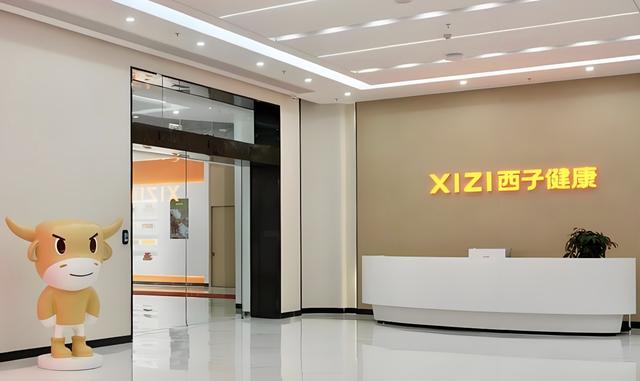
Core Viewpoint - Xizi Health is attempting to go public on the Hong Kong Stock Exchange, aiming to become the first stock in the "Douyin live streaming + sports nutrition" sector, despite facing significant challenges related to its business model and financial health [1][3]. Group 1: Business Model and Growth - Xizi Health's revenue is heavily reliant on Douyin, with over 60% of its income tied to the platform, and nearly half of its revenue spent on marketing, while R&D investment remains below 1% [3][10]. - The company transitioned from being a third-party product agent to developing its own brands, achieving rapid growth with brands like FoYes and fiboo, which reached over 500 million in sales within 20 months of launch [4]. - In 2023, Xizi Health reported revenues of 1.447 billion, projected to grow to 1.692 billion in 2024, with Q1-Q3 2025 revenues nearing 1.609 billion, indicating strong sales momentum [4]. Group 2: Profitability and Financial Metrics - The gross margin has significantly increased from 44.4% in 2023 to 59.5% in the first nine months of 2025, indicating a shift towards higher profitability [5]. - Marketing expenses have surged, with sales costs rising from 472 million in 2023 to 756 million in Q1-Q3 2025, leading to a decrease in net profit margin from 8.9% in 2024 to 7.4% in 2025 [10]. Group 3: Market Position and Competition - Xizi Health ranks third in the retail sales of sports nutrition products in China as of 2024, showcasing its competitive position in the market [6]. - The company's growth is primarily driven by online sales, with nearly 99% of revenue coming from this channel, and Douyin accounting for 62.8% of online sales in Q1-Q3 2025 [8][9]. Group 4: Risks and Challenges - The company faces significant risks due to its heavy reliance on Douyin for revenue, with over 60% of income coming from this single channel, making it vulnerable to changes in Douyin's policies [12]. - Xizi Health's supply chain is also highly concentrated, with the top five suppliers accounting for over 45% of purchases, posing risks related to supply disruptions [13]. - The ownership structure is heavily family-controlled, which may lead to governance issues and lack of checks and balances in decision-making [13]. Group 5: Future Outlook - The listing of Xizi Health represents a case study of rapid scaling through a single platform, but the company must address its reliance on Douyin, increase R&D investment, and improve supply chain management to ensure long-term sustainability [14][15].

2025年体重管理食品消费者洞察报告
Sou Hu Cai Jing· 2026-01-06 07:27
Core Insights - The weight management food market is experiencing explosive growth driven by increasing health awareness among consumers, shifting from aesthetic concerns to long-term health considerations [1][2] Market Overview - Obesity is a global public health challenge, leading to a surge in demand for scientific weight management solutions, with the global market projected to reach several hundred billion dollars by 2027 [2] - The domestic market for functional weight loss foods is nearing 500 billion yuan and continues to grow rapidly, particularly in online sales channels, which have seen several-fold increases in recent years [2][20] Consumer Behavior - Today's consumers are increasingly rational, prioritizing health benefits and ingredient safety when selecting weight management foods, with over 60% considering these factors as primary [3] - There is a shift in consumer focus from short-term results to long-term scientific efficacy, with a growing demand for products that are "additive-free," "low-calorie," and "sugar-free" [3] Product and Brand Dynamics - Weight management has become integrated into daily life, leading to diverse product demands, with female consumers focusing on specific life stages and male consumers emphasizing fitness and taste [4] - E-commerce platforms are the primary purchasing channels, with nearly 40% of consumers preferring to buy as needed, and established brands like Tongrentang and Renhe hold significant trust and recognition [4] Industry Trends - The industry is entering a phase of regulation and innovation, with ongoing improvements in regulatory policies to address issues like illegal additives and exaggerated claims [5] - Future product innovations are expected to expand beyond weight loss to include emotional management, metabolic health, and gut microbiome benefits, leveraging advanced technologies for personalized nutrition [5] Future Outlook - The weight management food market is at a critical juncture, with consumer standards evolving to prioritize safety, scientific backing, and health outcomes, indicating that future market leaders will be those that integrate these elements into their offerings [6]

2025食品行业的理性回归:健康不再是标签,而是产品基因
3 6 Ke· 2025-07-07 09:24
Group 1 - The food industry is experiencing a significant shift towards health and transparency, with health becoming a core aspect of product innovation and "food as medicine" gaining traction as a consumer necessity [1][4][31] - The market for "food as medicine" has surpassed 370 billion yuan, with over 2,900 registered companies in this sector, indicating a growing trend in health-focused consumption [4][5][6] - The "superfood" market is projected to grow from 16.3 billion USD in 2025 to 32.8 billion USD by 2030, driven by increasing consumer demand for health benefits and nutritional density [9][10] Group 2 - The "Weight Management Year" initiative aims to address the rising obesity rates in China, with over 50% of adults and nearly 20% of children classified as overweight or obese [15][16] - The health management market in China reached 1.81 trillion yuan in 2023, with the weight management market expected to reach 326 billion yuan by 2025, highlighting a robust growth trajectory [15][16] - The demand for weight management products is diversifying, with a focus on functional foods that cater to various health needs, including appetite suppression and metabolism enhancement [17][18] Group 3 - New food safety standards have been introduced to address consumer concerns about "zero additives" and food labeling, emphasizing the need for transparency and quality in food products [20][21] - The rise of "clean label" certifications reflects consumer preferences for products with fewer artificial ingredients, with 85% of consumers considering ingredient lists when purchasing [28][29] - Brands are increasingly seeking authoritative certifications to enhance their market position, but the credibility of these certifications can vary significantly [29][30]