
俄亥俄级战略核潜艇

Search documents
没有规则的核赛场,美国疯狂扩核,俄罗斯亮出致命反制
Feng Huang Wang Cai Jing· 2026-02-11 13:43
Group 1 - The expiration of the New START treaty on February 5 marks a significant shift in global nuclear disarmament, moving from a phase of reduction to one of potential escalation [1][2] - The U.S. plans to increase its nuclear arsenal, with a projected budget increase from $756 billion to $946 billion over the next decade, representing a growth of over 25% [2] - The U.S. is also pursuing the "Iron Dome" initiative to develop an unconstrained missile defense system, which could provoke a new arms race as other nations enhance their nuclear capabilities in response [2][3] Group 2 - The New START treaty, originally signed in 2010, limited both the U.S. and Russia to 1,550 deployed nuclear warheads and 700 delivery vehicles, but relations have deteriorated significantly since the Ukraine conflict [3][4] - Russia has shifted its nuclear policy from a no-first-use stance to a more aggressive posture, developing new strategic weapons like the "Zircon" and "Poseidon" to counter NATO's conventional advantages [5][6] - The U.S. has not committed to a no-first-use policy, which raises the nuclear threshold and complicates the strategic landscape [4][5] Group 3 - The U.S. is seeking to involve China in nuclear negotiations, but China maintains its position of a defensive nuclear strategy and will not participate in arms races [7][8] - The introduction of new technologies and high-survivability weapons complicates future arms control negotiations, as the U.S. continues to increase its nuclear capabilities [7][8] - The current state of nuclear relations reflects a breakdown of strategic trust and frameworks, leading to a more dangerous global environment than during the Cold War [8]


俄罗斯喊话美国,美国喊话中国,中国回应:表示遗憾
Xin Lang Cai Jing· 2026-02-07 16:40
Core Points - The expiration of the New START treaty marks the first time in over half a century that there are no treaties limiting the nuclear arsenals of the world's two largest nuclear powers, the US and Russia, raising concerns about a new arms race and nuclear proliferation [1][6] - The UN Secretary-General has stated that the risk of nuclear weapon use is at its highest level in decades, highlighting the urgency of the situation [1] Group 1: Nuclear Arsenal Overview - By 2025, Russia is projected to have 4,309 nuclear warheads, while the US will have 3,700, with approximately 1,770 of the US warheads deployed and 1,930 in reserve [1] - The US is undergoing a comprehensive modernization of its nuclear triad, including the replacement of the Minuteman III ICBM with the Sentinel ICBM, the replacement of Ohio-class submarines with Columbia-class submarines, and the procurement of the B-21 long-range bomber [2][4] Group 2: Treaty Implications - The New START treaty, which was signed in 2010 and extended in 2021, limited the number of deployed strategic nuclear warheads to 1,550 and established verification mechanisms, which are now no longer in effect [5][6] - With the treaty's expiration, both the US and Russia may increase their nuclear arsenals beyond 6,000 warheads in the next decade, as the constraints have been lifted [6] Group 3: Global Nuclear Dynamics - The absence of a nuclear arms control agreement may lead to an imbalance in global nuclear capabilities, prompting other nuclear-armed states to enhance their arsenals [9][10] - The potential for a nuclear arms race could escalate the quality and quantity of nuclear weapons, with implications for deployment in new domains such as space [10] Group 4: Future Negotiations - There is a call for a new nuclear arms control agreement that includes not only warhead numbers but also new delivery systems such as hypersonic missiles and nuclear-powered torpedoes [11] - The US has suggested that China should join nuclear disarmament talks, although China has expressed reluctance to participate, citing its nuclear capabilities as significantly lower than those of the US and Russia [13][14]
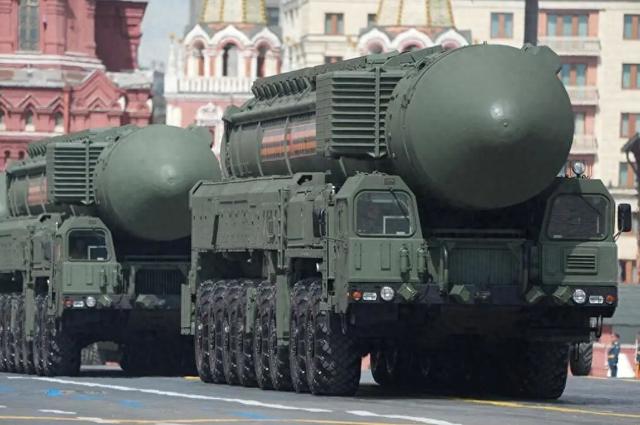
“特普会”倒计时 美俄还在酝酿更大的核博弈
Yang Shi Xin Wen· 2025-08-10 23:49
Group 1: Meeting and Diplomatic Tensions - The meeting between US President Trump and Russian President Putin is scheduled for August 15 in Alaska to discuss the Ukraine crisis, marking their first face-to-face meeting since 2019 [1] - Trump has expressed disappointment in Putin and indicated that the deadline for a peace agreement between Russia and Ukraine remains valid, with a potential shortening of the 50-day timeline [3][4] - The ongoing verbal exchanges between the US and Russia have escalated, with both sides making strong statements regarding nuclear capabilities and treaties [2][6] Group 2: Nuclear Threats and Military Posturing - The current tensions between the US and Russia are described as the most explicit nuclear threat since the Cuban Missile Crisis, with both nations engaging in military posturing [8][20] - Trump announced the deployment of two US nuclear submarines to "appropriate areas," likely near Russian waters, emphasizing the seriousness of nuclear threats [7][9] - The US Navy operates 71 nuclear submarines, including 14 Ohio-class submarines, which can carry up to 24 Trident II missiles, each with a yield of 475 kilotons [11] Group 3: Arms Control and Treaty Developments - Russia has announced it will no longer adhere to the self-imposed restrictions of the Intermediate-Range Nuclear Forces Treaty, which previously limited the deployment of land-based missiles [14][15] - The last remaining nuclear arms treaty between the US and Russia, the New START treaty, is set to expire on February 5, 2024, raising concerns about a new arms race [22] - The US has been expanding its intermediate-range missile capabilities since its withdrawal from the INF Treaty in 2019, with deployments planned in various allied countries [16][17]