
停车场

Search documents
北京城市副中心将围绕环球度假区等“量身定制”交通配套
Zhong Guo Xin Wen Wang· 2026-01-30 12:02
Core Viewpoint - Beijing's sub-center will customize transportation infrastructure around key areas such as Tsinghua University's financial development base, Anzhen Hospital, Universal Resort, and the Grand Canal Cultural Belt to support high-quality urban development [1][3]. Group 1: Transportation Infrastructure Development - The sub-center will accelerate the construction of M101 line and Yizhuang line Taihu vehicle depot station projects, promote the planning of M102 line, and enhance the rail network to expand service coverage [2]. - A new round of rural road improvement actions will be implemented to enhance regional road construction and quality [2]. - By the end of this year, the Pinggu line is expected to be ready for operation, further integrating high-speed rail, intercity, suburban rail, and urban metro systems [2]. Group 2: Integration of Transportation and Cultural Tourism - The sub-center will prioritize transportation facility optimization to support the high-quality development of urban industries and key areas, focusing on optimizing traffic organization in the Canal Business District [3]. - Transportation facilities will be deeply integrated with cultural tourism, transforming transport routes into scenic and consumer lines [3]. Group 3: Parking Solutions - The sub-center will establish a modern transportation governance system to promote high-quality development and safety through efficient governance [4]. - Strategies will be implemented to address traffic congestion with tailored solutions, including the promotion of "green wave" traffic signals for smoother intersections [4]. - Multiple channels will be utilized to alleviate parking difficulties, including the construction of new parking lots and the revitalization of idle spaces [4].
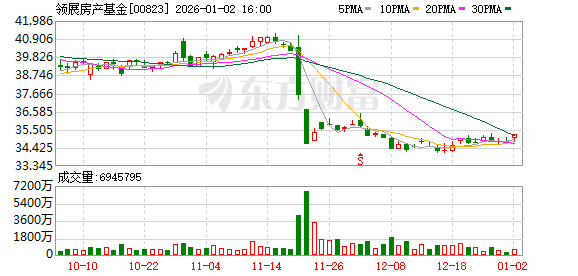
前任行政总裁王国龙因退休离任 领展委托国际猎头公司开启全球招聘
Mei Ri Jing Ji Xin Wen· 2026-01-04 15:58
Core Viewpoint - The resignation of the long-serving CEO of Link REIT has initiated a global search for a successor to lead the next phase of the company's development [2][4]. Group 1: Leadership Transition - The current Chief Investment Officer, Song Junyan, has been appointed as an executive director, alongside Chief Financial Officer, Huang Guoxiang, to form a temporary leadership structure until a new CEO is appointed [2]. - Former CEO Wang Guolong officially retired on December 31, 2022, after 16 years in the role, during which he oversaw significant asset optimization and acquisitions in mainland China [4]. - Wang Guolong's total compensation over the past five fiscal years reached HKD 379 million, significantly higher than many peers in the industry [5]. Group 2: Financial Performance - Link REIT reported a total revenue of HKD 7.023 billion and a net property income of HKD 5.178 billion for the half-year ending September 2022, reflecting a year-on-year decline of 1.8% and 3.4%, respectively [6]. - The distributable total decreased by 5.6% to HKD 3.3 billion, attributed to negative rental adjustments in Hong Kong and mainland China amid a challenging macroeconomic environment [6]. Group 3: Recruitment Process - The board is collaborating with an international headhunting firm to identify a new CEO with extensive experience in real estate investment and business management [6]. - The recruitment process is expected to be rigorous and time-consuming due to the seniority of the position and the focus on external candidates [6]. - The independent non-executive chairman, Ou Dunqin, has agreed to dedicate more time to support the two executive directors and oversee the recruitment process, receiving an additional annual allowance of HKD 2.849 million for this role [6].

贾康:从消费联系有效投资的“系统集成”认识
Sou Hu Cai Jing· 2025-07-30 13:34
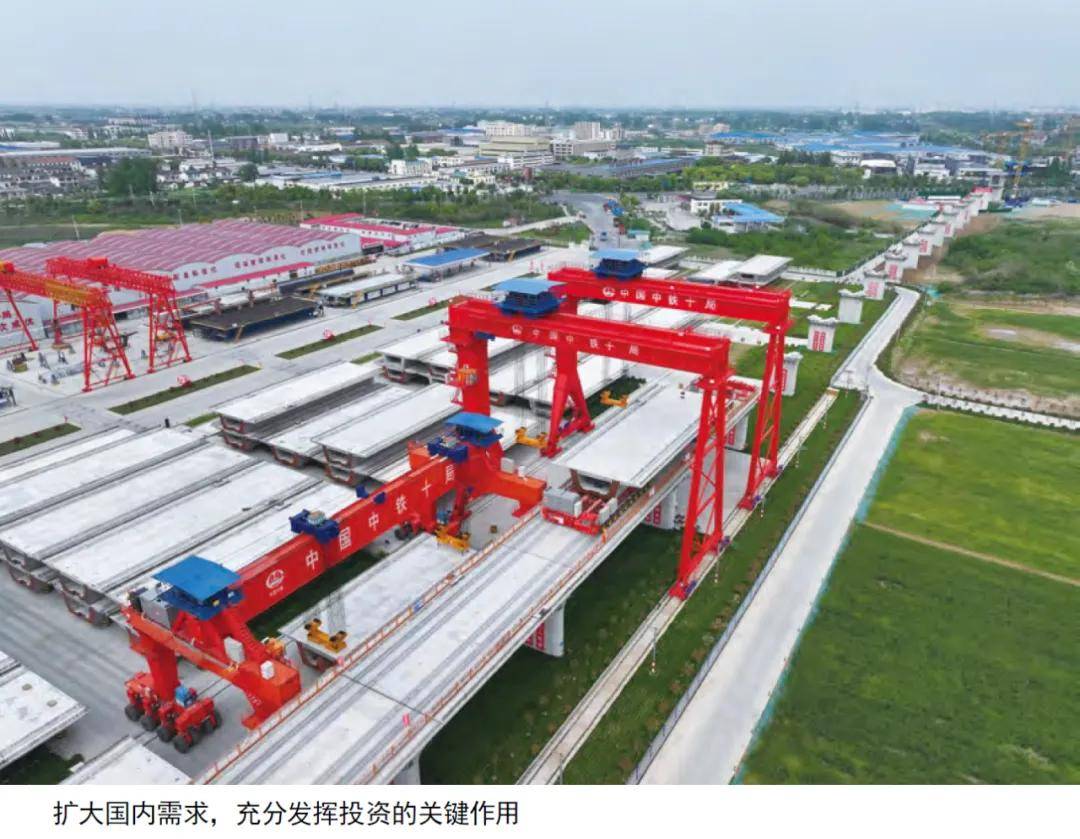
Core Viewpoint - The article emphasizes the importance of "system integration" in boosting consumption and improving investment efficiency, highlighting the interconnectedness of consumption, investment, and overall economic operation [2][3]. Group 1: Economic Policy and Investment - The current macroeconomic policy is characterized by proactive fiscal measures and moderately loose monetary policy, focusing on "effective investment" to expand domestic demand [4][7]. - Government investment should target major strategic implementations and key areas of security capability, which will enhance economic vitality and create jobs [4][6]. - There is a misconception that government investment opportunities are saturated; however, numerous effective investment projects are available, particularly in urban infrastructure and disaster prevention [6][7]. Group 2: Employment and Economic Growth - Effective investment projects initiated by the government can immediately create job opportunities and stimulate market demand, akin to the "New Deal" approach [7][11]. - Long-term benefits of effective investment include structural optimization and enhanced economic resilience, contributing to national security and social stability [7][8]. Group 3: Comprehensive Performance and Externalities - The effectiveness of government investment should be evaluated beyond traditional cost-benefit analysis, considering the broader positive externalities and comprehensive performance of projects [8][9]. - Examples such as the Qinghai-Tibet Railway illustrate that some projects may not yield immediate financial returns but provide significant long-term national benefits [8][9]. Group 4: Systematic Approach to Government Investment - Government investment should be viewed as a systematic project, requiring a combination of policy direction, project planning, funding allocation, and quality management [11]. - Successful government investment involves a series of interconnected processes, including feasibility studies and post-completion maintenance, to ensure comprehensive effectiveness [11].
祥源文旅(600576):子公司与控股股东签署管理服务合同 推进合作共赢
Xin Lang Cai Jing· 2025-06-16 00:25
Core Viewpoint - The company has signed management service contracts with seven subsidiaries of its indirect controlling shareholder, Xiangyuan Holdings Group, to enhance operational efficiency and profitability in the tourism sector [1][2]. Group 1: Management Service Contracts - Zhejiang Yuankun Tourism will provide management services to seven companies, focusing on ticket sales, amusement parks, commercial operations, and parking services [1]. - The total management service fee is expected to range from 22.5 million to 38.25 million yuan, with a service period extending until December 31, 2027 [1]. Group 2: Strategic Implications - The transaction aims to leverage the company's comprehensive operational management capabilities in tourism, enhancing the operational efficiency of the controlling shareholder's tourism assets [2]. - The company is committed to a strategy of cultural and tourism integration, expanding its business footprint with a rich resource base from its controlling shareholder, which operates over 40 cultural tourism projects nationwide [2]. Group 3: Financial Projections - The company is projected to achieve total revenues of 1.34 billion, 1.51 billion, and 1.74 billion yuan from 2025 to 2027, with year-on-year growth rates of 55%, 13%, and 15% respectively [2]. - The net profit attributable to the parent company is expected to reach 382 million, 460 million, and 544 million yuan for the same period, with year-on-year growth rates of 160%, 20%, and 18% respectively [2].

领展房地产投资信托基金(0823.HK):2025财年业绩符合预期-租户销售改善迹象。指引轻微负租金调整。潜在并购上行空间未反映在价格中
Goldman Sachs· 2025-05-30 02:40
Investment Rating - The report maintains a "Buy" rating for Link REIT since March 31, 2023, with a target price of HK$48.00, representing a 17.4% upside from the current price of HK$40.90 [13][21]. Core Insights - Link REIT reported a headline net loss of -HK$8.9 billion for FY25, primarily due to a -HK$15.8 billion markdown in rental properties. However, the underlying profit grew by 13% year-on-year to HK$7 billion, aligning with expectations [1]. - The overall revenue for Link REIT increased by 4.8% year-on-year to HK$14.223 billion, with a notable contribution from non-rental ancillary income, which rose by 16% year-on-year [1][23]. - The rental portfolio valuation was marked down by 4.7% half-on-half to HK$226 billion, reflecting a 9.2% decline from its peak at the end of FY23 [2][23]. - Management anticipates ongoing pressure on rental reversion, guiding for a low-to-mid single-digit percentage decline in FY26E [18][22]. Summary by Sections Financial Performance - Link REIT's total revenue for FY25 was HK$14.223 billion, with a year-on-year growth of 4.8%. The revenue growth is expected to moderate to 3.2% in the second half of FY25 [1][23]. - The net property income (NPI) grew by 5.5% year-on-year to HK$10.6 billion, with a margin expansion to 74.7% [1][23]. - The group declared a final dividend per share (DPS) of HK$1.37, a 3.7% increase year-on-year, totaling HK$2.72 for the full year [2][23]. Rental Trends - Tenant sales showed signs of improvement, with a decline of -3% year-on-year in FY25, compared to -4.3% in the first half of FY25 [22]. - The rental reversion for the Hong Kong portfolio was negative at -2.2% for FY25, with management expecting continued challenges in rental reversion amid uncertain macroeconomic conditions [22]. M&A and Strategic Initiatives - Management is actively exploring M&A opportunities under the Link 3.0 strategy, with preparations already in place [19][22]. - The company has a treasury of approximately 17 million units, which could be utilized for funding potential acquisitions [19]. Market Position and Valuation - The stock offers a compelling valuation with a dividend yield of 6.7%, which is above the historical average spread over US treasury rates [21]. - The financial position remains healthy, with a slight increase in the net gearing ratio to 21.5% and an interest coverage ratio improved to 5x [17][22].