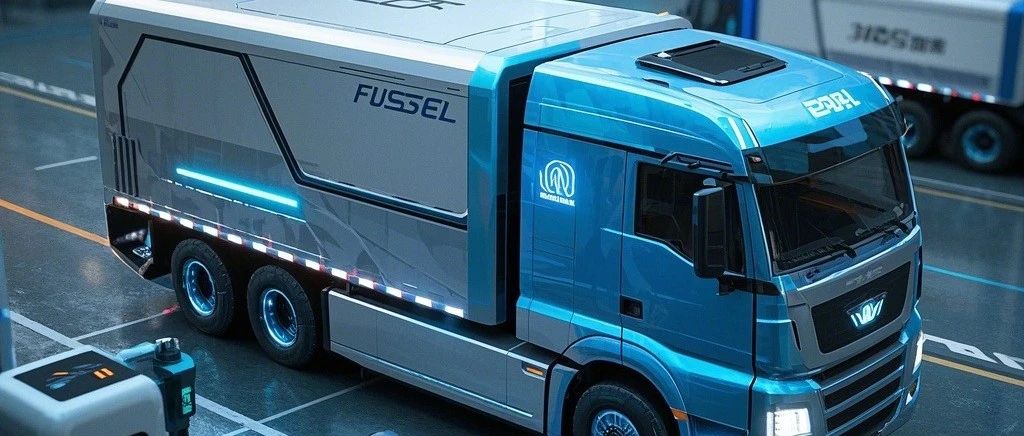
兆瓦级超充方案

Search documents
跨越拐点:华为靠什么破解重卡电动化“最后一道”难关?| 头条
第一商用车网· 2025-12-19 07:04
Core Viewpoint - The article emphasizes the significance of ultra-fast charging technology in the electric heavy truck sector, highlighting its potential to revolutionize logistics efficiency, cost structures, and low-carbon models, particularly in commercial vehicles compared to passenger cars [1]. Group 1: Ultra-Fast Charging Technology - Ultra-fast charging is a key technology to alleviate range anxiety for electric vehicle users and is crucial for the widespread adoption of electric vehicles [1]. - Huawei's megawatt ultra-charging technology is leading the charge in enhancing the efficiency and sustainability of commercial vehicle charging systems [1]. Group 2: Industry Collaboration and Ecosystem - The establishment of the "Super Charging Alliance 2.0" aims to address core bottlenecks in the industry, such as mismatched charging infrastructure and vehicle compatibility, by fostering an open and cooperative ecosystem [3]. - Over ten major heavy truck manufacturers have joined the alliance, indicating a shift from experimental phases to large-scale applications of high-power charging technology [5]. Group 3: Advantages of Huawei's Megawatt Ultra Charging - The megawatt ultra-charging solution significantly reduces charging time from over one hour to approximately 15 minutes, enhancing operational efficiency by nearly four times [7][10]. - The technology is designed to withstand extreme environmental conditions, ensuring high reliability and safety during the charging process [9]. - The reduction in charging time translates to a 15% increase in overall transportation efficiency, benefiting both logistics companies and charging station investors [10]. Group 4: Practical Applications and Market Validation - Huawei's ultra-charging solutions are being implemented in key logistics hubs across China, demonstrating their effectiveness in real-world scenarios [12]. - The establishment of the first 100-megawatt ultra-charging station in Sichuan showcases the capability of the technology to handle high-frequency, heavy-load transportation in challenging environments [17][19]. - The ongoing expansion of the Super Charging Alliance and the deployment of various charging networks are paving the way for comprehensive electrification in the logistics sector [19].


华为明年将在大湾区建设500座重卡超充站
高工锂电· 2025-09-20 10:15
Group 1 - The core viewpoint of the article highlights the rapid growth of new energy heavy truck sales, which exceeded 110,000 units from January to August 2025, representing a year-on-year increase of approximately 179% [3] - Huawei is focusing on the development of a megawatt-level ultra-fast charging network, with plans to establish 20 charging stations in Shenzhen by the end of the year and expand to 500 stations in the Bay Area next year [3][4] - The construction cost of the megawatt ultra-fast charging stations is approximately 4.5 million, with the ability to support fast charging for both passenger vehicles and heavy trucks, thereby reducing overall costs [4] Group 2 - The current battery partners of Huawei's ultra-fast charging alliance have launched eight battery models, covering specifications from 300 to 600 kWh, which will drive the demand for related batteries [3][4] - The megawatt ultra-fast charging stations require significant power, potentially reaching tens of megawatts, necessitating upgrades to existing regional power grids [4] - Huawei's integrated energy station for megawatt ultra-fast charging employs a full set of "solar-storage-charging" technology, featuring 4 megawatts of solar power and 30 sets of 215 kWh commercial energy storage [4][5]

电动重卡补能趋势:换电、超充双轨并行走向融和?
高工锂电· 2025-07-01 12:08
Core Viewpoint - The article discusses the evolving landscape of electric heavy-duty truck charging solutions, highlighting the competition and integration between battery swapping and ultra-fast charging technologies as the industry adapts to increasing sales and technological advancements in the sector [1][6][10]. Charging Solutions - Battery swapping and ultra-fast charging are the two main methods supporting the penetration of electric heavy-duty trucks, with companies like CATL and BYD leading the development of fast-charging batteries and systems [1][6]. - CATL has introduced a "75 standard battery swap module" and signed contracts for battery swap stations, indicating a strategic move to integrate multiple energy supply solutions for heavy-duty trucks [1][12]. - The sales of charging heavy-duty trucks have significantly outpaced battery-swapped trucks, with over 40,000 units sold in the first five months of 2025, more than double the sales of battery-swapped trucks [7][8]. Ultra-Fast Charging Developments - Companies are launching high-power ultra-fast charging solutions, such as a 1.6MW product from Qiyuan Xindong, which can charge up to 260 kWh in 15 minutes, providing a range of nearly 200 kilometers [2][8]. - Huawei's ultra-fast charging solution can reach up to 1.5MW, while other companies like Star Charge and Telai Electric are also developing their own ultra-fast charging technologies [8][9]. - The construction cost for a megawatt-level charging station is approximately 4.5 million yuan, with the potential for compatibility with various vehicle types, thus reducing overall costs [8]. Industry Trends and Future Outlook - The article notes that the high upfront costs of battery swap stations may hinder widespread adoption, but the rapid growth in electric heavy-duty truck sales is driving changes in charging technology and infrastructure [6][11]. - The integration of charging and battery swapping solutions is seen as a potential future trend, with companies exploring hybrid models that combine both methods to enhance efficiency and sustainability [10][12]. - The collaboration between major players, such as CATL and Sinopec, aims to establish a nationwide battery swap network, with plans to build at least 500 swap stations this year and expand to 10,000 in the long term [12].