光伏级硅料

Search documents
逆势并购,通威股份有何战略考量
Xin Lang Cai Jing· 2026-02-26 06:25
Core Viewpoint - Tongwei Co., Ltd. announced a significant acquisition of 100% equity in Qinghai Lihua Qingneng Co., Ltd., which has led to a halt in trading for up to 10 days, reflecting the market's mixed reactions to this move during a challenging period for the photovoltaic industry [2][3][4]. Group 1: Acquisition Details - The acquisition is seen as a strategic move to consolidate Tongwei's leading position in the photovoltaic sector, where it currently holds over 900,000 tons of high-purity silicon production capacity, accounting for approximately 30% of the global market share [3][4]. - Qinghai Lihua has a production capacity of over 200,000 tons, ranking sixth in the industry, which would increase Tongwei's total silicon production capacity to over 1 million tons if the acquisition is successful [3][4]. Group 2: Industry Context - The photovoltaic industry is currently facing severe challenges, including overcapacity and plummeting prices, with polysilicon prices falling below the cost line since Q4 2023, leading many companies to incur significant losses [3][4]. - The acquisition is viewed as a potential means to improve market concentration and reduce vicious price competition, as Tongwei aims to enhance its market power amid regulatory challenges to previous collaborative pricing strategies [4][10]. Group 3: Strategic Considerations - The timing of the acquisition may allow Tongwei to capitalize on lower costs due to the current market downturn, as valuations are not high, making it an opportune moment for mergers and acquisitions [11][12]. - Qinghai Lihua's capabilities in electronic-grade polysilicon, with purity levels reaching 11N, align with the industry's shift towards N-type technology, providing Tongwei with a strategic advantage in high-quality silicon materials [11][12]. Group 4: Management Dynamics - The relationship between Tongwei and Qinghai Lihua's chairman, Duan Yong, who previously held key positions at Tongwei, may facilitate smoother integration post-acquisition, potentially reducing integration risks [12]. - Concerns remain regarding the valuation of the acquisition and the impact on Tongwei's shareholders, particularly given Qinghai Lihua's previous valuation of 13.849 billion yuan during a funding round in 2022 [12].


逆势并购,通威股份有何战略考量
IPO日报· 2026-02-26 06:18
Core Viewpoint - Tongwei Co., Ltd. announced a significant acquisition of 100% equity in Qinghai Lihua Qingneng Co., Ltd., which has led to a halt in trading for up to 10 days, reflecting the market's mixed reactions to this move during a challenging period for the photovoltaic industry [2][3]. Group 1: Acquisition Context - The acquisition has garnered attention due to Tongwei's position as a leading player in the photovoltaic sector, particularly during a downturn characterized by overcapacity and falling prices [3]. - The founder and chairman of Qinghai Lihua, Duan Yong, previously held senior positions at Tongwei, indicating a unique integration approach that is not commonly seen in A-share mergers [3][6]. Group 2: Strategic Considerations - The acquisition may be aimed at consolidating Tongwei's leading position, as the company currently has an annual production capacity of over 900,000 tons of high-purity silicon, which is the highest globally, and a market share of approximately 30% [3]. - By acquiring Qinghai Lihua, which has a production capacity of over 200,000 tons, Tongwei's total capacity could exceed 1 million tons, further distancing itself from competitors like GCL-Poly and Daqo New Energy [3]. Group 3: Market Dynamics - The photovoltaic industry is undergoing significant adjustments, with previous attempts at price stabilization through joint efforts facing regulatory challenges, making market-driven mergers and acquisitions a viable path for capacity reduction [4]. - Tongwei's chairman emphasized that the polysilicon segment is crucial for supply-demand regulation across the industry, suggesting that this acquisition is a strategic response to current market conditions [4]. Group 4: Cost and Technological Positioning - The timing of the acquisition may allow Tongwei to minimize costs, as the overall industry is experiencing low valuations, making it an opportune moment for mergers [5]. - Qinghai Lihua not only has photovoltaic-grade silicon production but also has developed electronic-grade polysilicon, which aligns with the industry's shift towards higher efficiency technologies [5]. Group 5: Integration Challenges - The prior relationship between Duan Yong and Tongwei may facilitate smoother integration post-acquisition, potentially reducing risks associated with merging operations [6]. - However, concerns remain regarding the valuation of Qinghai Lihua and the potential impact on Tongwei's shareholders, particularly given the previous high valuation of Qinghai Lihua at 13.849 billion yuan [6].
特朗普要玩阴的?打造“硅联盟”,率先下手与中国竞争关键矿产
Sou Hu Cai Jing· 2025-12-17 04:15
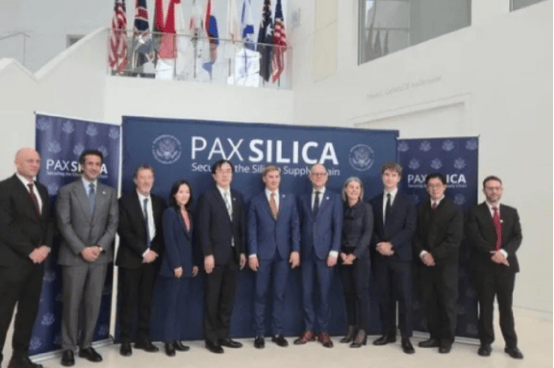
Group 1 - The "Silicon Peace Declaration" signed by the US and eight allied countries aims to establish a secure and prosperous silicon supply chain, reflecting a shift in US foreign policy from "value-based alliances" to "industrial chain control" in response to China's technological rise [1][3] - The US is concerned about China's rapid advancements in 5G, artificial intelligence, and semiconductor manufacturing, which challenge its long-standing technological dominance. In 2024, China's high-tech industry is projected to account for 19.1% of GDP, a 7.3 percentage point increase since 2019 [3] - The US is forming a "technology security alliance" to create an exclusive cooperation system across the entire supply chain, from key mineral extraction to AI infrastructure deployment, aiming to curb China's technological upgrades [3] Group 2 - China holds a dominant position in the silicon industry, with a projected production of 1.82 million tons of polysilicon in 2024, a 23.6% year-on-year increase, maintaining over 90% of the global market share [4] - The global semiconductor industry has developed an interdependent structure, with China being the largest semiconductor consumer market, accounting for 35% of global demand. A complete "decoupling" from China by US allies could lead to supply chain disruptions and increased costs [6] - China is responding to US strategic containment with a dual approach of "independent innovation + open cooperation," increasing domestic production of semiconductor equipment and attracting foreign investment in high-tech industries, which reached 1.2 trillion yuan in 2024, a 15.3% increase [6]