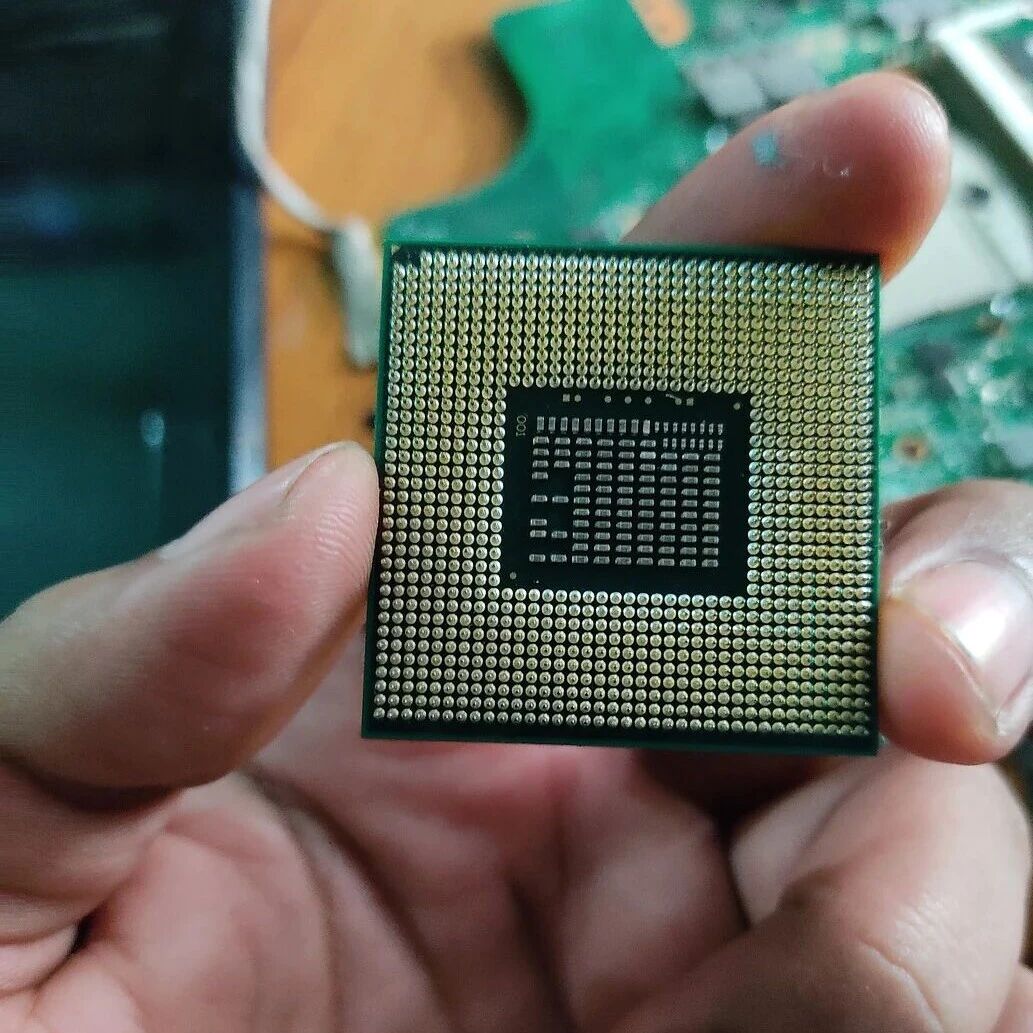
光学处理单元(OPU)

Search documents
这款芯片,算力是英伟达10倍
Xin Lang Cai Jing· 2026-01-28 03:31
Core Insights - Neurophos, an AI chip company based in Austin, Texas, has announced significant testing results for its Optical Processing Unit (OPU), claiming it achieves ten times the performance of NVIDIA's latest AI supercomputer while maintaining similar power consumption levels [3][4] - The breakthrough is attributed to larger computational matrices and higher clock frequencies, which provide a key advantage over traditional GPUs [3][4] Company Highlights - Neurophos's CEO, Patrick Bowen, detailed the OPU's hardware design, featuring a 1000 x 1000 pixel photonic sensor matrix, which is 15 times larger than the typical 256 x 256 pixel matrices used in most AI GPUs [4] - The company has successfully reduced the physical size of photonic transistors by approximately 10,000 times, addressing integration challenges faced by traditional silicon photonic chips [4][6] - The first-generation optical accelerator, Tulkas T100, has a core unit size of about 25 square millimeters and operates at a clock frequency of 56 GHz, significantly surpassing traditional electronic chip performance limits [5][6] Industry Context - Photonics is emerging as a key area in the semiconductor field, with major tech companies like NVIDIA and AMD investing in optical technologies to enhance data transmission and processing capabilities [7] - The advancements in optical computing, such as those demonstrated by Neurophos, represent important milestones in the maturation of the photonics industry, which aims to overcome limitations of traditional electronic chips [7][8] - The ongoing demand for AI computing power is pushing the boundaries of traditional electronic chip performance, making photonics a promising direction for future breakthroughs [8]



比尔盖茨押注硅光突破:旗下Neurophos首款光子芯片性能达英伟达AI超算十倍
Sou Hu Cai Jing· 2026-01-27 10:18
Core Insights - Neurophos, an AI chip startup backed by the Gates Frontier Fund, has made significant advancements in silicon photonics, developing an optical processing unit (OPU) that is approximately 10,000 times smaller than existing technologies and capable of a 1000×1000 pixel scale photonic computing matrix on a single chip [1] Group 1: Technology Advancements - The first optical accelerator, Tulkas T100, achieves AI computing performance that is ten times greater than NVIDIA's latest Vera Rubin NVL72 supercomputer at FP4/INT4 precision, while maintaining similar power consumption levels [3] - Key technologies contributing to this performance include a 1000×1000 photonic tile, which significantly exceeds the mainstream GPU matrix size of 256×256, and a clock frequency of 56 GHz, which is much higher than the 9.1 GHz of Intel's Core i9-14900KF and 2.6 GHz of NVIDIA's RTX Pro 6000 GPU [3] Group 2: Manufacturing and Future Prospects - The CEO of Neurophos, Patrick Bowen, stated that traditional optical transistors produced in silicon photonic factories are about 2 millimeters long, making high-density integration challenging. Their technology miniaturizes optical transistors to a scale compatible with CMOS processes, enabling large-scale parallel optical computing [3] - The Tulkas T100 chip contains only one "optical tensor core" with an area of approximately 25 square millimeters, significantly fewer than the 576 digital tensor cores integrated into NVIDIA's Vera Rubin chip, yet achieves higher effective throughput through greater matrix dimensions and clock frequency [3] - Despite these advancements, Neurophos acknowledges that the technology is still in the engineering validation stage, with mass production not expected before 2028, and several challenges remain, including on-chip SRAM capacity, vector processing unit expansion, and optoelectronic co-design [4]
微软投资光芯片,计划取代GPU
半导体行业观察· 2026-01-23 01:37
Core Insights - Neurophos Inc. has successfully raised $110 million in an oversubscribed early funding round, bringing its total funding to $118 million, with significant participation from various investors including Gates Frontier and Microsoft's M12 [1][2] - The company aims to address the growing demand for computational power required for AI technologies by developing a new AI acceleration chip called the Optical Processing Unit (OPU), which integrates over a million micro-scale optical processing elements on a single chip [2][3] Funding and Investment - The A round of funding was led by Gates Frontier, with participation from multiple investors such as Carbon Direct Capital, Saudi Aramco Ventures, and others [1] - The investment reflects a broader trend where investors are willing to fund promising chip startups due to the unprecedented demand for AI computing, which cannot be solely met by existing players like NVIDIA [3][4] Technology and Innovation - Neurophos's OPU is claimed to achieve performance levels up to 100 times that of current AI processors, providing a more powerful plug-and-play solution for data center operators [2] - The core innovation lies in the development of proprietary micro-scale optical modulators, which are 10,000 times smaller than existing photonic components, enabling practical photon-based computing [2][3] Performance and Applications - The OPU chip is designed to operate at clock frequencies exceeding 100 GHz, with early tests showing performance of over 300 trillion operations per watt, significantly surpassing current standards [3] - Neurophos is collaborating with Norwegian data center operator Terakraft to launch a pilot project for its optical AI accelerator by 2027, with plans to manufacture complete systems by early 2028 [3][5] Future Plans - The funding will accelerate the delivery of Neurophos's first integrated photonic computing system, which includes OPU modules and a complete software stack [5] - The company plans to expand its headquarters in Austin, Texas, and open a new engineering center in San Francisco to showcase its technology to potential customers [5]