
人工智能芯片

Search documents
AI芯片公司,融资30亿
半导体行业观察· 2026-03-31 02:23
Core Viewpoint - Rebellions, a South Korean AI chip startup, has raised $400 million (approximately 3 billion RMB) to expand into the U.S. market before its IPO, with a valuation of $2.34 billion [1][9]. Group 1: Funding and Market Expansion - The funding round was led by Future Asset Financial Group and the Korean National Growth Fund, which is part of the government's initiative to boost the domestic semiconductor industry [1][3]. - Rebellions aims to target large labs like Meta and xAI as primary customers, rather than large-scale data center operators like Amazon and Microsoft [1][2]. - The company is currently conducting active proof-of-concept trials with several clients in the U.S. [1]. Group 2: Product and Technology - Rebellions focuses on inference capabilities, providing higher energy efficiency and performance compared to competitors like Nvidia [2]. - The company sells server systems composed of its Rebel100 NPU chips, which are designed for high-performance AI applications [2][5]. - The Rebel100 processor can perform petaFLOP dense 16-bit floating-point operations and has a total memory bandwidth of 4.8 TB/s [6]. Group 3: Competitive Landscape - Rebellions competes not only with Nvidia but also with other startups like Cerebras and Groq [2]. - The company claims to have a strong revenue source, although it faces challenges in securing memory chip supplies due to high demand and limited availability [2][6]. - Rebellions benefits from its close relationships with major memory manufacturers like Samsung and SK Hynix, which are also investors in the company [2][3]. Group 4: Strategic Initiatives - The South Korean government launched the "K-Nvidia" initiative to invest in companies designing advanced AI chips, with Rebellions being a key player [3]. - Rebellions has established offices in Japan, Saudi Arabia, Taiwan, and the U.S. to promote its technology globally [5]. - The company is developing a new rack-level computing platform that does not require liquid cooling or ultra-high power density racks, aiming to make deployment easier in existing enterprise data centers [4][7]. Group 5: Software and Integration - Rebellions' software stack operates on open-source frameworks like vLLM, PyTorch, and Triton, facilitating ease of use for clients familiar with these technologies [8]. - The company is a member of the PyTorch Foundation, which is relatively uncommon among AI chip startups, indicating a commitment to open-source collaboration [9].


Elon Musk的晶圆厂,究竟要多少钱?
半导体行业观察· 2026-03-27 00:52
Core Viewpoint - Elon Musk's TeraFab project aims to produce millions to billions of AI chips with an annual power consumption of up to 1 terawatt (1 TW), requiring an estimated $5 trillion in funding to achieve its goals, which far exceeds current industry capacity [1][5]. Group 1: Funding and Production Capacity - TeraFab's goal of producing 1 TW of AI silicon annually necessitates between 142 to 358 wafer fabs to process 22.4 million Rubin Ultra GPU wafers, 2.716 million Vera CPU wafers, and 15.824 million HBM4E wafers [1]. - A modern advanced logic wafer fab can produce approximately 24 million wafers per year, meaning TeraFab would need about 105 fabs at 100% yield or 126 fabs at 80% yield to meet its production targets [3]. - The estimated cost for a 2nm process fab ranges from $25 billion to $35 billion, leading to a total requirement of approximately $3.15 trillion at 100% yield or $3.78 trillion at 80% yield for logic capacity alone [3]. Group 2: High Bandwidth Memory (HBM) Production - HBM production is critical for TeraFab's objectives, with modern DRAM fabs providing a capacity of 100,000 to 200,000 wafers per minute, averaging 150,000 wafers [4]. - To produce 15.824 million HBM4E wafers, TeraFab would require about 9 fabs at 100% yield or 12 fabs at 70% yield, with each fab costing at least $20 billion, leading to a total of approximately $240 billion for memory capacity [4]. - Advanced packaging facilities for 2.5D and 3D integration are also necessary, with costs ranging from $2 billion to $3.5 billion per facility, indicating a need for significant additional investment [4]. Group 3: Challenges Beyond Funding - Raising $5 trillion poses significant challenges, as it exceeds the market capitalizations of major companies like Nvidia, Apple, and Alphabet combined [5]. - The feasibility of such large-scale private financing or collaboration among governments, sovereign wealth funds, and capital markets is questioned, alongside limitations in manufacturing equipment and skilled labor availability [5]. - The ultimate question remains whether Musk intends to establish a chip foundry with capacity surpassing that of TSMC, Samsung, and Intel combined to meet the demands of Tesla, SpaceX, and xAI [5].
NVIDIA Accused of Hiding $1B Crypto Mining Revenue as 'Gaming' — Lawsuit Moves Forward After Supreme Court Snu
Yahoo Finance· 2026-03-26 12:45
Core Viewpoint - NVIDIA Corporation and its CEO, Jensen Huang, are facing a class-action lawsuit for allegedly concealing over $1 billion in GPU sales related to cryptocurrency mining during the 2017-2018 boom, raising concerns about the company's historical reliance on the crypto market [1][7]. Group 1: Lawsuit Details - The lawsuit claims NVIDIA misclassified significant revenue from crypto mining under its Gaming segment, misleading shareholders about the sustainability of its growth and downplaying exposure to the volatile crypto market [2]. - Plaintiffs, led by a Swedish investment firm, argue that NVIDIA executives knowingly understated the impact of crypto miners on gaming segment revenue [2]. - Internal documents and testimonies suggest NVIDIA earned between $1.1 billion and $1.35 billion more from crypto-related GPU sales than publicly disclosed, primarily through GeForce gaming cards sold to miners [3]. Group 2: Market Impact - The lawsuit alleges that the majority of crypto-related sales were through consumer GeForce cards, particularly in high-demand markets like China [4]. - Following a crash in crypto prices in late 2018, NVIDIA reduced its revenue guidance due to excess inventory and declining miner demand, resulting in a stock drop of over 28.5% in just two trading days [4]. - This decline led to a significant loss in market value and triggered the original lawsuit in 2018 [4]. Group 3: Legal Proceedings - Judge Haywood S. Gilliam Jr. certified the class after NVIDIA could not demonstrate that its statements had no effect on its stock price [5]. - An internal email from a senior vice president indicated that the company's valuation remained high due to public assurances regarding its business [5]. - A case management conference is scheduled for April 21, 2026, as the lawsuit progresses [5].

北大团队实现芯片领域重要突破,国产化进程有望提速
Xuan Gu Bao· 2026-02-24 15:03
Group 1: Industry Insights - A research team led by Qiu Chengguang from Peking University has developed the smallest and lowest power-consuming ferroelectric transistor to date, which is expected to support AI chip performance and energy efficiency improvements [1] - This new technology breaks the physical limitations of traditional ferroelectric transistors, achieving energy consumption levels that are an order of magnitude lower than the best international standards [1] - The ultra-low working voltage and energy-efficient characteristics of the nano-gate ferroelectric transistor provide a core component solution for building high-efficiency data centers and lay a critical technological foundation for the next generation of high-performance AI chips [1] - Donghai Securities notes that global semiconductor demand continues to improve, with rapid growth in AI servers and new energy vehicles, and demand is expected to recover further by January 2026 [1] - Despite high and rising inventory levels among companies, the demand surge in certain segments driven by AI is leading upstream wafer foundries to increase prices, while memory price hikes may affect costs in consumer electronics like mobile phones and PCs, potentially slowing shipments [1] - Overall, the semiconductor supply-demand landscape is expected to remain favorable in February, with domestic semiconductor production likely to accelerate, suggesting investors should pay attention to leading companies in specific segments [1] Group 2: Company Developments - Huahai Qingke's main products include CMP equipment, thinning equipment, cutting equipment, wet processing equipment, wafer regeneration, key consumables, and maintenance services, having initially achieved a platform strategy layout of "equipment + services" [2] - Shengmei Shanghai is engaged in the development, manufacturing, and sales of semiconductor cleaning equipment and semiconductor plating equipment, providing customized, high-performance, and low-consumption process solutions for semiconductor manufacturers [2]


北大团队实现芯片领域重要突破
Ke Ji Ri Bao· 2026-02-24 02:40
Core Viewpoint - The research team from Peking University has developed the smallest and lowest power-consuming ferroelectric transistor to date, which is expected to support the enhancement of computing power and energy efficiency for AI chips [1]. Group 1: Technological Advancements - The physical gate length of the ferroelectric transistor has been reduced to the 1-nanometer limit, representing a significant breakthrough in the field [1]. - Traditional ferroelectric transistors faced limitations such as high energy consumption and mismatched logic voltage, hindering their large-scale application [1]. - The research team utilized a nano-gate structure design to address the high voltage and energy consumption issues associated with changing the polarization state of ferroelectric materials [1]. Group 2: Performance Improvements - The new technology has reduced energy consumption by an order of magnitude compared to the best international standards [1]. - The ultra-low operating voltage and energy characteristics of the nano-gate ferroelectric transistor provide a core device solution for constructing high-efficiency data centers [1]. - This advancement lays a critical technological foundation for the development of the next generation of high-performance artificial intelligence chips [1].
英伟达震惊世界的芯片
半导体行业观察· 2026-02-24 01:23
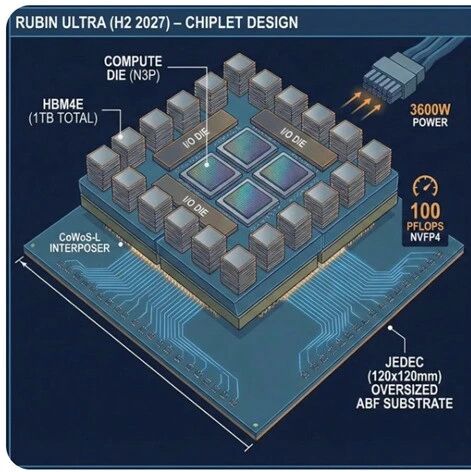
Core Viewpoint - NVIDIA is set to unveil multiple groundbreaking chips at the upcoming GTC 2026 conference, emphasizing the importance of memory logic integration for future developments [2][4]. Group 1: Background on AI Chip Challenges - The AI chip industry faces three major obstacles: memory bandwidth gap, interconnect power consumption, and structural inefficiencies in LLM inference [4][6][7]. Group 2: Memory Bandwidth Gap - The throughput of the B200 tensor core is 1.57 to 1.59 times higher than that of the H200 under FP16/FP8, and 2.5 times higher under FP4, while memory bandwidth growth lags behind GPU performance improvements [5]. Group 3: Interconnect Power Consumption - In a hypothetical million-GPU cluster, pluggable transceivers consume hundreds of megawatts, with a single 1.6Tbps transceiver consuming about 30 watts, highlighting the power consumption issues in interconnects [6]. Group 4: Structural Inefficiencies in LLM Inference - LLM inference consists of two distinct phases: pre-filling and decoding, which require different hardware capabilities. Separating these phases can increase throughput by 2.35 times [7]. Group 5: Proposed Solutions - **Solution 1: Rubin Ultra Roadmap** Rubin Ultra is expected to feature four GPU compute chips integrated in one package, achieving 100 PFLOPS performance with a power consumption of 3600W [8][10]. - **Solution 2: Silicon Photonic Stacks** NVIDIA has introduced silicon photonic-based network switches, with Quantum-X expected to deliver 115 Tb/s and Spectrum-X up to 400 Tb/s [12][18]. - **Solution 3: Rubin CPX for Inference** The Rubin CPX GPU is designed specifically for inference, utilizing GDDR7 to reduce memory costs significantly while improving performance [19][21]. - **Solution 4: Long-term 3D IC Development** The potential for 3D IC technology, which could stack memory directly on top of GPUs, is being explored, with significant implications for performance and energy efficiency [26][29]. Group 6: Future Expectations - The GTC 2026 conference may reveal specific timelines for the production of Rubin Ultra and the architectural details of the Kyber rack, as well as NVIDIA's collaboration with SK Hynix on 3D chip development [11][33].
今日A股市场重要快讯汇总|2026年2月11日
Sou Hu Cai Jing· 2026-02-11 00:07
Group 1: Company Dynamics - Blackstone is reportedly planning to invest $200 million in ANTHROPIC [11] - Google has received EU antitrust approval for its $32 billion acquisition of Wiz [11] - CME Group will launch single stock futures [11] Group 2: Industry Insights - Spotify's stock surged by 15.8% due to better-than-expected first-quarter earnings forecast, potentially marking its largest single-day gain since October 2019 [11] - The UK Financial Conduct Authority (FCA) has filed a lawsuit against global cryptocurrency exchange Huobi (HTX) for illegally promoting cryptocurrency services to UK consumers [11] - Bitcoin has fallen below $68,000, declining by 3.13% in a single day [11]
越疆开启第三批全尺寸工业人形机器人ATOM的2026年量产交付;商业航天首个卫星测发技术厂房诞生丨智能制造日报
创业邦· 2026-02-05 03:08
Group 1 - Counterpoint predicts that Broadcom will expand its market share in the custom chip (ASIC) market to 60% next year, capturing nearly 99% of wafer manufacturing orders from the top ten global data centers and ASIC customers [2] - The competition in the AI chip market is expected to intensify between ASICs and GPUs, with Broadcom and TSMC positioned as the biggest winners in the second phase of the AI chip boom [2] Group 2 - Yujian has commenced the mass delivery process for its third batch of full-size industrial humanoid robots, ATOM, which are set for large-scale delivery in 2026 [2] - LG Energy Solution has signed an agreement with Hanwha's U.S. subsidiary to supply 5 GWh of batteries for energy storage systems, with production planned locally to avoid tariff uncertainties [2] Group 3 - Samsung Display plans to start mass production of 8.6-generation OLED panels in May, which are expected to be used in Apple's upcoming OLED MacBook Pro models [2] Group 4 - Tianbing Technology announced the completion of the first satellite measurement and launch technology plant in China's commercial aerospace sector, which will enhance the efficiency of satellite testing and launch preparations [2]



台积电赴日建3nm工厂,投资170亿美元
半导体行业观察· 2026-02-05 01:08
Core Insights - TSMC plans to invest $17 billion in advanced 3nm chip production in Kumamoto, Japan, with the Japanese government considering additional support for this investment [2] - Rapidus, a Japanese chip manufacturer, is expected to exceed its private investment target of 160 billion yen ($1.02 billion) by 2025, with significant backing from IBM and other major Japanese companies [3][4] - The Japanese government is prioritizing domestic production of advanced chips for economic security, with Rapidus aiming for mass production of 2nm chips by FY2027 [5] Group 1: TSMC's Investment in Japan - TSMC's investment in Japan is set at $17 billion for 3nm chip production, with discussions ongoing regarding changes to its original plan of $12.2 billion for 6-12nm capacity [2] - The Japanese government is providing subsidies to TSMC and is considering further support for its expansion plans [2] Group 2: Rapidus' Growth and Investment - Rapidus is projected to raise over 160 billion yen ($1.02 billion) in private investments by FY2025, with major shareholders including SoftBank and Sony, each investing 21 billion yen [3][4] - The number of shareholders in Rapidus is expected to increase from 8 to over 30, indicating growing interest in the company [4] - Rapidus aims to achieve mass production of 2nm chips by FY2027, supported by both public and private funding [5] Group 3: Technological Developments and Challenges - IBM is providing technical support to Rapidus and is expected to become its first foreign investor, aiming to reduce reliance on TSMC [4] - Rapidus has confirmed the operation of its 2nm transistor prototype and is working on efficient AI chip connections [4] - Despite progress, Rapidus faces challenges in scaling production, increasing output, and expanding its customer base [5]
美媒爆料:特朗普就职前,阿联酋公司购买了特朗普家族加密货币公司近一半股份
Guan Cha Zhe Wang· 2026-02-02 10:05
Core Viewpoint - The Trump family has reportedly earned over $1 billion through cryptocurrency since Donald Trump's return to the White House, raising significant concerns about potential conflicts of interest and corruption [1][8]. Group 1: Transaction Details - An investment company linked to the United Arab Emirates (UAE) acquired 49% of the Trump family's cryptocurrency company, World Free Finance, just days before Trump took office, marking a historic transaction where a foreign government official became a major shareholder in a U.S. president's company [1][11]. - The UAE company, Aryam Investment 1, paid an initial $250 million, with $187 million directed to entities controlled by the Trump family and $31 million to a company linked to U.S. Middle East envoy, Wittekov [1][4]. Group 2: Stakeholder Involvement - Sheikh Tahnoun bin Zayed Al Nahyan, a member of the Abu Dhabi royal family and UAE's national security advisor, supported the transaction and manages over $1.3 trillion in assets across various sectors [2][11]. - Following the transaction, the Trump family's ownership in World Free Finance decreased from 75% to 38%, indicating that other parties have acquired shares, although the buyers have not been disclosed [4][13]. Group 3: Political Implications - The transaction has sparked criticism regarding potential conflicts of interest, with former Obama administration officials and Democratic lawmakers expressing concerns about Trump's financial dealings while in office [6][15]. - The White House has defended Trump, asserting that he acts in the best interest of the public and that his assets are managed by a trust to avoid conflicts [7][16]. Group 4: Business Operations - Since Trump's second term began, the Trump family has expanded into various sectors, including investment banking and cryptocurrency, with reports indicating they earned approximately $1.4 billion from cryptocurrency projects in the year following his presidency [8][17].
