
光影丹青

Search documents
文化新观察丨为千年文明记忆点亮数字未来
Xin Hua She· 2025-11-14 21:56
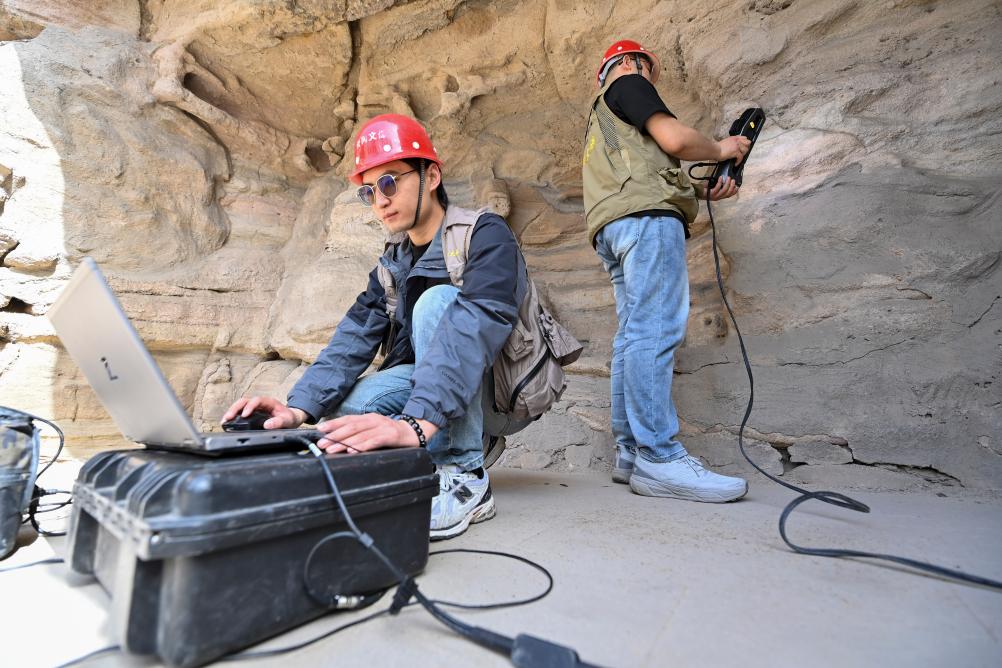
Core Perspective - The integration of digital technology in cultural heritage preservation is transforming the way historical artifacts are protected, shared, and experienced, enabling a more inclusive and sustainable future for cultural assets [2][4][6][7]. Group 1: Digital Preservation Initiatives - The establishment of the Cultural Heritage Digitalization Professional Committee at the World Internet Conference highlights the growing importance of digital preservation in maintaining cultural heritage [1]. - The collaboration between the Great Bao'en Temple Ruins Museum and UNESCO, along with 17 academic institutions, showcases a global effort to digitally reconstruct historical sites, such as the famous Liuli Tower, using advanced technologies like virtual reality and artificial intelligence [2]. - The Silk Road Caves Digital Preservation Project has successfully digitized significant sites, including 16 caves at Yungang and 165 at Maijishan, utilizing laser scanning and digital twin technology for enhanced protection [4]. Group 2: Cultural Engagement and Accessibility - The "Light and Shadow Danqing" project at the World Internet Conference transformed static ancient paintings into immersive experiences, allowing audiences to engage with cultural artifacts in innovative ways [5]. - The Palace Museum has digitized over 1 million items, with 150,000 high-definition images available for public access, enhancing the accessibility of cultural heritage [6]. - Public participation initiatives, such as Tencent's "Digital Cultural Relics Guardian Action," encourage community involvement in the preservation of cultural heritage, fostering a sense of responsibility and engagement among the public [9]. Group 3: Economic and Cultural Impact - The "Life Art - Mawangdui Han Dynasty Culture Immersive Digital Exhibition" attracted over 500,000 visitors and generated ticket revenue of 45 million yuan, demonstrating the economic potential of cultural exhibitions enhanced by digital technology [7]. - The establishment of the "China Ceramic Industry Internet" platform in Jingdezhen connects over 1,900 enterprises and promotes international cultural trade, exceeding 500 million yuan [7]. - The shift from "digital replication" to "value regeneration" signifies a broader transformation in the role of museums, positioning them as creators and connectors of culture rather than mere guardians [9].

为千年文明记忆点亮数字未来
Xin Hua She· 2025-11-14 12:52
Core Perspective - The article emphasizes the importance of digital technology in the preservation and revitalization of cultural heritage, showcasing various initiatives and projects that leverage digital tools to enhance public engagement and protect historical artifacts [1][3][6]. Group 1: Digital Preservation Initiatives - The establishment of the Cultural Heritage Digitalization Professional Committee at the World Internet Conference highlights a growing focus on digital preservation and transmission of cultural heritage [1]. - The collaboration between the Great Bao'en Temple Ruins Museum and UNESCO, along with 17 academic institutions, aims to create a cross-border platform for digital restoration and immersive experiences of historical sites [3]. - The China Cultural Relics Protection Foundation's Silk Road Cave Temples Digital Protection Project has successfully digitized significant sites, including the Yungang Grottoes and the Leshan Giant Buddha, utilizing advanced technologies for preservation [3]. Group 2: Public Engagement and Economic Impact - The "Light and Shadow Danqing" project at the World Internet Conference showcased 40 masterpieces from over 12,000 national treasures, transforming static art into an immersive experience, thus enhancing public appreciation of cultural heritage [4]. - The Hunan Museum's collaboration with Harvard University for the "Life Art" exhibition attracted over 500,000 visitors and generated significant ticket revenue, demonstrating the economic potential of cultural exhibitions [6]. - Tencent's "Digital Cultural Relics Public Protection Action" encourages public participation in the digitization of artifacts, fostering a sense of responsibility and engagement among the community [6]. Group 3: Future of Cultural Heritage - The article posits that digitalization is not merely about preserving the past but also about illuminating the future, suggesting a shift in how cultural heritage is perceived and utilized [5]. - The integration of digital technology in museums is seen as a transformation from being mere guardians of civilization to becoming creators and connectors of culture [6].
聚“会”成势 向“新”而行 ——浙江把握乌镇峰会机遇推动高质量发展
Ren Min Ri Bao· 2025-11-14 01:29
Group 1: Core Insights - The World Internet Conference in Wuzhen has become a significant platform for global internet innovation and technology since its establishment as a permanent venue in 2014, contributing to economic, cultural, and social development in Zhejiang [1] - Zhejiang has effectively transformed the advantages of hosting the Wuzhen Summit into a driving force for high-quality development in the digital era, enhancing economic efficiency and cultural prosperity [1] Group 2: Digital Economy Development - Companies in Qiantang are leveraging the Wuzhen Summit to advance, with initiatives like the establishment of an eco-friendly materials lab by New Fengming Group and Donghua University, and the successful launch of the National Technology Transfer Center's pilot base [2] - The "Wuzhen Light" supercomputing center supports a collaborative and intelligent computing system, while Qiantang has become a national testing demonstration zone for smart connected vehicles, attracting over 60 enterprises in the sector [2] - Since 2019, the "Direct to Wuzhen" global internet competition has engaged over 5,000 projects from more than 40 countries, resulting in the cultivation of 4 publicly listed companies and 16 unicorns [2] - Zhejiang's digital economy value increased from 14.8 trillion yuan in 2015 to 47 trillion yuan in 2024, with an average annual growth rate of 13%, now accounting for 53% of the GDP [2] Group 3: Cultural Exchange and Innovation - The overseas short drama production center of Jiaxing Jiuzhou Cultural Media Co. is utilizing AI technology to promote over 4,000 works globally, enhancing cultural exchange through the internet [3] - The game "Black Myth: Wukong," developed by a Hangzhou company, has sold over 28 million copies, showcasing the fusion of Chinese culture and digital technology [3] - Online literature, dramas, and games are rapidly expanding internationally, with companies in Huzhou and Quzhou successfully exporting cultural products to over 150 countries [3] - AI is also being applied in cultural heritage protection, with digital products showcased at the Wuzhen Summit revitalizing ancient treasures [3] Group 4: Smart Living Initiatives - Digital innovations are significantly improving daily life in Zhejiang, such as real-time traffic management systems reducing vehicle wait times by an average of 15% [4] - Smart elderly care facilities in Wuzhen are equipped with advanced health monitoring technologies, enhancing the quality of life for seniors [4] - The "Smart National Medicine" platform allows residents to track prescriptions conveniently, similar to package tracking [4] - The "Rights Protection Code" system enables construction workers to easily contact project managers and local authorities, streamlining dispute resolution [4] Group 5: Healthcare Innovations - The Zhuhai region is exploring an integrated health service chain that combines AI initial assessments, specialist doctor decisions, and family doctor execution, covering 65 wards and 143 specialized treatment paths, serving nearly 10,000 patients [5] - The "Zhejiang Service" platform facilitates electronic residence permit applications for families relocating across provinces, exemplifying the benefits of the residence permit reform [5] - The integration of digital technology into daily life enhances convenience, efficiency, and sustainability, contributing to a sense of well-being and security among residents [5]
聚“会”成势 向“新”而行
Ren Min Ri Bao· 2025-11-12 22:19
Group 1: Digital Economy Development - The World Internet Conference in Wuzhen has become a significant platform for technological display and idea exchange since 2014, contributing to economic growth and cultural development in Zhejiang [1] - In Qiaotou, companies are leveraging the conference to enhance technological innovation and industrial upgrades, with over 60 intelligent connected vehicle enterprises established [2] - Zhejiang's digital economy value increased from 14.8 trillion yuan in 2015 to 47 trillion yuan in 2024, with an average annual growth rate of 13%, accounting for 53% of GDP [2] Group 2: Cultural Exchange and AI Integration - Zhejiang is promoting cultural exchange through the internet, with companies like Jiuzhou Cultural Media producing over 4,000 works for global distribution using AI technology [3] - The game "Black Myth: Wukong" has achieved global sales of over 28 million copies, showcasing the fusion of Chinese culture and digital technology [3] - AI is also being utilized in cultural heritage protection, with digital products showcased at the Wuzhen conference [3] Group 3: Smart Living Initiatives - Digital technologies are enhancing daily life in Zhejiang, with smart traffic systems reducing vehicle wait times by an average of 15% [4] - The Wuzhen Smart Elderly Care Center is equipped with advanced health monitoring devices, improving the quality of life for seniors [4] - The "Zhejiang Service" platform facilitates the issuance of electronic residence permits, benefiting families relocating within the province [5]