
再生塑料

Search documents
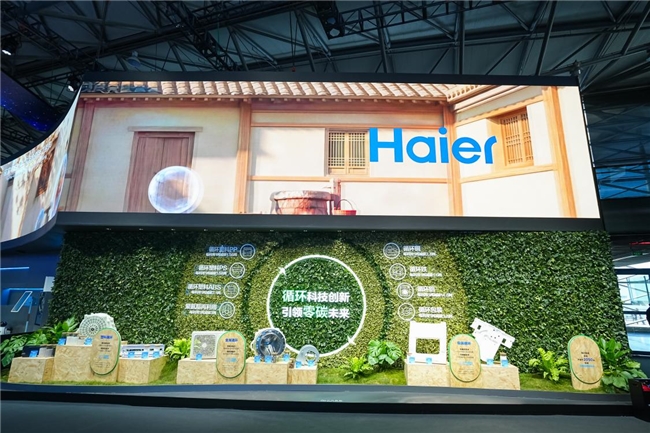
家电回收第一规模!海尔智家AWE展多品类循环生态
Sou Hu Wang· 2026-03-13 01:46
Core Insights - The 2026 China Household Appliances and Consumer Electronics Expo (AWE2026) opened in Shanghai, showcasing Haier Smart Home's AI Eye 2.0, which aims to enhance home management through AI technology [1] - Haier Smart Home has demonstrated its latest achievements in the recycling of old household appliances, leveraging its leading position in appliance recovery to innovate in circular material technology and digital platforms [1] Group 1: Recycling Achievements - Since 2022, Haier Smart Home has recovered nearly 30 million old appliances through a comprehensive channel, leading the industry in recovery volume [3] - The company has developed a "Five Networks Integration" model, combining marketing, channel, service, logistics, and recycling networks to create a specialized recycling system for old appliances, achieving centralized, standardized, and scaled recovery [3] - The Haijing Green Recycling platform, the first of its kind in the industry, extends beyond traditional large appliances to include small appliances, 3C electronic products, drones, and even old clothing, facilitating the recovery of more idle resources [3] Group 2: Recycling Process and Environmental Impact - Haier Smart Home has established a closed-loop system for the entire process of recycling, disassembly, regeneration, and reuse, ensuring a comprehensive approach to recycling [3] - The company has achieved a plastic recycling purity of 99.9% through innovative processes, successfully entering overseas markets in Europe and Japan, and expanding into high-value applications in automotive, daily chemicals, and office automation sectors [3] - The company is building a traceable, quantifiable zero-carbon circular digital platform, demonstrating that 10,000 discarded refrigerators can yield approximately 406 tons of metal, reducing carbon emissions by 744 tons, and that 10,000 old washing machines can yield about 93 tons of plastic, reducing carbon emissions by 270 tons [5] Group 3: Commitment to Green Development - Haier Smart Home is committed to promoting green practices in appliance recycling and processing, continuously deepening its circular economy layout [5] - The company integrates green concepts throughout the entire lifecycle of product design, manufacturing, and recycling, reinforcing its position as a service-oriented technology ecosystem enterprise [5] - As the smart home strategy is further implemented, more users will benefit from a low-carbon, convenient green lifestyle [5]


中石化,又一新材料公司揭牌
DT新材料· 2026-03-12 16:05
Group 1 - The core viewpoint of the article highlights the establishment of Sinopec Recycling Technology Co., Ltd., which marks a significant step in building a comprehensive recycling and high-value utilization system for waste plastics, supporting the company's dual carbon strategy [2][4]. - The company was registered on October 13, 2025, with a registered capital of 200 million RMB, fully owned by Sinopec Chemical Sales Co., Ltd., and is set to officially operate on January 1, 2026 [4]. - The main business focus is on waste plastic recycling, integrating functions such as investment cooperation, resource storage, processing trade, carbon chain services, technology development, and ESG management, with a strategic layout in the recycling of high polymer materials [5][6]. Group 2 - The company plans to achieve breakthroughs in four key areas by 2026: strengthening the physical recycling industry chain, expanding high-value application scenarios for recycled plastics, enhancing technological innovation support, and constructing a new green marketing pattern [6][7]. - The focus will be on promoting recycled plastics into high-value sectors such as automotive, home appliances, and electronics, while replicating successful recycling experiences [6]. - The company aims to upgrade its business model from product sales to comprehensive solutions, expanding into overseas markets to contribute to the group's green and low-carbon high-quality development [7].

英科再生(688087):动态点评:收入高增,利润增速略有承压
East Money Securities· 2026-03-02 10:07
Investment Rating - The report maintains a "Buy" rating for the company, indicating a positive outlook for its stock performance relative to the market index [3][6]. Core Insights - The company reported a revenue of 3.54 billion yuan for 2025, reflecting a year-on-year growth of 21.08%. However, the net profit attributable to shareholders decreased by 2.1% to 301 million yuan, with a significant drop in non-recurring net profit by 22.84% [1][6]. - The revenue growth is attributed to several factors: the global capacity expansion strategy, particularly in Vietnam, the optimization of product structure, and the strengthening of customer relationships through a broad marketing network [5][6]. - The company’s total assets increased by 32.99% year-on-year, driven by the expansion of its operational scale and increases in financial and fixed assets [5]. Financial Projections - Revenue projections for 2025-2027 are 3.54 billion, 3.81 billion, and 4.40 billion yuan, with growth rates of 21.08%, 7.51%, and 15.51% respectively. The net profit for the same period is projected to be 301 million, 351 million, and 450 million yuan, with growth rates of -2.1%, 16.73%, and 28.19% respectively [6][7]. - The price-to-earnings (P/E) ratios for 2025, 2026, and 2027 are estimated at 22.46, 19.24, and 15.01 respectively, indicating a favorable valuation trend [6][7].

英科再生资源股份有限公司2025年度业绩快报公告
Shang Hai Zheng Quan Bao· 2026-02-27 20:34
Financial Performance - The company achieved a revenue of 3,540.06 million yuan in 2025, marking a year-on-year increase of 21.08%, with Q4 revenue reaching a record high of 956.96 million yuan, up 38.23% from the previous year [1][3] - The net profit attributable to the parent company was 300.88 million yuan, a slight decrease of 2.10% year-on-year, while the net profit excluding share-based payments increased by 3.41% to 314.17 million yuan [1][4] Asset and Equity Growth - Total assets at the end of the reporting period were 7,322.36 million yuan, reflecting a growth of 32.99% compared to the beginning of the period [2][5] - The equity attributable to the parent company was 2,839.80 million yuan, an increase of 12.05%, with a per-share net asset value of 15.25 yuan, also up 12.05% [2] Operational Factors - The revenue growth was driven by a stable operational strategy, global capacity expansion, and optimization of the product structure, particularly in the decorative building materials segment [3][4] - The company has successfully launched the second phase of its production base in Vietnam, enhancing its global supply chain and market competitiveness [3] Impairment Provisions - The company reported a total of 49.13 million yuan in asset impairment provisions for 2025, including 50.30 million yuan in asset impairment losses and a reversal of credit impairment losses of 1.17 million yuan [8][11] - Specific impairments included 21.11 million yuan for inventory and 29.19 million yuan for fixed assets, primarily related to its subsidiary in Malaysia [9][10]
营收首破35亿元 英科再生2025年全球化布局进入收获期
Zheng Quan Ri Bao Wang· 2026-02-27 13:12
Core Insights - The company reported a resilient performance for the fiscal year 2025, with total revenue surpassing 3.54 billion yuan, marking a year-on-year increase of 21.08% [1] - The fourth quarter showed particularly strong growth, with revenue reaching 957 million yuan, a significant year-on-year increase of 38.23% [1] - 2025 is highlighted as a year of achievement for the company's globalization strategy, with key progress in the construction of the Vietnam production base [1] Group 1 - The company has successfully launched the second phase of its Vietnam production base, achieving efficient capacity release, while the third phase is progressing as planned [1] - This strategic layout optimizes the global supply chain and enhances delivery assurance in overseas markets, building a solid foundation for coping with market fluctuations and improving global competitiveness [1] Group 2 - The company is deepening its industrial structure adjustment while solidifying its traditional business advantages, focusing on four core business matrices: finished frames, decorative building materials, recycled plastics, and environmental equipment [2] - The decorative building materials segment is expected to accelerate its growth as the company's "second growth curve," contributing to a collaborative and steady development of the four main businesses [2] - The company has strengthened direct supply partnerships with large retailers across over 130 countries, enhancing channel operational efficiency and effectively diversifying potential risks from single markets [2] Group 3 - Despite achieving record revenue, the company's net profit attributable to shareholders slightly decreased by 2.10% to 301 million yuan due to asset impairment provisions and increased exchange losses [2] - Excluding the impact of share-based payments, the net profit attributable to shareholders was 314 million yuan, reflecting a 3.41% year-on-year growth, indicating robust profitability in core operations [2] - The company aims to strengthen its foundation for long-term high-quality development and continuously enhance its global market competitiveness [2]
英力士获法国3亿欧元资助
Zhong Guo Hua Gong Bao· 2026-02-25 02:32
Core Viewpoint - INEOS has secured a €300 million investment supported by the French government to advance the next phase of its Lavera plant renovation, which will reduce CO2 emissions by 331,000 tons annually, equivalent to taking over 70,000 cars off the road [1] Group 1: Investment and Financials - The project will utilize mature energy-saving technologies, laying the groundwork for future decarbonization through electrification and carbon capture [1] - The total planned investment for the Lavera plant has exceeded €550 million, including a previously announced €250 million investment plan from November 2025 [1] Group 2: Employment and Economic Impact - This investment will provide stable jobs for approximately 2,000 direct employees and over 10,000 workers in the supply chain [1] - The upgrade will enhance the long-term competitiveness of this key industrial asset in France, safeguarding thousands of technical positions [1] Group 3: Industry Context - The investment comes at a time when European chemical plants are closing due to high energy costs and global competition [1] - The Lavera plant is a core pillar of French manufacturing, directly serving critical sectors such as pharmaceuticals, healthcare, aerospace, and defense [1]
英科再生1月29日获融资买入989.49万元,融资余额1.09亿元
Xin Lang Cai Jing· 2026-01-30 01:39
Group 1 - The core viewpoint of the news is that Yingke Recycling has experienced a decline in stock price and trading volume, with significant financing and margin trading activities indicating investor sentiment and market positioning [1][2]. - On January 29, Yingke Recycling's stock fell by 5.05%, with a trading volume of 84.19 million yuan. The financing buy-in amount was 9.89 million yuan, while the financing repayment was 9.64 million yuan, resulting in a net financing buy of 0.25 million yuan [1]. - As of January 29, the total balance of margin trading for Yingke Recycling was 1.09 billion yuan, which is 1.84% of its circulating market value, indicating a low financing balance compared to the past year [1]. Group 2 - As of September 30, Yingke Recycling had 7,443 shareholders, a decrease of 3.27% from the previous period, while the average circulating shares per person increased by 3.39% to 25,022 shares [2]. - For the period from January to September 2025, Yingke Recycling achieved an operating income of 2.583 billion yuan, representing a year-on-year growth of 15.76%, and a net profit attributable to shareholders of 226 million yuan, up 16.29% year-on-year [2]. - Yingke Recycling has distributed a total of 120 million yuan in dividends since its A-share listing, with 93.13 million yuan distributed over the past three years [3].
欧盟出台政策推动再生塑料循环利用
Zhong Guo Hua Gong Bao· 2026-01-27 01:41
Core Viewpoint - The European Commission has introduced a policy proposal focused on plastics to promote a circular economy and boost the demand for recycled plastics [1] Group 1: Policy Measures - The EU requires member states to amend the Single-Use Plastics Directive to enhance plastic recycling, mandating that by 2030, 30% of materials in specific beverage bottles sold domestically must be made from recycled plastics [1] - Member states are required to report the weight of compliant bottles sold and the weight of recycled plastics used in these bottles, with only mechanically recycled plastics currently recognized as recycled [1] - The amendment allows chemically recycled plastics to be considered as recycled plastics, introducing a quality balance method for calculating the amount of recycled plastics [1] Group 2: Implementation Standards - The European Commission proposed an implementation regulation to treat recycled plastics as secondary raw material standards, based on the Waste Framework Directive, establishing EU-wide standards for mechanically recycled plastics [1] Group 3: Regulatory Enhancements - The European Commission plans to improve regulations due to the issue of unused plastic raw materials imported from abroad being sold as recycled plastics, with a revision scheduled for the second quarter of 2026 [1] - Stricter compliance documentation will be required for imported recycled plastics used in food containers, along with a revision of tariff codes to distinguish between virgin plastics and recycled plastics [1]
我国十大品种再生资源回收总量超4亿吨
Ren Min Ri Bao Hai Wai Ban· 2026-01-20 04:49
Group 1 - The Chinese government has issued the "Recycled Materials Application Promotion Action Plan," aiming to enhance the application of recycled materials and promote a circular economy by 2030 [1][3][5] - The plan outlines a roadmap for increasing the supply of high-quality recycled materials, including recycled steel, non-ferrous metals, plastics, and paper, to support the expansion of recycled materials usage [3][5] - By 2024, the total recovery of ten major types of recycled resources in China is expected to exceed 400 million tons, with scrap steel and paper accounting for approximately 21% and 70% of the raw materials used in production, respectively [3][5] Group 2 - Companies are enhancing their capabilities in the recycled materials sector, with many developing specialized networks for collection and processing [6][7] - For instance, Guangxi Fanfeng Environmental Technology Co., Ltd. has established a comprehensive recycling network and plans to launch a large-scale appliance dismantling base by 2026, aiming for an annual dismantling capacity of over 3 million units [7][8] - Jin Tian Copper Industry has developed a closed-loop industry chain for recycled copper, achieving a 75% reduction in carbon emissions while maintaining product quality comparable to virgin materials [8][9] Group 3 - Recycled materials are increasingly being integrated into everyday products, with companies like Beijing Baopu Recycled Environmental Technology Co., Ltd. producing high-quality recycled items for events like marathons [10] - The China Resource Recycling Group is focusing on advanced technologies for resource recycling, including AI and near-infrared spectroscopy for intelligent sorting of materials [11] - Klaus-Maffei Group is leveraging its advanced recycling technologies to enhance the processing of recycled plastics, aligning with the government's plan to expand the use of recycled materials [12][13]

我国十大品种再生资源回收总量超4亿吨——再生材料利用“路线图”来了
Ren Min Ri Bao Hai Wai Ban· 2026-01-20 00:34
Group 1 - The Chinese government has issued the "Recycled Materials Application Promotion Action Plan," aiming to enhance the application of recycled materials and promote a circular economy by 2030 [1][3] - The plan outlines a roadmap for increasing the supply of high-quality recycled materials, improving waste recycling systems, and expanding the application of recycled materials in various industries [3][5] - By 2024, the total recovery of ten major types of recycled resources in China is expected to exceed 400 million tons, with significant contributions from scrap steel and paper [3][5] Group 2 - Companies like Ningbo Nuoding are actively engaging with partners in the recycling and manufacturing sectors to enhance collaboration and improve the efficiency of recycling processes [2][3] - The industry is witnessing a rise in specialized and large-scale operations, with companies developing extensive offline and online recycling networks to facilitate resource recovery [7][8] - Advanced technologies, such as AI and near-infrared spectroscopy, are being utilized to improve the sorting and recycling of materials, enhancing the quality and efficiency of recycled products [10][11] Group 3 - The plan emphasizes the need for a robust management system for recycled materials, including the establishment of standards and certification systems to promote their use [5][6] - Companies are increasingly focusing on the development of low-carbon recycled products, which can significantly reduce carbon emissions while meeting high purity standards required by high-tech industries [8][11] - The promotion of recycled materials is expected to play a crucial role in resource security and energy conservation, with specific targets set for the recovery and utilization of various materials by 2030 [5][6]