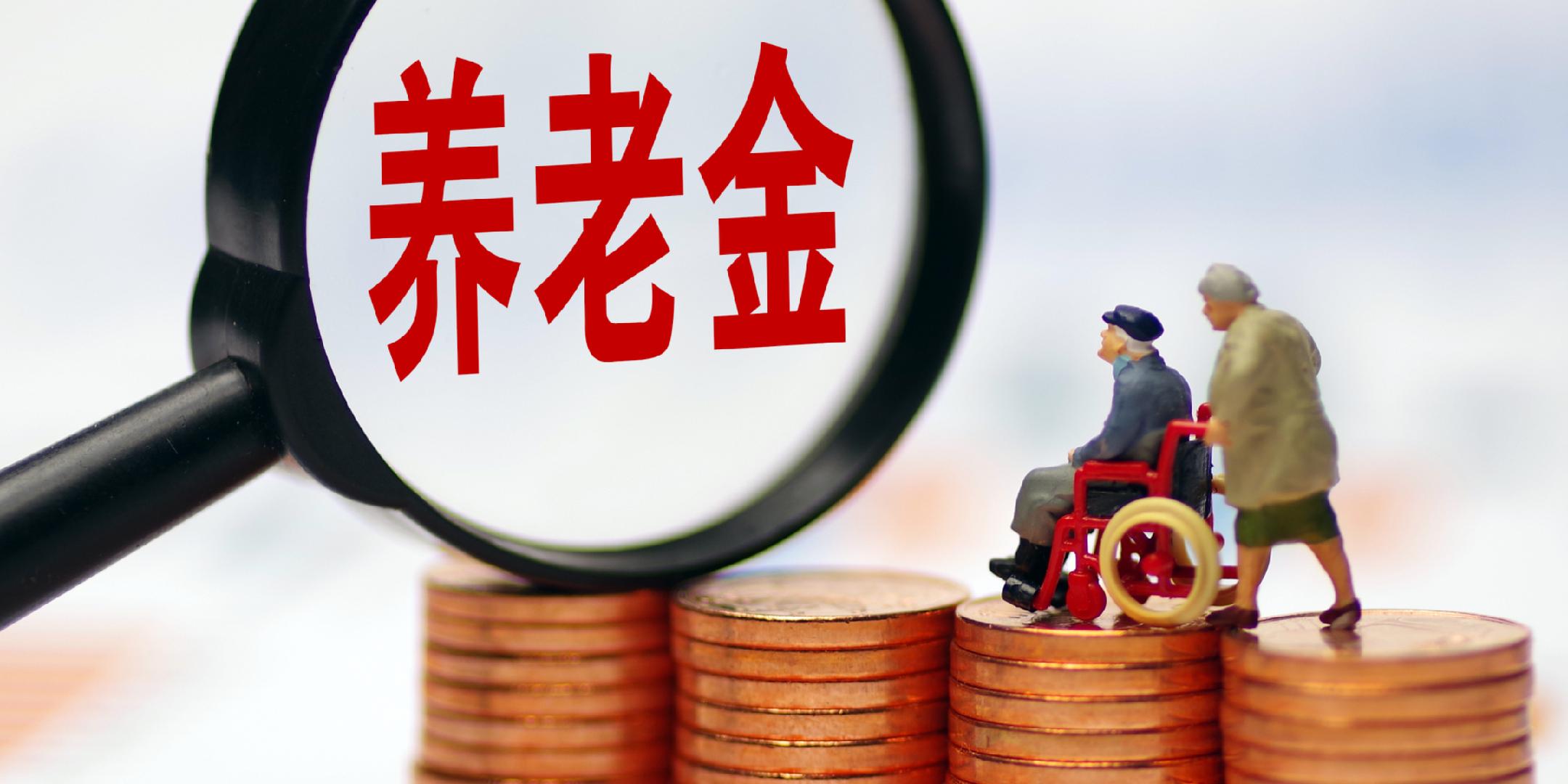
农民养老金

Search documents
20名代表委员呼吁背后 农民养老金调涨现实路径
经济观察报· 2026-03-14 09:05
Core Viewpoint - The article emphasizes the necessity of increasing farmers' pensions in China, highlighting the historical contributions of migrant workers to the country's industrialization and urban development, and argues that enhancing their basic pensions is a rightful acknowledgment of their sacrifices [1][10]. Summary by Sections Farmers' Pension Context - During the 2026 Two Sessions, the issue of increasing farmers' pensions became a focal point of public discussion, with 16 representatives and 4 committee members submitting proposals to raise pension levels [2]. - As of 2024, 540 million people are enrolled in the farmers' pension system, with 180 million actually receiving benefits. The pension consists of a basic pension and a personal account pension, with the basic pension minimum set to rise from 55 yuan/month in the early days to 143 yuan/month by 2025 [2][3]. Disparities in Pension Levels - There is a significant disparity in pension levels across regions, with the average farmers' pension being less than 300 yuan/month. For instance, Beijing and Shanghai have average pensions of 998 yuan/month and 1555 yuan/month, respectively, while many provinces like Yunnan and Anhui remain below 200 yuan/month [3]. - The average pension for retired enterprise employees is 3162 yuan/month, compared to 214 yuan/month for farmers, indicating a 14.8 times difference [3]. Calls for Pension Increases - A growing consensus among scholars and representatives has emerged since 2022, advocating for a more substantial increase in farmers' pensions, particularly for the elderly [3][6]. - Proposals include raising pensions to around 500 yuan/month in the short term and planning for a gradual increase to 1000 yuan/month over the next five years, necessitating an average annual increase of approximately 150 yuan/month [5][6]. Economic Implications - Increasing farmers' pensions is viewed as a means to stimulate domestic consumption, especially in light of economic pressures from the pandemic. Higher pensions could lead to a noticeable increase in marginal consumption propensity, thus benefiting overall economic growth [7][8]. - The 2024 pension increase marked a significant rise, with the minimum standard increasing by 20 yuan/month, a notable change from previous years [8]. Funding and Sustainability - The funding for pension increases is a critical issue, with current fiscal support for farmers' pensions being significantly lower than that for urban retirees. In 2024, fiscal support for farmers' pensions was 4249.51 billion yuan, compared to 6439.19 billion yuan for civil servants and 8066.7 billion yuan for enterprise employees [15]. - Experts suggest that to achieve substantial pension increases, central government funding will be necessary, as local governments may struggle to meet the financial demands [14][15]. Structural Reforms - The article discusses the need for structural reforms in the pension system to ensure sustainability, emphasizing that simply raising pensions without addressing the underlying funding mechanisms may not be viable in the long term [19]. - The current pension system's design, which limits benefits for older farmers who have not contributed to personal accounts, necessitates a reevaluation to ensure fair treatment across different age groups [12][19]. Future Directions - There is a push for a "gradient increase" in pensions based on age, with suggestions to provide additional support for those over 70 years old, reflecting their unique challenges [13][14]. - The article concludes with a call for a balanced approach to pension increases that considers both the need for immediate support and the long-term sustainability of the pension system [19][22].


陆挺建议逐渐将农民养老金上调至每月千元
经济观察报· 2026-01-23 13:58
Group 1 - The article emphasizes the importance of increasing rural pension levels to improve the income expectations of rural workers and flexible employment personnel, which can significantly stimulate consumption due to their higher marginal propensity to consume [1][2][8] - It suggests that raising the rural pension by 50 to 100 yuan per month could gradually increase the average pension level from less than 300 yuan to 1000 yuan over several years, which aligns with the goal of boosting consumption in China's macro economy [2][8] - The article highlights that the current rural pension system covers approximately 1.8 billion elderly individuals, with a significant number of rural workers and flexible employment personnel benefiting from potential increases in pension levels [8][9] Group 2 - The article discusses the government's cautious approach to stock market management, aiming to prevent it from becoming a "mad bull" while avoiding sharp declines, which has been effective in maintaining market stability [2][4] - It notes that the government has not introduced a stimulus policy comparable to the "924" moment in 2025, primarily due to a favorable stock market performance, which serves as a lesson from past experiences [4][5] - The article anticipates that the real estate sector may experience a "924 moment" in the near future, indicating a potential policy shift to stimulate the market [4][5] Group 3 - The article mentions that the central government's financial support for rural pensions is projected to exceed that for enterprise employee pensions and civil servant pensions within two years if the monthly increase is set at 100 yuan [8][9] - It points out the disparity in local financial support for rural pensions, with some regions providing significantly higher subsidies than others, suggesting that central government intervention is necessary to ensure equitable pension increases [9] - The article argues that enhancing the rural pension system is crucial for transitioning from a middle-income to a middle-developed country, marking the next two to three years as a critical period for social security reform in China [9]

陆挺建议逐渐将农民养老金上调至每月千元
Jing Ji Guan Cha Wang· 2026-01-23 11:22
Group 1: Economic Policy and Market Outlook - The government aims to maintain a stable stock market, avoiding both a "mad bull" scenario and significant declines, with current policies being described as cautious yet effective [2][4] - There is an expectation that the real estate market may experience a policy moment similar to the "924" event in 2024 within the next three to four months [5] - The government has not introduced stimulus policies comparable to the "924" moment in the second half of 2025, partly due to a favorable stock market performance [4][3] Group 2: Pension System and Consumer Spending - Recommendations have been made to increase the rural basic pension by 50 to 100 yuan per month, aiming to raise the average pension from under 300 yuan to 1000 yuan over several years [2][6] - Increasing rural pensions is seen as a more effective way to stimulate consumption compared to funding mortgage interest subsidies [2][6] - The financial implications of raising rural pensions by 100 yuan per month would require an additional annual expenditure of over 200 billion yuan from the government [6][7] Group 3: Social Security System Reform - The rural pension system is broader in coverage compared to urban employee pensions, with 1.8 billion elderly individuals receiving rural pensions [6][7] - The central government has been gradually increasing its financial support for rural pensions, with the subsidy rising from 93 yuan to 143 yuan per month from 2021 to 2025 [7] - There is a call for the central government to take the lead in increasing rural pensions to ensure equitable distribution, rather than relying on local governments, which face varying financial capabilities [7]