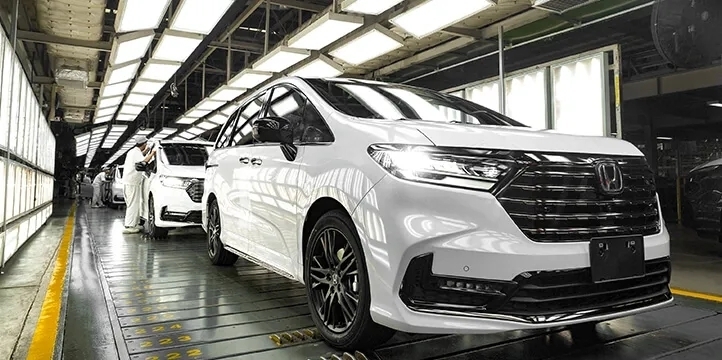
凌派

Search documents
合资集体觉醒,唯独少了本田?
3 6 Ke· 2025-11-03 06:23
Core Insights - The Chinese automotive market is experiencing unprecedented competition, with numerous new models being launched and an accelerated shift towards electrification [1][4] - Honda's electric vehicle (EV) offerings have been notably weak in the Chinese market compared to competitors like Kia and Hyundai [3][4] - Honda's historical confidence and unique brand identity are being challenged as the company struggles to adapt to the rapidly changing market dynamics in China [5][12] Industry Dynamics - The intense competition in the Chinese automotive market has forced joint venture brands to rethink their strategies to maintain market share [1][4] - Honda's recent product launches, including the P7/S7 and GT sedan, have not garnered significant positive feedback, indicating a disconnect with consumer preferences [3][4] - The shift towards electrification is critical, with Honda needing to accelerate its product development and better understand the needs of Chinese consumers [4][12] Honda's Position - Honda has historically been a unique and confident brand, but its approach may not be sufficient in the current competitive landscape [5][16] - The company has faced significant challenges in the past few years, with a decline in sales and market presence as Chinese brands gain traction [12][14] - Honda's strategy to introduce a new electric brand "烨" and a new generation of EVs reflects an attempt to realign with market demands, but the execution remains crucial [12][16] Future Outlook - As the Chinese market continues to evolve, Honda must adapt its strategies to avoid being left behind, especially as consumer preferences shift towards more affordable and larger vehicles [16][17] - The company's reliance on traditional fuel vehicles may hinder its ability to compete effectively in the growing EV segment [9][10] - Honda's future success in China will depend on its ability to innovate and respond to the rapidly changing automotive landscape [12][14]


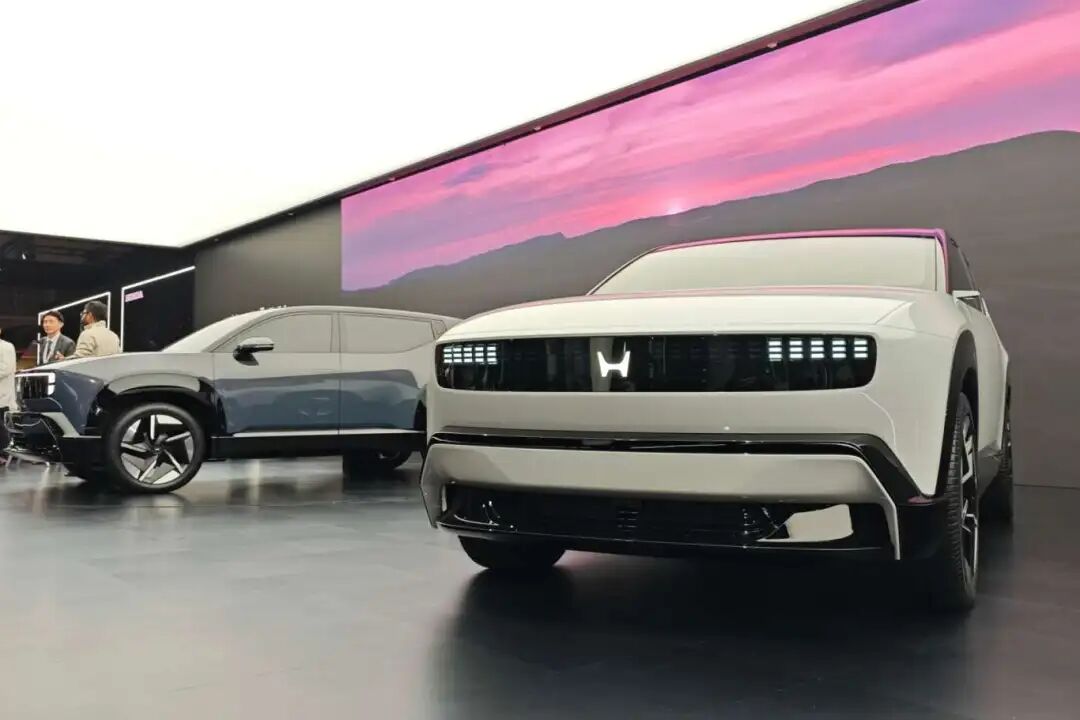
广汽本田P7销量遇冷:9月仅卖出196辆 何以破局?
Xi Niu Cai Jing· 2025-10-31 11:54
Core Insights - The domestic narrow passenger car market retail sales reached 2.244 million units in September 2025, with a year-on-year growth of 6.4%, while the new energy vehicle market led with sales of 1.299 million units and a year-on-year growth of 15.7% [2] - GAC Honda's P7 model, however, faced a stark contrast with only 196 units sold in September, a month-on-month decline of 22%, and a total of 1,394 units sold in six months, averaging over 200 units per month [2][3] - The P7's initial launch was marked by high expectations, claiming over 5,365 orders within 24 hours, but actual sales figures were significantly lower, with only 437 units sold in April and a decline to 142 units in May [2][3] Product and Market Analysis - The P7's failure is attributed to a disconnect between product capabilities and market demand, particularly in pricing, where its range of 199,900 to 249,900 yuan appears less competitive compared to rivals like Toyota bZ3X and Nissan N7, which are priced at 109,800 and 119,800 yuan respectively [2][3] - Technically, the P7's use of a rear torsion beam non-independent suspension is seen as a disadvantage compared to competitors with multi-link suspensions, and its Honda CONNECT 3.0 system lacks appeal against domestic models featuring advanced chips and driving solutions [3] - The P7's sales performance reflects broader challenges for GAC Honda, which saw total sales of 223,900 units from January to September 2025, a year-on-year decline of 27.58%, making it the brand with the largest sales drop within GAC [3][4] Financial Performance - GAC Honda reported a revenue of 22.625 billion yuan in the first half of the year, a year-on-year decline of 26.23%, and 30.668 billion yuan in the first half of 2024, down 28.35%, indicating a downward trend [4] - The traditional automotive market is shifting as the era of relying on fuel vehicles fades, necessitating GAC Honda to stabilize its existing market share while accelerating efforts in new energy and smart technology to regain competitive advantages [4]
广汽本田“换将”求生 “广丰系”高管高洪祥接棒
Xi Niu Cai Jing· 2025-08-12 05:50
Group 1 - Gao Hongxiang has officially replaced Li Jin as the director and executive vice president of GAC Honda, while Li Jin has been reassigned to the group headquarters [2] - GAC Honda is currently facing significant challenges, with sales dropping from a peak of 780,000 units in 2021 to 470,000 units in 2024, and net profit declining from 12.4 billion yuan in 2020 to 1.8 billion yuan in 2024 [2] - In the first half of 2025, GAC Honda's sales continued to decline, reaching approximately 155,000 units, a year-on-year decrease of 25.63% [2] Group 2 - Several previously popular models are no longer performing well, such as the Fit, which sold 110,000 units in 2019 but has seen sales drop to less than 3,000 units in the first half of this year [2] - The Accord's new generation has abandoned the well-known i-MMD hybrid technology in favor of a plug-in hybrid model, resulting in poor performance compared to domestic brands [2] - GAC Honda's struggles in the new energy sector are evident, with the Honda P7 electric SUV selling only 745 units in the three months following its April launch [3] Group 3 - In contrast, GAC Toyota has shown strong performance, with sales of approximately 66,000 units in July, a year-on-year increase of 11.7%, surpassing the combined sales of Honda's two joint ventures in China for that month [3] - Gao Hongxiang's previous experience as a director and vice president at GAC Toyota indicates that there are high expectations for his leadership at GAC Honda [3] - The joint venture agreement for GAC Honda is set to last until May 13, 2028, marking a critical period for the company's development in China [3]

确认!高洪祥正式接棒李进,广汽本田再迎“广丰系”高管
Mei Ri Jing Ji Xin Wen· 2025-08-08 03:33
Group 1 - GAC Honda has confirmed the leadership change, with Gao Hongxiang officially taking over from Li Jin as the executive vice president, effective from August 7 [1] - Li Jin has been with GAC Honda since 2004 and has held various senior positions within the GAC group, while Gao Hongxiang previously served as the deputy general manager at GAC Toyota Engine Co., indicating a strategic shift within the company [1][2] - GAC Honda has been experiencing significant challenges, with sales dropping to approximately 155,000 units in the first half of the year, a decline of 25.63% year-on-year, and a decrease in net profit from 12.4 billion yuan in 2020 to 1.8 billion yuan in 2024 [2] Group 2 - The company has struggled to adapt to changing consumer demands, leading to poor sales performance of key models such as the Fit, which sold less than 3,000 units in the first half of the year compared to 110,000 units in 2019 [3] - GAC Honda's market control has weakened, with models like the Accord and the冠道 failing to meet evolving consumer preferences, particularly in hybrid technology [3][4] - In contrast, GAC Toyota has maintained a strong market presence, with a 11.7% year-on-year increase in sales in July, highlighting the differences in strategic execution between the two companies [3][6] Group 3 - GAC Honda's electric vehicle strategy has not yet yielded successful models, while GAC Toyota's "Platinum Smart" brand has seen success with the 3X model, which has delivered over 20,000 units [4] - The management structure differences between GAC Honda and GAC Toyota have led to varying levels of local management influence, impacting their respective strategies in the competitive market [6] - The leadership change at GAC Honda presents an opportunity for the new executive to address the company's strategic challenges and improve its market position [6]