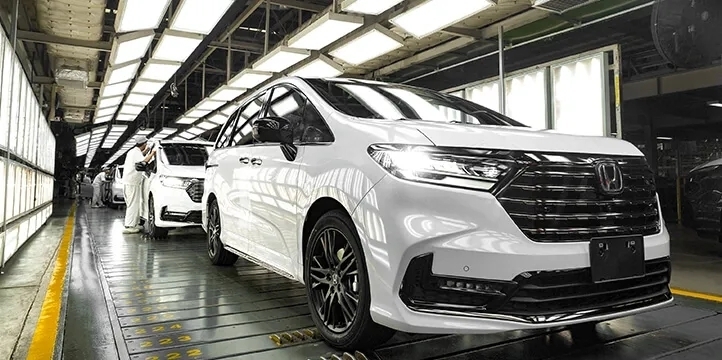
冠道

Search documents
广汽集团(02238) - 海外监管公告
2026-03-29 10:46
香港交易及結算所有限公司及香港聯合交易所有限公司對本公告的內容概不負責,對其準確性或完整 性亦不發表任何聲明,並明確表示,概不對因本公告全部或任何部分內容而產生或因依賴該等內容而 引致的任何損失承擔任何責任。 GUANGZHOU AUTOMOBILE GROUP CO., LTD. 廣州汽車集團股份有限公司 ( 於中華人民共和國註冊成立的股份有限公司 ) (股份編號: 2238) 海外監管公告 本公告乃廣州汽車集團股份有限公司(「本公司」)按香港聯合交易所有限公司證券上市規 則第 13.10B 條發出。 以下文件乃本公司於二零二六年三月二十七日在中華人民共和國上海證券交易所網頁登載, 僅供參閱。 承董事會命 廣州汽車集團股份有限公司 馮興亞 董事長 中國廣州,二零二六年三月二十七日 於本公告日期,本公司的執行董事為馮興亞及閤先慶,本公司的非執行董事為陳小沐、鄧蕾、 周開荃、王亦偉及洪素麗,以及本公司的獨立非執行董事為趙福全、肖勝方、王克勤及宋鐵波。 1. 《廣州汽車集團股份有限公司 2025 年年度報告摘要》 2. 《廣州汽車集團股份有限公司 2025 年年度報告》 3. 《廣州汽車集團股份有限公司 2025 ...
2月车市迎结构性调整:吉利独破20万辆,比亚迪海外销量首超国内
Mei Ri Jing Ji Xin Wen· 2026-03-02 10:21
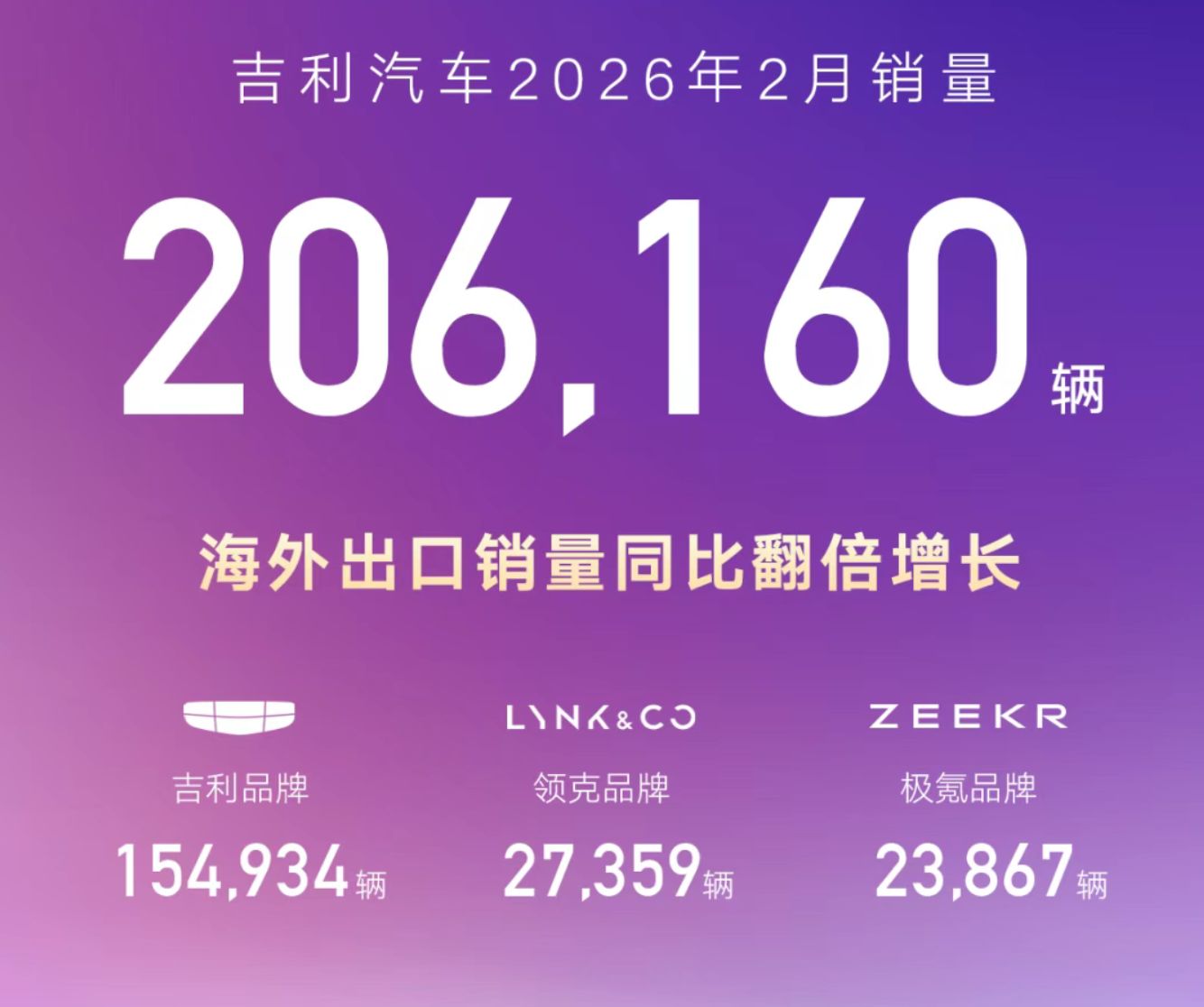
Core Insights - The automotive market is experiencing a significant decline in sales during the Chinese New Year period, with many dealerships reporting low customer traffic and minimal transactions [1][6] - A majority of dealers, 76.8%, indicated that February sales did not meet their expectations, reflecting a challenging market environment [1][6] Group 1: Sales Performance - Among traditional automakers, only a few companies, including Geely, BYD, Chery, Great Wall, SAIC, and Dongfeng Honda, have reported their February sales figures [2] - Geely's sales exceeded 200,000 units in February, reaching 206,200 units, a slight increase of 1% year-on-year [3] - BYD's February sales were 190,200 units, while SAIC's sales for domestic brands (excluding joint ventures) were 187,000 units [3] - Chery's sales reached 160,800 units, and Great Wall's sales were 72,600 units, showing a year-on-year decline of 6.79% [3] Group 2: Export Trends - BYD's overseas sales surpassed 100,000 units in February, marking a year-on-year increase of 41.4%, and for the first time, exceeded domestic sales [5] - Chery's export volume was 124,900 units, also reflecting a year-on-year growth of 41.5% [5] Group 3: Market Competition - The automotive industry is facing intensified competition, with executives from Changan and SAIC-GM Wuling warning of a complex competitive environment ahead [7] - Many joint venture brands have not released their February sales data, indicating a cautious outlook on short-term market trends [6][7] - Joint venture brands are responding to market pressures with significant discounts, such as Buick and Honda offering price cuts of up to 100,000 yuan [7][8] Group 4: Promotional Strategies - Some joint venture brands, including Dongfeng Honda and GAC Honda, have released their February sales data, with GAC Toyota reporting 41,800 units sold, driven by models like Camry and Highlander [8] - Dongfeng Honda achieved sales of 17,600 units, a year-on-year increase of 10.1%, largely due to low sales figures in the previous year [8] - Zhengzhou Nissan reported sales of 4,531 units, a significant year-on-year increase of 57.5%, with a notable rise in new energy vehicle sales [9]


招牌已被摘除!东本发动机公司易主
Xin Lang Cai Jing· 2025-12-17 14:19
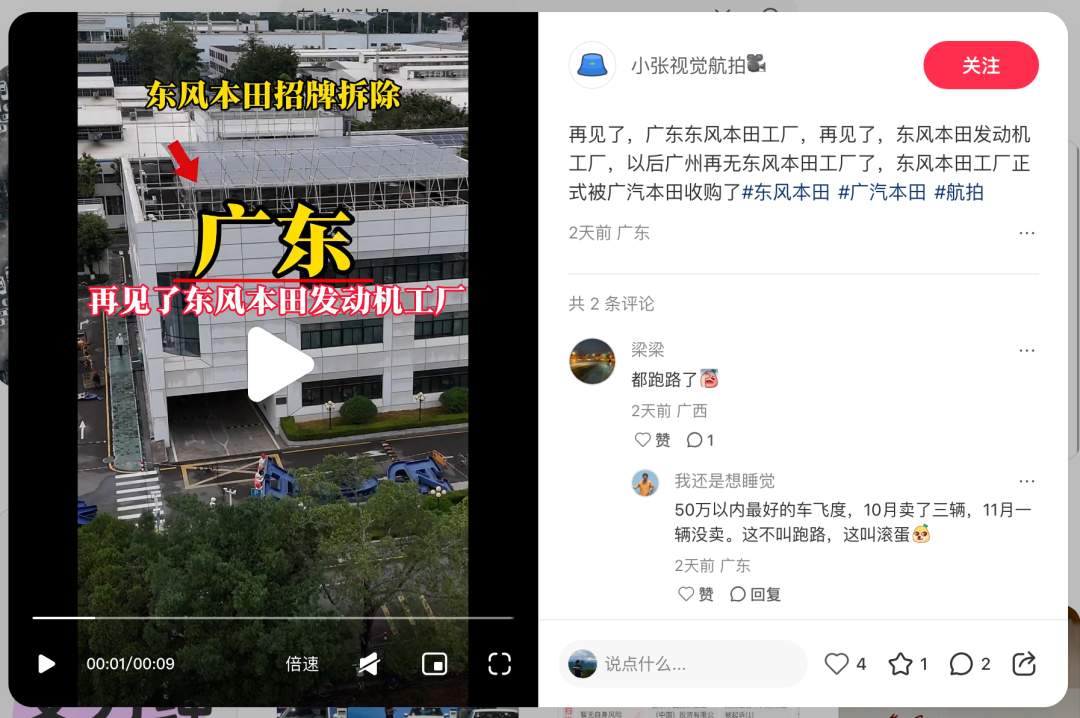
Core Viewpoint - Dongfeng Honda Engine Co., Ltd. has officially ceased operations as a joint venture, transitioning to GAC Honda following the acquisition of its 50% stake by GAC Honda [1][5][12]. Group 1: Company Transition - The Dongfeng Honda sign has been removed, and the company will be rebranded as GAC Honda Engine in the future [1]. - The official website has updated its logo to GAC Honda, although it still lists Dongfeng Honda Engine Co., Ltd. at the bottom [3]. - GAC Honda's acquisition of Dongfeng Honda Engine is part of a strategy to optimize fuel vehicle asset structure and support Honda's automotive strategy in China [10][12]. Group 2: Financial Details - GAC Honda agreed to acquire the 50% stake in Dongfeng Honda Engine for a base price of RMB 1.172 billion, funded through cash capital increase [5][12]. - The financial performance of Dongfeng Honda Engine shows a significant improvement, with revenue increasing from RMB 9.566 billion in 2023 to RMB 17.852 billion in 2024, and a turnaround from a net loss of RMB 228 million to a profit of RMB 84 million [8][16]. - In the first half of 2025, the company maintained profitability with revenue of RMB 3.807 billion and a net profit of RMB 371 million [8][15]. Group 3: Strategic Implications - The acquisition will allow GAC Honda to achieve complete autonomy in engine supply, reducing communication and transportation costs with external suppliers [16]. - The integration is expected to enhance supply chain stability, improve management efficiency, and lower costs, ultimately increasing competitiveness in the market [14][16].

广汽本田P7销量遇冷:9月仅卖出196辆 何以破局?
Xi Niu Cai Jing· 2025-10-31 11:54
Core Insights - The domestic narrow passenger car market retail sales reached 2.244 million units in September 2025, with a year-on-year growth of 6.4%, while the new energy vehicle market led with sales of 1.299 million units and a year-on-year growth of 15.7% [2] - GAC Honda's P7 model, however, faced a stark contrast with only 196 units sold in September, a month-on-month decline of 22%, and a total of 1,394 units sold in six months, averaging over 200 units per month [2][3] - The P7's initial launch was marked by high expectations, claiming over 5,365 orders within 24 hours, but actual sales figures were significantly lower, with only 437 units sold in April and a decline to 142 units in May [2][3] Product and Market Analysis - The P7's failure is attributed to a disconnect between product capabilities and market demand, particularly in pricing, where its range of 199,900 to 249,900 yuan appears less competitive compared to rivals like Toyota bZ3X and Nissan N7, which are priced at 109,800 and 119,800 yuan respectively [2][3] - Technically, the P7's use of a rear torsion beam non-independent suspension is seen as a disadvantage compared to competitors with multi-link suspensions, and its Honda CONNECT 3.0 system lacks appeal against domestic models featuring advanced chips and driving solutions [3] - The P7's sales performance reflects broader challenges for GAC Honda, which saw total sales of 223,900 units from January to September 2025, a year-on-year decline of 27.58%, making it the brand with the largest sales drop within GAC [3][4] Financial Performance - GAC Honda reported a revenue of 22.625 billion yuan in the first half of the year, a year-on-year decline of 26.23%, and 30.668 billion yuan in the first half of 2024, down 28.35%, indicating a downward trend [4] - The traditional automotive market is shifting as the era of relying on fuel vehicles fades, necessitating GAC Honda to stabilize its existing market share while accelerating efforts in new energy and smart technology to regain competitive advantages [4]
车企早已不再试探!十一车市加速放量,经销商“花式”让利抢客
Bei Jing Shang Bao· 2025-10-08 23:59
Core Viewpoint - The automotive industry is leveraging the National Day and Mid-Autumn Festival holidays to boost sales through new vehicle launches and promotional offers, aiming to capture market share in the fourth quarter and meet annual sales targets [1][7]. Group 1: New Vehicle Launches - Over 70 new vehicle models are set to be launched in September, with significant attention on models like Tesla's Model Y L, which has become a focal point for consumer inquiries and test drives during the holiday period [2][3]. - The introduction of new models has successfully driven foot traffic to dealerships, with some models experiencing long wait times for delivery due to high demand [3]. Group 2: Promotional Strategies - Automotive companies are implementing various promotional strategies, including cash discounts and trade-in subsidies, to attract consumers during the holiday season [4][5]. - For instance, GAC Honda and SAIC Volkswagen are offering special cash vouchers and trade-in bonuses to lower the purchase threshold for consumers [4]. Group 3: Consumer Behavior and Preferences - Consumers are increasingly opting for shopping at automotive supermarkets during the holidays, as it allows them to combine leisure activities with vehicle shopping, enhancing convenience [3]. - The holiday period has seen a surge in consumer interest, with many taking advantage of the time off to explore vehicle options they previously considered [3]. Group 4: Market Trends and Projections - The automotive market is expected to see a significant boost in sales during the fourth quarter, with projections indicating a year-on-year growth of 5% to 10% [8]. - The implementation of policies promoting vehicle trade-ins and updates has contributed to a recovery in automotive consumption, with production and sales figures showing positive growth compared to the previous year [7][8].

“金九银十”看车市|“十一”车市加速放量:新车站“C位”,商超店成客流主力
Bei Jing Shang Bao· 2025-10-08 13:45
Core Insights - The automotive industry is leveraging the National Day and Mid-Autumn Festival holidays to boost sales through new vehicle launches and promotional offers, aiming to capture market share in the fourth quarter [1][11]. New Vehicle Launches - Over 70 new vehicles were launched in September, with significant attention on models like the Tesla Model Y L, which became a focal point for consumer inquiries and test drives during the holiday [2][3]. - The introduction of the Li Auto i6 has led to increased orders, with expectations of selling out production capacity by January 31 [3]. Promotional Strategies - Automotive companies are implementing various promotional strategies, including cash discounts and trade-in subsidies, to attract consumers during the holiday period [7][8]. - For example, GAC Honda and SAIC Volkswagen are offering cash vouchers and trade-in subsidies to lower the purchase threshold for consumers [7][8]. Consumer Behavior - The convenience of automotive superstores during the holidays has attracted consumers who may not have had time to visit traditional dealerships [6]. - Many consumers are taking advantage of the holiday to explore vehicle options while engaging in other leisure activities, such as shopping and dining [6]. Market Trends - The "Golden September" and "Silver October" sales periods are expected to see a boost due to favorable policies and promotional activities, with a projected 5% to 10% year-on-year growth in fourth-quarter sales [12]. - The government's "old-for-new" policy has effectively stimulated automotive consumption, contributing to a 12.7% increase in production and a 12.6% increase in sales year-on-year for the first eight months of the year [11].
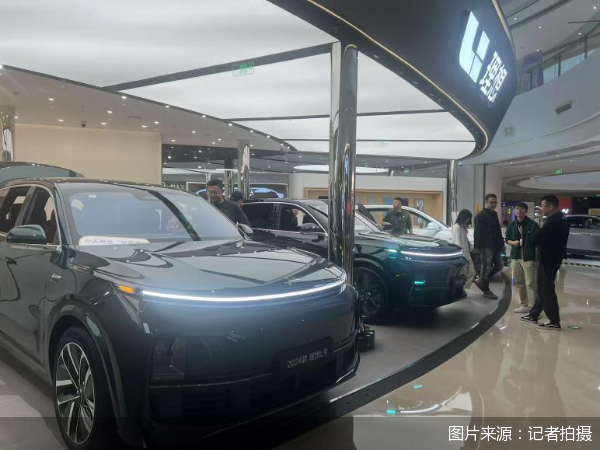
“十一”车市加速放量:新车站“C位”,商超店成客流主力
Bei Jing Shang Bao· 2025-10-08 13:41
Core Insights - The automotive industry is leveraging the National Day and Mid-Autumn Festival holidays to launch new models and attract customers, resulting in increased order volumes for dealerships [1][2][3] - Companies are implementing various promotional strategies, combining new vehicle launches with attractive pricing to stimulate consumer interest and drive sales [1][4][5] - The "trade-in" policy continues to boost new car consumption, making the holiday period a critical time for automakers to achieve their annual sales targets [1][7][8] New Model Launches - Over 70 new vehicles were launched in September, with significant attention on models like the Tesla Model Y L during the holiday period, which became a key attraction for consumers [2][3] - Dealerships are experiencing increased foot traffic and order volumes due to the strategic placement of new models in prominent locations within showrooms [2][3] Promotional Strategies - Automakers are employing various promotional tactics, such as cash discounts and trade-in subsidies, to lower the purchase threshold for consumers [4][5] - For instance, GAC Honda and SAIC Volkswagen are offering special cash vouchers and trade-in bonuses during the holiday period to incentivize purchases [4][5] Market Dynamics - The automotive market is witnessing a recovery in demand, supported by favorable policies and promotional activities, with production and sales figures showing significant year-on-year growth [7][8] - The "Golden September" and "Silver October" sales periods are expected to see a boost in customer traffic and sales volume, driven by holiday shopping and promotional events [8]
广汽本田“换将”求生 “广丰系”高管高洪祥接棒
Xi Niu Cai Jing· 2025-08-12 05:50
Group 1 - Gao Hongxiang has officially replaced Li Jin as the director and executive vice president of GAC Honda, while Li Jin has been reassigned to the group headquarters [2] - GAC Honda is currently facing significant challenges, with sales dropping from a peak of 780,000 units in 2021 to 470,000 units in 2024, and net profit declining from 12.4 billion yuan in 2020 to 1.8 billion yuan in 2024 [2] - In the first half of 2025, GAC Honda's sales continued to decline, reaching approximately 155,000 units, a year-on-year decrease of 25.63% [2] Group 2 - Several previously popular models are no longer performing well, such as the Fit, which sold 110,000 units in 2019 but has seen sales drop to less than 3,000 units in the first half of this year [2] - The Accord's new generation has abandoned the well-known i-MMD hybrid technology in favor of a plug-in hybrid model, resulting in poor performance compared to domestic brands [2] - GAC Honda's struggles in the new energy sector are evident, with the Honda P7 electric SUV selling only 745 units in the three months following its April launch [3] Group 3 - In contrast, GAC Toyota has shown strong performance, with sales of approximately 66,000 units in July, a year-on-year increase of 11.7%, surpassing the combined sales of Honda's two joint ventures in China for that month [3] - Gao Hongxiang's previous experience as a director and vice president at GAC Toyota indicates that there are high expectations for his leadership at GAC Honda [3] - The joint venture agreement for GAC Honda is set to last until May 13, 2028, marking a critical period for the company's development in China [3]

确认!高洪祥正式接棒李进,广汽本田再迎“广丰系”高管
Mei Ri Jing Ji Xin Wen· 2025-08-08 03:33
Group 1 - GAC Honda has confirmed the leadership change, with Gao Hongxiang officially taking over from Li Jin as the executive vice president, effective from August 7 [1] - Li Jin has been with GAC Honda since 2004 and has held various senior positions within the GAC group, while Gao Hongxiang previously served as the deputy general manager at GAC Toyota Engine Co., indicating a strategic shift within the company [1][2] - GAC Honda has been experiencing significant challenges, with sales dropping to approximately 155,000 units in the first half of the year, a decline of 25.63% year-on-year, and a decrease in net profit from 12.4 billion yuan in 2020 to 1.8 billion yuan in 2024 [2] Group 2 - The company has struggled to adapt to changing consumer demands, leading to poor sales performance of key models such as the Fit, which sold less than 3,000 units in the first half of the year compared to 110,000 units in 2019 [3] - GAC Honda's market control has weakened, with models like the Accord and the冠道 failing to meet evolving consumer preferences, particularly in hybrid technology [3][4] - In contrast, GAC Toyota has maintained a strong market presence, with a 11.7% year-on-year increase in sales in July, highlighting the differences in strategic execution between the two companies [3][6] Group 3 - GAC Honda's electric vehicle strategy has not yet yielded successful models, while GAC Toyota's "Platinum Smart" brand has seen success with the 3X model, which has delivered over 20,000 units [4] - The management structure differences between GAC Honda and GAC Toyota have led to varying levels of local management influence, impacting their respective strategies in the competitive market [6] - The leadership change at GAC Honda presents an opportunity for the new executive to address the company's strategic challenges and improve its market position [6]