
新能源与智能化

Search documents
长城汽车2025年营收超2228亿元,高端化与全球化驱动结构性增长
Zhong Guo Qing Nian Bao· 2026-03-30 06:48
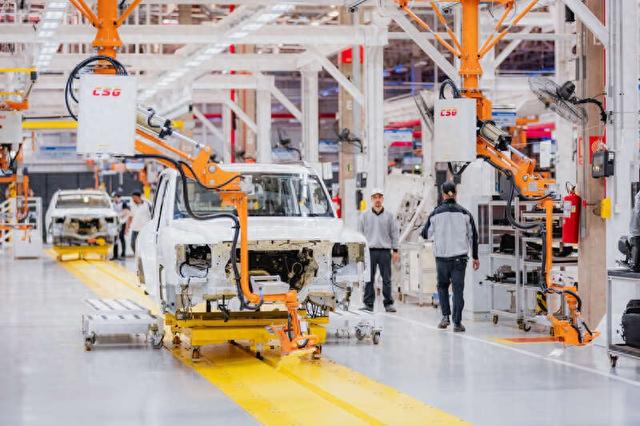
Core Insights - The core viewpoint of the article highlights the strong performance of Great Wall Motors in 2025, achieving record revenue and sales figures despite industry challenges [2][3]. Financial Performance - The company reported an annual revenue of 222.824 billion yuan, marking a year-on-year increase of 10.2%, setting a new historical high [2]. - The net cash flow from operating activities was approximately 40.4 billion yuan, indicating a solid financial structure to support ongoing investments [3]. - The asset-liability ratio decreased by 2.73 percentage points, reflecting improved financial stability [3]. Sales and Market Position - Great Wall Motors sold 1.324 million new vehicles, with significant growth in both new energy vehicles and overseas sales [2]. - The average revenue per vehicle reached 168,300 yuan, an increase of about 4,500 yuan year-on-year, with vehicles priced above 200,000 yuan accounting for 41% of total sales [2]. - Sales of vehicles priced above 200,000 yuan reached 534,000 units, an increase of 91,000 units from the previous year, indicating a shift towards higher-value products [2]. Research and Development - The company maintains a strong focus on R&D, with a team of 23,000 engineers, equating to one engineer for every four employees [2]. - Great Wall Motors ranked first among Chinese independent vehicle manufacturers in terms of patent authorizations, particularly in the field of new energy vehicles, for five consecutive years [2]. - The launch of the Yuan platform, compatible with five power forms and based on native AI, demonstrates the company's commitment to innovation and smart technology [2].


华金汽车首次覆盖浙江华远:紧固件和座椅锁驱动增长,深耕技术持续开拓新品
Quan Jing Wang· 2026-02-13 10:46
Core Viewpoint - Zhejiang Huayuan is a high-tech enterprise in the field of customized automotive connection components, showing strong growth potential through steady growth in its core businesses of special fasteners and seat locks, along with advancements in new energy and intelligent technology [1] Group 1: Business Overview - The company focuses on the research, production, and sales of customized automotive system connection components, with core products including special fasteners and seat locks, applicable in key areas such as vehicle body chassis, power systems, safety systems, and intelligent electronic systems [1] - Zhejiang Huayuan has established a comprehensive supply and sales service network for automotive fasteners and seat locks, with city service centers in Guangzhou, Shanghai, and Chongqing, an office in Singapore, and a dedicated delivery warehouse in Bulgaria [1] Group 2: Supply Chain Integration - The company is deeply integrated into the automotive parts supply chain, serving as a first-tier supplier to major automakers such as Volkswagen China, GAC Honda, Changan Mazda, Great Wall Motors, and Changan Ford [2] - In the lock business, products are supplied to brands like Lincoln, Cadillac, GAC Honda, SAIC General, Changan Ford, and Dongfeng Nissan through first-tier suppliers [2] - Zhejiang Huayuan is expanding its product boundaries into the new energy and intelligent automotive sectors, entering the supply chains of major domestic new energy vehicle manufacturers like NIO, Xpeng, GAC Aion, BYD, and Li Auto [2] Group 3: R&D and Product Development - The company has accumulated extensive R&D experience, with over 10 series of locks and more than 100 varieties currently in production, along with various technical reserves under development [3] - Products exceed industry standards in key performance indicators such as static strength, operational durability, lateral stiffness, and locking force, meeting the stringent requirements of leading automakers [3] - The company possesses high-precision processing capabilities of 0.01mm, utilizing combined processes like cold heading and machining for efficient production of screw and gear products [3] Group 4: Financial Performance - In the first three quarters of 2025, the company achieved total revenue of 541 million yuan, a year-on-year increase of 18.64%, and a net profit attributable to shareholders of 79 million yuan, up 29.30% year-on-year [4] - The shipment volume of aluminum alloy precision connection components for various sensors reached 10.86 million pieces in the first half of 2025, a year-on-year increase of 445% [4] - The company has completed investment in production lines for screw products and is progressing towards mass production, with new electric lock products already in mass production for brands like Xpeng and Dongfeng [4]
观车 · 论势 || 规模之外,商用车企更需算好盈利账
Zhong Guo Qi Che Bao Wang· 2026-02-09 09:43
Core Insights - China's heavy-duty truck industry has maintained the world's highest annual sales for years, but the profitability of leading domestic manufacturers remains low compared to European counterparts [1][2] - The industry is facing a transition from scale expansion to profit generation, necessitating a profound transformation among Chinese commercial vehicle companies [1][5] Group 1: Current Challenges - The heavy-duty truck manufacturing sector is capital-intensive, with high costs for raw materials and core components, making profits vulnerable to price fluctuations and market demand changes [1] - Intense competition in the domestic market, with over ten companies vying for market share, has led to price wars, resulting in some models being sold at negative gross margins [1] - The overall gross margin in the industry is maintained at only 8% to 12%, with net profit margins fluctuating between 1% and 3% [1] Group 2: Comparison with European Companies - European commercial vehicle manufacturers like Daimler Trucks, Volvo Trucks, and Scania focus on internal optimization and cost reduction through layoffs, factory closures, and capacity utilization improvements [2] - These companies prioritize technological research and development in key areas such as power systems, smart connectivity, and electrification to enhance profitability [2] - European firms have adopted a lifecycle service model that integrates used vehicle trading, financial services, and customized solutions, transforming vehicle sales into ongoing profit sources [2] Group 3: Opportunities for Growth - To address profitability issues, Chinese heavy-duty truck companies should explore global markets for better value returns, moving beyond simple product exports to a comprehensive evaluation of systemic capabilities [3] - Successful international expansion requires a long-term strategic approach, including product certification, market adaptation, and the establishment of localized sales and service networks [3] - The global shift towards electrification in the automotive industry presents a historic opportunity for Chinese companies to enter high-barrier markets like Europe, leveraging their advantages in the new energy truck sector [3] Group 4: Future Directions - The new technological revolution presents both challenges and opportunities for reshaping profitability models in China's heavy-duty truck industry [4] - The rapid increase in the penetration rate of new energy trucks in the domestic market necessitates the development of proprietary core technologies and innovative business models to enhance profit margins [4] - Intelligent technology can transform heavy-duty trucks into data nodes, allowing companies to offer value-added services such as fuel management and preventive maintenance, creating new revenue streams [4] Group 5: Strategic Shift - The high-quality development of the manufacturing industry requires a shift from scale to efficiency, emphasizing profitability and innovation as core competitive indicators [5] - Companies must abandon the obsession with scale and focus on value creation, optimizing product and business structures to build a profitable lifecycle model [5] - Strong profitability is essential for ensuring sufficient resources for research and development, stable operations, and continuous innovation, forming a solid foundation for the industry's transition from large to strong [5]
利润率跌破2%:博世中国挥刀裁员
Xin Lang Cai Jing· 2026-02-04 12:07
Core Insights - Bosch is facing unprecedented transformation challenges in the Chinese market, including layoffs and restructuring efforts to adapt to the declining demand for traditional fuel vehicles and the rise of new energy vehicles [1][2][7] Group 1: Layoffs and Restructuring - Bosch has initiated layoffs affecting nearly 200 employees, particularly in its Wuxi base, which focuses on fuel vehicle and hydrogen fuel cell projects [1][8] - The company has announced a global layoff plan of 22,000 employees, with 9,000 in Germany in 2024 and an additional 13,000 in 2025, indicating a significant workforce reduction [2][8] - Bosch's employee count in China is projected to decrease from approximately 58,000 at the end of 2023 to 56,000 by the end of 2024, reflecting a steady decline [8] Group 2: Financial Performance - Bosch's sales are expected to slightly increase to €91 billion in 2025, but the EBIT margin is projected to drop to about 2%, down from 3.5% in 2024, indicating a significant decline in profitability [2][9] - The company has set aside €3.1 billion for restructuring costs, which is about 3.5% of the projected sales for 2025, highlighting the financial strain from ongoing adjustments [9] Group 3: Market Position and Competition - Bosch's competitive position in the Chinese market is deteriorating due to the rapid rise of local companies like Huawei and BYD, which are gaining market share through faster technology iterations and better cost performance [4][11] - In the ADAS sector, Bosch's market share dropped from 22.5% in the first half of 2024 to 15.2% in the same period of 2025, while Huawei's share increased from 3.5% to 4.3% [11] - Bosch's position in the cockpit domain is particularly weak, ranking ninth with only 3.6% market share, while local competitors like BYD Electronics lead the market [11][12] Group 4: Strategic Responses - In response to declining profits and local competition, Bosch is increasing its R&D investment in China, targeting 11.9 billion yuan in 2024, which is about 8% of its sales, focusing on local development projects [12][13] - Bosch is also leveraging its global presence to assist Chinese automakers in expanding internationally, having supported over 200 models in their overseas ventures [13]
连续17年稳居全球第一 去年我国汽车产销量均超3400万辆
Sou Hu Cai Jing· 2026-01-15 13:41
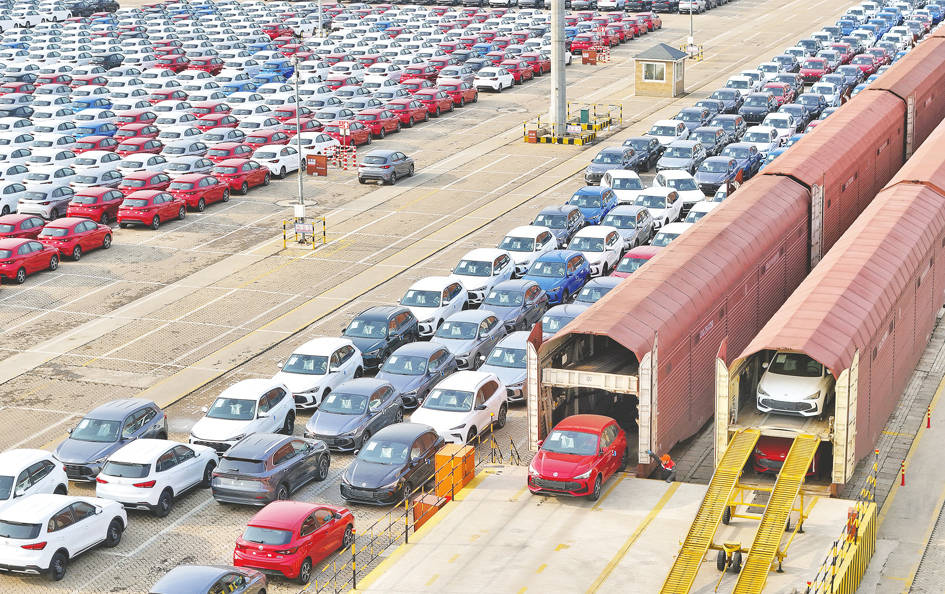
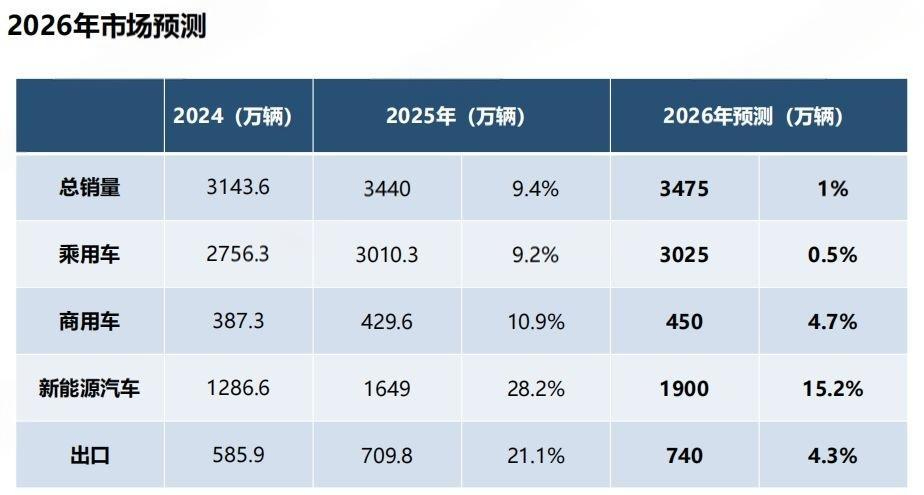
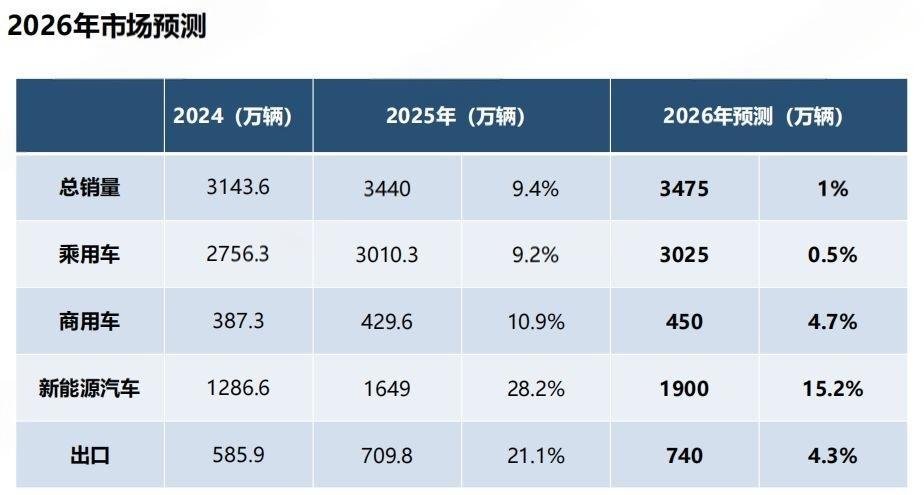
Core Viewpoint - In 2025, China's automotive industry is expected to achieve significant growth, with total vehicle production and sales reaching historical highs, driven by the "Two New" policy and strong consumer demand [1][3]. Group 1: Overall Automotive Market Performance - In 2025, China's total automotive production and sales are projected to reach 34.53 million and 34.40 million units, respectively, marking year-on-year growth of 10.4% and 9.4% [1]. - The automotive market has maintained a production and sales scale of over 30 million units for three consecutive years, solidifying its position as the world's largest automotive market for 17 years [1]. - The China Association of Automobile Manufacturers (CAAM) predicts that total vehicle sales in 2026 will be 34.75 million units, with a modest growth of 1% [3]. Group 2: Passenger Vehicle Segment - In 2025, passenger vehicle production and sales exceeded 30 million units for the first time, reaching 30.27 million and 30.10 million units, with year-on-year growth of 10.2% and 9.2% [4][5]. - The growth rate of the passenger vehicle market showed signs of slowing down in the fourth quarter of 2025, with production and sales in December declining by 6.7% and 4.6% month-on-month, and 2.1% and 6.2% year-on-year [4]. - The CAAM noted that the passenger vehicle market's growth was supported by the "Two New" policy, which provided a stable transition and orderly connection for the market [3]. Group 3: Commercial Vehicle Segment - In 2025, commercial vehicle production and sales surpassed 4 million units, reaching 4.261 million and 4.296 million units, with year-on-year growth of 12% and 10.9% [8]. - The sales of new energy commercial vehicles reached 954,000 units, reflecting a significant year-on-year increase of 65.5% [8]. - The CAAM forecasts that commercial vehicle sales will reach 4.5 million units in 2026, representing a growth of 4.7% [9]. Group 4: New Energy Vehicles (NEVs) - In 2025, NEV production and sales exceeded 16.62 million and 16.49 million units, respectively, with year-on-year growth of 29% and 28.2% [10]. - NEVs accounted for 47.9% of total new vehicle sales in 2025, an increase of 7 percentage points compared to 2024 [10]. - The CAAM anticipates that NEV sales will reach 19 million units in 2026, with a year-on-year growth of 15.2%, potentially increasing market penetration to approximately 54.68% [11].
两个连续全球第1 2025年我国汽车产销双超3400万辆
Mei Ri Jing Ji Xin Wen· 2026-01-15 02:14
Core Viewpoint - In 2025, China's automotive industry is expected to achieve record production and sales, driven by the "Two New" policy, with total vehicle production and sales exceeding 34 million units, marking a significant growth compared to previous years [1][6]. Group 1: Overall Market Performance - In 2025, China's total automotive production and sales are projected to reach 34.53 million and 34.40 million units, representing year-on-year growth of 10.4% and 9.4% respectively, maintaining the global leadership for 17 consecutive years [1][6]. - The passenger vehicle segment achieved a historic milestone, with production and sales surpassing 30 million units for the first time, totaling 30.27 million and 30.10 million units, with year-on-year growth of 10.2% and 9.2% [4][6]. Group 2: Quarterly Trends - The automotive market showed steady growth in the first three quarters of 2025, but experienced a noticeable slowdown in the fourth quarter, with production and sales in December declining by 6.7% and 4.6% respectively compared to the previous month [3][4]. - The decline in growth rate in the fourth quarter was attributed to the withdrawal of subsidies in various regions, which had previously supported market growth [4]. Group 3: Commercial Vehicle Market - The commercial vehicle market also demonstrated strong performance, with production and sales exceeding 4.26 million and 4.30 million units, reflecting year-on-year growth of 12% and 10.9% [7]. - The sales of new energy commercial vehicles reached 954,000 units, marking a significant year-on-year increase of 65.5% [7]. Group 4: New Energy Vehicles - In 2025, the production and sales of new energy vehicles reached 16.63 million and 16.49 million units, with year-on-year growth of 29% and 28.2%, maintaining the global lead for 11 consecutive years [9][10]. - Although the penetration rate of new energy vehicles did not exceed 50% for the entire year, it did surpass 50% in domestic new car sales, reaching 50.8% [10]. Group 5: Future Projections - For 2026, the total automotive sales in China are projected to be 34.75 million units, with a modest year-on-year growth of 1% [1][6]. - The new energy vehicle market is expected to grow further, with sales anticipated to reach 19 million units, representing a year-on-year increase of 15.2% [10].

两个连续全球第一!2025年我国汽车产销双超3400万辆
Mei Ri Jing Ji Xin Wen· 2026-01-15 00:44
Core Viewpoint - In 2025, China's automotive production and sales are expected to exceed 34.4 million units, marking a significant growth compared to previous years, driven by the "Two New" policy and strong market demand [1][2]. Group 1: Overall Market Performance - In 2025, China's total automotive production and sales are projected to reach 34.53 million and 34.4 million units, respectively, representing year-on-year growth of 10.4% and 9.4% [1][2]. - The automotive market has maintained a scale of over 30 million units for three consecutive years, solidifying its position as the world's largest automotive market for 17 years [1][2]. - The forecast for 2026 indicates a slight increase in total automotive sales to 34.75 million units, with a year-on-year growth of 1% [2]. Group 2: Passenger Vehicle Insights - In 2025, passenger vehicle production and sales surpassed 30 million units for the first time, achieving 30.27 million and 30.1 million units, respectively, with year-on-year growth of 10.2% and 9.2% [4][8]. - The growth rate of passenger vehicle sales in December 2025 showed a decline, with production and sales dropping by 6.7% and 4.6% month-on-month, and a year-on-year decrease of 2.1% and 6.2% [4][6]. Group 3: Commercial Vehicle Performance - The commercial vehicle market in 2025 saw production and sales return to over 4 million units, with figures of 4.261 million and 4.296 million units, reflecting year-on-year growth of 12% and 10.9% [10]. - The sales of new energy commercial vehicles reached 954,000 units in 2025, marking a significant year-on-year increase of 65.5% [10]. Group 4: New Energy Vehicle Trends - In 2025, new energy vehicle production and sales reached 16.626 million and 16.49 million units, respectively, with year-on-year growth of 29% and 28.2% [14]. - New energy vehicles accounted for 47.9% of total new vehicle sales, an increase of 7 percentage points from the previous year [14][16]. - The forecast for 2026 anticipates new energy vehicle sales to reach 19 million units, representing a year-on-year growth of 15.2% [16].
两个连续全球第一!2025年我国汽车产销双超3400万辆:乘用车首超3000万辆,新能源车渗透率全年未超50%
Mei Ri Jing Ji Xin Wen· 2026-01-14 23:49
Core Viewpoint - In 2025, China's automotive production and sales are expected to exceed 34.4 million units, marking a significant growth compared to previous years, driven by the "Two New" policy and strong market demand [1][2]. Group 1: Overall Market Performance - In 2025, China's total automotive production and sales are projected to reach 34.53 million and 34.4 million units, respectively, representing year-on-year growth of 10.4% and 9.4% [1][2]. - The automotive market has maintained a scale of over 30 million units for three consecutive years, solidifying its position as the world's largest automotive market for 17 years [1][2]. - The forecast for 2026 indicates a slight increase in total automotive sales to 34.75 million units, with a growth rate of 1% [1][2]. Group 2: Passenger Vehicle Insights - In 2025, passenger vehicle production and sales surpassed 30 million units for the first time, achieving 30.27 million and 30.1 million units, with year-on-year growth of 10.2% and 9.2% [6][7]. - The forecast for 2026 suggests that passenger vehicle sales will reach 30.25 million units, reflecting a modest growth of 0.5% [8]. Group 3: Commercial Vehicle Performance - The commercial vehicle market showed strong performance in 2025, with production and sales reaching 4.26 million and 4.296 million units, respectively, marking year-on-year growth of 12% and 10.9% [9]. - The sales of new energy commercial vehicles reached 954,000 units in 2025, representing a significant year-on-year increase of 65.5% [9]. Group 4: New Energy Vehicle Trends - In 2025, new energy vehicle production and sales reached 16.626 million and 16.49 million units, with year-on-year growth of 29% and 28.2% [14][16]. - New energy vehicles accounted for 47.9% of total new vehicle sales, an increase of 7 percentage points from the previous year [16]. - The forecast for 2026 anticipates new energy vehicle sales to reach 1.9 million units, with a growth rate of 15.2% [14][16].
新动力 新价值 东风新能源专用车引领高效节能新时代
Sou Hu Wang· 2025-12-22 11:09
Group 1 - The core message of the news is that the Dongfeng Commercial Vehicle 2026 Partner Conference signals that new energy and intelligence are no longer concepts but tangible realities [1] - The Dongfeng Tianjin KR pure electric street sweeper chassis represents a technological breakthrough and serves as a practical tool for operators in sanitation and municipal sectors to reduce costs and increase efficiency [3] Group 2 - The electric vehicle is built on the Tianjin KR platform, known for its durability and reliability, validated by millions of users over time [4] - Unlike simple engine replacements, the vehicle features a forward development design with the battery placed behind the driver's cabin, enhancing ground clearance and providing ample space for equipment installation [6] - The vehicle is equipped with a 232 kWh battery from CATL, allowing for continuous high-intensity operation for up to 8 hours without the need for mid-shift charging [8] Group 3 - The vehicle supports a maximum 400A DC fast charging, enabling a charge from 20% to 80% in under 40 minutes, allowing for quick recharging during breaks [10] - The electric street sweeper utilizes a high-torque direct-drive motor, providing immediate power delivery, which enhances efficiency in frequent stop-and-go operations compared to traditional diesel vehicles [12] - The operating costs of the electric sweeper are significantly lower than those of diesel vehicles, especially when charging during off-peak hours, potentially saving enough on fuel costs to equate to several months of additional profit [14] Group 4 - The Dongfeng Tianjin KR pure electric street sweeper is positioned as a key to industry transformation, offering high battery capacity, rapid charging, lower operational costs, and proven reliability to support a smoother and more profitable transition to green operations [15]

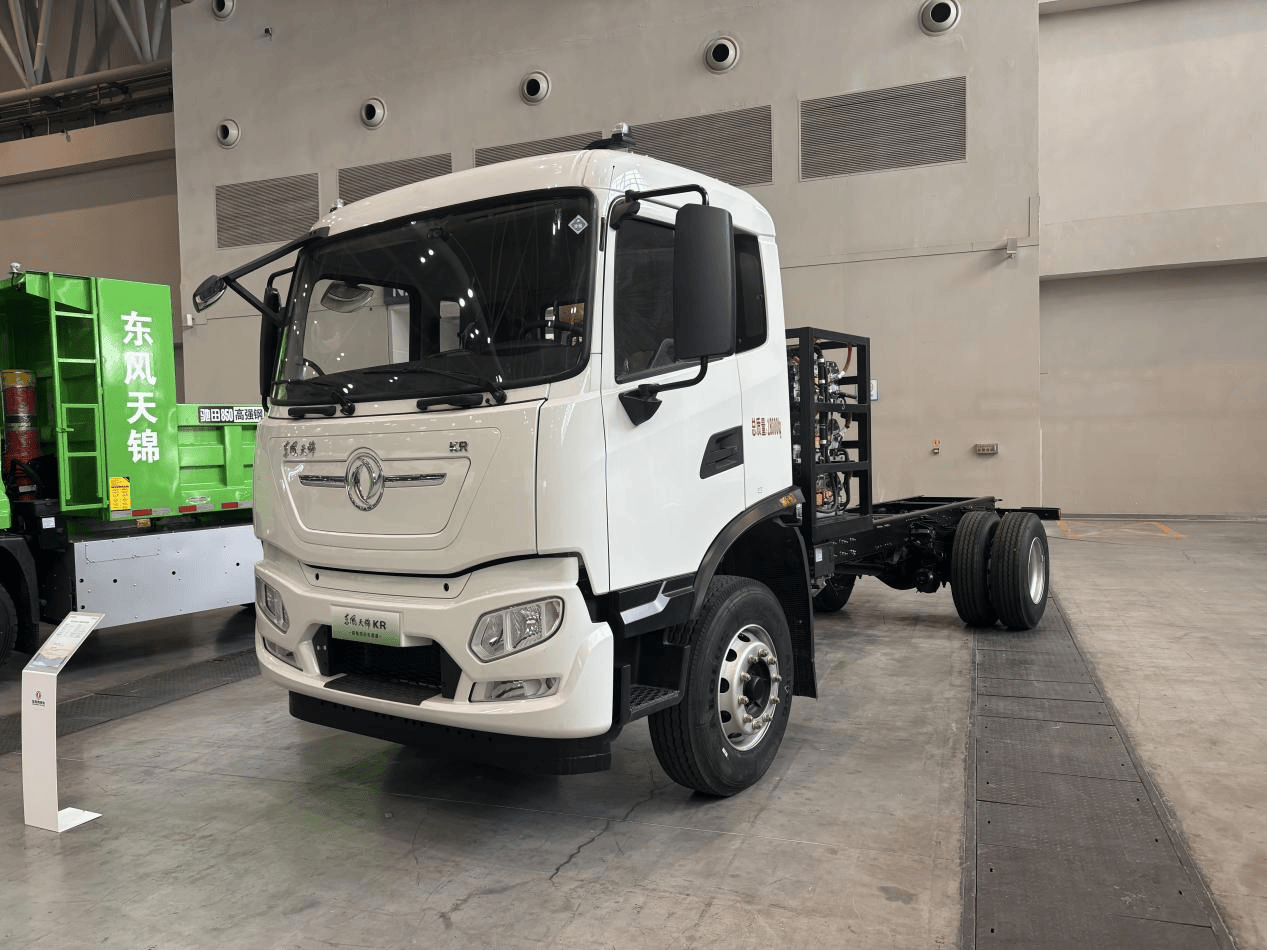
观车 · 论势 || 自主可控 关乎汽车产业兴衰“命门”
Zhong Guo Qi Che Bao Wang· 2025-12-22 09:13
Core Insights - The global automotive industry is undergoing a transformative period characterized by the deep integration of new energy and intelligence, with rapid technological iterations and a significant restructuring of the industry landscape [2] - The autonomy of core technologies has become essential for survival and development in the industry, as evidenced by the competitive struggle over key areas such as chips and batteries [2][3] - The vulnerabilities of the global supply chain were highlighted during the 2021 chip shortage, which resulted in over 7.7 million vehicles being cut from production and an economic loss of $210 billion [2] Group 1: Industry Resilience and Adaptation - Chinese automakers have demonstrated strong risk resilience during recent crises, with companies like BYD and Great Wall Motors successfully mitigating production risks through self-developed technologies [3] - BYD achieved a 14.8% increase in sales by relying on self-researched automotive-grade chips, while Great Wall Motors reduced chip supply risks by over 60% through partnerships with domestic chip manufacturers [3] - The ability to independently develop core technologies is now seen as a critical factor for long-term competitiveness and survival in the automotive market [3] Group 2: Global Trends and Competitive Advantages - International automakers that invest in electric and intelligent technologies and build internal technical loops tend to exhibit greater resilience and control during market fluctuations [4] - Companies leveraging self-developed technologies can reduce reliance on upstream suppliers and create differentiated advantages in data accumulation, software-defined vehicles, and user experience [4] - The control over core technologies enables rapid and flexible innovation tailored to user needs, establishing a solid competitive moat [4] Group 3: Strategic Importance for China - For China, promoting core technology autonomy is strategically significant for transitioning from a "big automotive nation" to a "strong automotive nation" [5] - Historically, China faced challenges in the traditional automotive sector due to heavy reliance on imports for key components, but this situation is changing in the new energy vehicle sector [5] - Domestic automotive-grade chips are gradually achieving mass production, with some models reaching 100% localization in core chips, marking a shift in the previously monopolized high-end chip market [5] Group 4: Challenges and Collaborative Efforts - The path to core technology autonomy is fraught with challenges, particularly in high-end automotive chips where foreign companies still dominate [6] - Achieving autonomy does not equate to isolation; it requires open collaboration to enhance capabilities and address weaknesses [6] - A comprehensive approach involving sustained R&D investment, vertical integration, and supportive policies is necessary to build a robust autonomous ecosystem in the automotive industry [6] Group 5: Historical Context and Future Outlook - The automotive industry's history shows that each paradigm shift in production models and core technologies reshapes global competitive dynamics [7] - Mastery of new core technologies like chips, batteries, and software is redefining industry development rules and reflects a nation's industrial resilience and strategic initiative [7] - As Chinese automakers and supply chain partners continue to break through in core technology areas, they will enhance their ability to navigate industry cycles and market changes [7]
