
分期商城

Search documents
高息借贷“换壳”潜行: 马甲矩阵、分期场景与退费中介的隐秘博弈
Zhong Guo Zheng Quan Bao· 2026-01-21 21:54
Core Viewpoint - The article discusses the emergence of new high-interest lending models in the context of tightening regulations on loans with annualized interest rates above 24%, highlighting the challenges in identifying true borrowing costs and the rise of complaint-driven intermediaries [1][6]. Group 1: High-Interest Lending Models - New lending products such as "monthly financing guarantees" and "installment malls" have emerged, featuring short borrowing cycles and high fees, targeting individuals with poor credit histories and urgent funding needs [1][3]. - A specific case illustrates a borrower taking a loan of 6,000 yuan with a total repayment amount of 8,318.7 yuan, resulting in an annualized interest rate of 464% [2]. - The "monthly financing guarantee" products typically have short terms of around 30 days and involve small loan amounts, often between 3,000 to 10,000 yuan, with additional high fees that inflate the effective interest rates [3][4]. Group 2: Regulatory Environment - Regulatory measures have intensified, with the China Internet Finance Association conducting inspections on mobile financial apps, leading to corrective actions by several institutions [6][7]. - The People's Bank of China has introduced a classification rating system for non-bank payment institutions, which will impact their operations and regulatory scrutiny based on compliance with lending regulations [7]. - The regulatory focus is shifting towards the entire supply chain of online lending platforms, with recent actions targeting payment institutions that facilitate high-interest loans [6][7]. Group 3: Industry Challenges - The high-interest lending industry operates through a complex and organized structure designed to evade regulatory scrutiny, complicating the tracking and accountability of transactions [4]. - The rise of intermediaries offering to assist borrowers in recovering high fees and interest reflects the growing consumer dissatisfaction and the challenges in navigating the lending landscape [5]. - Payment institutions face difficulties in monitoring the true costs of funds due to the layered nature of partnerships and the obscured characteristics of high-interest products [7].
高息借贷“换壳”潜行:马甲矩阵、分期场景与退费中介的隐秘博弈
Zhong Guo Zheng Quan Bao· 2026-01-21 21:08
Core Viewpoint - The article discusses the emergence of high-interest lending products disguised under new names and structures in response to regulatory tightening on loans with annualized interest rates above 24%. These products target borrowers with poor credit histories and urgent short-term funding needs, utilizing complex and hidden industry chains to evade regulation [1][2][3]. Group 1: High-Interest Lending Products - New lending models such as "monthly financing guarantee" and "installment mall" have developed, featuring short borrowing periods and high fees, leading to significantly elevated effective annual interest rates [1][3]. - A specific case illustrates a borrower taking a loan of 6,000 yuan with a total repayment amount of 8,318.7 yuan, resulting in an effective annual interest rate of 464% [1]. - Complaints against platforms like "Xin Xiaoyong" have surged, with nearly 800 complaints focusing on exorbitant interest rates and hidden fees, including high guarantee fees [2][3]. Group 2: Regulatory Environment - The implementation of regulations prohibiting products with annualized rates above 24% has led to a contraction of previously high-interest lending options, pushing many borrowers to seek alternative, non-compliant products [2][6]. - The China Internet Finance Association has been actively conducting inspections and promoting self-regulation among financial institutions, with some institutions already completing necessary rectifications [6][7]. - New regulations from the People's Bank of China will classify payment institutions based on governance and operational stability, impacting their ability to engage with high-interest lending products [7]. Group 3: Industry Challenges - The complex organizational structure of high-interest lending platforms, often using multiple names and entities, complicates the tracking and accountability of these loans, making it difficult for borrowers to assert their rights [4][5]. - The rise of intermediaries offering to help borrowers reclaim high fees and interest reflects the growing demand for consumer protection in this opaque lending environment [4][5]. - Payment institutions face challenges in monitoring the true cost of funds due to the layered nature of these lending models, which obscures the actual interest rates being charged [7].
全面排查!第三方支付机构掐断高息网贷支付链路
Guo Ji Jin Rong Bao· 2026-01-17 04:39
Core Viewpoint - The implementation of new regulations on internet lending and small loan companies has led to a crackdown on high-interest lending practices, with many online lending platforms attempting to circumvent these regulations through new business models [1][3]. Group 1: Regulatory Actions - New regulations have been introduced to manage internet lending and small loan companies, aiming to improve financial service quality and compliance [1]. - Third-party payment institutions are conducting compliance checks and terminating partnerships with potentially non-compliant local financial institutions to prevent high-interest lending [1][3]. - Regulatory bodies have previously mandated that payment companies must not open accounts for financial institutions, especially small loan companies, and must scrutinize any business with internal annual returns exceeding 24% [3]. Group 2: High-Interest Lending Practices - High-interest online lending has been proliferating, with examples such as the "鹿优选分期商城" offering products at prices significantly above market value, coupled with high annualized interest rates [2]. - The "分期商城" model allows for disguised high-interest loans, where users may end up paying much more than the market price for products, sometimes without even receiving the goods [2]. Group 3: Challenges in Compliance - The complexity of high-interest lending models makes it difficult for payment institutions to identify and sever ties with non-compliant practices, as many operate under the guise of legitimate services [6]. - Payment institutions face challenges due to the hidden nature of high-interest loans, multi-layered cooperation chains, and the short-term profit incentives associated with these loans [6][7]. - There is a lack of sufficient risk control technology and data support among many small payment institutions, hindering their ability to monitor compliance effectively [6]. Group 4: Recommendations for Payment Institutions - Payment institutions are advised to enhance their compliance systems by implementing strict merchant entry reviews, dynamic monitoring of transactions, and establishing a dedicated regulatory policy tracking department [7]. - Institutions should consider innovative approaches to align with regulatory encouragement, such as improving payment accessibility and utilizing emerging technologies like AI and big data to enhance compliance efficiency [7].
支付机构开始切断24%以上产品支付通道
21世纪经济报道· 2026-01-16 02:25
Core Viewpoint - The article discusses the increasing regulatory pressure on third-party payment institutions regarding high-interest loan products, particularly those with annualized rates exceeding 24%, leading to compliance checks and potential business model changes in the industry [1][5][12]. Group 1: Regulatory Environment - A third-party payment institution in Hangzhou has been required to stop providing payment services for a high-interest loan product, "Yuexi Rongdan," due to regulatory scrutiny [1]. - The implementation of the "New Loan Regulations" in October 2022 has triggered a series of strong regulatory signals targeting high-interest loan products, affecting the entire loan issuance chain [1][5]. - Regulatory guidance has led to compliance self-checks among payment institutions, particularly in East China, focusing on risk management for existing financial clients [5][6]. Group 2: Compliance and Self-Inspection - Payment institutions are conducting comprehensive compliance inspections across all business lines to identify potential risks in existing operations [5][6]. - The focus of these inspections includes ensuring that payment channels are not used for high-interest loan products and that business practices align with regulatory standards [6][10]. - The "Non-Bank Payment Institution Classification Rating Management Measures" has been introduced to further regulate the payment industry, emphasizing compliance and risk management [9][10]. Group 3: Impact on Business Models - The self-inspection wave is partly driven by the emergence of new high-interest loan models, such as "Yuexi Rongdan" and "Installment Mall," which have raised compliance concerns [12][14]. - Payment institutions are expected to cut off payment channels for high-interest products, but this will not necessarily affect compliant business operations [6][10]. - The classification rating results for payment institutions will influence their operational scope and regulatory scrutiny, with potential downgrades for those involved in non-compliant activities [9][10].


助贷大搞分期商城,价差最高达80%,利率远超24%
Sou Hu Cai Jing· 2025-12-23 21:36
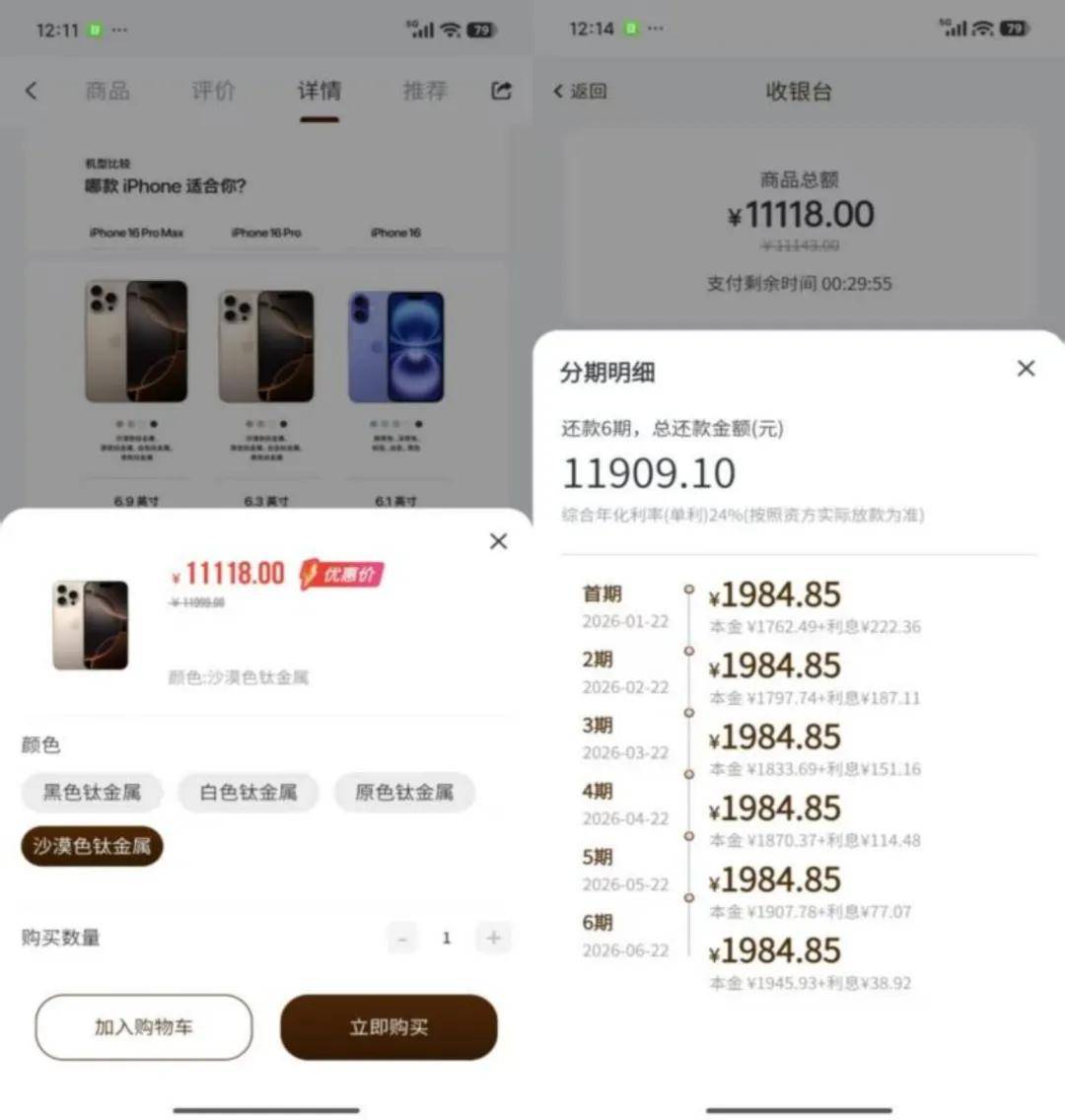
Core Viewpoint - The introduction of new lending regulations has significantly compressed the survival space for the industry, prompting the emergence of a new business model known as "installment shopping malls," which effectively operates as a lending service under the guise of consumer financing [1]. Group 1: Business Model Characteristics - The mainstream installment malls create their own online shopping environments, embedding lending and installment payment options within the product transaction process [2]. - These new installment malls focus on standardized products with transparent and easily liquidated second-hand market prices, such as investment gold bars and brand-name smartphones, often pricing these items significantly higher than conventional e-commerce platforms [2]. - For example, the "柚优品" app lists an iPhone 16 Pro Max at 11,118 yuan, with a total repayment amount of 11,909.1 yuan under a six-month installment plan, reflecting a nominal annualized interest rate of 24% [3]. Group 2: Price Discrepancies - Price comparisons reveal significant markups; for instance, the same iPhone model is priced at 9,599 yuan on JD.com, indicating a price difference of approximately 15.8% [5]. - Other platforms exhibit similar pricing strategies, with marked-up prices for gold bars and smartphones ranging from 16.16% to as high as 80% compared to market rates [7]. - The core logic of these installment malls is to generate high profits through inflated prices and a 24% service fee, effectively circumventing regulatory limits on nominal interest rates [8]. Group 3: Industry Trends and Risks - The entry of more lending players into the installment mall sector has been noted, with companies actively recruiting for related operational roles, indicating a shift towards financial products disguised as consumer goods [9]. - The emergence of these platforms raises concerns about high interest rates, inflated product prices, and potential consumer risks such as privacy breaches and aggressive debt collection practices [14]. - Complaints from users highlight issues such as excessive fees, receiving refurbished products, and experiencing harassment over repayments, suggesting a systemic erosion of consumer rights within this business model [20][21].

技术筑桥,幸福可达:全民钱包用AI破解“普惠与风控”难题
Cai Fu Zai Xian· 2025-10-20 06:38
Core Insights - The article emphasizes the importance of consumer finance as a vital link between public demand and economic vitality, focusing on the dual challenges of broadening access to services and managing risks effectively [1] Group 1: Challenges in Traditional Financial Services - Traditional financial services are limited by physical branch locations and rigid credit assessment criteria, leaving many potential customers, such as small merchants and individuals without credit history, underserved [2] - The need for a balance between inclusive financial access and risk management is highlighted, as lowering barriers can lead to increased risk exposure [1][2] Group 2: Innovative Solutions by Quanmin Wallet - Quanmin Wallet leverages financial technology to address the core contradictions in the industry, aiming to provide both inclusive and secure financial services [1] - The platform targets underserved areas by offering a product matrix that is small, frequent, and adaptable, catering to users without traditional credit records [2] - A dual-service model combining "smart terminals and online platforms" has been implemented to enhance service accessibility in rural and county markets [2] Group 3: Enhanced User Experience - The introduction of an installment shopping mall covers various consumer sectors, integrating financial support into everyday purchasing scenarios [3] - Special services for green consumption trends, such as discounts for purchasing electric vehicles and energy-efficient appliances, are also offered [3] - The user experience is optimized through advanced technologies like OCR and live detection, simplifying identity verification processes [3] Group 4: Risk Management Strategies - Quanmin Wallet employs a self-developed "Star Observation Platform" and CRAM risk control system to maintain asset quality while expanding service offerings [4] - A multi-dimensional data modeling approach enhances credit assessment by integrating various data sources, moving beyond traditional credit data reliance [4] - The platform utilizes federated learning technology to ensure data privacy while maximizing data utility for risk assessment [4] Group 5: AI-Driven Risk Control - The integration of advanced algorithms, such as extreme gradient boosting and knowledge graphs, allows for automated data processing and real-time model optimization [5] - The platform can effectively identify and intercept fraudulent activities at various stages of the lending process, ensuring stable asset quality [5] - Compliance and security measures are strictly followed, with partnerships established with licensed financial institutions to enhance transparency and risk management [5] Group 6: Ecosystem Development - Quanmin Wallet has evolved beyond mere lending services to create an ecosystem that combines technology output, scenario integration, and user empowerment [6] - Collaborations with e-commerce and service platforms enable seamless integration of financial services into daily consumer experiences [6] - Educational initiatives, such as the "Quanmin Financial Classroom," aim to enhance user understanding of financial services, fostering responsible credit usage [6]