
利巴韦林

Search documents
拓新药业:公司核心业务聚焦于原料药及医药中间体的研发、生产与销售
Zheng Quan Ri Bao Wang· 2026-02-25 05:48
Core Viewpoint - The company is closely monitoring developments in the international small nucleic acid field and is tracking the application progress of small nucleic acid drugs [1] Group 1: Core Business Focus - The company's core business is focused on the research, development, production, and sales of active pharmaceutical ingredients (APIs) and pharmaceutical intermediates [1] - Key products include sodium cytidine diphosphate, ribavirin, cytarabine hydrochloride, and cytosine, which are widely used in antiviral, antitumor, and neurological medications [1] Group 2: Health and Functional Food Market - The company is actively expanding into the health functional food raw material market, with main products including L-α-glycerophosphocholine, coenzyme Q10, monohydrate creatine, and L-carnitine [1] Group 3: Future Strategy - The company plans to closely follow market demand changes and continuously increase R&D investment to enhance operational performance and intrinsic value [1]
印度尼帕病毒疫情带飞个股,专家称传播性相对有限
Xin Lang Cai Jing· 2026-01-27 12:59
Group 1 - The recent outbreak of Nipah virus disease in West Bengal, India, has raised significant concern, with 5 confirmed cases reported, including healthcare workers, and nearly 100 individuals under home quarantine [1] - The impact of the Nipah virus outbreak on China is relatively minor, with no cases reported in the country, although there is a risk of imported cases that necessitates enhanced preventive measures [1][2] - Nipah virus has been known for over 20 years, with its first outbreak occurring in Malaysia in 1998, and it primarily affects South Asia and Southeast Asia [1][2] Group 2 - The Nipah virus primarily damages the central nervous system (90%) and respiratory system (62%), with a high fatality rate ranging from 40% to 75% [2] - Experts indicate that the Nipah virus has a low basic reproduction number (R₀) compared to influenza or COVID-19, and there have been no reports of large-scale airborne transmission [4] - Current antiviral treatments for Nipah virus are limited, with no approved drugs or vaccines available, although Ribavirin may be effective for treating Nipah virus encephalitis [4][5] Group 3 - Recent research has shown that VV116 has antiviral activity against Nipah virus in vitro and can improve survival rates in mouse models, indicating potential for treatment [4][5] - Several companies have reported possessing Nipah virus testing technology or products, but they have not yet achieved significant revenue from these offerings [6] - The most common testing method for Nipah virus is nucleic acid testing, and public health departments are equipped to handle such testing, which is deemed sufficient for current needs [6]




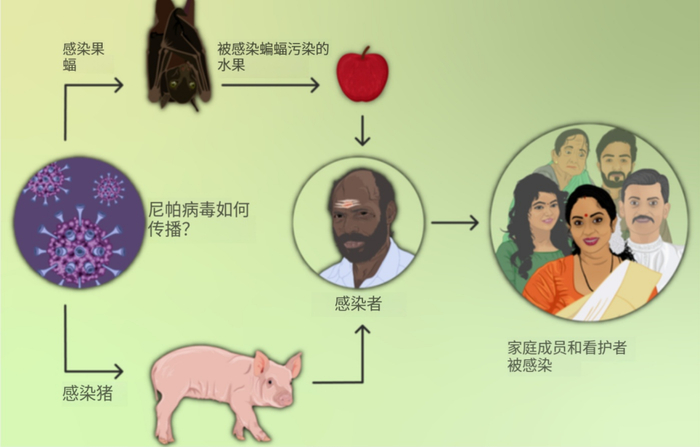
“孟加拉株”尼帕病毒致死率更高、更可能“人传人”,印度疫情有何启示
Di Yi Cai Jing· 2026-01-27 04:07
Core Insights - The Nipah virus is not a new threat but an evolving adversary with a high mortality rate of up to 75%, posing annual challenges in countries like India and Bangladesh [1][8] - Recent outbreaks in West Bengal, India, are considered to be localized and not indicative of a larger pandemic potential, although the situation is being closely monitored [1][3] Group 1: Current Situation and Spread - India has reported a small-scale outbreak of the Nipah virus with confirmed cases rising to 5, including one critical patient [3][4] - The virus may have transmitted between patients and healthcare workers in hospitals, indicating potential human-to-human transmission [4][8] - The outbreak is characterized by high mortality rates and localized clusters, with concerns about cross-regional spread and hospital-acquired infections [8][10] Group 2: Transmission and Variants - The Nipah virus has evolved from a "bat-pig-human" transmission model to a more direct "bat-human" model, with potential for human-to-human transmission [4][5] - Different strains of the Nipah virus exhibit varying human-to-human transmission potentials, with the Bangladesh strain showing higher transmissibility compared to the Malaysian strain [5][6] - Studies indicate that 29% of cases in Bangladesh and over 50% in India are due to human-to-human transmission, contrasting sharply with earlier outbreaks in Malaysia and Singapore [6][7] Group 3: Research and Development Challenges - Despite the high mortality rate and the virus being on the WHO's priority pathogen list, there are currently no approved antiviral treatments or vaccines for Nipah virus [8][10] - Existing treatments rely on supportive care, and the efficacy of repurposed drugs like ribavirin remains uncertain [9][10] - Research efforts are ongoing, with some candidates entering clinical trials, but funding and resource limitations pose significant challenges to advancing these initiatives [9][11] Group 4: Future Considerations - The need for sustained investment in research for vaccines and antiviral drugs targeting the Nipah virus is critical, especially given its proximity to China and the potential for outbreaks [2][11] - The development of vaccines is underway, with candidates like the adenovirus vector vaccine and mRNA vaccine showing promise, but progress is slow [10][11] - Regulatory challenges and funding gaps hinder the development of effective vaccines and treatments for sporadic but severe infectious diseases like Nipah virus [11]
爱科百发坎坷上市路:五年四度冲击资本市场 管线多为授权引进核心竞争力如何体现?
Xin Lang Zheng Quan· 2025-10-11 08:05
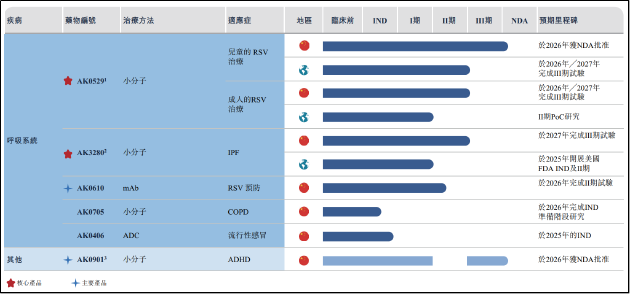
Core Viewpoint - Shanghai Aike Baifa Biopharmaceutical Technology Co., Ltd. (referred to as "Aike Baifa") has submitted its prospectus to the Hong Kong Stock Exchange for the fourth time since 2021, facing challenges in its capital market journey due to reliance on licensed-in R&D models, questionable commercialization potential, and ongoing cash flow pressures [1][2]. Group 1: Capital Market Attempts - Aike Baifa's journey to capital markets has been fraught with difficulties, having first submitted its listing application to the Hong Kong Stock Exchange in June 2021, only to terminate the process in October of the same year [2]. - The company then shifted focus to the domestic market, applying for a listing on the Sci-Tech Innovation Board in April 2023, but withdrew its application in January 2024 after multiple inquiries [2]. - The changing capital market environment, regulatory policies, and investor preferences have led to missed financing opportunities, while R&D expenditures continue to accumulate, exacerbating financial pressures [2]. Group 2: Financial Performance - Aike Baifa is currently in a state of deep losses, with revenues of 6.7 million yuan in 2023 and a cumulative net loss of 571 million yuan during the same period [2]. - The company's cash flow is under significant pressure, with net cash flow from operating activities for 2023, 2024, and the first half of 2025 reported as -232.8 million yuan, -188.7 million yuan, and -71.7 million yuan, respectively [3]. - As of June 30, 2025, the company had only 96.74 million yuan in cash and cash equivalents, having exhausted most of its financing from angel to B-round and approximately 80.29% of C to D-round funds [3]. Group 3: R&D and Product Pipeline - Aike Baifa focuses on innovative therapies for respiratory and pediatric diseases, with a product pipeline consisting of six candidate drugs, primarily developed through a License-in model [4][6]. - The core product, Qiruisuo Wei (AK0529), was developed during the founder's tenure at Roche and is marketed as the first RSV-specific antiviral drug to show positive results in critical Phase III trials, although its non-original research background raises market concerns [6]. - The reliance on external technologies for product development has led to regulatory scrutiny regarding the company's core competitiveness, especially as most products are licensed-in [6][7]. Group 4: Market Challenges - Despite having a first-mover advantage, Qiruisuo Wei faces significant challenges, particularly in the treatment market where existing preventive monoclonal antibody drugs have already gained approval [7]. - The licensing agreements for Qiruisuo Wei include substantial upfront and milestone payments, which could limit the company's long-term profitability even if the product is successfully commercialized [7].
拓新药业:力争实现从中间体到原料药、制剂的全产业链突破
Zheng Quan Ri Bao Wang· 2025-08-15 10:44
Core Viewpoint - The company, Tuoxin Pharmaceutical, focuses on the research, production, and sales of nucleoside (acid) raw materials and pharmaceutical intermediates, with a commitment to expanding its product offerings in the antiviral and antitumor sectors [1] Group 1: Company Focus and Products - The company and its subsidiaries specialize in nucleoside (acid) raw materials and pharmaceutical intermediates [1] - Main products include cytidine sodium, ribavirin, cytarabine hydrochloride, and cytosine, which are used in antiviral, antitumor, and neurological medications [1] Group 2: Future Development Plans - The company plans to continue deepening its core areas, increasing research and development efforts in nucleoside (acid) products for antitumor and antiviral applications [1] - There is an active strategy to expand into the broader health sector while striving for a full industry chain breakthrough from intermediates to raw materials and formulations [1]
拓新药业:专注于核苷(酸)类医药中间体及原料药的研发、生产及销售
Zheng Quan Ri Bao Zhi Sheng· 2025-08-15 10:25
Core Viewpoint - The company focuses on the research, production, and sales of nucleoside (acid) pharmaceutical intermediates and active pharmaceutical ingredients, primarily in the fields of antiviral, antitumor, and neurological medications [1] Company Overview - The main products of the company include: - Cytidine sodium - Cytidine - Acyclidine - Cytarabine hydrochloride - Adefovir dipivoxil - Ribavirin - Inosine - Acyclovir - Cytosine - 5-Fluorouracil - Cytidine - Uridine [1] Market Focus - The company is currently not involved in the development of vaccines or treatments related to the epidemic of Chikungunya virus [1]