前装量产Robotaxi

Search documents
东北证券:首予小鹏汽车-W“买入”评级 战略转型“物理AI”公司
Zhi Tong Cai Jing· 2026-01-07 02:39
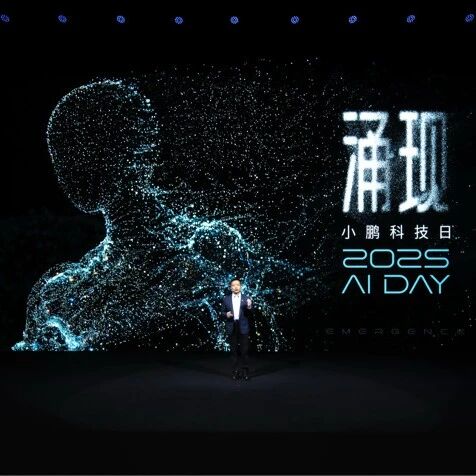
Core Viewpoint - Northeast Securities initiates coverage on XPeng Motors (09868) with a "Buy" rating, highlighting record-high delivery volume, revenue, and gross margin in Q3 2025, driven by a dual-energy strategy and new model launches [1] Group 1: Financial Performance - In Q3 2025, XPeng Motors achieved total revenue of 20.38 billion yuan, a year-on-year increase of 101.8%, with net loss significantly narrowing to 380 million yuan [1] - The total delivery volume reached 116,007 units, marking a 149.3% year-on-year growth and setting a historical record [1] - The comprehensive gross margin surpassed 20% for the first time, reaching 20.1%, indicating a notable improvement in profitability [1] Group 2: Product Strategy - To address user range anxiety, the company launched a "pure electric + range extender" dual-energy strategy, with the first range-extended model, X9 EREV, officially launched in November 2025 [2] - The X9 EREV features a 63.3 kWh battery and a third-generation range extender with an efficiency of over 3.6 kWh/L, achieving a CLTC pure electric range of 452 km [2] - Additional range-extended versions of key models such as G6, G7, and P7i are expected to launch in Q1 2026, alongside four new models including two SUVs based on the MONA platform [2] Group 3: AI Strategy and Technological Advancements - At the 2025 Technology Day, the company showcased its commitment to transforming into a "physical AI" company, with a clear path and core technology [3] - The VLA 2.0 model, a second-generation visual-language-action model, was introduced, enhancing reasoning efficiency by 12 times and improving average takeover mileage in complex scenarios by 13 times [3] - The company plans to fully deploy VLA 2.0 in Ultra models by Q1 2026, with potential applications extending to robotics and other embodied intelligence fields [3] - XPeng Motors announced the launch of China's first fully self-developed mass-produced Robotaxi, with plans to introduce three models in 2026 and begin trial operations in the second half of 2026 [3] - The humanoid robot IRON is expected to achieve mass production by the end of 2026, initially piloting in commercial scenarios such as guiding and shopping [3]

小鹏为什么选择物理AI这条路
雷峰网· 2025-11-07 00:43
Core Viewpoint - The future of automobiles is envisioned as four-wheeled robots, with intelligent driving becoming the core competitive point in the industry by 2025, as electric vehicle technology matures and becomes a basic threshold for entry [2][9]. Group 1: Industry Trends - The development of the new energy industry has shifted focus from electrification to intelligent driving, marking a new cycle of competition [2]. - Major tech companies are investing in physical AI, indicating a consensus that the next generation of human-machine interaction will be through robotics [2][9]. - The emergence of physical AI is expected to revolutionize various sectors, including automotive, robotics, and flying cars, creating a more integrated technological ecosystem [7][28]. Group 2: Company Developments - Xiaopeng Motors has been an early adopter of AI in the automotive sector, positioning itself in the first tier of intelligent driving companies in China [3]. - The company has achieved significant breakthroughs with its second-generation VLA model, which allows for autonomous understanding of physical laws, enhancing its intelligent driving capabilities [5][20]. - Xiaopeng's investment in AI infrastructure includes a 4.5 billion yuan annual investment in computing power, establishing a large-scale intelligent computing cluster to support its AI model training [16]. Group 3: Product Innovations - Xiaopeng plans to launch multiple products, including three Robotaxi models and a highly humanoid robot named IRON, aiming for mass production by the end of 2026 [22][30]. - The second-generation VLA model is designed to eliminate reliance on high-precision maps, enabling more flexible and cost-effective deployment of Robotaxi services [28]. - The company is also advancing in the flying car sector, with over 7,000 orders for its land carrier and ongoing flight verification for its multi-person tilt-rotor flying car [30]. Group 4: Competitive Landscape - The competition in the physical AI space is intensifying, with Xiaopeng and Tesla both recognizing the need for a combination of diverse hardware and unified software architecture to support AI's development in the physical world [12][17]. - Xiaopeng's approach to physical AI aims to create a synergistic effect across its various business lines, optimizing costs and enhancing overall competitiveness [26]. - The industry is witnessing a shift from a single-direction chase to a collaborative innovation model, where breakthroughs are achieved through the convergence of multiple fields [33].