剑侠情缘网络版

Search documents
西山居高管变动:郭炜炜辞任西山居CEO 由邹涛代理
Sou Hu Cai Jing· 2025-12-01 04:23
Group 1 - The CEO of Xishanju, Guo Weiwei, has submitted his resignation due to personal career planning reasons, and the board has accepted his request [1][3] - Guo Weiwei will continue to serve as the Chief Producer at Xishanju, while Zou Tao, the CEO of Kingsoft and Chairman of Xishanju, will act as the interim CEO [3] - Guo Weiwei has been with Kingsoft since 2004, serving in various roles including Vice President and CEO of Xishanju, and has been instrumental in the development of the popular game "Jian Xia Qing Yuan Online" [3][5] Group 2 - The gaming industry is currently facing both opportunities and challenges, with increasing demand for high-quality content and cultural expansion becoming new growth points [4] - The market competition is intensifying, requiring continuous product innovation and experience upgrades, which are critical issues for Xishanju's further development [4][5] - Xishanju, established in 1995, is a subsidiary of Kingsoft responsible for gaming, and has explored overseas markets since 2003 with the launch of its first online game [5]



越南已成第一,这些新兴出海市场越来越能打了
3 6 Ke· 2025-09-04 10:47
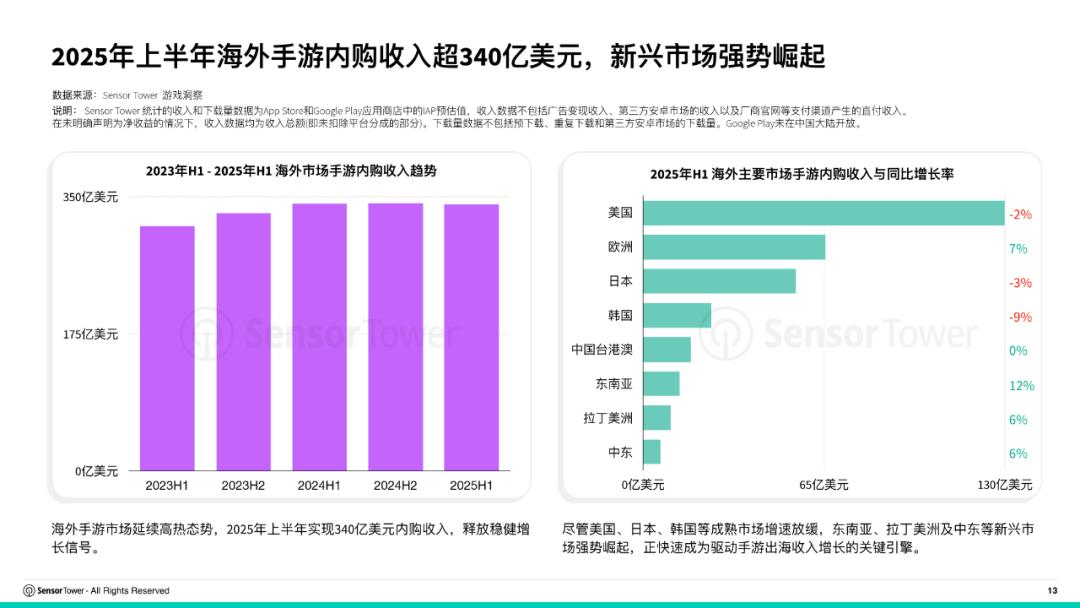
Group 1: Overview of China's Gaming Industry Growth - The Chinese gaming industry is experiencing a new wave of growth in overseas markets, with actual sales revenue from self-developed games reaching $9.501 billion in the first half of 2025, a year-on-year increase of over 11% [1] - Traditional markets such as North America, Japan, South Korea, and Western Europe remain key revenue contributors, but competition is intensifying, prompting Chinese companies to explore underdeveloped emerging markets [1] - Emerging markets in the Middle East, Latin America, and Southeast Asia are rising, presenting new growth opportunities for manufacturers [1] Group 2: Vietnam's Gaming Market - Vietnam has emerged as a significant player in the global gaming scene, with mobile game downloads reaching the highest globally in 2024, surpassing China [5] - Chinese games dominate the Vietnamese market, with 81% of approved games being from China, and titles like "Sword of Legends Online" have historically held a significant market share [7] - The success of Chinese games in Vietnam is attributed to cultural proximity, effective localization strategies, and integration with local payment platforms [9] Group 3: Challenges in the Vietnamese Market - Despite the potential, challenges such as strict approval processes and market size versus commercial return discrepancies exist, requiring companies to adjust expectations [9] - The Vietnamese gaming market is projected to reach $1.5 to $2 billion by 2025, with an annual growth rate of 15% to 25% [9] Group 4: Middle East Gaming Market - The Middle East is becoming a new blue ocean for the gaming industry, driven by a large population, strong consumer spending, and government support [12] - Saudi Arabia's government has elevated the gaming industry as a national strategy, planning to invest $38 billion in gaming and esports [14] - The market is characterized by high consumer spending, with Saudi users' average revenue per user (ARPU) being twice that of the U.S. and five times that of China [14] Group 5: Russia's Gaming Market - Russia's mobile game downloads reached 1.18 billion in the first half of 2024, making it the fifth largest globally, supported by a smartphone penetration rate of 83% [17] - The local digital ecosystem has shown resilience despite international sanctions, with in-app purchase revenue expected to reach $247 million in 2024, growing 12% year-on-year [17] - The exit of Western companies has created a "window of opportunity" for Chinese developers to fill the gap in the market [20] Group 6: Latin America's Gaming Market - Latin America is a growing market with approximately 150 million gamers and a market size of around $3.8 billion, with Brazil being the largest market [21] - The effectiveness of marketing strategies has shifted towards leveraging KOLs (Key Opinion Leaders) for brand promotion, especially in gaming [23] - The market is in a recovery phase, with Chinese companies increasingly establishing local teams for customized operations [24] Group 7: Future Outlook - The Chinese gaming industry is entering a new phase focused on strategic depth and localization, moving away from a reliance on traffic and short-term gains [25] - The next decade will see competition driven by the ability to transition from "game developers" to "localization partners," enabling sustainable global development [26]