剪刀

Search documents
爸爸妈妈别塞了,这些真不让带!
Xin Lang Cai Jing· 2026-02-23 12:30
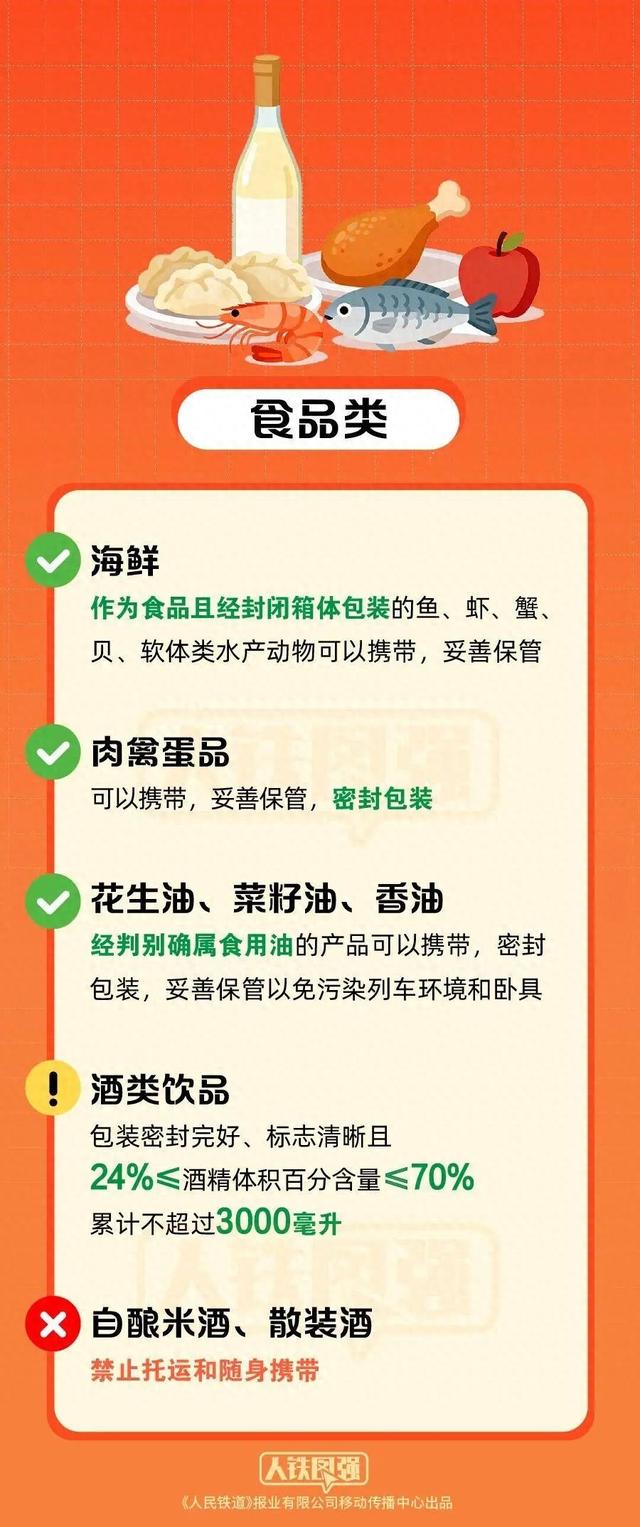
Group 1 - The article provides guidelines on items that can and cannot be carried on trains, emphasizing the importance of proper packaging and handling to avoid contamination and safety issues [1][3][4] - Specific food items such as meat, poultry, and eggs are allowed if properly sealed and stored, while certain alcoholic beverages are permitted under specific conditions, including a maximum alcohol content of 70% and a total volume not exceeding 3000 milliliters [3][4] - Personal care items like perfumes and sprays are allowed in limited quantities, with restrictions on container sizes for flammable products [6][7] Group 2 - Items such as knives with blades longer than 60mm are prohibited for carry-on but can be checked in, while smaller knives are allowed [7][11] - Certain recreational items like folding strollers and wheelchairs are permitted, with specific guidelines for electric wheelchairs [8][9] - Prohibited items include flammable liquids, certain tools, and weapons, which cannot be carried on or checked in [14][15] Group 3 - Smoking is strictly prohibited on high-speed trains and in designated areas of regular trains, with fines imposed for violations [18] - Passengers are allowed to carry a limited number of electronic cigarettes and lighters, but usage is restricted [18] - Guidelines for transporting small animals, such as guide dogs and pets, are provided, including weight limits and health requirements [19] Group 4 - The article outlines procedures for reporting lost items, including using the railway's official app and contacting customer service for assistance [20][21][22][23]

3亿把销量见证!揭秘王麻子称霸专业厨刀市场的核心底气
Zhong Guo Shi Pin Wang· 2026-01-09 07:08
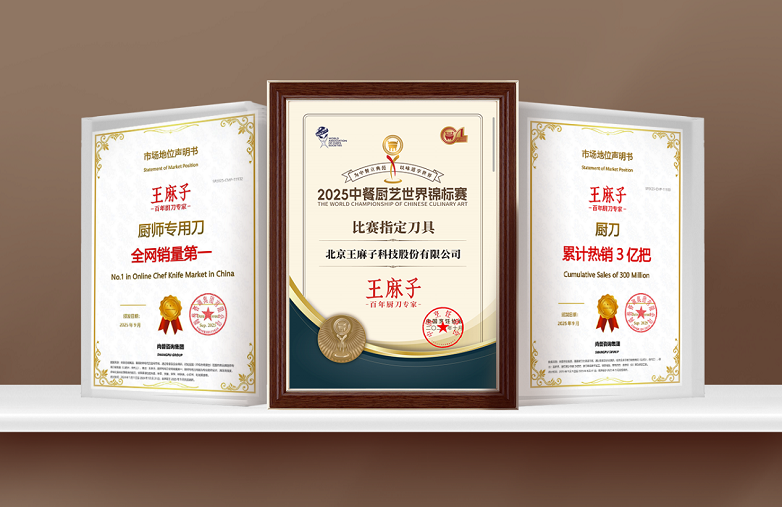
Core Insights - Wang Mazi, a century-old kitchen knife brand, has achieved remarkable success in the competitive knife market, with cumulative sales of over 300 million chef knives and recognition as the exclusive knife brand for the "World Chinese Culinary Arts Championship" in 2025 [1][3] Group 1: Craftsmanship - The brand combines 59 traditional forging processes with modern material technology, enhancing the durability and performance of its knives [3] - The core "ice-forging quenching process" significantly increases the hardness, toughness, and corrosion resistance of the steel, improving durability by 340% [3] - Ergonomic designs and precise weight balance of the knife handles ensure comfort and reduce fatigue for professional chefs [3] Group 2: Product Matrix - Wang Mazi offers a comprehensive product matrix that meets diverse needs in the professional catering industry, including various knife types and related tools [5] - The product line includes specialized knives for different culinary tasks, such as sashimi knives and cleavers, as well as scissors and cutting boards [5] Group 3: Quality Control - The brand has established a rigorous quality control system, rooted in its founding principle of "genuine quality" and modern scientific management [8] - Wang Mazi invested 500 million yuan in a state-of-the-art manufacturing facility equipped with a national-level CMA testing laboratory to ensure consistent performance of its products [8] Group 4: Service Assurance - Wang Mazi has introduced the "Worry-Free Purchase Plan," which includes rapid response mechanisms and lifetime sharpening support, enhancing customer loyalty [9] - The service model emphasizes long-term partnerships rather than one-time transactions, significantly increasing brand stickiness in the professional catering market [9] Group 5: Long-term Strategy - The brand's commitment to "long-termism" is evident in its focus on product development, craftsmanship innovation, and quality improvement, rather than short-term marketing trends [9] - By integrating modern technology with traditional techniques, Wang Mazi has positioned itself as a solution provider for contemporary kitchen challenges, earning the trust of professional chefs and achieving top sales in the market [9]
我国每10把刀具,就有7把来自广东这座城市!
Zhong Guo Xin Wen Wang· 2025-12-16 00:34
Core Insights - Yangjiang produces 70% of China's knives, with a total output value exceeding 55 billion yuan, accounting for 75% of national production and 85% of exports [3][9] - The knife-making industry in Yangjiang has a history of over 1,400 years, with significant growth during the Republic of China era and a resurgence post-reform and opening-up [5][9] - The industry has evolved into a complete industrial chain, including raw material production, manufacturing, and logistics, with a focus on digital transformation and automation [9][11] Industry Overview - Yangjiang is known as the "Knife Capital of China," with products sold in over 130 countries [1] - The city has established a robust industrial cluster with well-known brands like Yatongzi, Jinhui, and Zhang Xiaoqian [3][9] - The Yangdong Industrial Park accounts for 35% of national production and 51% of exports, housing 18 of the top 30 knife enterprises in China [8] Historical Context - The knife-making tradition in Yangjiang dates back to the military production of weapons by the national hero Xianfu [5] - The industry saw a boom in the late Qing and early Republic periods, with the "Jifu Knife" gaining significant popularity [5] Technological Advancements - The industry is undergoing a digital transformation, with automation and digital control being implemented in core processes [11][13] - The introduction of advanced technologies has led to improved production efficiency and product quality [11][13] Brand Development - Yangjiang's knife industry is shifting from OEM to brand development, with initiatives to promote regional brands and collective trademarks [14] - The acquisition of the Wang Mazi brand has led to significant sales growth, with plans for international market expansion [14] E-commerce Growth - The cross-border e-commerce sector for Yangjiang's knife products has seen rapid growth, with transaction volumes exceeding 3.46 billion yuan in the first three quarters of 2025 [16] - The rise of e-commerce platforms has enabled many knife enterprises to expand their market reach domestically and internationally [19] Future Directions - The industry aims to extend its technology into household appliances and kitchen products, exploring new market opportunities [19]

MUJI无印良品“闭店潮”来袭:昔日中产宠儿,今朝如何破局求生?
Sou Hu Cai Jing· 2025-09-06 17:47
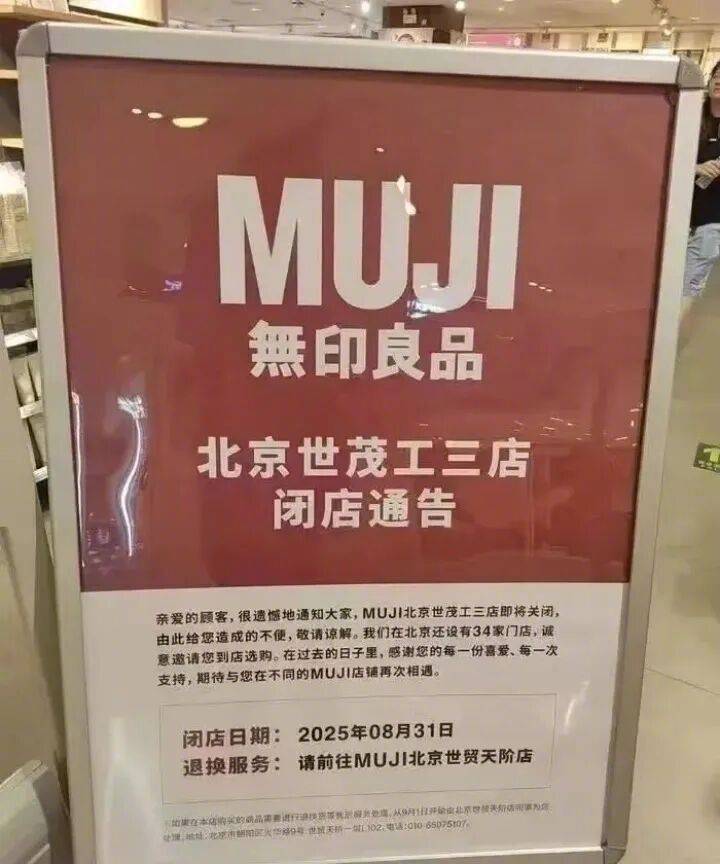
Core Insights - MUJI is closing its store in Beijing, marking the end of over a decade of operation, with the closure set for August 31, 2025 [1] - The brand has been retreating from the Chinese market, having closed 30 stores from 2022 to 2024, including 17 in the first five months of 2025 [3] - Despite a marketing push featuring celebrity endorsement, the brand faces ongoing product quality issues and consumer complaints [3][4] Market Position and Challenges - MUJI's pricing strategy has led to a perception of high prices in China, with products priced 25%-50% higher than in Japan, despite multiple price reductions since 2014 [4] - Increased competition from local brands like Miniso and Netease Yanxuan, which offer similar designs at lower prices, has intensified market pressure [4] - Consumer sentiment indicates that 63% find MUJI's designs outdated, and 58% would choose other brands at the same price point [4] Strategic Adjustments - The brand is undergoing strategic adjustments, including relocating underperforming stores to emerging commercial areas and expanding flagship store sizes [6] - New flagship stores integrate lifestyle elements like MUJI Cafe and MUJI BOOKS, aiming to create a lifestyle ecosystem [6] Digital Transformation and Innovation - Digital transformation is a key focus, with online sales increasing by 37% after joining delivery platforms [7] - Membership system upgrades have improved customer retention, with a 28% repurchase rate from e-commerce channels [7] - Product innovation includes the introduction of fresh produce and pet products, as well as interactive features in stores to attract younger consumers [7]
张小泉股价下跌0.98% 间接控股股东等69家公司被裁定合并重整
Jin Rong Jie· 2025-07-29 17:50
Group 1 - As of July 29, 2025, Zhang Xiaoqin's stock price is reported at 19.22 yuan, down 0.19 yuan from the previous trading day, with a decline of 0.98% [1] - The company operates in the general equipment manufacturing industry, focusing on the research, production, and sales of traditional tools and modern hardware products, including kitchen knives, scissors, and nail clippers [1] - Zhang Xiaoqin has a total market capitalization of 2.998 billion yuan and a circulating market value of 2.998 billion yuan [1] Group 2 - On July 29, 2025, Zhang Xiaoqin announced that its indirect controlling shareholder, Fuchun Holding Group, and its controlling shareholder, Zhang Xiaoqin Group, along with 69 other companies, have been ordered by the People's Court of Fuyang District, Hangzhou City, Zhejiang Province, to undergo substantial merger reorganization [1] - The court has appointed Zhejiang Jingheng Law Firm as the administrator for the reorganization, which may lead to adjustments in the equity held by the controlling shareholders, potentially affecting the control of the listed company [1] - The company stated that its production and operations are currently normal despite the ongoing reorganization process [1] Group 3 - On the same day, the main funds for Zhang Xiaoqin experienced a net outflow of 6.8985 million yuan, accounting for 0.23% of the circulating market value [2]
中国手机和游戏机等对美出口单价在下降
日经中文网· 2025-07-25 07:15
Core Viewpoint - The article discusses the decline in export prices of various Chinese products to the U.S. in June, indicating that Chinese companies may be absorbing tariffs to maintain market share in the U.S. [1][3][4] Group 1: Export Price Decline - In June, out of 14 product categories surveyed, 9 categories saw a decline in export prices, including smartphones and game consoles, which dropped by 45% and 23% respectively [1][3] - The average export price of smartphones to the U.S. decreased by 40% year-on-year, while game consoles saw a 20% decline [1][3] Group 2: U.S. Import Dependence - The U.S. has a high dependence on Chinese imports for these categories, with over 80% of smartphones and game consoles imported from China [3] - The import share of Chinese products in the U.S. market for these categories is reported to be between 80% to 90% [3] Group 3: Tariff Impact and Market Strategy - Chinese manufacturers may be absorbing part of the tariffs imposed by the U.S. to maintain their market presence [3][4] - The U.S. currently imposes a total of 30% tariffs on Chinese products, despite some negotiations to suspend certain tariffs for 90 days [3][5] Group 4: Export Volume Changes - In June, the export volume of smartphones to the U.S. decreased by 71% year-on-year, while game consoles saw a reduction of 48% [4] - Some products, such as fireworks, experienced a significant increase in exports, rising by 51% in June, likely due to previously postponed shipments [4] Group 5: Future Negotiations - U.S. Treasury Secretary announced upcoming discussions on tariffs between the U.S. and China, indicating the potential for extending the suspension of certain tariffs [5] - If negotiations fail, the tariffs may remain in place long-term, which could lead to shortages and price increases in the U.S. market [5]

哪些中国商品对美出口大减?
日经中文网· 2025-05-21 03:06
Core Viewpoint - The ongoing high tariffs between the US and China are likely to exacerbate shortages of daily necessities in the US, while also negatively impacting China's economy due to declining export revenues [1][3]. Group 1: Export Trends - In April, China's exports to the US saw significant declines across various categories, with smartphones down 70%, game consoles down 45%, and thermos bottles down 40%, leading to an overall export decrease of 21% [2]. - The decline in exports is particularly pronounced in household appliances and daily necessities, which are heavily reliant on Chinese imports, accounting for 80-90% of the US market [1][2]. Group 2: Tariff Impact - The US and China agreed to lower tariffs by 115% on May 14, but the current tariff rates remain higher than those before the Trump administration [1][3]. - If high tariffs persist, there is a risk of further shortages and price increases for daily goods in the US, which could lead to a significant economic impact on China as well [3][4]. Group 3: Economic Projections - Estimates suggest that if the current 30% tariffs remain in place, China's exports to the US could decrease by 30% over the next two years, potentially lowering China's GDP by approximately 0.9% [4]. - The high tariff burden may squeeze corporate profits, reduce equipment investment, and lead to job losses in China, contributing to an overall economic slowdown [3][4].

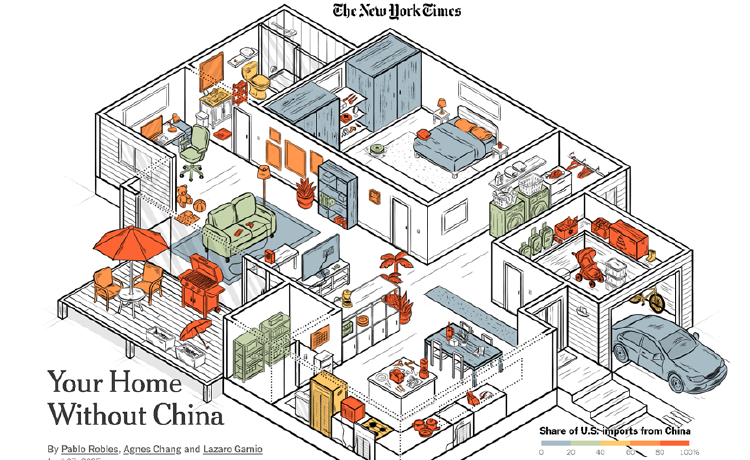
美国人的家里,竟有这么多东西来自中国
Huan Qiu Shi Bao· 2025-04-29 00:58
Core Insights - The article highlights the significant reliance of American households on products imported from China, as illustrated by a visual representation in The New York Times [1][20] Group 1: Product Dependency - Kitchen products such as scissors, can openers, thermos cups, plates, utensils, frying pans, and steamers have over 70% dependency on imports from China [4] - Major appliances like microwaves have over 90% reliance on Chinese imports, while refrigerators and stoves have 52% and 51% dependency, respectively [5] - In the living room, products like lamps, gaming consoles, picture frames, toys, wall clocks, children's books, and artificial plants also show over 70% reliance on Chinese imports [8] Group 2: Other Areas of Dependency - In the balcony area, items such as chairs, umbrellas, and charcoal grills have a dependency rate of 70% to 90% on Chinese imports [10] - Office supplies like computers and desk lamps exceed 70% reliance on imports from China, while bathroom items such as mirrors, scales, nail clippers, and sinks also show over 50% dependency [12] - In the bedroom, products like cosmetics, first aid kits, hair dryers, combs, blankets, and alarm clocks have over 70% reliance on Chinese imports, with pillows exceeding 60% [15] Group 3: Seasonal and Miscellaneous Items - Laundry items such as electric irons and hangers have over 90% dependency on Chinese imports, while storage items like flashlights, strollers, and holiday decorations also exceed 90% [18] - The article emphasizes that without Chinese products, even celebrating national holidays would be challenging for Americans [18] Group 4: Automotive Dependency - Although American cars are not directly imported from China, many components, including batteries for electric vehicles, are sourced from China, indicating that tariffs will increase costs for American consumers when buying or repairing vehicles [21]