游戏机

Search documents
小字营销再现,大厂自卑拉满?
Sou Hu Cai Jing· 2026-02-23 15:44
Core Viewpoint - The article discusses the issue of "small print marketing," highlighting how companies mislead consumers through deceptive advertising practices, particularly in the context of gift boxes during the Spring Festival [3][5]. Group 1: Misleading Marketing Practices - A specific example involves a "nut gift box" that claims to weigh 958 grams, but only 33 grams are actual nuts, with the majority being drinks and snacks, raising concerns about consumer deception [3]. - The marketing strategy emphasizes "nuts" and "dried fruits" while downplaying the presence of drinks and snacks, which are only revealed in the detailed product description [3][5]. - This practice of "small print marketing" is not new and has been criticized in various industries, including electronics, where misleading claims are often made [5][7]. Group 2: Industry Implications - The prevalence of small print marketing reflects a lack of confidence among major brands, leading to a reliance on misleading tactics to avoid accountability [7][8]. - Such marketing strategies not only harm consumer trust but also diminish the overall brand value, as they prioritize short-term sales over genuine product quality [8]. - The article suggests that this trend has become an industry norm, allowing companies to engage in false marketing and exaggerate product benefits without facing repercussions [7][8].

反转再反转,美国这次加征全球关税,如同舞台剧一样
Sou Hu Cai Jing· 2026-02-23 03:42
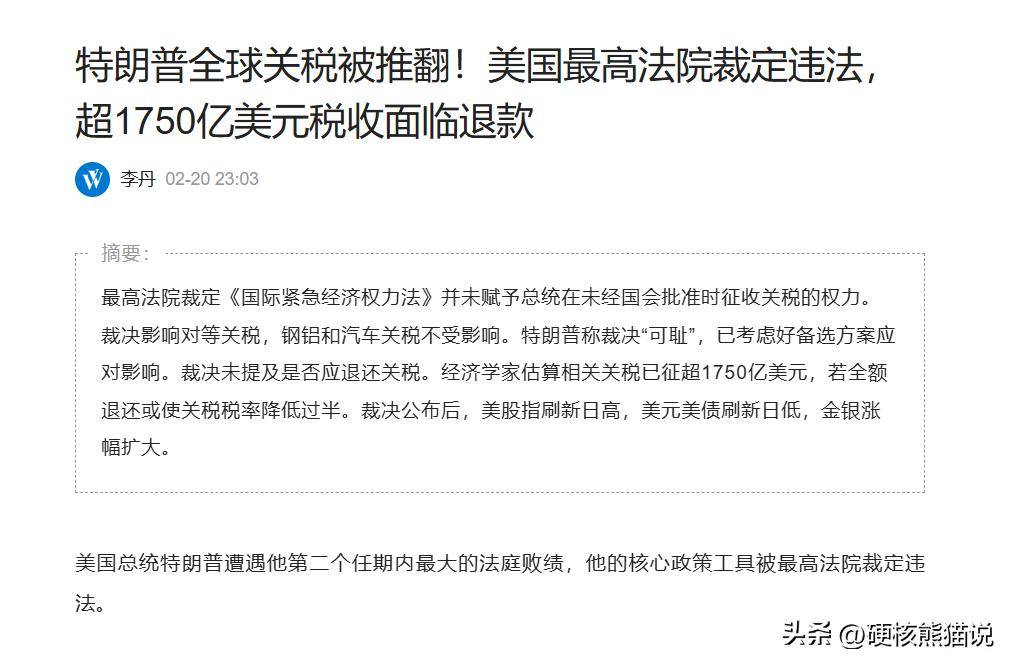
Group 1 - The Supreme Court ruling has significant implications for the U.S. domestic economy, despite having little effect on Trump's international relations [3][5] - Trump quickly adjusted his strategy by invoking the Trade Act of 1974, increasing global tariffs from 10% to 15%, which is higher than initially planned [5] - The increase in tariffs is expected to burden American consumers, with an estimated additional cost of $1,700 per household annually due to rising import costs [7][9] Group 2 - High tariffs are putting pressure on U.S. manufacturing, with overall costs rising by 2% to 4.5%, and specific industries like automotive facing increased costs of $1,200 to $2,500 per vehicle [9] - The manufacturing sector is experiencing job losses, with over 80,000 layoffs in the past year, contradicting Trump's goal of bringing manufacturing back to the U.S. [9][11] - The share of manufacturing in the U.S. economy is declining, projected to drop from 10.8% in 2024 to 10.5% in 2025, indicating a lag in advanced technology sectors [11] Group 3 - The semiconductor industry is facing significant losses due to increased tariffs, with over $10 billion in damages and a reduction in global market share from 37% in 1990 to 12% today [11] - If tariffs persist, consumer electronics prices are projected to rise significantly, with smartphones potentially increasing by 31% and gaming consoles by 69% [11] - The U.S. is losing competitive ground to China in high-tech sectors, with China making substantial advancements in electric vehicles, artificial intelligence, and semiconductor production [13]
内存芯片价格持续飙升!分析师预测一季度再涨40%至50%
Xin Lang Cai Jing· 2026-01-28 04:49
Group 1 - The global chip industry is experiencing a new wave of price increases, with Samsung and SK Hynix significantly raising the prices of LPDDR memory used in iPhones, with Samsung's price increase exceeding 80% and SK Hynix approaching 100% [1][4] - Domestic companies such as Zhongwei Semiconductor and Guokewai have also announced price adjustments for their products, with increases ranging from 15% to 50% for MCU and Norflash products, and 40% to 80% for KGD products [1][4] - Analysts predict that memory chip prices will continue to rise, with Counterpoint forecasting an additional increase of 40% to 50% in the first quarter of this year, following a 50% increase last year [1][4] Group 2 - The significant rise in memory chip prices is putting pressure on the global consumer electronics industry, potentially leading to decreased demand for smartphones, personal computers, and gaming consoles [4][7] - IDC and Counterpoint predict a 2% decline in smartphone sales this year, marking the first annual decrease since 2023, along with a 4.9% contraction in the PC market and a 4.4% drop in gaming console sales [4][7] - Manufacturers like Apple and Dell are facing rising costs and must decide whether to pass these costs onto consumers, which may have a greater impact on low-end and mid-range device manufacturers [4][7]




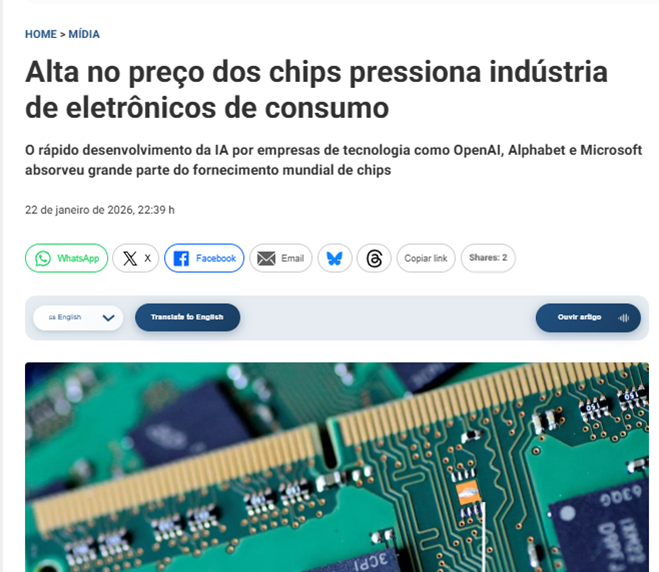
芯片正在掀新一轮涨价潮,外媒称消费电子产品面临压力
Huan Qiu Wang· 2026-01-28 00:57
Group 1 - The global chip industry is experiencing a new wave of price increases, with Samsung and SK Hynix significantly raising the prices of LPDDR memory used in iPhones, with Samsung's prices up over 80% and SK Hynix close to 100% [1] - Domestic companies such as Zhongwei Semiconductor and Guokewai have also announced price adjustments for their products, with increases ranging from 15% to 50% for MCU and Norflash products, and 40% to 80% for KGD products [1] - Analysts predict that memory chip prices will continue to rise, with Counterpoint forecasting an additional increase of 40% to 50% in the first quarter of this year, following a 50% increase last year [1] Group 2 - The significant rise in memory chip prices is putting pressure on the global consumer electronics industry, leading to a potential decrease in demand for smartphones, personal computers, and gaming consoles [4] - IDC and Counterpoint predict a 2% decline in smartphone sales this year, marking the first annual decrease since 2023, while the PC market is expected to contract by 4.9% and gaming console sales by 4.4% [4] - Manufacturers like Apple and Dell are facing rising costs and must decide whether to pass these costs onto consumers, which may have a greater impact on low-end and mid-range device manufacturers [4]
增长4.5%!2025年山东进出口总值3.53万亿元
Da Zhong Ri Bao· 2026-01-21 01:01
Core Insights - In 2025, Shandong's total foreign trade import and export value reached 3.53 trillion yuan, marking a year-on-year growth of 4.5%, and accounting for 7.8% of the national total, contributing 9.1% to the national foreign trade growth [2][3] Trade Performance - Exports amounted to 2.16 trillion yuan, increasing by 4%, while imports reached 1.37 trillion yuan, growing by 5.1% [2] - Monthly trade values remained stable, with 10 months showing year-on-year growth; December's trade value hit a record high of 340.78 billion yuan, up 3.1% year-on-year and 13.6% month-on-month [2] Trade Composition - General trade accounted for 2.29 trillion yuan, growing by 4.4% and representing 64.8% of total trade; bonded logistics trade reached 599.32 billion yuan, up 5.6%; processing trade was 546.16 billion yuan, increasing by 5.3% [2] - Cross-border e-commerce saw significant growth, with B2B direct exports reaching 113.34 billion yuan, up 7.6%, and overseas warehouse exports skyrocketing to 5.59 billion yuan, a tenfold increase [2] Market Participants - Shandong had 80,500 enterprises engaged in import and export activities, a 9.7% increase from the previous year; private enterprises accounted for 74,800 of these, contributing 76.3% of the total import and export value [3] - Private enterprises' import and export value reached 2.69 trillion yuan, growing by 6.3%, while state-owned enterprises reported 302.22 billion yuan, a 2.1% increase [3] Export Dynamics - In 2025, private enterprises contributed 92.9% of market participants, 76.3% of the total import and export value, and 105.9% of the foreign trade increment [3] - Major export products included electromechanical products, which reached 1.06 trillion yuan, growing by 8.7% and accounting for 48.9% of total exports; this marked the first time exports surpassed the trillion yuan mark [3][4] - Key export items such as automobiles, electronic components, and gaming consoles saw growth rates of 22.4%, 23.2%, and 25.7% respectively [3] Trade Markets - Shandong's trade with the EU, Russia, and Brazil grew by 5.1%, 4.4%, and 7.1% respectively; trade with Belt and Road countries reached 2.26 trillion yuan, up 7.6%, making up 64.1% of total trade [3] - Notable growth in trade with Africa, the Middle East, and Central Asian countries was recorded at 38.6%, 18.5%, and 55.2% respectively [3] Manufacturing Strength - Shandong has established itself as a global manufacturing hub, with 105 categories of electromechanical products leading the nation in export value; specific products like diesel trucks and concrete mixers account for over 10% of global exports in their categories [4]
山东进出口总值首次突破3.5万亿元
Xin Hua Cai Jing· 2026-01-20 09:38
Core Insights - The total import and export value of Shandong Province is projected to reach 3.53 trillion yuan by 2025, representing a year-on-year growth of 4.5% and accounting for 7.8% of the national total [1] - Exports are expected to be 2.16 trillion yuan, growing by 4%, while imports are anticipated to reach 1.37 trillion yuan, increasing by 5.1% [1] Trade Performance - The number of foreign trade enterprises in Shandong has reached 80,500, with 74,800 being private enterprises [1] - The import and export value of private enterprises is 2.69 trillion yuan, making up 76.3% of the province's total [1] Belt and Road Initiative - Shandong's trade with countries involved in the Belt and Road Initiative is projected to be 2.26 trillion yuan, which constitutes 64.1% of the total import and export value [1] Product Export Breakdown - By 2025, the export of electromechanical products is expected to be 1.06 trillion yuan, representing 48.9% of total exports [1] - Specific product categories such as automobiles, electronic components, and gaming machines are projected to see export growth rates of 22.4%, 23.2%, and 25.7% respectively [1] - High-tech product exports are expected to grow by 34.6%, while the "new three samples" products are projected to increase by 37% [1]
《经济学人》:人工智能将给电子产品消费者带来巨大痛苦
美股IPO· 2026-01-09 07:08
Core Viewpoint - The surge in demand for memory chips driven by artificial intelligence is creating significant supply shortages for consumer electronics manufacturers, leading to increased prices and delayed product deliveries [3][4]. Group 1: Supply and Demand Dynamics - The demand for memory chips, particularly DRAM and high bandwidth memory (HBM), is unprecedented due to the rise of AI-driven devices [3]. - Dell's COO described the current supply-demand imbalance as "unprecedented," with predictions of a 15% to 20% increase in personal computer prices [3]. - IDC estimates that global smartphone shipments could decline by 5% and personal computer sales could drop nearly twice as much if the situation persists [3]. Group 2: Impact on Memory Chip Production - HBM production requires three to four times the silicon wafers compared to standard DRAM, leading to a significant increase in resource consumption [4]. - The global DRAM market is highly concentrated, with SK Hynix, Samsung, and Micron accounting for over 90% of revenue, and these companies are shifting capacity towards HBM [4]. - HBM's profit margins are significantly higher, averaging 50% or more, compared to 35% for standard memory, which has led to a 200% average stock price increase for these companies since early 2025 [4]. Group 3: Price Increases and Market Effects - The price of standard DRAM (DDR4) has surged by 1360% since April 2025, impacting the cost structure of consumer electronics [4]. - Companies like Apple can absorb higher costs due to their pricing power, while others, such as Asus and Xiaomi, are already raising prices and warning of profit margin impacts [5]. - Automotive manufacturers are under the most pressure as the DRAM requirements for vehicles are increasing rapidly due to more electronic components being integrated [5]. Group 4: Future Outlook and Mitigation - Memory manufacturers plan to invest approximately $61 billion in DRAM this year, a 14% increase from 2025, but new capacity will take up to two years to come online [5]. - An estimated 60% to 70% of this investment will be directed towards HBM, limiting the availability of standard DRAM [5]. - The supply shortage may only ease with a decline in the AI frenzy, which could lead to immediate consumer pain [5].



79岁父亲教给我的8条受用一生的金钱法则
Xin Lang Cai Jing· 2025-12-26 14:43
Core Insights - The article reflects on the contrast between childhood experiences and modern childhood, emphasizing the shift from simple, carefree play to a focus on material possessions and technology [1][13] - It discusses the author's father's frugal mindset and how it shaped the author's views on money, highlighting the importance of contentment and financial wisdom [1][13] Summary by Sections Financial Principles - Principle 1: Let values guide every financial decision, ensuring spending aligns with what is most important in life [2][14] - Principle 2: Money can be earned again, but time lost is irretrievable; prioritize time with family over financial gain [3][15] - Principle 3: Investing in oneself yields the best returns, enhancing earning potential and personal resilience [4][16] - Principle 4: Debt limits future choices; maintaining financial flexibility is crucial for peace of mind [7][17] - Principle 5: Small acts of frugality, like turning off lights, accumulate over time and reflect a mindful approach to resource management [8][18] - Principle 6: Embracing simplicity leads to a more fulfilling life, prioritizing time and meaningful relationships over material pressures [9][20] - Principle 7: New cars are costly; the average price exceeds $50,000, with monthly costs potentially surpassing $1,200; opting for used cars can significantly enhance long-term net worth [10][21] - Principle 8: Frugality differs from stinginess; the former values meaningful spending while the latter diminishes happiness [11][22]

前11月广东外贸进出口同比增4.2% 占全国总值的20.9% 对全国增长的贡献度达23.8%
Nan Fang Ri Bao Wang Luo Ban· 2025-12-11 01:17
Core Insights - Guangdong's foreign trade has shown steady progress this year, with growth rates surpassing the national average, highlighting its significant role in the national economy [1][2] - In the first 11 months, Guangdong's total foreign trade reached 8.61 trillion yuan, a 4.2% increase year-on-year, setting a historical record for the same period [1] - The province accounted for 20.9% of the national total trade value, contributing 23.8% to the overall national growth [1] Trade Performance - In November, Guangdong's imports and exports reached 813.24 billion yuan, an 8.9% increase, leading the nation in growth [2] - Exports for November were 515.14 billion yuan, up 6.7%, while imports rose to 298.1 billion yuan, a 12.8% increase [2] - General trade accounted for 58.2% of Guangdong's total trade, with a 3.9% increase, while processing trade saw a modest growth of 0.5% [2] Export Dynamics - Guangdong's exports of electromechanical products reached 3.77 trillion yuan, a 7% increase, making up 68.5% of total exports [3] - Key export items such as electronic components and computers saw significant growth, with increases of 19.3% and 10.1% respectively [3] - Traditional products like motorcycles and game consoles also experienced notable growth rates of 34.6% and 27.2% [3] Import Trends - The demand for imports has continued to expand, with integrated circuits imported at 1.17 trillion yuan, a 15.6% increase [3] - Imports of computers and their components grew by 20.3%, while semiconductor manufacturing equipment saw a remarkable increase of 43.8% [3] Market Expansion - ASEAN, Hong Kong, and the EU are Guangdong's top three trading partners, each surpassing 1 trillion yuan in trade volume [4] - Trade with emerging markets such as the Middle East and Africa has shown strong growth, with increases of 7.8% and 10.4% respectively [4] - The "Belt and Road" initiative countries accounted for 38.5% of Guangdong's trade, totaling 3.32 trillion yuan, with a growth rate of 4.9% [4] Consumer Goods Import - Driven by domestic consumption, imports of essential goods like grains and dairy products have seen double-digit growth, with increases of 18.6% and 19.7% respectively [4] - The implementation of zero-tariff policies for certain products from least developed countries is expected to further enhance import volumes [4][5]
广东前11个月进出口同比增4.2%
Nan Fang Du Shi Bao· 2025-12-10 23:20
Core Insights - Guangdong's foreign trade has shown steady growth this year, outpacing the national average, highlighting its significant role in the country's trade dynamics [2][3]. Trade Performance - In the first 11 months, Guangdong's total foreign trade reached 8.61 trillion yuan, a 4.2% increase year-on-year, marking a historical high for the same period; the national growth rate was 3.6% [2]. - Exports amounted to 5.5 trillion yuan, growing by 2.1%, while imports reached 3.11 trillion yuan, increasing by 8% [2]. Monthly Trade Growth - In November alone, Guangdong's trade totaled 813.24 billion yuan, a growth of 8.9%, significantly faster than the previous month [3]. - Exports in November were 515.14 billion yuan, up 6.7%, and imports were 298.1 billion yuan, rising by 12.8% [3]. Trade Composition - General trade accounted for 58.2% of Guangdong's total trade, with a value of 5.01 trillion yuan, growing by 3.9% [3]. - The bonded logistics trade grew by 9.3% to 1.74 trillion yuan, while processing trade saw a modest increase of 0.5% to 1.78 trillion yuan [3]. Role of Private Enterprises - Private enterprises contributed significantly, with a total import and export value of 5.49 trillion yuan, a 4.4% increase, representing 63.8% of Guangdong's total trade [3]. Emerging Markets - Guangdong's trade with ASEAN, Hong Kong, and the EU surpassed 1 trillion yuan each, with growth rates of 5.8%, 11.3%, and 8.7% respectively [4]. - Trade with emerging markets such as the Middle East, Africa, and Central Asia grew by 7.8%, 10.4%, and 26% respectively, all exceeding the overall growth rate [4]. Export Dynamics - The export of electromechanical products reached 3.77 trillion yuan, a 7% increase, now accounting for 68.5% of total exports [5]. - Notable growth was observed in new export categories, including drones (43.4%) and 3D printers (28.5%) [6]. Import Trends - The demand for imports has expanded, with integrated circuits valued at 1.17 trillion yuan, growing by 15.6% [6]. - Imports of consumer goods such as grains and dairy products saw significant increases, with growth rates of 18.6% and 19.7% respectively [6].