加工农产品

Search documents
网红赋能年货节 直播带货兴乡村
Sou Hu Cai Jing· 2026-02-11 10:53
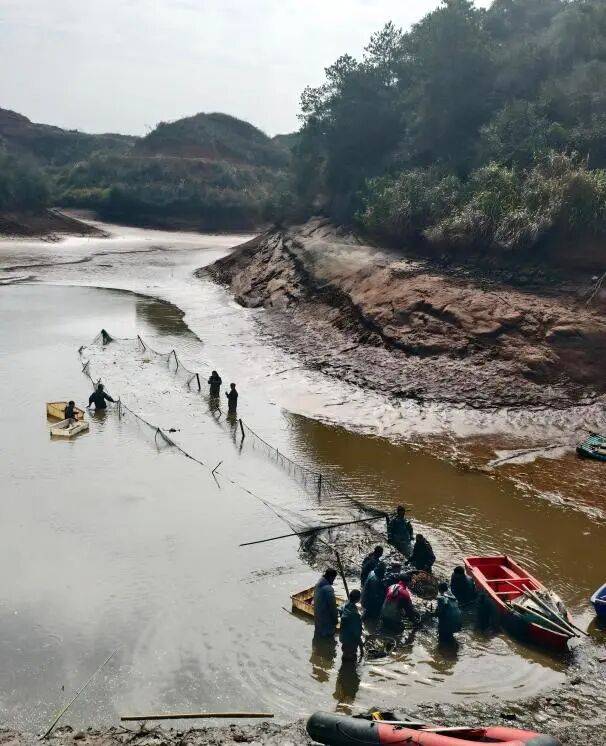
Core Viewpoint - The "Shennong Fuli · Online Purchase of Zhuzhou" event has successfully stimulated consumer potential and enthusiasm through diverse and distinctive activities, particularly by leveraging local agricultural resources and digital platforms [1][3]. Group 1: Event Overview - The event features a collaboration between the well-known creator "Dabiao Ge Vlog" and local agricultural enterprises in Tea Ling County, utilizing a unique "one yuan one fish" model to promote local fishery resources [2][3]. - The initiative aims to connect local agricultural products with national consumers, breaking traditional sales barriers and enhancing the visibility of local brands [3][7]. Group 2: Economic Impact - The live streaming event has resulted in significant order volumes and sales, showcasing local culinary delights and processed agricultural products [3]. - The collaboration is expected to activate the local agricultural market and explore new pathways for rural industrial development, integrating digital economy with traditional agriculture [7]. Group 3: Social Responsibility - The event also includes a charitable initiative, offering a free tasting of local dishes to villagers aged 70 and above, reflecting the social responsibility of the creators and local businesses [5]. - This approach emphasizes the importance of community engagement and the integration of industry development with local welfare [5].


莫迪迎来强援,敲定史上最大自贸协定,不只为了对付特朗普
Sou Hu Cai Jing· 2026-02-02 03:23
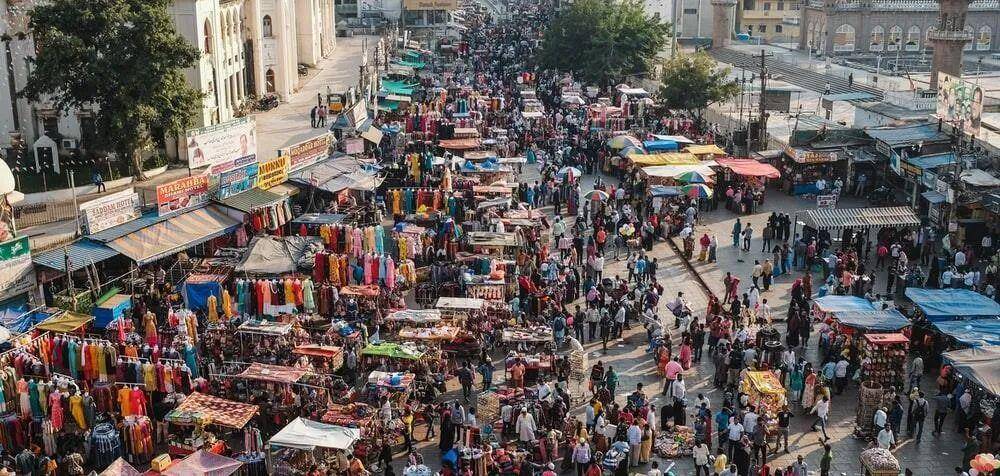
Core Viewpoint - The recent trade agreement between India and the European Union (EU) is a significant geopolitical move aimed at reducing dependence on the US and China, creating a vast free trade area covering approximately 2 billion people and a quarter of global GDP [1][3]. Group 1: Agreement Details - The agreement includes substantial tariff reductions, such as India's reduction of wine tariffs from 150% to about 20% and olive oil tariffs to zero within five years, while the EU will provide greater access to the Indian automotive market [3]. - The agreement's implementation requires approval from the European Parliament and the Indian Cabinet, which may take up to six months [3]. Group 2: Strategic Implications - The trade deal is seen as a response to external pressures, particularly from the US, and reflects a desire for India and the EU to strengthen their economic ties and reduce reliance on China and the US [3][4]. - The agreement is viewed as a potential catalyst for India's manufacturing and service sectors, aiming to attract European investment and technology [1][3]. Group 3: Challenges and Considerations - The depth of market openness remains uncertain, particularly in sensitive areas like agriculture and digital trade, where substantial concessions from both sides are still unclear [4]. - India's investment environment poses long-term challenges, including regulatory volatility and infrastructure weaknesses, which may deter EU businesses from establishing efficient supply chains in India [6][7]. - The EU's trade policies, which emphasize high standards related to environmental and labor rights, could create non-tariff barriers for Indian exports, potentially leading to trade friction [9]. - There exists a strategic tension between India's desire for autonomy and the EU's expectation for India to be a reliable partner in supply chain diversification, complicating the agreement's implementation [9][11]. - India's manufacturing sector heavily relies on imports from China, particularly for critical components, which complicates the transition to EU-based supply chains [11]. Group 4: Overall Assessment - The India-EU trade agreement represents a significant geopolitical strategy that may help both parties expand market access and mitigate unilateral pressures from the US, while signaling a move towards trade diversification [11]. - However, it is overly optimistic to view this agreement as a comprehensive solution for restructuring global supply chains or achieving a complete decoupling from China and the US; it is more of a selective cooperation framework rather than a full economic integration blueprint [11].
海南冬交会首日客流爆棚,现场订单交易总额超2.25亿元
Xin Lang Cai Jing· 2025-12-05 08:19
Core Insights - The 28th China (Hainan) International Tropical Agricultural Winter Trade Fair opened on December 4, 2025, at the Hainan International Convention and Exhibition Center [1] - The total transaction amount on the first day reached 225.9 million yuan, with contract orders accounting for 133.9 million yuan and intention orders totaling 92 million yuan [1] - The high proportion of contract orders highlights the effectiveness of the Winter Trade Fair as a platform for industry cooperation [1] Industry Summary - The event facilitated deep connections between buyers from across the country and agricultural enterprises, resulting in cooperation agreements in areas such as tropical fruits, aquaculture, and agricultural product processing [1]
冬交会首日 现场订单交易总额超2.25亿元
Hai Nan Ri Bao· 2025-12-05 02:24
Core Insights - The first day of the 28th China (Hainan) International Tropical Agricultural Winter Trade Fair (Winter Trade Fair) achieved a total on-site order transaction amount of 225.9 million yuan, with a significant portion being contract orders, indicating the effectiveness of the fair as a platform for industry cooperation [2][3]. Group 1 - The total on-site transaction amount reached 225.9 million yuan, with contract orders accounting for 133.9 million yuan and intention orders for 92 million yuan [2]. - The on-site transaction total included 4.0541 million yuan, with online platforms like e-commerce and Douyin live streaming contributing 238,100 yuan, which is nearly 6% of the total [2]. - Douyin live streaming was the main online transaction channel, contributing 155,500 yuan in a single day, while offline transactions dominated with a total of 3.816 million yuan [2]. Group 2 - Four cooperation projects were facilitated on the first day, with a total amount of 22.5 million yuan [3]. - The organizing committee plans to hold various activities during the fair, including a livestock industry brand supply chain promotion conference and a tasting competition for Tunchang black pig products, aimed at further activating tropical agricultural trade potential [3].
既是田间喜讯 更是民生福祉提升 多视角看农民生活变迁 感受乡村振兴新图景
Yang Shi Wang· 2025-09-24 06:54
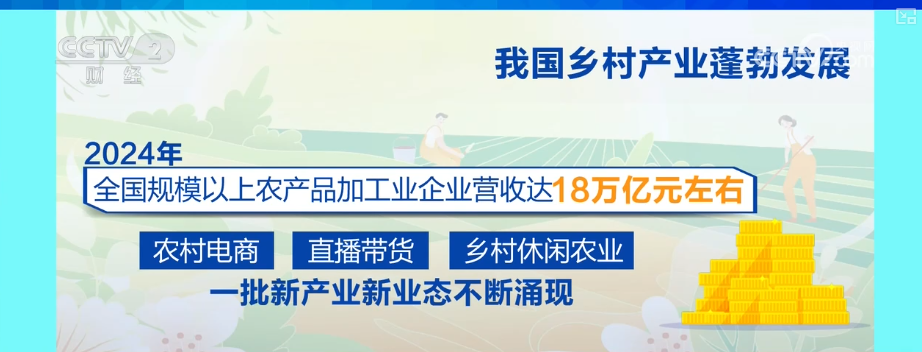
Core Viewpoint - The article highlights the significant improvements in rural livelihoods and the development of rural industries in China, driven by the comprehensive promotion of rural revitalization initiatives. Group 1: Rural Economic Development - In 2024, the revenue of large-scale agricultural processing enterprises in China reached approximately 18 trillion yuan, with new business models such as rural e-commerce and live streaming sales emerging [3] - The revenue from leisure agriculture in 2024 was nearly 900 billion yuan, an increase of about 50 billion yuan compared to 2020 [3] Group 2: Income Growth - The per capita disposable income of rural residents increased from 17,131 yuan in 2020 to 23,119 yuan in 2024, a rise of 5,988 yuan, averaging an increase of nearly 1,500 yuan per year [5] Group 3: Infrastructure and Living Conditions - Rural infrastructure has seen significant improvements, with the total length of rural roads exceeding 4.64 million kilometers and the coverage of tap water reaching 94% [8] - The rural sanitation toilet coverage rate is approximately 76%, and 140,000 villages have undergone greening and beautification [8] Group 4: Healthcare Improvements - Since the 14th Five-Year Plan, healthcare accessibility has improved, with 2,199 counties and districts establishing integrated medical communities, and 95% of village clinics included in the medical insurance system [11] Group 5: Cultural and Recreational Development - The economic development in villages has allowed residents to engage in various cultural activities, with the village of Dahu Chenjia in Shandong integrating agriculture, culture, and tourism, generating over 20 million yuan in annual tourism revenue [15][23] Group 6: Agricultural Production and Innovation - In Shandong's Zhaoyuan, the apple planting area is 190,000 acres, with an annual production of about 690,000 tons, while also developing brands for grapes and autumn pears to increase farmers' income [23] - The introduction of new apple varieties and technologies in collaboration with the Chinese Academy of Agricultural Sciences has significantly improved planting efficiency [24] - The use of smart agricultural management platforms in grape cultivation has led to over 10% yield increase and substantial savings in fertilizer and water [28] Group 7: Future Projections - The total apple production in Shandong is expected to slightly increase by 2025, with an anticipated 10% increase in income per acre from integrated processing and leisure picking of fruits [30]