
动态随机存取存储器(DRAM)

Search documents
SK海力士:存储价格将继续上涨
智通财经网· 2026-02-22 07:30
Group 1 - The core viewpoint is that SK Hynix anticipates a continued upward trend in memory prices throughout the year, driven by strong demand from AI services and limited supply [1][2][3] - SK Hynix's DRAM and NAND inventory has decreased to approximately four weeks of supply, enhancing the company's bargaining power as a supplier [1][3] - The company expects that the shortage of cleanroom space across the industry is exacerbating supply constraints, creating a favorable environment for price increases [1][2] Group 2 - SK Hynix believes that the likelihood of substantial "double-booking" of memory orders is low, as customers recognize the challenges in significantly increasing memory capacity in the short term [2][3] - The company emphasizes that no customer can fully meet their memory needs this year, resulting in low demand fulfillment rates across all end markets [2][3] - The current tight supply-demand situation for traditional DRAM may lead to more favorable terms for the company's HBM business in 2027 [3][4] Group 3 - The company plans to focus on ramping up 1c nm capacity primarily for traditional DRAM starting in 2026, with HBM production scaling up from 2027 [4][5] - SK Hynix expects its capital expenditures to increase compared to last year, with a focus on HBM and traditional DRAM investments [5] - The company anticipates that over half of its traditional DRAM will adopt the 1c nm node by the end of this year, driven by strong demand for DDR5 and LPDDR5 [5]
内存“超级周期”成新常态?下游利润遭持久挤压,芯片巨头红利期未见尽头
美股IPO· 2026-02-10 04:36
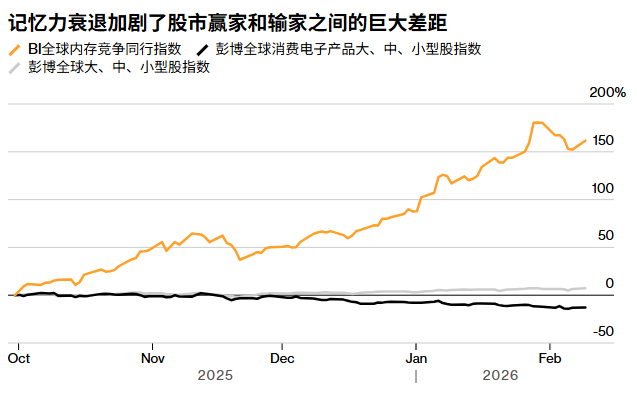
Core Viewpoint - The memory chip prices have surged in recent months, creating a stark contrast between winners and losers in the stock market, with many companies facing profit pressure leading to stock price declines [1][3]. Group 1: Market Dynamics - Memory chip manufacturers' stock prices have soared to historical highs, while consumer electronics manufacturers' index has dropped by 12% since late September last year [3]. - The memory manufacturing index, including companies like Samsung, has increased by over 160% during the same period [3]. - Concerns are rising about the duration of the current industry turmoil, with some analysts suggesting it may persist beyond the expected one to two quarters [6]. Group 2: Company Impact - Companies like Qualcomm and Nintendo have reported significant impacts from memory supply shortages, with Qualcomm's stock dropping over 8% and Nintendo experiencing its largest decline in 18 months [7]. - Logitech's stock has fallen approximately 30% from its peak due to rising chip prices affecting PC demand [7]. - The ongoing memory price increases have shifted from being a background issue to a headline concern in the current earnings season [7]. Group 3: Demand and Supply Issues - The demand for memory chips is under pressure, exacerbated by large-scale investments in AI infrastructure by major companies like Amazon, which is shifting capacity from high-bandwidth memory to traditional DRAM [8]. - The current situation has led to what some describe as a "super cycle," disrupting the typical boom and bust pattern of memory supply and demand [8]. - DRAM spot prices have surged over 600% in recent months, despite weak demand from end products like smartphones and automobiles [11]. Group 4: Investment Outlook - Memory chip manufacturers have emerged as standout winners in the tech sector, with stocks like SK Hynix rising over 150% and others like Kioxia and Nanya Technology seeing increases of approximately 280% [14]. - SanDisk's stock has surged over 400% in New York during the same timeframe [14]. - Historical memory cycles typically last 3-4 years, but the current cycle is noted to be longer and larger, with no signs of demand slowing down [14].


内存“超级周期”成新常态?下游利润遭持久挤压,芯片巨头红利期未见尽头
智通财经网· 2026-02-10 04:06
Core Viewpoint - The memory chip prices have surged in recent months, creating a stark contrast between winners and losers in the stock market, with memory manufacturers seeing stock prices rise to historical highs while companies like Nintendo and major PC brands face declining stock prices due to profit outlook pressures [1] Group 1: Market Trends - The global consumer electronics manufacturers index has dropped by 12% since the end of September last year, while a basket index of memory manufacturers, including Samsung, has surged over 160% [1] - The current memory chip shortage and price issues have become a focal point in earnings reports and conference calls, indicating a shift in market dynamics [4] - The DRAM spot prices have skyrocketed by over 600% in recent months, despite weak demand from end products like smartphones and automobiles [10] Group 2: Company Responses - Companies are evaluating their strategies to cope with the memory chip price surge, including locking in long-term supply agreements, passing on costs through price increases, and redesigning products to reduce memory usage [1] - Qualcomm's stock fell over 8% due to warnings about memory supply constraints limiting smartphone production, while Nintendo experienced its largest drop in 18 months due to profit margin pressures from supply shortages [4] - Logitech's stock has declined about 30% from its peak last November, attributed to rising chip prices impacting PC demand outlook [4] Group 3: Industry Outlook - The ongoing investment by major U.S. companies in AI infrastructure may exacerbate the memory chip shortage, complicating the supply-demand dynamics further [5] - The current memory cycle is described as a "super cycle," breaking the traditional boom-and-bust pattern of memory supply and demand [6] - The length and scale of the current memory cycle have exceeded previous cycles, with no signs of demand momentum weakening [12]
存储芯片荒难解!惠普(HPQ.US)等PC大厂据称首次考虑中国大陆供应商
智通财经网· 2026-02-05 22:24
Group 1 - Major PC manufacturers, including HP, Dell, Acer, and Asus, are considering sourcing memory chips from Chinese manufacturers due to supply shortages and rising costs in the tech industry [1][2] - HP has begun certifying products from Changxin Memory Technologies (CXMT) as a potential alternative supply source, with plans to monitor the memory chip supply situation until mid-2026 [1][2] - Dell is also certifying CXMT's DRAM products amid concerns of continued price increases for memory chips through 2026 [2] Group 2 - Acer and Asus are open to using memory chips from Chinese manufacturers, with Asus requesting assistance from its Chinese partners for notebook memory chip procurement [2] - Many PC manufacturers view Chinese memory chip companies as potential "saviors" for the consumer electronics industry, as leading manufacturers like Micron, Samsung, and SK Hynix prioritize supply for AI giants [2] - The ongoing supply constraints and cost pressures are forcing manufacturers to diversify their supply sources and rethink long-term procurement strategies [2] Group 3 - The price surge of storage chips is impacting the consumer electronics market, with IDC predicting a 4.9% contraction in the PC market by 2026, following an 8.1% growth last year [2] - Market expectations indicate that the price increase for storage chips will continue, with Counterpoint forecasting a further 40% to 50% rise in Q1 of this year after a 50% increase last year [3]

美光(MU.US)拟在新加坡加码存储芯片制造投资 全力应对全球“缺芯”潮
Zhi Tong Cai Jing· 2026-01-27 03:20
Core Insights - Micron Technology (MU.US) is set to announce an investment in expanding storage chip manufacturing capacity in Singapore to address the global shortage of storage chips [1][2] - The investment will focus on NAND flash memory, which is critical for various applications including AI infrastructure [1][2] Group 1: Investment Plans - Micron is expected to reveal its investment plan on Tuesday, with a significant focus on increasing NAND flash memory production [1] - The company has already invested $7 billion in a high-bandwidth memory (HBM) advanced packaging facility in Singapore, which is projected to begin operations in 2027 [2] Group 2: Market Context - The global demand for storage chips has surged due to the increasing need for AI infrastructure, leading to a severe supply shortage affecting consumer electronics and AI service providers [2] - Analysts predict that the supply gap for global storage chips may persist until the end of 2027 [2] Group 3: Competitive Landscape - Micron's main competitors, Samsung (SSNLF.US) and SK Hynix, have also announced plans to build new production lines and have expedited their production timelines [2] - Recently, Micron has been in talks to acquire a wafer fab from Taiwan's Nanya Technology for $1.8 billion to enhance its DRAM wafer production capacity [2]

花旗:英特尔迎来AI芯片代工“窗口期”,美光因DRAM涨价放缓移出观察名单
Jin Rong Jie· 2026-01-16 06:28
Group 1: Intel - Citigroup upgraded Intel's rating from "Sell" to "Neutral" with a target price set at $50 [2] - The upgrade is based on Intel's potential benefits from the tight advanced packaging capacity situation at TSMC [2] - Analyst Atif Malik noted that Intel has a unique opportunity to attract foundry customers with government support [2] - Intel is expected to benefit from improved yields in its 18A - P/14A processes, particularly in AI-specific integrated circuits [2] - Despite positive factors, Intel is still facing challenges, including potential market share loss to AMD and Arm, and a weak PC market that may lead to rising memory prices [2] Group 2: Micron Technology - Micron Technology has been removed from the U.S. focus watchlist due to expected slowing pricing momentum for DRAM in Q2 compared to Q1 [3] - Malik explained that Micron's stock price typically aligns with quarterly price trends [3] - Strong demand in the AI sector and limited foundry capacity are expected to maintain supply-demand balance for memory until 2026/27 [3]

花旗:英特尔(INTC.US)迎来AI芯片代工“窗口期”,美光(MU.US)因DRAM涨价放缓移出观察名单
Zhi Tong Cai Jing· 2026-01-16 06:17
Group 1: Intel - Citigroup upgraded Intel's rating from "Sell" to "Neutral" with a target price set at $50, citing benefits from TSMC's advanced packaging capacity constraints [2] - Analyst Atif Malik noted that Intel has a unique opportunity to attract foundry wafer customers with government support [2] - Intel is expected to benefit from improved yields in its 18A-P/14A processes, particularly in the backend, leading to positive effects from AI-specific integrated circuits [2] - Despite positive factors, Intel is still facing challenges, including potential market share loss to AMD and Arm, and a weak personal computer market that may lead to rising memory prices [2] Group 2: Micron Technology - Micron Technology has been removed from the U.S. focus watch list due to expected slowing pricing momentum for DRAM in Q2 compared to Q1 [3] - Micron's stock price typically aligns with quarterly price trends, according to Malik [3] - The supply-demand balance for memory is expected to remain stable until 2026/27, driven by limited foundry capacity and strong demand in the AI sector [3]
半导体行业复苏“温差”大:存储芯片火爆,其他品类疲软,大摩看好这些AI受益股
智通财经网· 2026-01-14 02:43
Core Viewpoint - Global semiconductor sales showed slight slowdown in November, but the memory chip market remains strong [1] Group 1: Semiconductor Sales Performance - November semiconductor sales increased by 7.1% month-over-month, lower than Morgan Stanley's forecast of 10.4%, but significantly above the 10-year historical average of 2.5% [1] - Year-over-year growth for the semiconductor industry reached 29.8%, up from 27.2% previously, with a monthly year-over-year increase of 29.5% [1] - Asia-Pacific region saw a remarkable sales increase of 71.9%, while China recorded a 28.9% growth; the Americas and Europe followed with year-over-year growth rates of 12.4% and 10.8%, respectively [1] Group 2: Product Category Performance - Discrete devices underperformed with a month-over-month sales decline of 4.1%, worse than Morgan Stanley's zero growth prediction and the historical average decline of 0.7% [1] - Analog chip segment also showed weakness, with a month-over-month sales drop of 4.4%, exceeding the forecasted decline of 3% and the historical average of 3.2% [2] - Microcontrollers experienced a significant month-over-month decline of 7.3%, falling short of the zero growth forecast and the historical average decline of 0.6% [2] - Memory chip market showed mixed results: NAND flash sales surged by 47.3%, exceeding the forecast of 40.8% and the 5-year historical average of 21.9% [3] - DRAM sales grew by 18.9%, below the forecast of 43.4% and the 5-year historical average of 26.3% [3] Group 3: Industry Outlook - Despite the slight month-over-month decline in semiconductor sales, analysts maintain an optimistic outlook for the industry, particularly for companies like NXP Semiconductors (NXPI.US) and Analog Devices (ADI.US) [3] - Analysts are increasingly positive about the semiconductor sector, favoring companies with structural competitive advantages and cyclical recovery opportunities [4] - In the AI sector, companies such as NVIDIA (NVDA.US), Broadcom (AVGO.US), and Micron Technology (MU.US) are expected to continue benefiting from strong demand [4][5] - The growth in AI demand is penetrating the analog chip sector, particularly in power management chips, with significant growth anticipated from the deployment of 800-volt architectures [5]


2026年CES定调行业走向:AI算力需求外溢引发存储“大地震”,供应链短缺恐贯穿全年
Zhi Tong Cai Jing· 2026-01-12 00:44
Group 1: Market Overview - The CES 2023 highlighted significant developments from major companies like Dell, Intel, Nvidia, and AMD, with a notable surge in demand for artificial intelligence leading to severe shortages in memory and storage, potentially impacting the market through 2026 [1] - Wedbush Securities analyst Matt Bryson noted that many DRAM contract prices for Q1 are yet to be finalized, but suppliers expect growth of 50% or more [1] - The demand from hyperscale cloud service providers is absorbing all new market capacity, leading to significant price increases in the secondary market [1] Group 2: Beneficiaries of DRAM Price Increase - Companies likely to benefit from the substantial rise in DRAM prices include Micron and SanDisk, with SanDisk expected to outperform the industry due to a low comparative base after being removed from Apple's supply chain [2] - Other potential beneficiaries mentioned are Pure Storage and Silicon Motion [3] Group 3: Impact on Nvidia - Nvidia's significant size means its actions will greatly affect the semiconductor industry; it may benefit from tight memory supply but could also exacerbate pressure on memory space [4] - The introduction of Nvidia's new storage layer via BlueField-4 is projected to increase overall storage demand by over 40% for AI workloads [4] Group 4: HDD Demand - The demand for hard disk drives (HDD) from companies like Western Digital and Seagate is described as "strong," with a significant gap between supply and orders that may widen throughout the year and persist until 2027 [5] - Price trends for HDDs are expected to rise as cloud service providers face emerging shortages [5] Group 5: Impact on Intel and AMD - Rising memory and storage prices are benefiting some companies but negatively impacting demand, with PC and mobile manufacturers reducing production expectations, leading to a forecasted low single-digit decline in these markets [6] - As major PC-centric semiconductor companies, Intel and AMD are particularly vulnerable to demand declines, with Intel facing rising memory costs as a warning signal [7] - Any reduction in PC manufacturing is a significant concern for Intel, affecting shipment volumes and pricing in a segment that constitutes about 60% of its sales [8] - AMD's situation is more complex, as the focus is on its AI accelerator product line; however, a decline in PC demand due to rising memory prices poses risks [8]

2026年CES定调行业走向:AI 算力需求外溢引发存储“大地震”,供应链短缺恐贯穿全年
智通财经网· 2026-01-12 00:07
Core Insights - The CES 2023 highlighted significant developments in the tech industry, particularly the surge in demand for artificial intelligence leading to a severe shortage of memory and storage, which may impact market trends through 2026 [1] - Analysts expect DRAM contract prices to increase by 50% or more, driven by demand from major cloud service providers [1] - Smaller clients are experiencing some relief, with PC year-over-year declines expected to be in the mid-single digits [1] Group 1: Companies Benefiting from DRAM Price Increase - Micron (MU.US) and SanDisk (SNDK.US) are expected to benefit significantly from the anticipated DRAM price increases, with SanDisk's pricing expected to outperform the industry due to a low comparison base [2] - Other potential beneficiaries include Pure Storage (PSTG.US) and Silicon Motion (SIMO.US) [3] Group 2: Impact on Nvidia - Nvidia's actions will significantly influence the semiconductor industry, with its new storage layer expected to increase overall storage demand by over 40% due to AI workload requirements [4] - The BlueField-4, set to launch in October 2025, combines Nvidia's Grace CPU and ConnectX-9 networking products to enhance computing power for AI applications [4] Group 3: HDD Demand - The demand for hard disk drives (HDD) from companies like Western Digital (WDC.US) and Seagate (STX.US) remains strong, with a significant gap between supply and orders that may persist until 2027 [5] - Price trends for HDDs are expected to rise as cloud service providers face increasing shortages [5] Group 4: Impact on Intel and AMD - Rising memory and storage prices are negatively affecting demand, with PC and mobile manufacturers reducing production forecasts, leading to expected low single-digit declines in these markets [6] - Intel and AMD, being major players in the PC semiconductor market, may be adversely affected by any decline in demand [7] - Intel's rising memory costs are a warning sign, but the company has other significant areas of focus, particularly its foundry business [7] - Any reduction in PC manufacturing is a major concern for Intel, as it could impact shipment volumes and pricing in a segment that constitutes about 60% of its sales [8] - AMD faces a more complex situation regarding the impact of rising memory prices, with its AI accelerator product line being a focal point [8]