内存芯片

Search documents
CPU,全面涨价
半导体芯闻· 2026-03-25 10:49
Core Viewpoint - The supply shortage of CPUs from Intel and AMD is worsening, significantly impacting PC and server manufacturers already affected by memory chip shortages [1][2]. Group 1: CPU Supply Shortage - Major PC manufacturers like HP and Dell have reported a noticeable gap between the required and available CPU quantities since late February, with the situation deteriorating compared to previous months [1]. - The average delivery time for CPUs has increased from one to two weeks to eight to twelve weeks, with some cases extending to six months [1]. - CPU prices have risen multiple times this year, with an average increase of 10% to 15%, and some products experiencing even higher price hikes [1][2]. Group 2: Market Dynamics - Intel and AMD are prioritizing server CPUs, leading to a reduced supply for the PC segment, which is expected to worsen in the second quarter of the year [2]. - The demand for AI computing capabilities is driving the shortage of memory chips and other materials, prompting PC and smartphone brands to announce price increases for the year [2]. - The competition in the CPU market is intensifying, with companies like Arm entering the server CPU space, potentially increasing pressure on the x86 architecture [6][3]. Group 3: Industry Response - Companies are investing more resources into designing CPUs based on Arm architecture due to the tight supply of Intel CPUs [3]. - The demand for general-purpose and storage servers is expected to grow significantly, with estimates suggesting a growth rate close to 15% this year, while Intel's capacity expansion is lagging [6][7]. - Both Intel and AMD are working to increase production capacity to meet market demand, but face challenges such as supply constraints for chip substrates and competition for manufacturing capacity with AI chip giants [7][8].


美光:每辆汽车将需要300GB内存 !
国芯网· 2026-03-23 14:06
Core Viewpoint - The article discusses the significant growth in memory demand driven by the rise of Level 4 (L4) autonomous vehicles, highlighting the potential for the automotive sector to surpass traditional consumer electronics in memory requirements [2][4]. Group 1: Memory Demand Growth - Micron Technology's CEO Sanjay Mehrotra reported that the memory capacity required for L4 autonomous vehicles is expected to exceed 300GB, which is a substantial increase compared to the current average of 16GB in mainstream vehicles [2][4]. - Micron's revenue for Q2 2026 reached $23.86 billion, a staggering 200% increase from $8.03 billion in the same period of 2025, primarily driven by the demand for high-end HBM chips from AI enterprises and structural supply constraints in the industry [2][4]. Group 2: Industry Trends and Collaborations - The automotive industry is witnessing a shift as companies like NVIDIA collaborate with Chinese automakers BYD and Geely, as well as Japanese firms Isuzu and Nissan, to promote the Drive Hyperion platform designed for L4 autonomous driving, which requires significantly more memory than current models [5]. - The high memory demand trend is also evident in consumer electronics, where high-end devices like Apple's Mac Studio have faced supply shortages due to increased user demand for running complex AI models [5]. Group 3: Future Outlook and Challenges - Despite the promising outlook for L4 autonomous vehicles, challenges remain, including high vehicle prices and regulatory policies that have yet to catch up with technological advancements [5]. - Mehrotra cautioned that if memory chip manufacturers do not have sufficient production capacity in place as L4 vehicles become more widespread, it could lead to a new round of memory shortages and price increases [5].

全球“芯荒”,专家:电脑、手机或涨20%以上
财联社· 2026-03-20 11:15
Group 1 - The global shortage of memory chips is impacting the prices of consumer electronics, with significant price increases expected to continue for an extended period [1][2] - Major tech companies, including Google, Microsoft, and Meta, are heavily purchasing memory chips to support their AI data centers, exacerbating the supply-demand imbalance [2] - Experts predict that prices for many consumer electronics, such as laptops and smartphones, could rise by 20% or more in the next 12 to 24 months due to the memory shortage [3] Group 2 - The entry-level laptops and desktops priced around $600 are nearly disappearing, with current prices for basic models ranging from $800 to $900, and some models reaching $1,200 to $1,300 [4] - The gaming industry is particularly affected, with companies like GamerTech Toronto reporting that their memory costs have quadrupled, leading to increased final prices for assembled computers [4] - The memory market is dominated by three major companies—Samsung, SK Hynix, and Micron—controlling over 90% of the global market share, and the current shortage may persist until 2027 [4]

美光盈利远超预期,但股价大跌
半导体芯闻· 2026-03-19 10:19
Core Viewpoint - Micron Technology's latest quarterly revenue nearly tripled, significantly exceeding analyst expectations, yet its stock price fell over 4% in after-hours trading [1] Group 1: Financial Performance - The company's non-GAAP earnings per share reached $12.20, surpassing Wall Street's expectation of $9.31 [1] - Revenue grew by 194% to $23.86 billion, exceeding the market's forecast of $20.7 billion [1] - Net profit for the quarter was $13.78 billion, compared to $1.58 billion in the same period last year [1] Group 2: Market Demand and Supply - The surge in demand for memory chips, particularly for AI workloads driven by NVIDIA's GPUs, has significantly boosted Micron's performance [1][2] - Micron is one of only three memory chip manufacturers globally, with the other two being Samsung and SK Hynix [2] - The company anticipates continued benefits from strong market demand, projecting earnings per share of $19.15 and revenue of $33.5 billion for the current quarter, well above previous forecasts [2] Group 3: Product and Technology Focus - Micron has shifted much of its production capacity towards high-bandwidth memory (HBM) products, which are primarily used in AI servers [3] - The gross margin increased from 37% in the same quarter last year to 74% this quarter, reflecting a 56% quarter-over-quarter growth [3] - Micron's cloud storage revenue surged by 160% to $7.75 billion, while its mobile and client segment revenue grew from $2.24 billion to $7.71 billion [3] Group 4: Strategic Contracts and Future Outlook - Traditionally viewed as a commodity, memory chip manufacturers like Micron are now signing longer-term contracts to secure supply amid shortages [4] - The CEO emphasized that as AI evolves, computing architectures will increasingly rely on memory, positioning Micron as a key beneficiary in the AI sector [4] Group 5: Capital Expenditure and Expansion Plans - Micron began mass production of its latest HBM4 memory products and plans to increase production of the next-generation HBM4e by 2027 [5] - The company expects significant growth in capital expenditures, with over $10 billion allocated for new manufacturing facilities to meet AI demand [5] - New manufacturing plants are under construction in Idaho and New York, with the New York facility projected to cost $100 billion and begin operations around 2028 [5]
韩国巨头警告:内存将缺货至2030年!
半导体芯闻· 2026-03-17 10:45
Core Viewpoint - The global shortage of memory chips is expected to persist for 4 to 5 years due to long-term structural limitations in semiconductor production, as stated by the chairman of SK Group [1]. Group 1: Industry Insights - SK Hynix's CEO, Choi Tae-won, indicated that despite expansion efforts by leading companies like SK Hynix, full capacity to meet demand may not be achieved until around 2030 [1]. - The supply of basic wafers for chip manufacturing is currently over 20% short of demand across the industry [1]. - The memory chip supply is dominated by SK Hynix, Samsung Electronics, and Micron Technology, which have shifted production capacity towards specialized memory for AI acceleration chips, resulting in a shortage of traditional storage chips [1]. Group 2: Market Impact - The ongoing shortage is impacting corporate profits, disrupting development plans, and increasing prices across various products, including laptops, smartphones, automobiles, and data centers [1]. - Market sentiment suggests that the shortage will worsen before it improves [1]. - SK Hynix is preparing to announce measures to stabilize prices, although specific details have not been disclosed [1]. Group 3: Stock Market Reactions - On Tuesday, SK Hynix's stock price rose by as much as 3.7% in the Seoul stock market [2]. - Samsung Electronics' stock also increased following the announcement that it would utilize its 4nm process to create AI inference chips based on the Groq architecture [2].


美银:上调内存芯片预测,预计伊朗冲突不会导致供应削减!
美股IPO· 2026-03-15 03:05
Group 1 - The current concerns regarding supply chain disruptions related to the conflict with Iran appear limited, as memory chip manufacturers hold sufficient inventory of critical materials needed for semiconductor manufacturing, estimated at about four to six months of supply, reducing the risk of shortfalls in the near term [2] - Companies are diversifying their supply sources by increasing orders from U.S. and Japanese manufacturers to offset potential disruptions in the region, and concerns surrounding energy supply interruptions seem manageable due to the availability of additional liquefied natural gas shipments from the U.S. and alternative power sources [3] - Therefore, it is expected that there will be no reduction in memory chip production related to the conflict with Iran [4] Group 2 - The company has raised its forecasts for memory chip prices and industry revenues, citing strengthening contract pricing trends and improved demand, with an upward revision for the average selling price of DRAM in Q1 and expectations for NAND pricing to also strengthen due to tightening supply conditions and ongoing demand from AI infrastructure and data centers [5] - The global memory market is expected to achieve stronger revenue growth by 2026, driven by AI-driven demand and improvements in pricing for DRAM and NAND segments as the sector continues to recover from previous years of sluggishness [5]

韩国很着急!中东冲突搅动芯片产业,半导体关键元素供给面临“中断”风险
第一财经· 2026-03-12 06:54
Core Viewpoint - The ongoing conflict in the Middle East raises concerns about its impact on the semiconductor industry and chip manufacturers, particularly regarding the supply of critical materials and rising energy costs, which may hinder AI data center construction and chip demand [2][6]. Group 1: Impact on Semiconductor Supply Chain - The Middle East conflict could disrupt the supply of essential materials like helium and bromine, which are critical for semiconductor manufacturing [4][6]. - Qatar produces over one-third of the world's helium, essential for cooling and lithography in chip production, and any supply disruption could significantly impact the global semiconductor industry [4][6]. - The closure of the Strait of Hormuz could hinder helium transportation, potentially affecting over 25% of global helium supply [5]. Group 2: Energy Costs and AI Data Centers - Rising energy costs due to the conflict may adversely affect the semiconductor industry, particularly as AI data centers consume 3-5 times more electricity than regular data centers [7]. - The volatility in oil prices, with Brent crude fluctuating around $100 per barrel, could increase operational costs for AI data centers, impacting their overall cost of ownership [7][8]. - If the conflict persists, it may lead to reduced capital expenditures on AI infrastructure and lower semiconductor demand [9]. Group 3: Response of Korean Chip Manufacturers - Samsung and SK Hynix, the largest memory chip producers, are under scrutiny for their response to the ongoing conflict, as they are crucial suppliers for AI data centers [8]. - Both companies are expected to start mass production of high-bandwidth memory (HBM) components soon, despite concerns over rising costs and demand fluctuations [8][9]. - The prolonged conflict could delay AI infrastructure development and pressure traditional DRAM products, potentially leading to weaker DRAM prices and lower revenue expectations for these companies [9][10].
内存大涨价,让他们头大
半导体芯闻· 2026-03-10 10:30
Core Viewpoint - The rapid development of artificial intelligence has led to a significant shortage of memory chips, increasing costs for PC manufacturers, who are compelled to raise prices or reduce specifications [1][2]. Price Increases - Major PC brands like Lenovo, HP, Dell, Asus, and Acer are preparing to raise prices to offset the rising costs of memory chips, with Asus indicating a price increase of approximately 15% to 25% for all laptops [1][2]. - Acer announced a price hike of 10% to 20% for certain models, while HP's CFO confirmed that the company must increase product prices due to soaring memory costs [1][2]. - Lenovo and Dell raised prices for their high-end commercial laptops by 20% and 25% respectively in January [1]. Impact of AI on Memory Demand - The demand for memory chips has surged due to artificial intelligence applications, with projections indicating that AI-related applications will account for over 50% of global DRAM consumption by 2025, up from 35% in 2023 [2][6]. Shift to High-End Products - Due to supply shortages, PC manufacturers are focusing more on high-end models to maximize revenue and better utilize limited memory supplies, despite an overall decline in shipment volumes [5][6]. Inventory and Cost Transfer - Many manufacturers began stockpiling memory chips starting in Q3 2025, leading to a situation where higher costs must be passed on to consumers [6]. - Analysts indicate that price increases are necessary for manufacturers to maintain business viability, with some estimating that high-end product prices will need to reflect increases of $200 to $300 [6][11]. Consumer Impact - Rising prices are expected to negatively affect consumer purchasing behavior, particularly for families needing multiple computers, as the increased cost could lead to delays in purchases [9]. - For mid-range models, manufacturers may reduce features to control prices, but high-end models have limited options for cost reduction [9]. Market Outlook - Omdia forecasts that the notebook market could shrink by up to 12.5% this year due to worsening supply conditions [11]. - Compal Electronics anticipates a 15% to 20% decline in PC shipments for Q1 2023 compared to the previous quarter, attributing this to memory chip shortages and rising component costs [11]. Manufacturer Responses - Lenovo acknowledges that rising DRAM prices may impact PC shipments but remains confident in its competitive position and expects revenue growth [12]. - Dell emphasizes its scale and long-term supplier relationships as advantages during turbulent times, although it did not comment on pricing strategies [12].

存储芯片,前所未有的危机
半导体行业观察· 2026-03-09 01:07
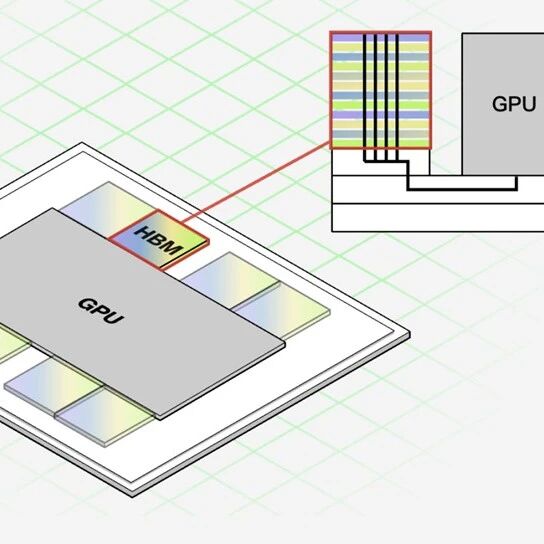
Group 1 - The memory chip industry is currently facing unprecedented supply shortages driven by the rapid growth of artificial intelligence, with major tech companies expected to invest up to $650 billion by 2026, an 80% increase from last year [2] - Memory chips are crucial for modern computing, serving as data storage and transmission to the CPU, and are increasingly used in AI data centers [3][5] - The rise of AI has led to the development of High Bandwidth Memory (HBM), which significantly improves data transfer speeds by vertically stacking multiple memory chips [7][12] Group 2 - The demand for DRAM in data centers is projected to account for about 50% of global consumption by 2025, up from 32% five years ago, with AI servers expected to consume over 60% of global server resources by 2030 [16] - To secure chip supplies, AI system manufacturers are willing to pay premiums and sign long-term supply agreements, leading memory manufacturers to shift focus towards higher-margin HBM chips [14][16] - The rising costs of memory are impacting consumer electronics, with HP reporting that memory costs now account for 35% of laptop manufacturing material costs, up from 15-18% just three months prior [17] Group 3 - The memory chip market is dominated by three companies: Samsung, SK Hynix, and Micron Technology, which face challenges in rapidly increasing production capacity due to high costs and the complexity of HBM manufacturing [19][28] - The industry has historically struggled to match new capacity with demand fluctuations, leading to cautious expansion strategies to avoid past overproduction losses [28][31] - The ongoing supply shortages may result in higher product prices, reduced profit margins, and slower product upgrade cycles for consumer electronics companies [32]
麦格理:韩国股市尽管已上涨160%但仍"便宜"
美股IPO· 2026-03-02 23:42
Core Viewpoint - Macquarie believes that despite several years of strong growth in the South Korean stock market, its valuation remains attractive, supported by earnings momentum and liquidity [1]. Group 1: Market Outlook - Analysts predict that the KOSPI index could approach 8,000 points by 2026, driven by strong earnings growth, ample liquidity, and favorable government policies [3]. - The market has risen 160% since 2024, yet it is still considered cheap relative to profit growth, with current trading prices estimated at about 9 times the earnings expected in 2026 [4]. Group 2: Earnings and Valuation - The speed of earnings upgrades has outpaced stock price increases, indicating that the current rally is primarily driven by fundamental earnings growth rather than valuation re-rating [5]. - Samsung Electronics and SK Hynix are expected to account for approximately 52% of total net profits in 2026 and about 90% of the growth portion [5]. Group 3: Industry Dynamics - The memory chip sector is facing the "most severe memory supply shortage in history," which is not expected to ease in the next two to three years due to AI demand absorbing supply [6]. - There is significant upside potential for memory prices, which the market has not fully reflected in current earnings forecasts [6]. Group 4: Supportive Policies and Trends - The South Korean government is encouraging a shift of household assets from real estate to stocks, with about 65% of household assets currently allocated to real estate compared to an OECD average of around 50% [6]. - Increased ETF inflows, stock buybacks, and planned repatriation of investment accounts are expected to provide incremental demand for the stock market [7]. Group 5: Sector Ratings - Macquarie maintains an overweight rating on memory, defense, power equipment, biotech/healthcare, shipbuilding, and the South Korean beauty industry [8].