
北京轨道交通22号线

Search documents
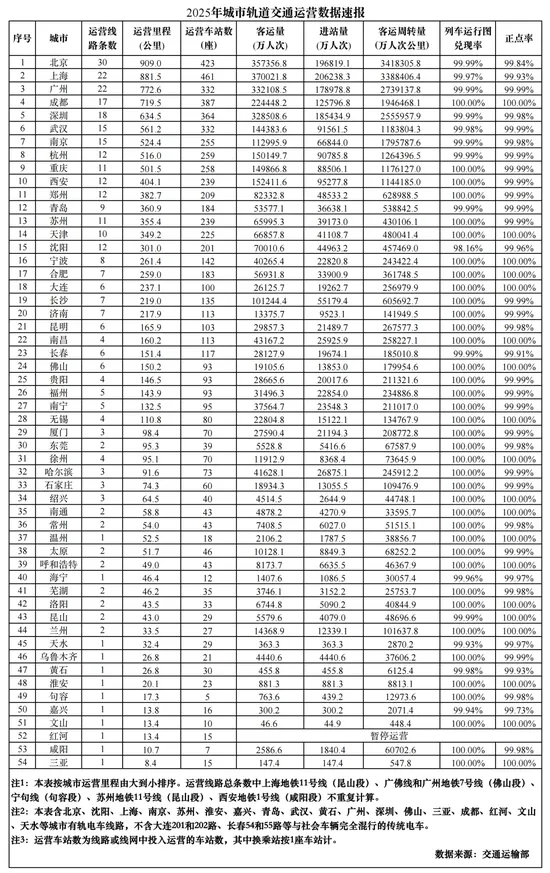
轨道交通排行:北京领跑,南京有变化
Jing Ji Ri Bao· 2026-01-22 10:20
Group 1 - The core viewpoint of the article highlights the growth and changes in urban rail transit systems across major Chinese cities, with a specific focus on Nanjing's rising ranking in operational mileage [3][4]. - As of December 31, 2025, a total of 54 cities in China will have 343 urban rail transit lines in operation, covering 11,710.3 kilometers and 6,680 stations, with an addition of 18 new lines and 764.7 kilometers of new operational mileage in 2025 [2]. - Beijing continues to lead the nation in urban rail transit operational mileage, with 30 lines and 909 kilometers, while Nanjing has moved up to the seventh position, surpassing Hangzhou and Chongqing, due to the opening of new lines [4]. Group 2 - Several major cities are set to open new rail transit lines this year, including Beijing's first interprovincial line, which will span approximately 81.2 kilometers, and Shanghai's line expected to be operational by the end of the year [5]. - Nanjing is preparing for the opening of two lines, the 6th line and the Ningma line, which will connect Jiangsu and Anhui provinces, with the 6th line measuring about 32.35 kilometers and the Ningma line about 54.23 kilometers [5]. - The urban rail transit landscape is expected to continue evolving as cities announce progress on ongoing projects, potentially leading to further changes in rankings by the end of the year [6].

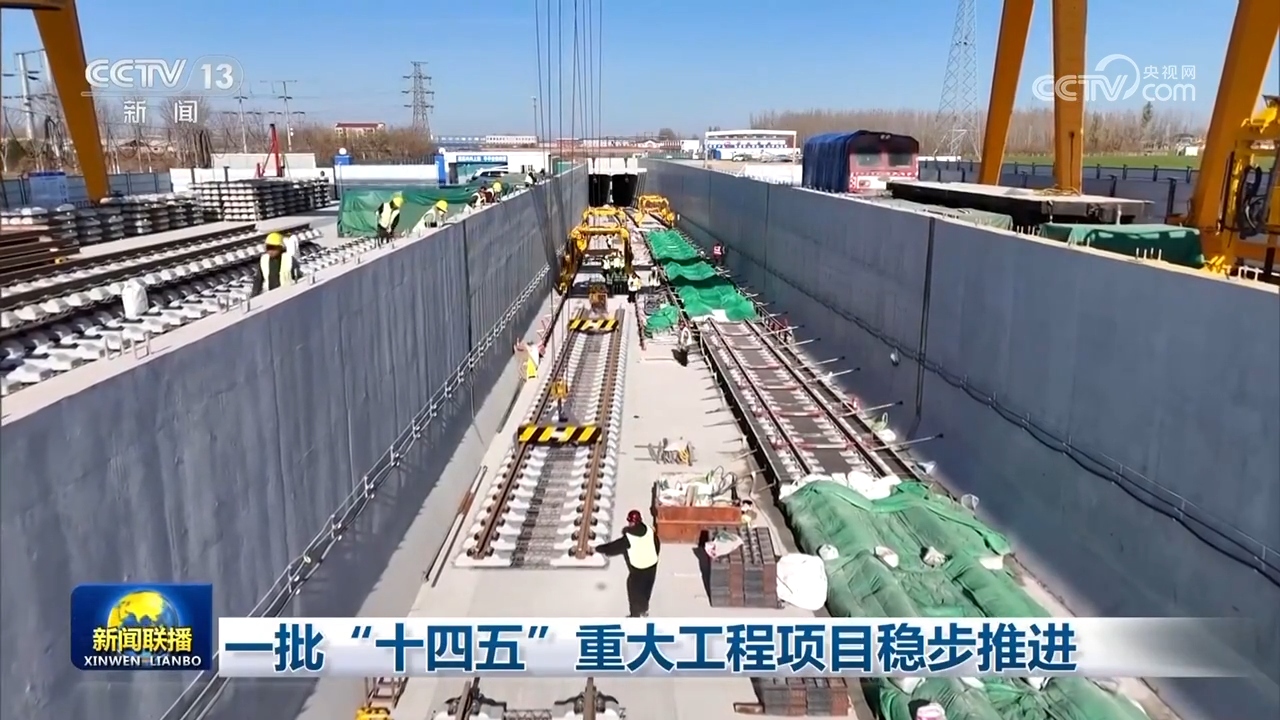
一批“十四五”重大工程项目稳步推进
Yang Shi Wang· 2025-11-23 12:48
Core Insights - The article highlights the steady progress of major "14th Five-Year Plan" projects across various regions, contributing to high-quality economic and social development [1] Infrastructure Development - The Beijing Rail Transit Line 22 Hebei section has officially begun track laying, marking the first inter-regional rail line between Beijing and Hebei, with a total length of approximately 81 kilometers and 22 stations, reducing travel time from Hebei Yanjiao to Beijing CBD to about 32 minutes [3] - In Anhui, the Chaoma Intercity Railway, part of the national "Eight Vertical and Eight Horizontal" high-speed rail network, has commenced track laying, connecting Chaohu and Ma'anshan, expected to be completed next year, enhancing the integration of the Yangtze River Delta [5] - The Ge'er Tunnel of the Xining-Chengdu Railway in Gansu has successfully passed through, with an average elevation of 3,300 meters, making it the highest tunnel in the Xining-Chengdu Railway project, reducing travel time from Xining to Chengdu from around 10 hours to approximately 4.5 hours upon completion [7] Water Conservancy Projects - The construction of the Shandong Linyi Menghe Shuangshuo Reservoir, a significant water conservancy project under the "14th Five-Year Plan," is progressing rapidly, currently at 75% completion, expected to enhance flood control, water supply, and irrigation in the Yihe River basin, thereby ensuring agricultural and food security [9] - In Guangdong Zhanjiang, the largest pump station of the North Bay Guangdong Water Resource Allocation Project is nearing completion, expected to be operational by 2031, spanning over 490 kilometers and benefiting more than 18 million people by connecting 12 reservoirs [11] - In Sichuan Nanchong, the first phase of the Tingzikou Irrigation District project is under construction, expected to be operational by 2027, addressing irrigation for over 3.7 million acres of farmland and drinking water for more than 4 million people [11]
经济上台阶 民生增福祉——“数读”北京市“十四五”经济社会发展“成绩单”
Xin Hua Wang· 2025-09-16 02:03
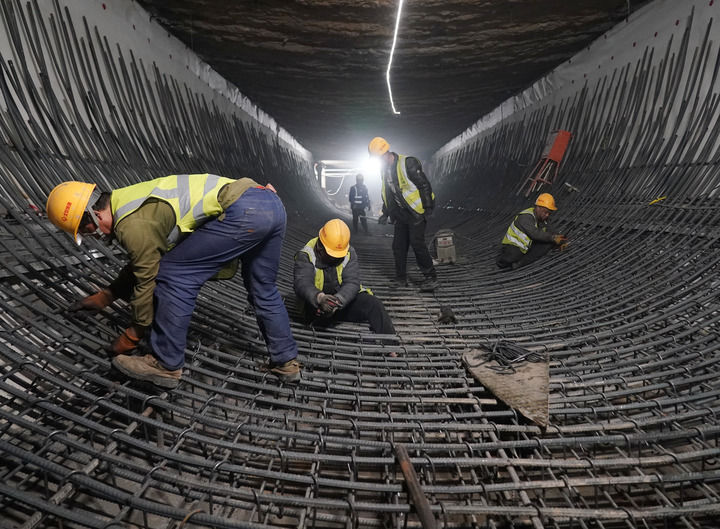
Core Insights - Beijing's "14th Five-Year Plan" showcases significant achievements in economic and social development, emphasizing high-quality growth through strategic initiatives [1][6] Group 1: Economic Development - The Beijing-Tianjin-Hebei coordinated development strategy has led to the reduction of non-capital functions, with a cumulative decrease of 150 square kilometers in urban construction land and the exit of over 3,000 general manufacturing enterprises [1][3] - The GDP of Beijing is projected to exceed 5 trillion yuan during the "14th Five-Year Plan," with an economic increment of approximately 1.4 trillion yuan, equivalent to the economic output of a district like Haidian [6][7] - By 2024, the per capita GDP in Beijing is expected to reach $32,000, with labor productivity at 444,000 yuan per person, ranking first among all provinces and cities in China [6][7] Group 2: Infrastructure and Connectivity - The construction of the Beijing Subway Line 22 is accelerating, reducing travel time from Yanjiao in Hebei to Beijing's sub-center to just 9 minutes, and to the CBD in 32 minutes [5] - A transportation network connecting major cities in the region has been established, creating a 1 to 1.5-hour travel circle among Beijing, Tianjin, and Hebei [3][5] Group 3: Innovation and Market Vitality - Beijing maintains a research and development investment intensity of around 6%, positioning itself among the top global innovation cities [7] - The city has registered 158 large models, accounting for approximately 30% of the national total, and has a significant presence in the commercial aerospace sector [7] - Over the past five years, more than 1,700 measures have been introduced to improve the business environment, resulting in an annual growth rate of 6.2% in the number of business entities, reaching a total of 2.686 million [7] Group 4: Environmental and Social Improvements - Air quality in Beijing has significantly improved, with PM2.5 levels dropping to an average of 30.5 micrograms per cubic meter in 2024, a 65.9% decrease from 2013 [10] - The city has added over 152 kilometers of urban rail transit in the past five years, with a 90% transfer rate between buses and rail within 50 meters [10] - Public services have expanded, with over 150,000 new primary and secondary school places and a 94% enrollment rate for eligible children in kindergartens [10]
22号线河北段完成桥梁下部结构施工
Bei Jing Ri Bao Ke Hu Duan· 2025-08-23 07:14
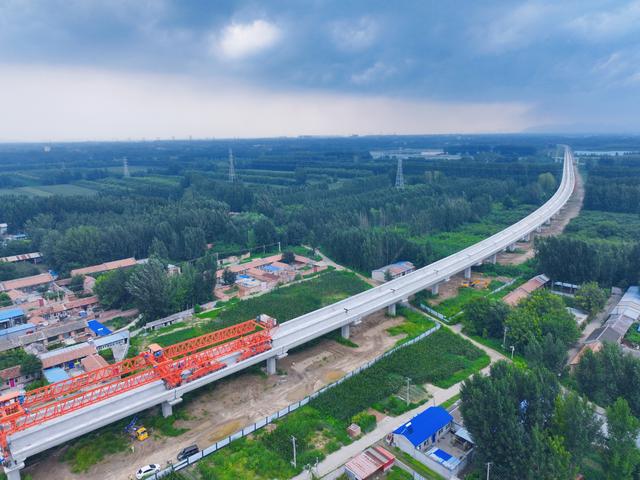
Core Points - The construction of the Beijing Subway Line 22's Hebei section has reached significant milestones, with 70% of the main structure and 80% of the station structure completed [1][2] - The project, undertaken by China Communications First Highway Engineering Group, spans approximately 30 kilometers, with about 8 kilometers of bridge engineering, facing complex construction environments and technical challenges [1] - The line will enhance rapid connectivity between key areas in Beijing and Hebei, significantly improving commuting efficiency and promoting coordinated development in the Beijing-Tianjin-Hebei region [2] Summary by Sections Construction Progress - The final steel cover beam support stone has been poured, marking the completion of the bridge's substructure construction for the Hebei section of Line 22 [1] - The project has successfully overcome challenges related to complex geological conditions and sensitive surrounding environments through innovative technology and scientific management [1] Project Specifications - The total length of the Beijing Subway Line 22 is approximately 81.82 kilometers, connecting major functional areas such as Beijing's business center, urban sub-center, and key districts in Hebei [1][2] - The line will facilitate rapid transit, with travel times from Langfang's northern three counties to Beijing's urban sub-center reduced to as little as 9 minutes, and to the CBD in about 32 minutes [2] Strategic Importance - The completion of Line 22 is expected to significantly enhance the efficiency of commuter travel and is seen as a key project for the high-quality development of the "Railway on the Beijing-Tianjin-Hebei" initiative [2]

北京轨道交通22号线河北段桥梁下部结构施工全部完成
Bei Jing Ri Bao Ke Hu Duan· 2025-08-21 01:53
Core Points - The construction of the Beijing Metro Line 22's Hebei section has reached significant milestones, with 70% of the main structure and 80% of the station structure completed [1][3] - The project, spanning approximately 30 kilometers, includes about 8 kilometers of bridge engineering and faces complex construction challenges due to its environment [3] - The line will enhance connectivity between key areas in Beijing and Hebei, significantly improving commuting efficiency and promoting regional development [3] Construction Progress - The final steel cover beam support cushion stone was poured on August 20, marking the completion of the bridge's substructure construction [1] - The main structure of the line has achieved a completion rate of 70%, while the station structure has reached 80% [1] Project Details - The Beijing Metro Line 22 is the first inter-provincial urban rail transit line between Beijing and Hebei, stretching approximately 81.82 kilometers [3] - The line connects major functional areas, including Beijing's business center, sub-center, and key regions in Hebei, facilitating rapid transit [3] Technical Innovations - The construction team has employed technical innovations and scientific management to overcome geological and environmental challenges [3] - Measures such as intelligent monitoring and improved drilling tools have been implemented to minimize construction disruption and enhance quality [3] Regional Impact - Upon completion, the line will enable rapid transit from Langfang's northern three counties to Beijing's sub-center in as little as 9 minutes, and to the CBD in approximately 32 minutes [3] - This project is seen as a significant step towards achieving high-quality integration of the Beijing-Tianjin-Hebei region [3]
一批重点工程取得阶段性进展 为经济社会高质量发展提供强劲动能
Yang Guang Wang· 2025-08-20 00:49
Group 1 - The Beijing Subway Line 22 (Pinggu Line) has completed the construction of the lower bridge structure in the Hebei section, marking a significant milestone in the project [1] - The line is approximately 30 kilometers long and includes 5 stations and 6 sections, which will reduce commuting time from Langfang's northern three counties to Beijing's sub-center to as little as 9 minutes [1] - The construction faced challenges due to complex environmental conditions, including liquefied soil layers, but the project team successfully implemented advanced construction techniques [1] Group 2 - The Ningxia-Hunan ±800 kV UHVDC transmission project has officially commenced operation, representing a key project in China's 14th Five-Year Plan for power development [2] - This project is the first approved UHV transmission corridor primarily for transporting renewable energy from the "Shagehuang" wind and solar base, with a total investment of 28.1 billion yuan [2] - The project enhances Ningxia's external transmission capacity to 20 million kilowatts, significantly improving the region's ability to utilize renewable energy [2] Group 3 - The Yukun High-speed Railway's key control project, the Binghui Tunnel, has successfully been completed, marking the first tunnel over 20 kilometers to be finished on the line [2] - The tunnel, located in Yunnan Province, utilized innovative construction methods to manage complex geological conditions and reduce risks [2] - With the completion of the Binghui Tunnel, 85% of the tunnels in Yunnan for the Yukun High-speed Railway have been completed, which is a crucial part of China's "eight vertical and eight horizontal" high-speed rail network [2]