
北汽极狐智能网联汽车

Search documents
中国汽车市场一周行业信息快报——2025年12月第5期
Zhong Guo Zhi Liang Xin Wen Wang· 2025-12-29 07:53
Group 1: Industry Developments - The domestic automotive industry is experiencing significant developments, including the advancement of L3-level autonomous driving commercialization, new regulations for electric vehicle energy consumption, and increased local replacement subsidies [1] - Beijing has issued the first L3-level highway autonomous driving vehicle special license plates, marking a milestone in the domestic autonomous driving sector [2][3] Group 2: Company News - Geely Automobile has completed the privatization and integration of Zeekr, which is now a wholly-owned subsidiary, aiming to enhance strategic synergy and scale effects in the fields of intelligence and electrification [2] - BAIC's Arcfox has received the first L3-level autonomous driving vehicle license plates in Beijing, with three vehicles currently operational under specific conditions [3] - FAW Bestune has achieved a cumulative sales record of 190,017 vehicles in 2025, marking a 20-year sales high, with a significant contribution from its entry-level electric model [4][5] - Mercedes-Benz has become the fifth-largest shareholder of Qianli Technology by acquiring 3% of its shares, indicating a strategic investment in the technology sector [6] - Deep Blue Automotive has completed a C-round financing of 6.122 billion yuan, with strong market growth reflected in a 45.7% year-on-year increase in sales [7][9] - A new mandatory standard for electric vehicle energy consumption will be implemented in 2026, tightening limits by approximately 11% compared to previous recommendations, which is expected to enhance consumer experience [10] - GAC Group has introduced a "three responsibilities" policy for its brands, ensuring accountability for issues related to battery fires, battery degradation, and accidents caused by intelligent parking systems [11][13]

经济日报:自动驾驶“准入许可”不等于大规模量产
Xin Lang Cai Jing· 2025-12-27 02:14
Core Viewpoint - The issuance of the first L3-level highway autonomous vehicle special license plates in Beijing marks a significant milestone in China's autonomous driving development, transitioning from technical validation to mass production application [1][4]. Group 1: L3-Level Autonomous Driving Overview - L3-level autonomous driving represents a critical transition from "driving assistance" to "autonomous driving," allowing the system to perform driving tasks under certain conditions without continuous driver monitoring [2]. - The first three quarters of this year saw a 21.2% year-on-year increase in new car sales with L2-level driving assistance features, achieving a penetration rate of 64% [2]. Group 2: Regulatory Framework and Testing - The Ministry of Industry and Information Technology (MIIT) has issued strict limitations on the operational scenarios, road types, urban areas, and speed limits for the two approved models, emphasizing a cautious regulatory approach [3]. - There is a distinction between "road test licenses" issued by local authorities and "product access licenses" from national departments, with the latter being significantly more challenging to obtain [3]. Group 3: Future Implications and Challenges - The successful implementation of L3-level autonomous driving requires not only technological advancements but also supportive policies, industry ecosystems, and infrastructure [4]. - The current pilot approach is characterized by "small-scale initiation and conditional implementation," indicating that mass production is not imminent despite the recent approvals [4].


忠阳车评“准入许可”不等于大规模量产
Jing Ji Ri Bao· 2025-12-27 00:18
Core Viewpoint - The issuance of the first L3-level autonomous driving vehicle license plates in Beijing marks a significant milestone in China's autonomous driving industry, transitioning from technology validation to mass production application [2][3]. Group 1: Regulatory Developments - The Ministry of Industry and Information Technology has officially granted the first L3-level conditional autonomous driving vehicle permits, allowing specific models from Changan Automobile and BAIC Group to conduct pilot tests on designated highways in Beijing and Chongqing [2][3]. - The L3-level autonomous driving is a critical transition from "driving assistance" to "autonomous driving," where the system can perform driving tasks under certain conditions without continuous driver monitoring [3]. Group 2: Market Context - In the first three quarters of the year, the sales of new passenger cars equipped with L2-level driving assistance features increased by 21.2%, achieving a penetration rate of 64% [3]. - The approval of these two autonomous driving models is seen as a recognition of technological maturity and a response to societal expectations for future smart mobility [3]. Group 3: Implementation and Limitations - The permits come with strict limitations regarding operational scenarios, road types, urban areas, and speed limits, indicating a cautious approach to the rollout of L3-level autonomous driving [4][5]. - The current pilot program does not open these vehicles to the general public but is limited to specific organizations conducting trial operations, emphasizing a careful regulatory framework to ensure safety [4][5]. Group 4: Future Outlook - The true commercialization of L3-level autonomous driving requires not only technological breakthroughs but also supportive policies, industry ecosystems, and infrastructure [5]. - The current approach of "small-scale initiation with conditional implementation" reflects the complexity and safety risks associated with autonomous driving systems, indicating that widespread adoption is still a long way off [5].

北京发放首批L3级高速公路自动驾驶车辆专用号牌
Xin Lang Cai Jing· 2025-12-23 09:49
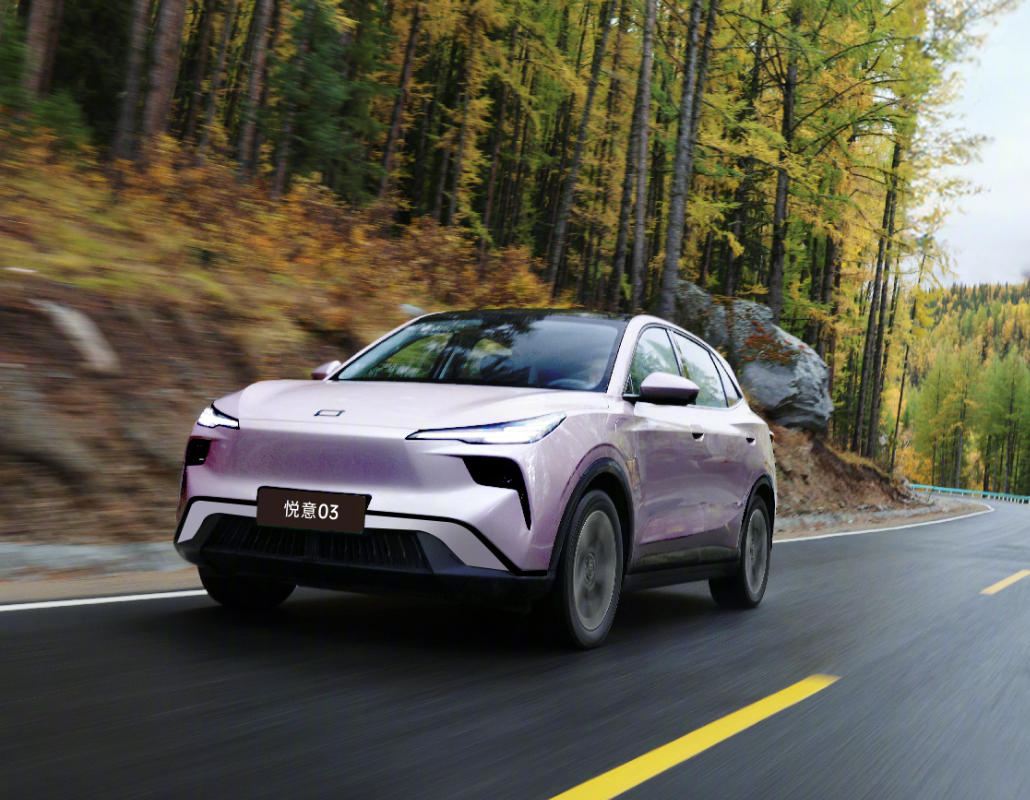
Core Insights - The issuance of the first L3 level autonomous driving vehicle special license plates in Beijing marks a significant milestone in China's transition from testing to mass production of autonomous vehicles, indicating the official start of the L3 autonomous driving era [1] Group 1: Vehicle and Technology Details - The first three L3 level autonomous vehicles registered in Beijing belong to Beijing Outing Automobile Service Co., Ltd., specifically the BAIC Arcfox intelligent connected vehicles [1] - These vehicles have undergone a series of tests and are currently in a conditional autonomous driving phase, capable of executing dynamic driving tasks at a maximum speed of 80 km/h on designated highways and urban expressways [1] - The conditional autonomous driving feature is limited to specific routes in Beijing, including sections of the Jing-Tai Expressway and the Daxing Airport Expressway, with the system automatically disabling the feature in other areas [2] Group 2: Regulatory and Future Developments - The Beijing Public Security Traffic Management Department, in collaboration with various agencies, has guided the comprehensive testing and safety evaluations necessary for the approval of L3 autonomous vehicles [2] - Future efforts will focus on enhancing the management of intelligent connected vehicles and implementing the city's smart vehicle industry development plan, aiming to create a replicable "Beijing model" for the large-scale application of autonomous driving [2]