十全大补面膜

Search documents
“十全大补”面膜神话落幕:又一外资护肤品撤离中国
Guan Cha Zhe Wang· 2026-01-08 04:45
Core Insights - Filorga, a well-known French skincare brand, announced its withdrawal from the Chinese market, closing its Tmall flagship store on January 31, 2026, along with its 3.03 million followers and popular products like the "Ten Full Nourishing Mask" [1] - The exit of Filorga is part of a broader trend, with over 60 foreign beauty brands leaving the Chinese market between 2024 and 2025, indicating a significant retreat of foreign skincare brands [1] - Domestic beauty brands have gained market share, surpassing foreign brands for the first time in 2023, with Proya becoming the first domestic brand to exceed 10 billion yuan in revenue [1] Group 1: Filorga's Market Performance - Filorga entered the Chinese market in 2015 and quickly gained popularity, achieving a sales record of over 1 billion yuan during the 2018 Double Eleven shopping festival, with a year-on-year growth of 148% [2] - However, growth slowed significantly after 2020, attributed to ineffective pricing strategies and a lack of competitive advantage against domestic brands [2][3] - The brand's high-priced star product, the mask priced at 599 yuan, failed to maintain its premium image due to frequent discounts, while domestic competitors offered more affordable alternatives [2] Group 2: Challenges in Channel Operations - Filorga's online sales performance was poor, with only 2.5 million to 5 million yuan in sales on Douyin in 2025, indicating a lack of effective online marketing strategies [3] - The closure of physical stores resulted in a loss of high-end brand image and direct consumer engagement opportunities [3] - In contrast, other brands under the L'Oréal group, such as La Roche-Posay and Kiehl's, maintained strong market positions through effective product offerings and operational strategies [3] Group 3: Broader Industry Trends - The withdrawal of Filorga aligns with Colgate's global strategy to streamline operations, as the company's personal care segment saw a 2.05% decline in net sales in the first half of 2025 [4] - Similar strategic adjustments are occurring across the foreign beauty sector, with brands like Shiseido and LVMH also closing stores or withdrawing from the market due to declining performance [5] - Domestic brands like Proya and Winona have shown significant growth, with Proya achieving over 10.778 billion yuan in revenue in 2024, marking a year-on-year increase of over 20% [5] Group 4: Future Outlook - Analysts suggest that the challenges faced by foreign brands are not solely due to their foreign status but rather their inability to adapt to the Chinese market and consumer preferences [6] - L'Oréal's success is attributed to its localized operations, contrasting with Filorga's failure to establish a coherent market strategy in China [6] - The Chinese high-end beauty market is expected to continue facing challenges, but opportunities remain for brands that can effectively engage with local consumers [6]
300万粉丝的菲洛嘉,还是关掉了天猫旗舰店
3 6 Ke· 2026-01-06 10:32
Core Viewpoint - Filorga, a French skincare brand, will close its Tmall flagship store on January 31, 2026, due to a strategic adjustment, indicating a planned channel shift rather than a sudden decision [1][3]. Group 1: Market Context - Filorga's decision is part of a broader trend where foreign brands are withdrawing or scaling back in the Chinese beauty market, with over 20 foreign brands exiting or significantly reducing their presence in 2025 [3][12]. - The Chinese beauty market is still important but is perceived as less profitable, prompting multinational companies to reassess their operational strategies [4][15]. Group 2: Brand Performance - Despite having over 3 million followers on Tmall, Filorga's closure does not indicate poor sales performance; rather, it reflects a shift in market dynamics where effective growth is becoming more challenging [3][12]. - Filorga has successfully transitioned from a niche professional brand to a more mainstream consumer brand, leveraging its strong product offerings [5][18]. Group 3: Operational Challenges - The skincare market in China has evolved, with efficacy claims becoming a baseline expectation, leading to increased costs for foreign brands in terms of education, content creation, and marketing [6][15]. - The complexity of operating on platforms like Tmall has increased, requiring brands to invest more in content, live streaming, and customer retention, which raises operational costs [8][9]. Group 4: Strategic Shift - Filorga's closure of its Tmall store is a strategic move to prioritize efficiency, as maintaining a presence on complex platforms demands significant local investment [8][11]. - The brand's decision reflects a broader trend among foreign brands to focus on selective deepening in markets where they can maintain profitability, rather than spreading resources too thinly [17][21]. Group 5: Future Outlook - The closure does not signify a loss of demand for efficacy skincare but rather a recalibration of strategies in a maturing market where profitability and sustainable growth are prioritized [18][19]. - The Chinese market is transitioning from a "must-participate growth battlefield" to a "mature market requiring careful calculation of input and output" for foreign beauty brands [21].

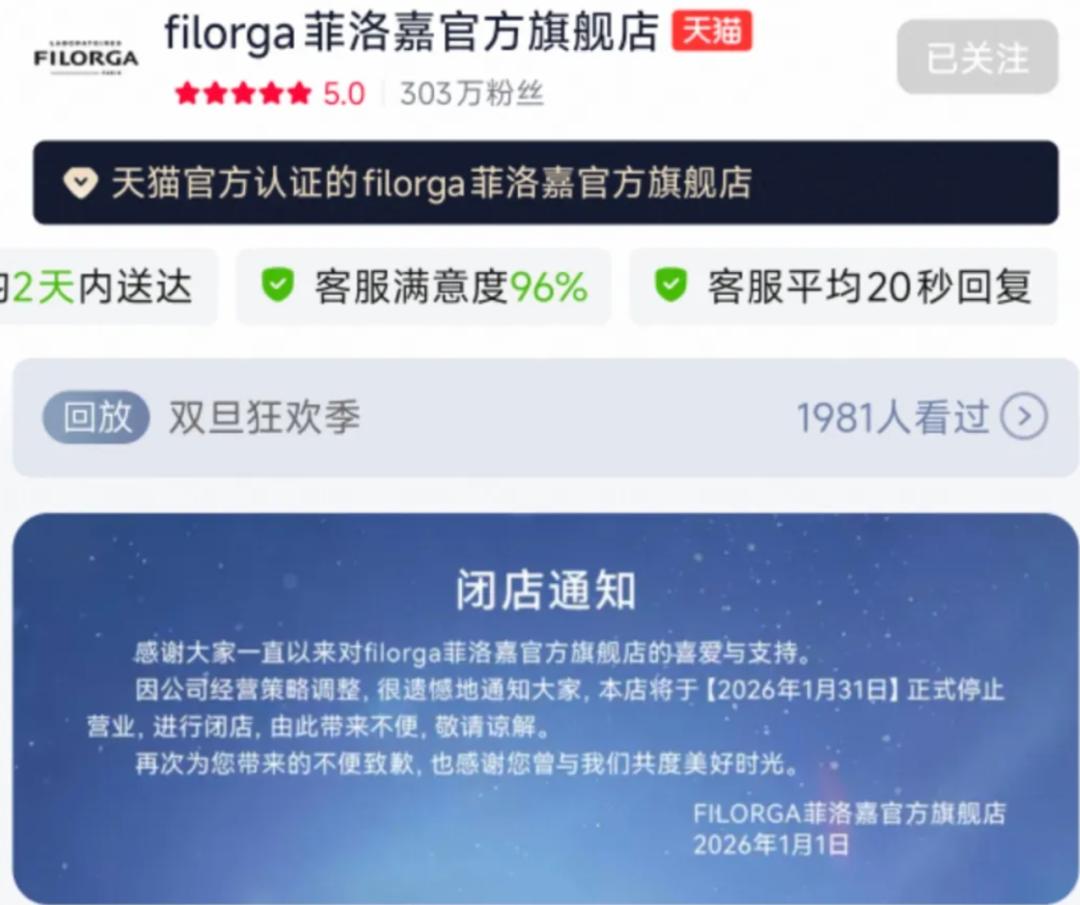
因战略调整,“十全大补面膜”菲洛嘉关店
Bei Jing Shang Bao· 2026-01-05 13:22
Core Viewpoint - The skincare brand Filorga, known for its anti-aging products, is closing its flagship store in China due to strategic adjustments, marking a significant shift in its market presence after a period of rapid growth and popularity [2][3]. Group 1: Company Overview - Filorga was founded in 1978 by biologist Michel Tordjman and is recognized for its professional skincare products [2]. - The brand entered the Chinese market in 2015, with its star product, the "NCEF Mask," achieving remarkable sales growth, reportedly increasing by 26 times in the first three years and a 148% year-on-year sales increase in 2018 [2]. Group 2: Recent Developments - Filorga's flagship store will officially close on January 31, 2026, following the announcement of the cessation of its WeChat mini-program operations by December 31, 2025 [2]. - The brand had previously closed its overseas flagship store in 2023, citing similar reasons of strategic adjustment [2]. Group 3: Market Performance - Under Colgate's ownership since a €1.495 billion acquisition in 2017, Filorga experienced significant growth, with its online sales peaking during events like the 2020 Double 11 shopping festival [3]. - However, Colgate's personal care segment reported a 2.05% decline in net sales in the first half of 2025, with the Asia-Pacific market, including China, seeing a 2.13% drop to $1.378 billion [4]. Group 4: Industry Insights - Industry experts suggest that Filorga's struggles in the Chinese market reflect a broader trend of domestic brands gaining market share at the expense of international brands [4]. - The brand's mid-to-high-end positioning has been challenged by aggressive discounting strategies, which have diluted its brand value and consumer recognition [4]. - The rise of domestic brands, particularly in the oral care sector, has further complicated Colgate's market position in China, impacting Filorga's growth potential [4].

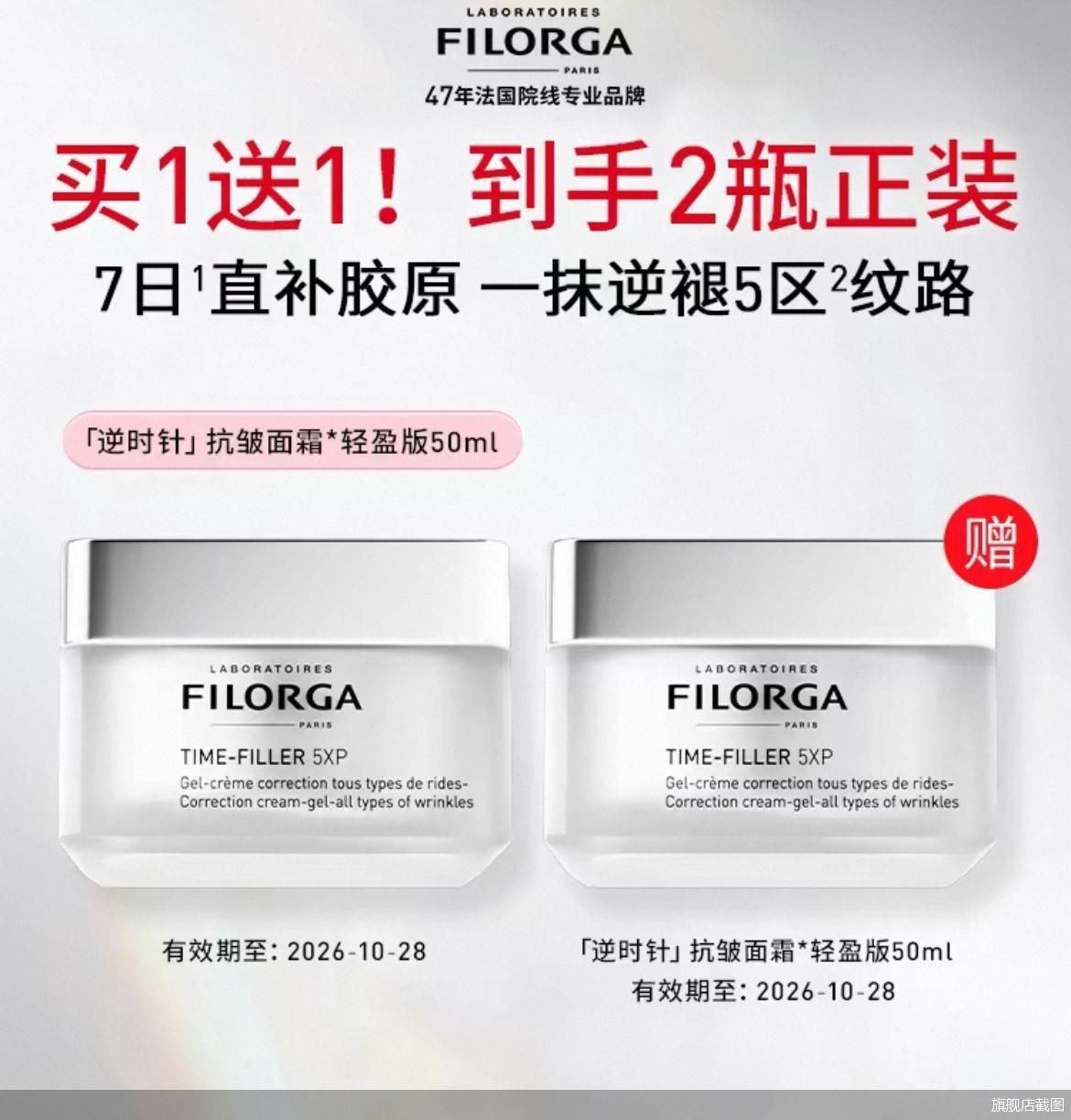
很突然,知名美妆品牌宣布闭店!王俊凯曾代言
第一财经· 2026-01-05 11:19
Core Viewpoint - Filorga, a French skincare brand, announced the closure of its official flagship store due to a strategic business adjustment, effective January 31, 2026 [3][6]. Group 1: Store Closure Announcement - Filorga's official flagship store has 3.03 million followers and has sold over 30,000 units of its star product, the "All-in-One Mask" [4][11]. - The store's customer service confirmed that the closure is due to a strategic adjustment, and members who have made prior payments should contact the official support for resolution before the closure [9][11]. Group 2: Brand Background and Market Position - Founded in 1978 by Dr. Michel Tordjman, Filorga is positioned as a professional skincare brand [11]. - In July 2019, Colgate-Palmolive acquired Filorga's skincare business for $1.69 billion (approximately 11.6 billion RMB) to enhance its personal care segment [11]. - Filorga entered the Chinese market in October 2015, initially focusing on online sales before opening physical stores in major cities by 2018 [11]. - The brand's success in China is largely attributed to the popularity of its "All-in-One Mask," which gained fame through social media trends [11].