南京市低空飞行服务平台

Search documents
市低空飞行服务平台将于三月向个人开放申报
Nan Jing Ri Bao· 2026-01-30 02:33
Core Viewpoint - Nanjing has introduced a new interim regulation for the safety management of civil drones, effective from February 1, 2026, to January 31, 2028, aimed at ensuring safe low-altitude flights for users through a comprehensive safety management system [1] Group 1: Definition of Violations - The regulation clearly defines 11 types of violations related to drone flights, establishing explicit standards for what constitutes illegal flying, including unauthorized flights without registration or licenses [2] - The new rules align with the revised Public Security Administration Punishment Law, categorizing illegal drone flights as public safety violations, with potential criminal liability for serious incidents [2] Group 2: Comprehensive Safety Management - The regulation consists of 7 chapters and 34 articles, creating a full-process safety management system covering pre-flight, in-flight, and post-flight phases [3] - Pre-flight requirements include real-name registration on the UOM platform, obtaining a pilot license for operators, and securing approval for controlled airspace flights [3] - In-flight regulations specify maximum flight altitudes for different drone types and require real-time reporting of identity and flight data [3] - Post-flight, a joint supervision and emergency response mechanism will be established, integrating low-altitude flight safety into broader emergency management systems [3] Group 3: Service Assurance - The regulation emphasizes service orientation, providing comprehensive support for compliant flights through the establishment of the Nanjing Low Altitude Flight Service Center [4] - Users can conveniently register and submit flight plans via the "Ningyi Fei" WeChat mini-program, with features for real-time safety monitoring and alerts [5] - The service improvements have led to significant outcomes, with nearly 400,000 compliant flights recorded in 2025, contributing to the high-quality development of Nanjing's low-altitude economy [5]
央视聚焦南京低空经济成果
Nan Jing Ri Bao· 2026-01-12 03:16
Core Insights - The article highlights the development of low-altitude economy in Nanjing, showcasing its innovative applications and smart operational models that inject new momentum into urban life [1][2] Group 1: Low-Altitude Flight Services - Nanjing's low-altitude flight service platform has gathered 228 operational units since its trial run began at the end of 2024, facilitating over 400,000 compliant flights and managing 188 airspace sectors and 197 flight routes [1] - The platform serves as the "smart brain" for Nanjing's low-altitude economy, optimizing flight paths and ensuring safety through an intelligent scheduling system [2] Group 2: Innovative Applications - The launch of "aerial delivery" services on the Yangtze River in August 2025 allows for uninterrupted supply to vessels, marking a significant low-altitude application in Nanjing [1] - A low-altitude blood transport route has been established, enabling rapid delivery between key medical nodes, with a single trip taking as little as 11 minutes and averaging 20 flights per day [1] Group 3: Regulatory Framework - Nanjing is developing a comprehensive policy framework to support the regulated growth of the low-altitude economy, with various departments issuing guidelines and safety management measures [2] - The implementation of the new Public Security Administration Punishment Law on January 1, 2026, will include regulations against unauthorized flights, promoting the integration of civilian drones into the low-altitude flight service platform for dynamic monitoring [2]
面向“十五五”,南京以一场大会树立“风向标”
Nan Jing Ri Bao· 2026-01-06 02:08
Group 1 - Nanjing is designated as a major hub for integrating technological and industrial innovation, with a focus on becoming a globally influential center for industrial technology innovation [1] - A series of policy outcomes were announced at the Nanjing conference, including a strategic cooperation agreement with the provincial Ministry of Industry and Information Technology and the establishment of various innovation platforms [1][3] - The city aims to accelerate the deep integration of technological and industrial innovation to strengthen its industrial capabilities [1][6] Group 2 - The Nanjing low-altitude flight service platform, developed in collaboration with major enterprises and research institutions, is set to enhance the operational capabilities of unmanned aerial vehicles [3] - The platform supports over 1,000 major drone operations daily, indicating a strong position in the national low-altitude economy [3] - National Grid Corporation's South Rui Group reported a 30% year-on-year growth in clean energy and energy conversion business, showcasing advancements in energy technology [4] Group 3 - Nanjing is constructing a comprehensive technology achievement transformation system, focusing on collaboration between universities, research institutions, and enterprises [6] - The city has launched 38 key technology challenges across seven priority industries, including biomedicine and artificial intelligence, to drive innovation [7] - The "Ningkehui" platform has published over 5,000 technology achievement information items and 600 technology demands, facilitating efficient technology transfer [7] Group 4 - Nanjing's innovation ecosystem is being optimized through updated talent policies and the establishment of financial support mechanisms for technology enterprises [9] - The city has set up 18 technology financial service stations, serving over 10,000 technology companies and facilitating financing exceeding 30 billion [9] - The commitment to nurturing talent and supporting startups is evident, with significant investments made in early-stage projects [9]
经济大省挑大梁丨江苏南京:跃马扬鞭聚科创之力,万马奔腾启产业新程
Nan Jing Ri Bao· 2026-01-06 00:58
Core Viewpoint - Nanjing is taking significant steps to integrate technological innovation with industrial development, aiming to establish itself as a global center for industrial technology innovation during the "14th Five-Year Plan" period [1][2]. Group 1: Policy and Strategic Initiatives - A conference was held in Nanjing to promote the deep integration of technological and industrial innovation, where several policy outcomes were announced, including a strategic cooperation agreement with the Jiangsu Provincial Department of Industry and Information Technology [1]. - The establishment of various platforms, such as the Jiangsu Provincial Industrial Technology Research Institute Nanjing Office and the "Zijinshan International Sci-Tech Innovation Fund District," was highlighted [1]. Group 2: Technological Developments and Achievements - Nanjing's low-altitude flight service platform, developed in collaboration with major enterprises and research institutions, is set to support over 1,000 drone operations daily, showcasing the city's leadership in low-altitude economy [5]. - The State Grid Corporation's subsidiary, Nanjing South Rui, reported a 30% year-on-year growth in clean energy and energy conversion business, indicating robust advancements in energy technology [6]. Group 3: Innovation Ecosystem and Talent Development - Nanjing is focusing on building a comprehensive technology transfer system, emphasizing the role of universities and enterprises in driving innovation and collaboration [10]. - The city has launched a series of support policies and established mechanisms for supply-demand matching, enhancing the efficiency of technology transfer [10][11]. - New talent policies have been introduced, providing financial support for graduates and reflecting the city's commitment to nurturing talent [15]. Group 4: Financial Support and Investment - Nanjing has developed a three-pronged financial empowerment mechanism, including "Ningke Loan," "Sci-Tech Investment," and "Sci-Tech Bonds," which have collectively facilitated over 30 billion yuan in financing for tech companies [15]. - The city has established 18 financial service stations for sci-tech enterprises, serving over 10,000 companies [15].


全市累计获批空域120个片区、航线174条 南京市低空飞行服务平台正式上线运行
Nan Jing Ri Bao· 2025-06-16 02:45
Core Insights - The Nanjing Low Altitude Flight Service Platform has officially launched, capable of supporting 50,000 low-altitude flights simultaneously, significantly enhancing flight safety in the city [1] - In the first half of this year, the platform recorded over 100,000 flights and nearly 30,000 flight hours, representing increases of 539% and 533% respectively compared to the same period in 2024 [1] Group 1 - The platform was developed by the Nanjing Transportation Group in collaboration with major enterprises and research institutions, utilizing technologies such as cloud computing, big data, and artificial intelligence [1][2] - The platform offers services including flight trajectory monitoring, traffic monitoring, and safety assessments, integrating meteorological data and communication information from major telecom operators [2] - Currently, the platform is focused on unmanned aerial vehicles, with plans to expand to a mixed service management platform for both manned and unmanned flights in the future [2] Group 2 - Nanjing has developed various low-altitude application scenarios, including logistics and government services, positioning itself among the top cities in China for diverse low-altitude applications [3] - The city has approved 120 airspace areas covering over 2,000 square kilometers, with 174 approved flight routes totaling over 3,000 kilometers and 266 takeoff and landing points [3] - The transportation department aims to accelerate the planning of low-altitude takeoff and landing facilities and establish a joint regulatory mechanism for low-altitude safety, contributing to the national low-altitude flight service system [3]
发布低空经济发展系列成果,签约一批产业和基金项目
Nan Jing Ri Bao· 2025-06-15 01:38
Core Insights - Nanjing is positioning itself as a key player in the low-altitude economy, emphasizing its strategic importance as a new emerging industry and a representative of new productive forces [1][2] - The city has made significant progress in developing the low-altitude economy, with a preliminary planning system established, increasing industrial agglomeration, and strengthening foundational support [1] - Nanjing aims to enhance the low-altitude economic ecosystem by focusing on safety regulations, innovation, and collaboration with various stakeholders to achieve high-quality development [1] Group 1 - The Nanjing government held a conference to promote low-altitude economic development and awarded the 2025 Low Altitude Industry Innovation Competition [1] - Key agreements were signed, including the "Low Altitude Industry Innovation Competition Cooperation Agreement," and several innovative institutions and alliances were established [2] - The city has launched various platforms, including a low-altitude safety platform and a low-altitude meteorological service platform, to support the industry [2] Group 2 - Nanjing's low-altitude economy is experiencing explosive growth, driven by a new framework for industrial technology innovation, product aggregation, and improved flight service systems [2] - The city is committed to becoming a major source of scientific innovation, an industrial hub, and a service center, aligning with national and provincial policies [2] - The establishment of the "Nanjing Industrial-grade Drone Innovation Laboratory" and the "Nanjing Low Altitude Safety Enterprise Alliance" reflects the city's commitment to fostering innovation in the low-altitude sector [2]
“飞行订单”持续增多
Nan Jing Ri Bao· 2025-04-29 02:21
Group 1 - The core idea of the articles revolves around the innovative use of drones in urban settings, particularly in Nanjing, to enhance efficiency in various services such as pest control and delivery during the upcoming holiday period [1][2] - During the "May Day" holiday, Nanjing is expected to see an average daily traffic flow of 875,000 vehicles, prompting the deployment of over 20 automated drone systems equipped with night vision cameras and intelligent communication systems for traffic management [1] - The city is set to launch its first drone delivery route in Qixia District, aiming to redefine instant delivery with an average speed of 60 km/h, allowing users to order items like hot drinks and seafood via mobile apps [2] Group 2 - The Nanjing Low Altitude Flight Service Platform is nearing completion, featuring 12 functional modules for airspace management and flight planning, integrating resources from over 90 operational units, and is expected to officially launch by the end of June [2] - The company is actively working on low-altitude smart network construction and infrastructure planning to foster the development of drone research, air logistics, and low-altitude tourism industries [2]
“6G落地,标准要先行”
Ke Ji Ri Bao· 2025-04-20 23:54
Group 1 - The core viewpoint of the articles emphasizes the collaborative efforts in developing 6G technology, highlighting various initiatives and projects aimed at enhancing mobile communication systems and addressing the challenges of standardization and industry collaboration [1][5][6]. Group 2 - The 6G technology is expected to significantly enhance capabilities compared to 5G, with potential applications in various sectors, including AI integration, which is seen as a key driver for the evolution of communication systems [2][3][4]. - The emergence of intelligent devices and AI applications is anticipated to transform user experiences and operational efficiencies, making devices smarter and more user-friendly [3][4]. - The importance of establishing unified standards for 6G is stressed, as it is crucial for reducing costs and ensuring successful implementation across different industries [5][6][7]. Group 3 - The need for cross-industry collaboration is highlighted, with calls for greater participation from vertical industries in the standard-setting process to ensure that 6G technology meets diverse market needs [6][7]. - The role of AI in enhancing communication systems and the necessity for a consensus on technical standards are emphasized as critical factors for the successful rollout of 6G [2][6].


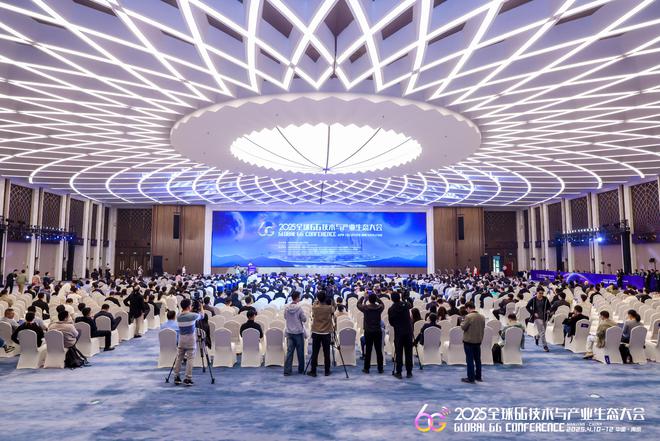
如何抢占6G技术与产业发展制高点?——2025全球6G技术与产业生态大会观察
Xin Hua She· 2025-04-12 07:57
Core Insights - 6G technology has been officially recognized in the government work report during the 2025 National Two Sessions, highlighting its importance for future industrial development [1] - The "2025 Global 6G Technology and Industry Ecosystem Conference" in Nanjing gathered experts and industry leaders to discuss strategies for seizing the development opportunities in 6G technology [1] Group 1: 6G Research and Development - The "6G Frontier Achievements Exhibition" showcased over 20 domestic companies, universities, and research institutions' latest advancements in 6G technology [2] - Notable projects include a visualization simulation platform for ultra-low Earth orbit satellite constellations developed by China Telecom and Beijing University of Posts and Telecommunications, and a low-altitude flight service platform by Nanjing Transportation Group [2] - 6G is seen as a new generation of intelligent information infrastructure, integrating technologies such as artificial intelligence, integrated circuits, cloud computing, and big data [2] Group 2: AI's Role in 6G Development - AI is viewed as a new driving force for 6G, with potential applications in industrial scenarios like machine vision and remote maintenance [4] - The combination of 6G and AI is expected to create new industries, business models, and enhance the digital transformation of society [4] - China has made significant progress in key 6G technologies, including ultra-large-scale antenna arrays and integrated sensing [4] Group 3: Collaboration and Standardization - The conference emphasized the need for global cooperation in defining 6G and its industrial ecosystem, advocating for international collaboration [6] - Establishing unified international standards for 6G is crucial to reduce costs for users and manufacturers, similar to the confusion caused by different mobile phone standards [6] - Experts from over ten countries, including the US, Canada, and the UK, participated in discussions on building an open and cooperative ecosystem for 6G technology [6]