博通ASIC

Search documents
华尔街仍看好,但威胁已至!英伟达“4万亿神话”正面临空前挑战
美股IPO· 2026-01-06 16:04
Core Viewpoint - The article discusses the declining market position of Nvidia (NVDA.US) as it faces increasing competition and concerns over the sustainability of AI spending, despite its historical growth and strong demand for its products [1][3][5]. Group 1: Nvidia's Market Performance - Since reaching an all-time high on October 29, Nvidia's stock has dropped by 9.1%, underperforming the S&P 500 index, raising investor concerns about the sustainability of AI spending and Nvidia's market dominance [3][5]. - Nvidia's stock price has increased over 1300% since the end of 2022, with its market capitalization surpassing $5 trillion, but it has since lost $460 billion in market value, reducing its three-year cumulative growth to nearly 1200% [3][5]. - Despite the recent downturn, Nvidia's stock remains in high demand, with 76 out of 82 analysts giving it a buy rating, and an average target price suggesting a potential 37% upside in the next 12 months [7][8]. Group 2: Competitive Landscape - Nvidia, holding over 90% of the AI chip market, faces unprecedented competition from rivals like AMD (AMD.US) and major clients such as Google (GOOGL.US) and Amazon (AMZN.US), who are developing their own chips to reduce costs [5][9]. - AMD is expected to see a 60% increase in its data center business revenue by 2026, reaching nearly $260 billion, indicating a significant threat to Nvidia's market share [8][9]. - The demand for customized chips is rising, with companies like Google and Meta exploring alternatives to Nvidia's high-cost chips, which can exceed $30,000 each [9][10]. Group 3: Financial Metrics and Valuation - Nvidia's gross margin is projected to decline from 75% to 71.2% in the 2026 fiscal year due to increased costs from the Blackwell chip series, with expectations to recover to around 75% in the 2027 fiscal year [11][12]. - The current valuation of Nvidia is relatively low at a forward P/E ratio of 25, which is only higher than Meta among the "Seven Giants," and lower than over a quarter of S&P 500 constituents [14]. - Analysts suggest that the current market valuation reflects a pessimistic outlook on the industry cycle and AI deployment, presenting a potential investment opportunity [14].



花旗预判到了AI泡沫恐慌! Q3猛砍科技巨头仓位 大举做空纳指与英伟达(NVDA.US) 押注...
Xin Lang Cai Jing· 2025-11-14 09:36
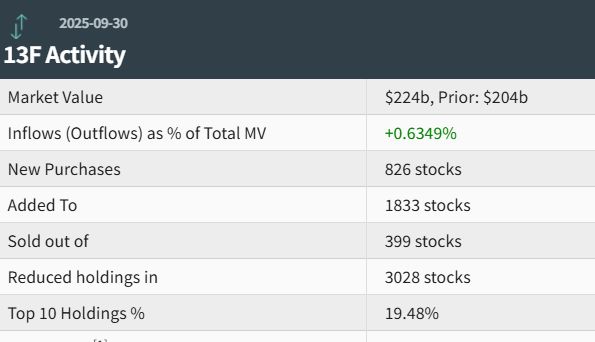
Core Viewpoint - Citigroup has significantly reduced its holdings in major AI-related technology stocks, reflecting concerns over the sustainability of the AI investment boom and the potential for a market correction in these high-valuation stocks [3][9]. Summary by Category Holdings Overview - As of September 30, 2025, Citigroup's total market value of holdings reached approximately $224 billion, up from $204 billion in the previous quarter, marking a 10% increase [1][2]. - The firm added 826 new stocks and increased holdings in 1,833 stocks, while reducing positions in 3,028 stocks and completely selling out of 399 stocks [1][2]. Major Stock Adjustments - Citigroup has notably reduced its positions in major tech giants such as Nvidia, Microsoft, Apple, and Amazon, aligning with the narrative of an "AI bubble" and the subsequent market correction [3][9]. - Despite the reductions in tech giants, Citigroup slightly increased its stake in Broadcom, indicating a positive outlook on its ASIC technology growth prospects [3][4]. Top Holdings - Nvidia remains Citigroup's largest holding with approximately 33.39 million shares valued at about $6.23 billion, although this represents a 28.22% decrease from the previous quarter [6]. - The second-largest holding is the Russell 2000 Index ETF put options, with around 23.99 million shares valued at approximately $5.81 billion, reflecting a 12.26% increase [4]. - Microsoft ranks third with about 9.56 million shares valued at approximately $4.95 billion, down 19.55% from the previous quarter [4]. Strategic Moves - Citigroup has increased its holdings in put options for the Nasdaq 100 Index ETF by 81%, indicating a preparation for potential declines in AI-related stocks [7][8]. - The top five purchases in the third quarter included high-yield corporate bond ETF put options and Nvidia put options, emphasizing a strategy to hedge against potential downturns in the AI sector [8]. Selling Trends - The top five sell-offs included Nvidia, Meta, Amazon, Microsoft, and Apple, further underscoring Citigroup's cautious stance on the AI investment landscape [9].