卡度尼利单抗(AK104)

Search documents
从“单兵”到“协同”,联合疗法藏着什么玄机?
Ge Long Hui· 2025-12-01 04:26
Core Insights - A paradigm shift in cancer treatment is underway, driven by combination therapies rather than single-agent treatments, as highlighted by Pfizer's strategy to focus on ADC combinations instead of direct comparisons with standard treatments or placebos [1][20] - Combination therapies are emerging as a significant trend in innovative drug development, addressing the limitations of single-agent therapies, such as low response rates and inevitable resistance [1][2] Group 1: Advantages of Combination Therapies - Combination therapies enhance efficacy and response rates, delay the onset of resistance, and maintain durable anti-tumor activity, significantly improving clinical value [2][3] - A notable example is the combination of Osimertinib with chemotherapy, which significantly extended the overall survival (OS) of patients with EGFR-mutant advanced non-small cell lung cancer (NSCLC) [2] Group 2: Market Dynamics and Competitive Landscape - The pharmaceutical industry is experiencing a "combination competition" era, where various combination strategies are being employed across different disease areas, leading to synergistic effects [7][20] - AstraZeneca's Osimertinib, despite being a top-selling drug, faces challenges from competitors and is implementing a comprehensive combination strategy to maintain its market position [5][6] Group 3: Ongoing Research and Development - Numerous clinical trials are underway exploring various combination therapies, including PD-(L)1 inhibitors with chemotherapy and other agents, indicating a robust pipeline in the oncology sector [14][19] - The exploration of combination therapies is not limited to solid tumors; significant advancements are also being made in hematological malignancies, showcasing the broad applicability of this approach [10][12] Group 4: Future Directions - The current landscape of drug development suggests that combination therapies will reshape the research and commercial ecosystem of the pharmaceutical industry, emphasizing the need for companies to adapt to this trend to remain competitive [20]

康方生物的“最热双抗”交出大涨业绩
Xin Lang Cai Jing· 2025-08-27 14:39
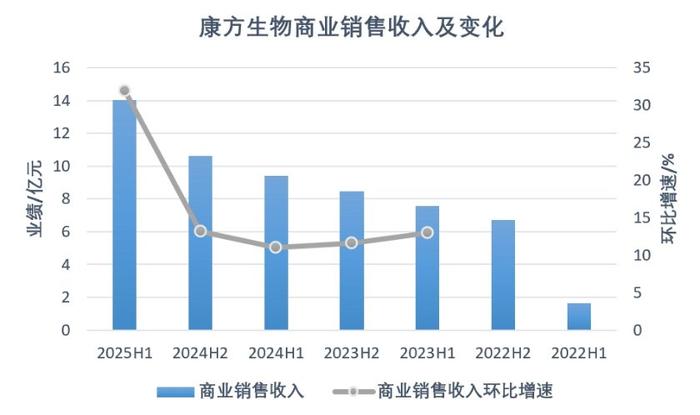
Core Viewpoint - Kangfang Biopharma reported a revenue of 1.412 billion yuan for the first half of 2025, marking a year-on-year increase of 37.75%, while the loss expanded to 588 million yuan from 249 million yuan in the same period last year [1][3] Financial Performance - Revenue for the period was 1.412 billion yuan, a 37.75% increase year-on-year [1] - Commercial sales revenue reached 1.402 billion yuan, up 49.20% year-on-year [1] - The company incurred a loss of 588 million yuan, which is an increase from the previous year's loss of 249 million yuan [1][3] Revenue Drivers - The growth in commercial sales revenue was primarily driven by the inclusion of AK104 and AK112 in the national medical insurance since January, leading to increased sales volume [1] - The increase in losses was attributed to a rise in equity investment losses from a partnership with Summit, which increased from 32.6 million yuan to 192 million yuan, as well as higher R&D expenses and stock incentive costs [3] Product Pipeline and Market Position - Kangfang Biopharma has received approval for seven products, including AK104 and AK112, which are key dual antibodies, and has expanded its commercial product range to include metabolic and autoimmune areas [4] - The sales team has grown from over 800 to 1,200 members, covering oncology and specialty drug sectors [4] - The company is focusing on AK112, which has shown promising results in clinical trials for non-small cell lung cancer [5][8] Clinical Development and Strategy - AK112 has achieved significant clinical endpoints in trials, including a statistically significant improvement in progression-free survival (PFS) [8][9] - The company is pursuing a strategy termed "IO2.0+ADC2.0," which aims to integrate dual antibodies with antibody-drug conjugates (ADCs) [12][13] - Kangfang Biopharma's pipeline includes ongoing clinical trials for various indications, with a focus on enhancing the efficacy of existing treatments [12][16]