
双足人形机器人R1

Search documents
“变了!中国老一辈崇拜硅谷,年轻人更偏爱梁文锋”
Guan Cha Zhe Wang· 2025-10-10 02:40
Core Insights - China is rapidly emerging as a leader in robotics technology, potentially dominating this key technology of the 21st century, despite the U.S. maintaining advantages in software and advanced AI chips [1][3] - The International Federation of Robotics (IFR) reported that in 2024, global new robot installations will reach 542,000 units, with China accounting for nearly 300,000 units, surpassing all other regions combined and being almost ten times that of the U.S. [3][4] - China's strong manufacturing capabilities and a complete supply chain for robotics components enable startups to quickly iterate and produce economically viable products [5][7] Industry Developments - The entry price for humanoid robots in China has significantly decreased, with UTree Technology's bipedal robot R1 priced under $6,000, about one-third of the previous year's model [5] - The deployment of robots in factories is increasing, helping to collect data necessary for training AI systems, addressing labor shortages due to an aging population [5][7] - Public enthusiasm for robotics is growing, supported by government policies and high-profile technology demonstrations, such as the World Artificial Intelligence Conference [5][7] Entrepreneurial Landscape - Chinese entrepreneurs and engineers are increasingly inspired by local figures rather than Silicon Valley icons, reflecting a shift in the technological landscape [8][10] - Many startups plan to scale production from dozens to tens of thousands of units in the coming months, driven by competitive pressures and a desire to enter international markets [7][10] - The younger generation of entrepreneurs is focused on high-quality manufacturing, believing that "Made in China" can represent world-class standards, especially in high-end manufacturing [7][10] Global Positioning - China is already a global leader in various sectors, including electric vehicles and AI, and emerging robotics startups aim to follow in their footsteps [8][10] - The U.S. needs to enhance its competitiveness in robotics by investing in infrastructure and fostering innovation, as the race in robotics is ongoing and China is poised to take the lead [10][11] - Analysts note that Chinese companies are benefiting from national-level support, similar to the development patterns seen in the electric vehicle and AI industries [11]

世界机器人大会|交卷时刻:人形机器人价格战尚早
Bei Jing Shang Bao· 2025-08-10 14:30
Core Insights - The robot industry is experiencing significant growth, with a 27.8% year-on-year revenue increase in the first half of 2025, indicating a shift from technology showcase to mass production [1] - The price of humanoid robots is expected to decrease significantly, as evidenced by the launch of the R1 model at a starting price of 39,900 yuan [1][7] - Companies are focusing on practical applications and commercial viability, with a notable shift towards the cultural and tourism sectors, which now account for 60% of revenue for some firms [3][4] Industry Growth - The humanoid robot industry is projected to double its shipment volume annually in the coming years [6] - Companies like Yunmu Zhizao have seen a dramatic increase in revenue, from over 4 million yuan in 2024 to more than 55 million yuan in 2025, with expectations to exceed 100 million yuan for the year [3] Market Dynamics - The competition is intensifying, with companies needing to answer whether their orders can outpace technological advancements and if they are prepared for price competition [1] - The emergence of lower-priced humanoid robots, such as the R1, raises questions about potential price wars in the industry, although some industry leaders believe that price is not the primary constraint [7][8] Application and Commercialization - The commercial application of bipedal humanoid robots in industrial settings is still in its early stages, with most deployments being limited to specific job functions [4][10] - Companies like Qingtong Intelligent have deployed over 100,000 robotic products, with significant growth in overseas markets [5] Technological Challenges - The industry faces challenges related to the lack of operational data for industrial applications, which is crucial for developing effective models for humanoid robots [15] - The complexity of creating high-quality embodied intelligence is a significant barrier to mass production, requiring advancements in data collection and model training [15][16]

人形机器人行业专题研究周报:宇树发布双足机器人R1,超150台人形机器人亮相WAIC-20250728
CHINA DRAGON SECURITIES· 2025-07-28 09:28
Investment Rating - The report maintains a "Recommended" investment rating for the humanoid robot industry [2][32]. Core Insights - The humanoid robot sector is experiencing significant product launches and events, such as the World Artificial Intelligence Conference (WAIC), which is expected to catalyze growth in the industry [32]. - The report emphasizes the importance of tracking the production progress of Tesla's Optimus and developments from domestic companies like Huawei and Yushu Chain to capitalize on the industry's expansion in 2025 [32]. Summary by Sections Market Review - From July 21 to July 25, 2025, the humanoid robot index increased by 2.13%, outperforming the Shanghai Composite Index, which rose by 1.67% [5][12]. - Notable individual stock performances included North Rare Earth (+16.05%) and Changsheng Bearing (+15.33%) [14]. Industry Dynamics - Yushu Technology launched its bipedal humanoid robot R1, priced starting at 39,900 yuan, featuring 26 joints and advanced motion capabilities [5][18]. - The WAIC showcased over 150 humanoid robots, marking the highest participation in its history, with various companies demonstrating applications in retail, industrial, logistics, and urban services [21][22]. - Tesla's Optimus robot began service in a restaurant, generating $47,000 in revenue within six hours, indicating strong market interest [24][25]. Company Developments - ByteDance introduced the GR-3 VLA model and the ByteMini robot, designed for household tasks with advanced capabilities [25]. - UBTECH launched the Walker S2, an industrial humanoid robot, featuring innovative technologies for autonomous operations [27][30]. Investment Recommendations - The report suggests focusing on companies with high certainty and incremental technology, particularly those linked to Tesla, Yushu, and Huawei [32]. - Key stocks to watch include those in the Tesla chain (e.g., Sanhua Intelligent Control, Top Group) and Yushu chain (e.g., Changsheng Bearing, Mannesmann) [32][33].

超150台人形机器人同台“出道”,在WAIC现场看中国AI应用“引潮”世界
Huan Qiu Wang Zi Xun· 2025-07-27 22:53
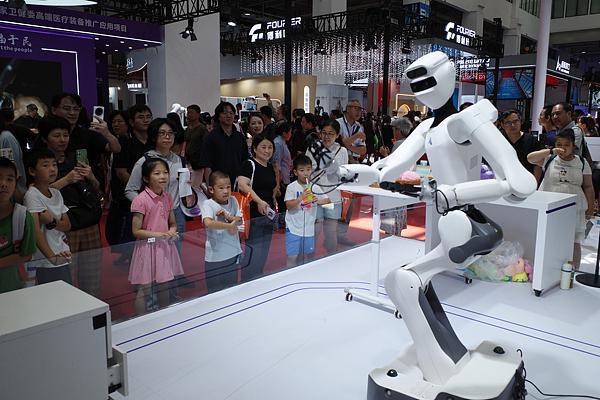
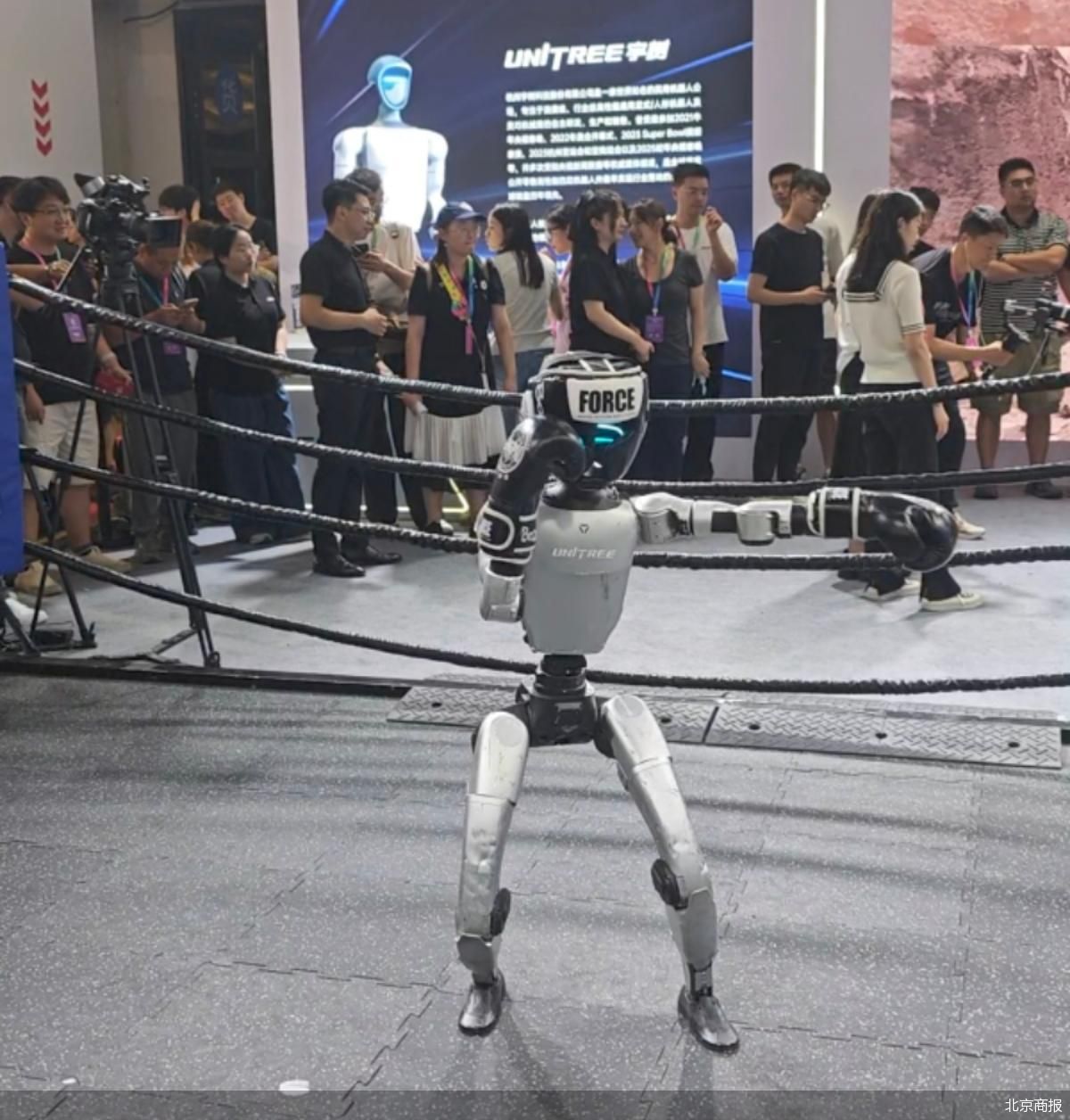
Group 1: Industry Overview - The Shanghai 2025 World Artificial Intelligence Conference (WAIC) showcased over 150 humanoid robots, marking the largest display of its kind, highlighting China's leadership in AI applications [1] - A Morgan Stanley report indicates that China holds a dominant position in the AI robotics sector, with the gap between the US and China widening [1] Group 2: Company Developments - Yushu Technology launched its new bipedal humanoid robot R1 at a starting price of 39,900 yuan, and showcased combat robots at WAIC, indicating a focus on practical applications [2] - Fourier, a smart robotics company, presented a medical companion robot designed for emotional interaction, showcasing advancements in healthcare robotics [3] - Star Motion Era demonstrated a robot capable of complex movements and has received orders from top global tech companies, indicating strong international demand [3] Group 3: Market Trends - Chinese humanoid robot companies are increasingly focusing on overseas market needs, which will enhance product modularity and patent strategies [4] - Major Chinese tech firms presented their latest AI research at WAIC, emphasizing the resilience and growth of China's AI industry despite US sanctions [4] Group 4: Technological Innovations - XREAL showcased its AI-powered smart glasses, which integrate AR and AI technologies, enhancing user experience with features like 3D visuals and real-time translation [5][6] - Alibaba introduced its Quark AI glasses, which address common issues in existing products, aiming to penetrate the consumer market effectively [6] Group 5: Competitive Landscape - Experts assert that China has surpassed the US in humanoid robot "physical" control capabilities, reflecting a shift in competitive dynamics in the robotics sector [8] - The manufacturing and data advantages of Chinese companies in humanoid robotics are highlighted as key factors in their competitive edge over US firms [9] Group 6: Future Prospects - Chinese humanoid robot manufacturers plan to extend their supply chains to ASEAN countries, aiming for international collaboration in the robotics industry [10]