可持续材料

Search documents
FINE2026 轻量化功能化与可持续材料展,火热招展中!6月10-12日 上海
DT新材料· 2026-03-22 16:04
Core Viewpoint - The FINE 2026 exhibition will focus on lightweight, functional, and sustainable materials, showcasing their applications in various industries such as aerospace, automotive, and robotics, while promoting technological innovation and sustainable development [1][3]. Exhibition Overview - The FINE 2026 exhibition will take place from June 10-12, 2026, at the Shanghai New International Expo Center, featuring a special section on lightweight, functional, and sustainable materials [1]. - The exhibition aims to create a comprehensive platform for showcasing cutting-edge products and latest achievements in materials, driven by end-user application demands [1]. Key Themes - The exhibition will center around three core themes: lightweight, functional, and sustainable materials, with a focus on their current applications and development trends in industries such as automotive, aerospace, low-altitude economy, electronics, and humanoid robotics [3]. Lightweight Materials - Categories of lightweight materials include: 1. Fiber and composite materials: carbon fiber, glass fiber, aramid, and various resin-based composites [4]. 2. Engineering plastics and elastomers: including polyether ether ketone, polyimide, and nylon [4]. 3. Foamed materials: such as foamed polyolefins and elastomers [4]. 4. Metal materials: magnesium alloys, aluminum alloys, and titanium alloys [4]. 5. 3D printing materials [4]. Functional Materials - Categories of functional materials include: 1. Optoelectronic materials: including liquid crystal polymers and quantum dots [4]. 2. Thermal protection materials: such as aerogels and high-temperature ceramics [4]. 3. Thermal conductive materials: including diamond and silicon carbide composites [4]. 4. Conductive materials: carbon-based materials and conductive polymers [4]. 5. Electromagnetic and dielectric materials: including polytetrafluoroethylene and conductive coatings [4]. 6. Other functional materials: phase change materials and smart materials [4]. Sustainable Materials - Categories of sustainable materials include: 1. Recycled materials: post-consumer recycled (PCR) and chemically recycled materials [5]. 2. Carbon dioxide-based polyols [6]. Industry Forums - The exhibition will host over 30 specialized forums focusing on future development directions, inviting industry experts to share insights on technology innovation, industry trends, and investment strategies [2][11]. - Notable forums include: 1. Humanoid Robotics Industry Innovation Conference [12]. 2. Commercial Aviation Industry Chain Forum [12]. 3. Lightweight and Structural Design Forum for Civil Aircraft [12]. 4. New Energy Vehicle Battery and Body Forum [12]. Expected Participation - The exhibition anticipates participation from over 100,000 attendees, including industry end-users, investors, and various enterprises across sectors such as robotics, drones, smart vehicles, AI consumer electronics, and data centers [13][15]. Booth Pricing - Standard booth pricing is set at CNY 16,800 (approximately USD 3,400) for a 9 m² space, while indoor space starts at CNY 1,580 (approximately USD 320) per square meter [19].

中资在新加坡固定资产投资激增8倍 首次超过美国|出海·投资
Sou Hu Cai Jing· 2026-02-11 11:35
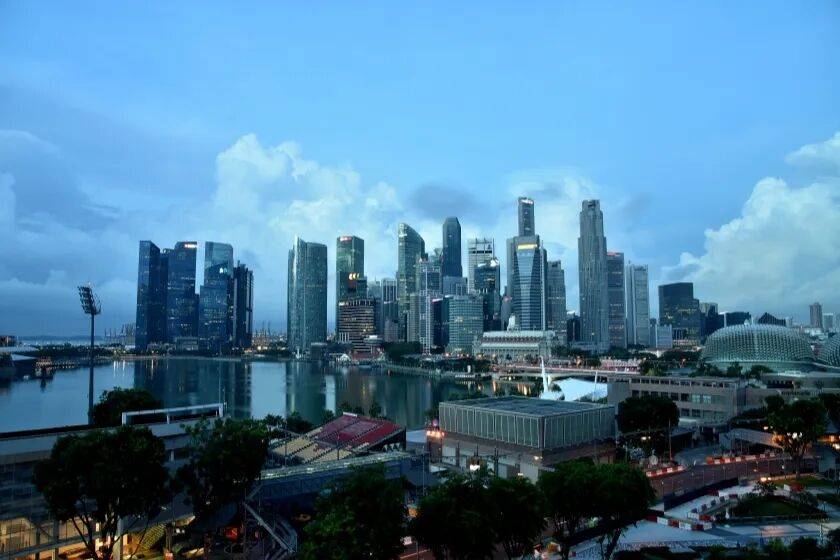
Group 1 - Chinese enterprises are accelerating their overseas expansion due to intense domestic competition and a complex international economic environment, with Singapore emerging as a key destination due to its stable institutional environment and open business climate [2] - In 2025, Chinese enterprises' fixed asset investment in Singapore is projected to reach 29.3 billion SGD, an approximately eightfold increase from 3.4 billion SGD in 2024 [2] - Singapore is expected to attract a total of 142 billion SGD in fixed asset investment in 2025, representing a year-on-year growth of 5.2%, with the share from Chinese enterprises rising from 2.5% in 2024 to 20.6%, surpassing the United States' 17.3% [2] Group 2 - The high-end manufacturing sector is the primary area for foreign investment, with manufacturing projects accounting for 85% of the total fixed asset investment in 2025, approximately 121 billion SGD [3] - Semiconductor manufacturers are actively building and expanding facilities to meet the strong global demand for AI chips, servers, and related products [3] - Biopharmaceutical companies are focused on enhancing the production capacity of high-value biopharmaceutical and medical technology products, while chemical companies are increasing investments in specialty chemicals and sustainable materials to support rapid growth in Southeast Asia [3]
阿科玛:以更贴近市场的方式推进创新
Zhong Guo Hua Gong Bao· 2026-01-23 03:36
Core Insights - Arkema Group is approaching its 20th anniversary of listing in 2026, with the Chinese market playing a crucial role in its growth and innovation strategy [1] Group 1: Growth through Differentiated Solutions - Arkema believes that the Chinese market will continue to demand high-performance and sustainable materials amid industrial restructuring and transformation [2] - The attractiveness of the Chinese market lies in its comprehensive capacity for special materials innovation and application, enabling efficient conversion from R&D to large-scale application [2] - The complete and responsive industrial chain in China allows for closer technical exchanges and application development with local customers [2] Group 2: Promoting Material Solutions in Emerging Applications - Arkema aims to collaborate with industry partners to implement material solutions in emerging applications, supporting industrial upgrades and sustainable development [3] - The "One Arkema" strategy focuses on cross-division, cross-functional, and cross-regional collaboration to enhance customer intimacy and cooperation [3] - Arkema plans to increase investment in battery-related fields, leveraging its expertise in special materials to drive the development of next-generation batteries [3] Group 3: Strengthening Local Service Capabilities - In 2026, Arkema will enhance its local service capabilities in China to improve long-term competitiveness [4] - The company will continue to invest in its largest R&D center in Asia, located in Changshu, particularly in battery laboratories to meet evolving energy density, safety, charging speed, and sustainability requirements [4] - Arkema's climate goals align with China's dual carbon targets, emphasizing the need for collaborative efforts across the entire value chain to achieve net-zero carbon by 2050 [4] Group 4: Corporate Social Responsibility Initiatives - Arkema's long-term corporate social responsibility project, "Green Innovation Classroom," will celebrate its 10th anniversary in 2026, having reached over twenty schools in six provinces [5] - The project focuses on fostering sustainable development awareness among youth and supporting their overall growth [5] - Arkema aims to continue such initiatives to bridge the gap between industry, society, and the public, creating broader social value for sustainable development [5]
2026年新材料十大趋势
材料汇· 2025-12-02 14:49
Group 1 - The article highlights that the materials science sector is driving unprecedented industrial transformation and innovation, with a focus on sustainability, intelligent materials, and advanced manufacturing techniques by 2026 [2][31] - It outlines ten core trends in the materials field, including sustainable materials, smart materials, nanotechnology, lightweight materials, materials informatics, advanced composites, two-dimensional materials, surface engineering, and digitalization in materials management [2][31] Group 2 - Sustainable materials are increasingly adopted across various industries to reduce carbon footprints and waste, with the global sustainable materials market projected to grow from approximately $333.31 billion in 2024 to about $1,073.73 billion by 2034, reflecting a compound annual growth rate (CAGR) of 12.41% [4] - Smart materials are being developed with programmable characteristics that respond to external stimuli, with the piezoelectric smart materials market expected to grow at a CAGR of 15.63%, reaching $39.49 billion from 2024 to 2028 [6][7] - The global nanomaterials market is estimated at $22.6 billion in 2024, with a projected CAGR of 14.3%, reaching $98.3 billion by 2035 [9][10] - The additive manufacturing market is expected to reach $6.92 billion by 2029, driven by innovations in 3D printing technologies [14] - The lightweight materials market is projected to reach $276.4 billion by 2030, with a CAGR of 8.3% from 2023 to 2030 [17] - The materials informatics market is expected to grow from $154.78 million in 2024 to $705.21 million by 2034, with a CAGR of 16.4% [19][21] - The advanced composites market is projected to reach $168.6 billion by 2027, with a CAGR of 8.2% from 2022 to 2027 [23] - The graphene market is expected to grow from $26.89 million in 2023 to $270 million by 2030, with a CAGR of 38.9% [25] - The surface engineering market is projected to grow from $25.46 billion in 2023 to $46.22 billion by 2030, with a CAGR of 8.89% [27] - The digitalization of materials management is being driven by Industry 4.0, enhancing the efficiency and connectivity of material handling and processing [29]