
基因检测

Search documents
医生追问“家谱”解密“肾炎魔咒”
Xin Lang Cai Jing· 2026-02-27 07:05
Core Insights - The article discusses a family's struggle with a hereditary kidney disease known as Alport syndrome, highlighting the importance of genetic testing and family history in understanding and managing hereditary conditions [2][3][4]. Group 1: Family Case Study - A family has been affected by a hereditary kidney disease for three generations, with multiple members suffering from kidney-related issues, prompting concerns about genetic transmission to future generations [2][3]. - The family tree analysis revealed a clear pattern of X-linked dominant inheritance, leading to the diagnosis of Alport syndrome, which is characterized by kidney dysfunction, hearing loss, and eye abnormalities [3][4]. Group 2: Genetic Testing and Diagnosis - Following a series of tests, including kidney biopsy and genetic testing, the family member was confirmed to have a mutation in the COL4A5 gene, which is responsible for Alport syndrome [3][4]. - The genetic inheritance pattern indicates that male offspring will not inherit the disease, while female offspring have a 50% chance of being carriers and potentially developing kidney issues [3]. Group 3: Rare Kidney Diseases Overview - Alport syndrome is one of the three most common hereditary kidney diseases, with the other two being Fabry disease and Gitelman syndrome, each with distinct genetic causes and clinical manifestations [5][6]. - These diseases often go unrecognized due to their subtle early symptoms, leading to delayed diagnosis and treatment [5][6]. Group 4: Prevention and Management Strategies - The article emphasizes the importance of early screening and genetic counseling to identify at-risk individuals and manage hereditary kidney diseases effectively [7]. - Recommended strategies include creating family health trees, regular health check-ups, and advanced genetic testing to prevent the transmission of genetic disorders to future generations [7].


Natera (NTRA) Tops Q4 Earnings and Revenue Estimates
ZACKS· 2026-02-27 00:46
Core Viewpoint - Natera reported quarterly earnings of $0.35 per share, significantly beating the Zacks Consensus Estimate of a loss of $0.46 per share, marking an earnings surprise of +175.43% [1] Financial Performance - The company achieved revenues of $665.5 million for the quarter ended December 2025, surpassing the Zacks Consensus Estimate by 0.76% and showing a year-over-year increase from $476.06 million [2] - Over the last four quarters, Natera has exceeded consensus EPS estimates two times and topped revenue estimates four times [2] Stock Performance and Outlook - Natera shares have declined approximately 7.5% since the beginning of the year, contrasting with the S&P 500's gain of 1.5% [3] - The company's earnings outlook is crucial for assessing future stock performance, with current consensus EPS estimates at -$0.57 for the upcoming quarter and -$1.74 for the current fiscal year [7] Industry Context - The Medical Services industry, to which Natera belongs, is currently ranked in the bottom 39% of over 250 Zacks industries, indicating potential challenges for stock performance [8] - Empirical research suggests a strong correlation between near-term stock movements and earnings estimate revisions, which could impact Natera's stock trajectory [5]


【特稿】短短2个月6项合作:顶尖医院从采购方变身创新者
思宇MedTech· 2026-02-17 03:53
Core Insights - Mayo Clinic has announced six cross-disciplinary collaborations, indicating a shift from being mere technology consumers to becoming organizers of innovation within the healthcare ecosystem [2][4][19] - The collaborations span various technologies, including wearable oxygen monitoring, AI imaging protocols, digital outpatient services, and gene testing, showcasing a significant expansion beyond traditional hospital procurement [2][4] Group 1: Demand Structure Transformation - The demand logic in hospitals is undergoing a three-tier leap, moving from single-point solutions to system capability building [4][5] - The first leap involves a shift in focus from "single-use effectiveness" to "long-term data value," emphasizing the importance of data systems in future medical devices [6][10] - The second leap sees hospitals transitioning from end-users to co-creation partners, indicating that those who define the technology path will likely shape the future market [8][12] - The third leap reflects a change from short-term procurement to long-term ecological collaboration, with hospitals now evaluating partnerships based on ecosystem development rather than one-time transactions [12][13] Group 2: Mayo Clinic's Strategic Layout - The Mayo Clinic Platform is not just a technology platform but a foundational infrastructure for innovation, allowing hospitals to create an innovative environment and select partners to define technology paths [14][15] - The Center for Digital Health at Mayo Clinic plays a strategic role, emphasizing that digital capabilities are core competitive advantages rather than mere support tools [15][18] Group 3: Global Trends and Driving Factors - A similar transformation is occurring globally, with hospitals shifting from passive technology acceptance to active innovation organization [19][20] - Four key driving factors include: 1. Medical data becoming a strategic asset, no longer viewed as a byproduct but as a resource for innovation [20] 2. AI entering substantive clinical applications, requiring continuous training and validation in real-world settings [21] 3. Increased demand for real-world evidence, positioning hospitals as critical nodes for evidence generation [21] 4. Dual pressures of quality and efficiency, making technological innovation a necessity rather than an option [21] Group 4: Systemic Impact on Medical Device Companies - The logic of product definition is evolving, requiring consideration of data dimensions, system integration capabilities, and collaborative support for multi-center research [22] - Market organization capabilities must upgrade, shifting from promotional execution to strategic dialogue and long-term partnerships [23] - The collaboration model is fundamentally changing from supplier relationships to innovation partnerships, emphasizing value co-creation over product supply [24] Group 5: Strategic Opportunities and Competitive Positioning - The current period is a critical window for companies to adapt to the evolving demand structure, as hospitals seek long-term partners that fit their innovation ecosystems [25][28] - Three key capabilities will determine future competitive positioning: data value creation, ecosystem integration, and collaborative co-creation [27][28]

技术+人才+生态赋能3000亿市场,大湾区扛起宠业医疗变革大旗
Nan Fang Nong Cun Bao· 2026-01-27 06:03
Core Insights - The pet medical industry is undergoing a transformation driven by technological innovation, professional talent support, and a cohesive industrial ecosystem [2][4][6] Group 1: Technological Innovation - The aging of pets and increasing health awareness among pet owners are leading to a rise in complex diseases such as malignant tumors and neurological disorders [12][13][15] - Traditional diagnostic methods face limitations, prompting a shift towards molecular diagnostic technologies, which enable precise screening for genetic diseases and targeted gene mutation detection for tumors [20][21] - Advanced imaging techniques, including high-frequency ultrasound, high-field MRI, and AI algorithms, achieve over 95% accuracy in identifying small lesions, facilitating a transition from experience-based to precision medicine [23][24][26] Group 2: Talent Development - There is a significant shortage of veterinary professionals, with a national gap of 300,000 veterinarians and a lack of specialized talent in areas such as ophthalmology and oncology [29][33] - The current educational system produces only 30% of graduates entering the pet clinical field, with traditional curricula lacking sufficient focus on pet diagnostics [35][36] - Proposed solutions include a three-dimensional model for team building, management, and training, emphasizing the need for practical, hands-on training and collaboration among team members [41][44][46] Group 3: Ecosystem Upgrade - The pet consumption market in urban China is projected to reach 300.2 billion yuan by 2024, with the Greater Bay Area accounting for 10% of national pet medical institutions, highlighting its potential as an investment hub [49][50] - Trends in the pet economy include high-end consumption, technological integration, and cross-industry collaborations, with significant growth expected in high-end food and specialized medical services [54][55] - The Greater Bay Area is positioned as a core engine for the pet medical industry, with a focus on specialized medical institutions and high-end veterinary hospitals as key investment areas [57][62]

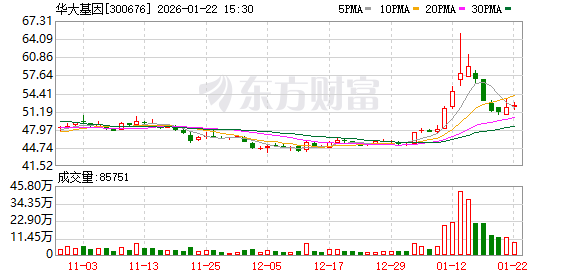
华大基因:公司的CEO为赵立见先生
Zheng Quan Ri Bao· 2026-01-22 08:37
Core Viewpoint - BGI Genomics' CEO is Zhao Lijian, and the company focuses on providing research services and precision medical testing solutions through multi-omics big data technologies, without involvement in probiotic production [2]. Group 1 - BGI Genomics' main business includes gene testing, mass spectrometry testing, and bioinformatics analysis [2]. - The company serves research institutions, enterprises, medical institutions, and public health organizations [2]. - Currently, BGI Genomics has not engaged in the production and manufacturing of probiotics [2].

华大基因:公司目前暂未涉及益生菌的生产制造
Zheng Quan Ri Bao Wang· 2025-12-24 11:44
Core Viewpoint - BGI Genomics (300676) focuses on providing research services and precision medical testing solutions through multi-omics big data technologies, and currently does not engage in the production of probiotics [1] Group 1 - The main business of BGI Genomics includes gene testing, mass spectrometry testing, and bioinformatics analysis [1] - The company serves research institutions, enterprises, medical institutions, and public health organizations [1] - BGI Genomics has not yet ventured into the production and manufacturing of probiotics [1]
华大基因(300676.SZ):目前暂未涉及益生菌的生产制造
Ge Long Hui· 2025-12-24 09:04
Core Viewpoint - BGI Genomics (300676.SZ) focuses on providing research services and comprehensive solutions for precision medicine through multi-omics big data technologies, including gene testing, mass spectrometry, and bioinformatics analysis, and is currently not involved in the production of probiotics [1] Group 1 - The main business of BGI Genomics includes gene testing, mass spectrometry testing, and bioinformatics analysis [1] - The company serves research institutions, enterprises, medical institutions, and public health organizations [1] - BGI Genomics has not yet ventured into the production and manufacturing of probiotics [1]
华大基因(300676.SZ):暂未参与脑机接口方面的研发
Ge Long Hui· 2025-12-24 09:04
Core Viewpoint - The company, BGI Genomics (300676.SZ), focuses on providing research services and precision medical testing solutions through multi-omics big data technologies, including gene testing, mass spectrometry, and bioinformatics analysis. The company has not engaged in the development of brain-computer interface technology [1]. Group 1 - The main business of the company involves offering comprehensive solutions for research and precision medicine testing [1]. - The company serves various clients, including research institutions, enterprises, medical organizations, and public health organizations [1]. - The company has not participated in the research and development of brain-computer interface technology [1].
2025年AI精准医疗市场专题分析
易观分析· 2025-12-16 07:47
Investment Rating - The report rates the AI precision medicine industry as having a positive investment outlook, with significant growth potential driven by technological advancements and policy support [10][39]. Core Insights - AI precision medicine is transforming healthcare from experience-based to data-driven approaches, emphasizing personalized treatment through genetic testing and big data [9][10]. - The market for AI precision medicine is expected to grow rapidly, with projections indicating a market size of 351 billion RMB by 2024 and 760 billion RMB by 2028, reflecting a compound annual growth rate (CAGR) of 21.49% [39]. - The integration of AI technologies into healthcare is enhancing diagnostic accuracy, treatment efficiency, and patient experience, addressing the challenges of uneven resource distribution in the healthcare system [17][40]. Summary by Sections Evolution of AI Precision Medicine - The evolution of AI precision medicine has progressed from research achievements to clinical applications, with significant advancements in technology and policy frameworks supporting this transition [8][9]. Policy Support - Policies are driving the development of a comprehensive and accessible precision medicine framework, enhancing regulatory systems and approval processes to facilitate the integration of AI in healthcare [10][11]. Market Trends - The AI precision medicine market is expanding rapidly, with a projected CAGR of 19.8% from 2022 to 2024 and 21.49% from 2024 to 2028, indicating strong growth potential [37][39]. Technological Advancements - AI technologies are significantly improving diagnostic capabilities, with advancements in multi-modal data integration and real-time health monitoring enhancing patient care and treatment outcomes [26][71]. Application Scenarios - AI is being applied in various healthcare settings, including personalized treatment plans, early disease detection, and long-term health management, thereby transforming traditional healthcare models [43][40]. Industry Collaboration - The report highlights the importance of collaboration across the healthcare ecosystem, leveraging data and AI to create a more integrated and efficient healthcare delivery system [78][79].
商业体检:莫让乱象损害信任
Xin Hua Wang· 2025-11-03 00:29
Core Insights - The article highlights the growing demand for health check-ups in China, driven by increased health awareness among residents, but also points out significant issues within the commercial health check industry, including induced consumption, over-testing, misdiagnosis, and inadequate after-sales service [1] Group 1: Induced Consumption and Over-Testing - Some commercial health check institutions create health anxiety and mislead consumers into adding unnecessary tests, leading to inflated costs [2][3] - Consumers report being pressured into additional tests during appointments, often resulting in significant increases in total expenses, sometimes exceeding 3000 yuan for tests that were not initially needed [2] - High-priced tests, such as genetic screenings, are promoted despite their limited value for the general population, leading to unnecessary financial burdens [4] Group 2: Misdiagnosis and Trust Issues - There are numerous complaints regarding misdiagnosis and missed diagnoses in commercial health check institutions, which erodes consumer trust [5][6] - Specific cases illustrate the severity of misdiagnosis, such as a missed kidney cyst that could have had dire consequences if not caught later [5] - Legal cases have emerged where institutions were held accountable for diagnostic errors, indicating a potential for increased scrutiny and liability in the industry [5][6] Group 3: Quality of Service and Regulatory Compliance - Many commercial health check institutions lack qualified medical personnel and fail to meet regulatory standards, leading to subpar service and report interpretation [7][8] - The interpretation of health check reports is often superficial, failing to provide meaningful insights into individual health conditions, which diminishes the overall effectiveness of the service [8] - Experts suggest that commercial health check institutions should adopt stricter operational standards and enhance their professional capabilities to improve accuracy and reduce risks of misdiagnosis [9][10] Group 4: Recommendations for Improvement - Experts recommend that commercial health check institutions enhance their service quality by adopting best practices from public hospitals, including rigorous staff qualifications and a structured review process for test results [11] - There is a call for improved regulatory frameworks to ensure compliance and protect consumer rights, including clearer guidelines on the responsibilities of health check institutions [10][11] - Establishing a robust quality assurance system that integrates technology, personnel, processes, and management is essential for minimizing diagnostic errors and enhancing service reliability [10]