外卖优惠券

Search documents
美团饿了么优惠券推广的全维度实战指南
Sou Hu Cai Jing· 2026-01-27 22:46
Core Insights - Coupons have evolved from simple discount tools to essential bridges connecting brands and consumers in a highly digitalized consumption environment [3] - The effectiveness of coupons is rooted in their ability to tap into consumer psychology, particularly the concept of loss aversion, which drives urgency in usage [3] - The campus market is a key battleground for coupon promotion due to the concentrated student population and their predictable consumption patterns [4] Group 1: Coupon Promotion Strategies - Effective coupon design balances practicality and allure, with ideal thresholds like "spend 20 get 8 off" encouraging higher spending [4] - The back-to-school season is a prime opportunity for coupon promotion, with students making up over 65% of new users during this time [5] - Online and offline channels for coupon distribution should be optimized, utilizing mechanisms like QR codes for seamless user engagement [6] Group 2: Innovative Approaches - Platforms are creating "coupon+" ecosystems that integrate social elements, such as group discounts, to lower customer acquisition costs [6] - The ultimate goal of coupon promotion is to convert traffic into retained customers, moving beyond traditional red envelope subsidies to a growth system that resonates with users [6] - Brands should maintain a consistent visual identity across all platforms to enhance user recognition and loyalty [7] Group 3: Data-Driven Optimization - Success in coupon promotion relies on ongoing data analysis, including metrics like redemption rates and user feedback, to refine strategies [7] - The future of coupon promotion will focus on integrating coupons with broader campus life services, enhancing user experience and engagement [8] - Innovative features, such as embedding study room availability in coupon details, can significantly increase redemption rates [8]



《小小的优惠券,大大的经济账?》
Sou Hu Cai Jing· 2025-08-06 04:52
Core Viewpoint - Since 2025, platforms like Meituan, Taobao Flash Sale, and JD have initiated a "subsidy war," leveraging a 1 yuan coupon to stimulate nearly 7 yuan in consumption, showcasing a significant market impact [4] Group 1: Subsidy Impact - Research indicates that every 1 yuan flash sale coupon can drive 1.65 yuan in takeaway consumption and generate an additional 6.76 yuan in cross-scenario spending, significantly outperforming international coupon experiences [4] - This "small subsidy" effect has not only avoided cannibalizing offline dining but has also led to increased revenue for small and medium-sized merchants, with the smallest businesses benefiting the most [4] Group 2: Market Dynamics - The takeaway flash sale has even inspired innovative consumption scenarios such as "ordering air conditioners and buying furniture," further integrating online and offline experiences, contributing to a mainstream digital consumption ecosystem [4] - Despite intense competition among platforms and regulatory interventions emphasizing rational competition, the overall trend remains positive [4] Group 3: Economic Contribution - In the digital economy era, small discount coupons are stimulating significant market vitality, injecting strong momentum into China's consumption recovery [4]
被约谈后 外卖平台仍在互相较量
Zhong Guo Jing Ying Bao· 2025-07-20 14:24
Core Viewpoint - The recent regulatory talks with major food delivery platforms have not significantly reduced promotional activities, as evidenced by continued high order volumes and sales for many merchants despite the discussions aimed at curbing excessive competition [1][9]. Group 1: Market Dynamics - On July 18, the State Administration for Market Regulation held talks with major platforms like Ele.me, Meituan, and JD.com, urging them to standardize promotional behaviors and engage in rational competition [1][7]. - Merchants reported that sales on July 19 were comparable to the previous week, indicating that the promotional activities were still in effect despite regulatory pressure [1][6]. - The platforms continued to issue significant discounts and coupons, with Meituan offering various food and beverage vouchers, and other platforms like Taobao and JD.com also providing substantial discounts [2][3]. Group 2: Competitive Landscape - The competition among food delivery platforms remains intense, with Ele.me gaining a larger market share at the expense of Meituan, while JD.com is also increasing its presence [10][11]. - Merchants noted that the revenue from Ele.me has surpassed that of Meituan, with Ele.me accounting for 49.7% of their delivery income, while Meituan's share has dropped to 36.9% [10]. - The ongoing promotional strategies reflect a "subsidy inertia," where platforms continue to offer discounts to retain users and maintain order volumes, despite regulatory calls to reduce aggressive pricing [9]. Group 3: Regulatory Impact - The regulatory body emphasized the need for platforms to avoid predatory pricing and adhere to laws governing e-commerce and fair competition [7][8]. - Legal experts highlighted that if platforms continue to offer products below cost to eliminate competition, it could be classified as unfair competition [8]. - The regulatory discussions have not yet led to a clear framework for enforcement, allowing platforms to navigate around the rules through combined discounts [9].

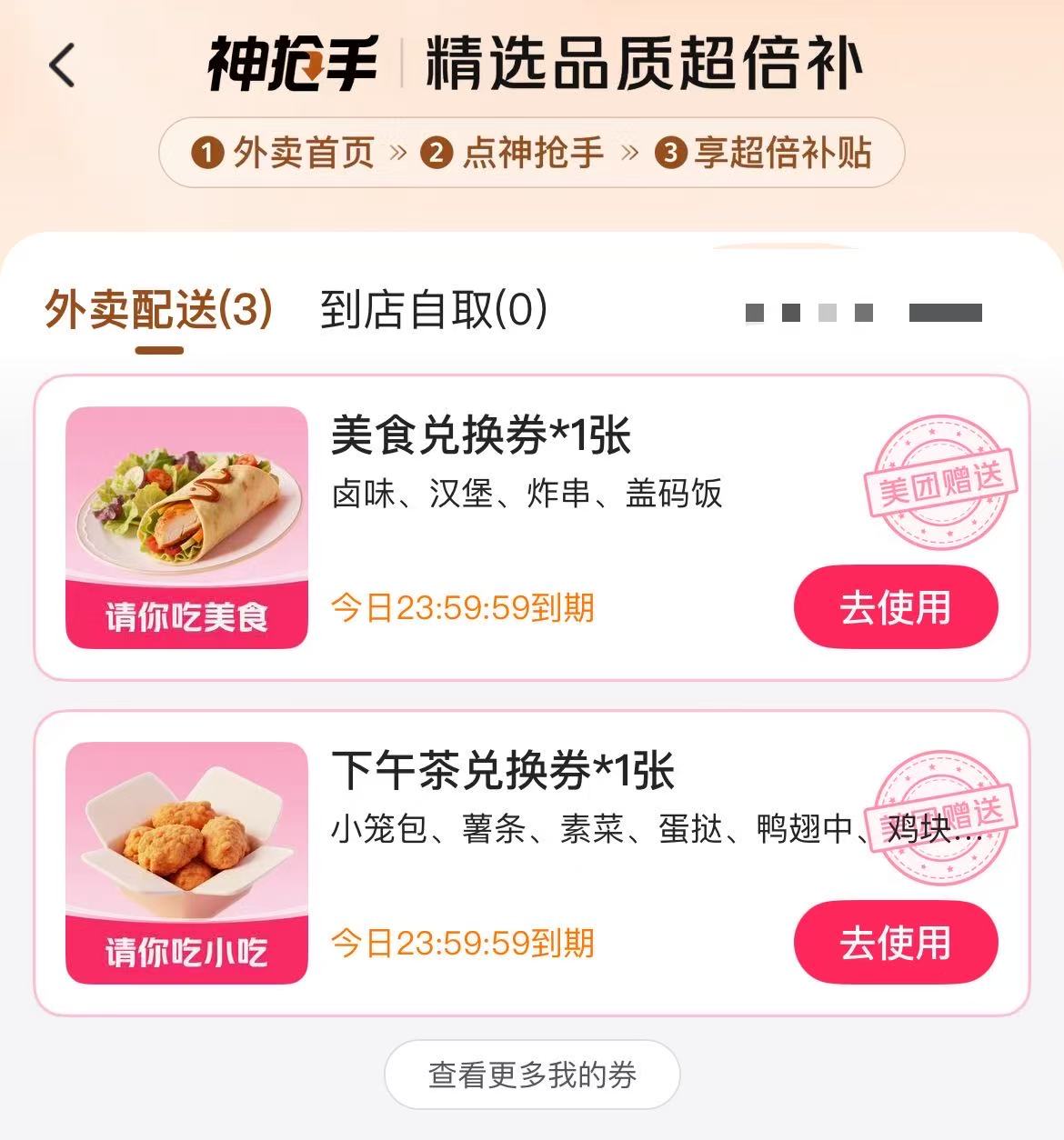
【活动】大学生看过来!这里有7张5元外卖优惠券等待查收
中国建设银行· 2025-03-13 07:22
Core Viewpoint - The article discusses the diverse identities and experiences of university students, highlighting their engagement with various activities and interests, including food exploration and digital trends [4]. Group 1 - University students are characterized by a wide range of personas, reflecting their varied interests and lifestyles [4]. - The article emphasizes the trend of students becoming "store explorers" and food bloggers, showcasing their active participation in social media and local food culture [5]. - There is a mention of the popularity of discount and promotional strategies among students, indicating a savvy approach to spending [11].