
外卖券

Search documents
“双11”本地之战|拉餐饮外卖入局 “双11”从“囤货”转向“即享”
Bei Jing Shang Bao· 2025-11-09 12:03
Core Insights - This year's "Double 11" has shifted from traditional e-commerce competition to a focus on local life and instant retail, with players like Taobao, Meituan, and JD engaging in a "minute-level" delivery race [1][12] Group 1: Participation of Food Delivery - Food delivery services, previously sidelined, have become key players in this year's "Double 11," with brands like Xiaobai and Papa John's launching special promotions [5][7] - Taobao's flash sale feature has attracted over 1 billion new users during the "Double 11" period, with 19,958 restaurant brands seeing over 100% growth in transaction volume compared to before the event [5][12] Group 2: Instant Retail Competition - The competition has evolved to focus on "minute-level" delivery rather than logistics scale, with Meituan reporting significant sales increases across various categories, including a 300% increase in liquor sales [11][12] - Meituan has integrated nearly one million offline stores into its instant delivery network, enhancing its service capabilities [11][12] Group 3: Strategic Shifts in E-commerce - Platforms are adapting their strategies to enhance customer engagement and increase transaction values, with a focus on local life services and instant retail as growth areas [13] - The competition is driving a need for platforms to upgrade their supply chains, warehousing, and delivery systems to meet the demand for rapid delivery [13]



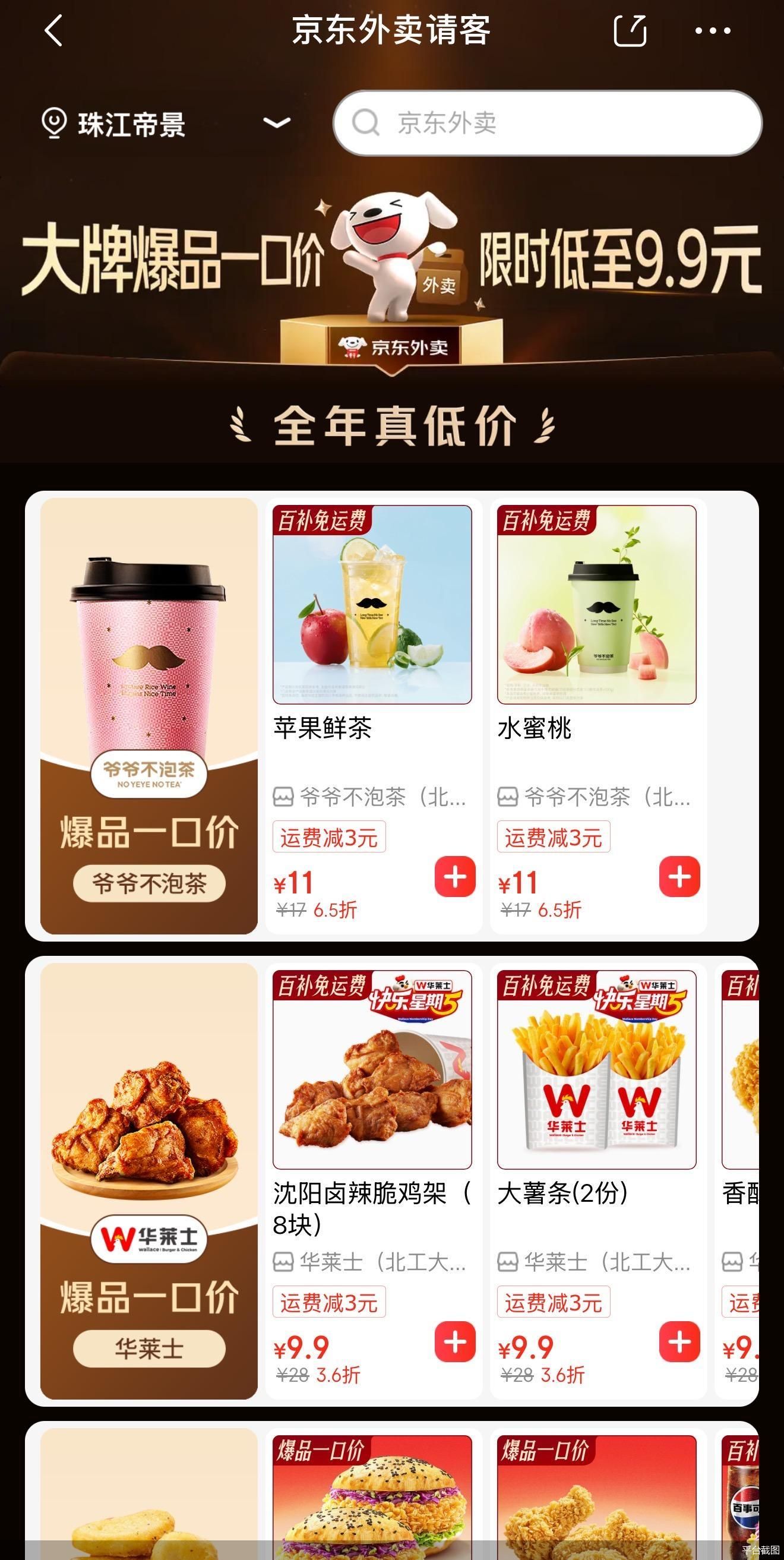
【活动】至高领18.8元外卖券,叠加积分更优惠
中国建设银行· 2025-08-07 08:20
Core Viewpoint - The article promotes various discount coupons and offers related to food delivery services, specifically targeting users of mobile banking and credit cards from China Construction Bank. Group 1: Promotional Offers - Users can receive WeChat discounts ranging from 10 to 100 yuan upon registering for mobile banking [1] - The promotional period for certain offers is from July 1, 2025, to August 31, 2025, with discounts starting as low as 3 yuan [5] - Weekly coupons for food delivery services like Ele.me and Meituan are available, with specific minimum order amounts required to use the discounts [6][10][11] Group 2: Coupon Details - Ele.me coupons can be used for orders over 38 yuan, and they can be claimed weekly [6] - Meituan offers include discounts for orders over 25 yuan, with specific validity periods for each coupon [10][11][12] - Users can enjoy up to 90% off on certain items when using points for Meituan orders [13] Group 3: Points and Payment - Users can redeem points for discounts on food delivery, with a maximum single transaction limit of 100 yuan and a monthly cap of 500 yuan for Meituan [14] - For Ele.me, users can redeem points for up to 50% off, with a single transaction limit of 5 yuan and the same monthly cap of 500 yuan [14] - The article emphasizes the benefits of using Dragon Pay and Construction Bank credit cards for additional discounts and points accumulation [17][19]

【优惠】10元外卖券天天领,一起好好吃饭~
中国建设银行· 2025-07-24 06:58
Core Viewpoint - The article discusses the recent trends and developments in the industry, highlighting key performance indicators and potential growth areas for companies involved [1] Group 1: Industry Trends - The industry has seen a significant increase in demand, with a year-over-year growth rate of 15% [1] - Emerging technologies are driving innovation, leading to a projected market size of $500 billion by 2025 [1] - Regulatory changes are impacting operational strategies, necessitating adjustments in compliance measures [1] Group 2: Company Performance - Company A reported a revenue increase of 20% in the last quarter, reaching $200 million [1] - Company B's market share has expanded by 5%, now holding 30% of the total market [1] - Company C has invested $50 million in research and development to enhance product offerings [1]

外卖内卷,私域深耕:第三方即配或成餐饮商家“博弈牌”
Huan Qiu Wang· 2025-07-21 11:31
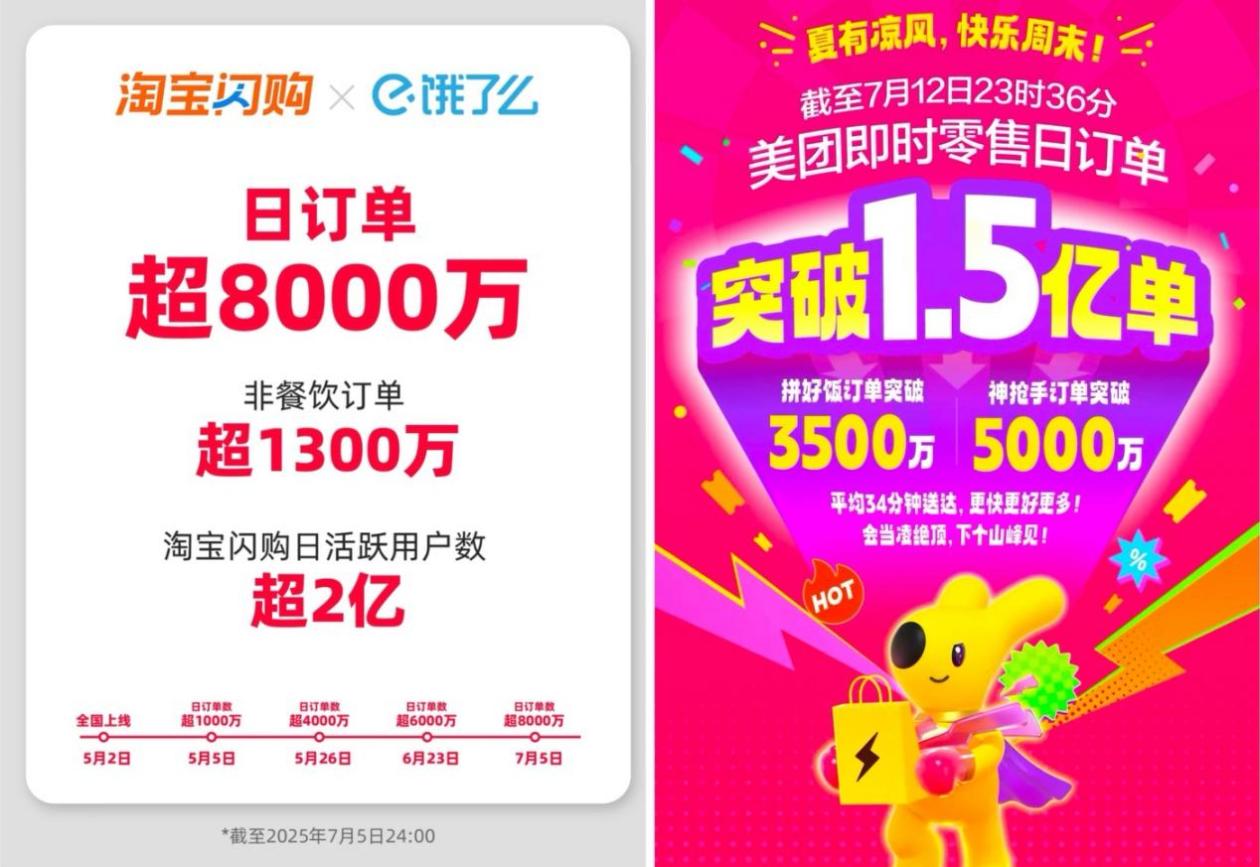
Core Viewpoint - The recent discussions by the Market Supervision Administration with major platforms like Ele.me, Meituan, and JD.com signal a regulatory intervention aimed at curbing aggressive promotional behaviors in the food delivery sector, promoting a healthier ecosystem for consumers, merchants, delivery riders, and platform companies [1] Group 1: Market Dynamics - The food delivery war has intensified, with platforms offering significant discounts and promotions, leading to a surge in order volumes [2][4] - During the first weekend of July, Taobao Flash Sale recorded over 80 million daily orders, while Meituan surpassed 120 million, indicating a total daily order volume of around 200 million [2] - The order volume spike has benefited large chain restaurants, with brands like Nayuki's Tea and Tim's Coffee experiencing substantial increases in delivery orders [4] Group 2: Merchant Challenges - The influx of orders has created operational challenges for many merchants, particularly small and medium-sized businesses, leading to staff shortages and increased pressure to fulfill orders [8][9] - Merchants are facing a "losing balance" situation, where the costs associated with promotional discounts are shared between platforms and merchants, often leading to unsustainable pricing models [9][11] - The competitive environment has intensified price wars, resulting in declining average transaction values for well-known brands [9][10] Group 3: Capital Market Response - The capital markets reacted positively to the benefits brought by the food delivery war, with stocks in the new tea beverage sector seeing collective gains following the promotional weekends [8] - Notable stock movements included a 2.17% increase for Gu Ming and a 0.74% rise for Mixue Group, reflecting investor optimism in the sector [8] Group 4: Strategic Shifts for Merchants - Merchants are beginning to explore alternative strategies to reduce dependency on platforms, such as building private domains and utilizing third-party delivery services [15][19] - Successful examples include Luckin Coffee, which has effectively developed its private domain strategy, reducing reliance on external platforms and enhancing customer loyalty [19][20] - The emergence of third-party delivery platforms like SF Express has provided merchants with flexible and cost-effective delivery solutions, allowing them to regain some control over pricing and operations [19][22]

财经观察丨订单需要“火”,而不是放在“火上烤”
Xin Hua Cai Jing· 2025-07-16 12:23
Core Viewpoint - The recent initiative by a local restaurant association highlights the negative impact of extreme subsidies and unfair competition in the food delivery market, particularly from platforms like Meituan and Taobao Shanguo, which have led to a chaotic market order and severe imbalance in the industry [1][2][3] Group 1: Impact on Restaurants - Many restaurants are forced to bear the costs of platform subsidies, leading to situations where they receive negative amounts after fees are deducted from orders [1] - The vicious cycle of "no flow without participation, but losses if participating" is causing significant distress for many dining establishments, particularly those reliant on dine-in customers [2][3] - Experts suggest that excessive subsidies do not lead to overall prosperity in the restaurant industry, but rather disrupt normal market order and negatively affect both delivery and dine-in services [3] Group 2: Market Dynamics and Competition - The platforms' aggressive competition is driven by a "winner-takes-all" effect, reminiscent of past internet industry battles, but the current situation in the restaurant sector may not yield the same benefits [2][3] - Regulatory intervention is deemed necessary to restore order and rational development in the industry, as the current state of extreme low pricing is harmful [3][4] Group 3: Customer Implications - Customers may initially benefit from low prices, but this could lead to a decline in quality and safety of food options as restaurants exit the market due to unsustainable practices [4] - The long-term consequences of chaotic competition could result in market shrinkage and a collapse of trust in the industry, ultimately harming consumers [4] Group 4: Call for Healthy Competition - A healthy and high-quality development of the industry requires a focus on mutual benefits rather than short-term gains, advocating for more positive competition and collaboration with the real economy [5]