外汇对冲

Search documents
直线拉升!刚刚:宣布救市!
Zhong Guo Ji Jin Bao· 2025-12-15 13:44
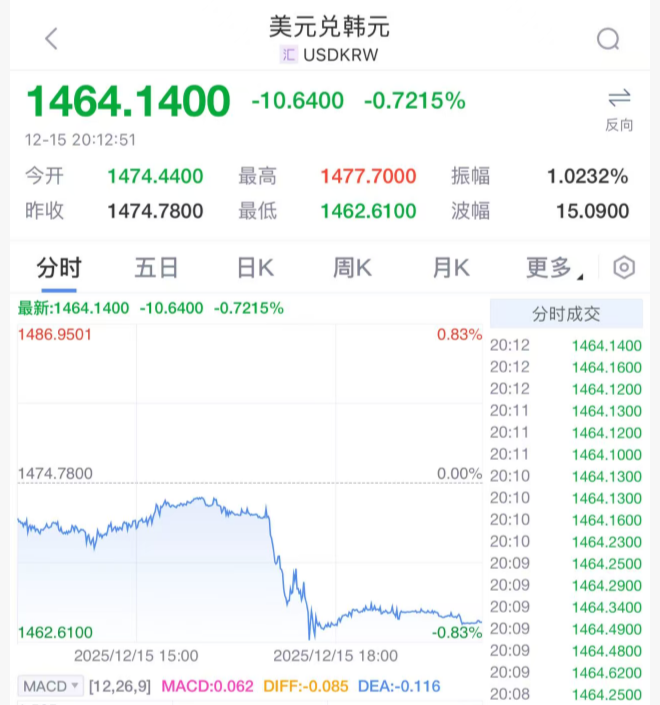
Core Viewpoint - The South Korean National Pension Service (NPS) is implementing a more flexible approach to strategic foreign exchange hedging to support the weakening Korean won, which has depreciated over 8% against the US dollar in the second half of the year [1][2]. Group 1: NPS Actions - The NPS has set a strategic hedging limit of 10% for its overseas investment portfolio [1]. - The NPS aims to adapt its hedging strategies based on market conditions to alleviate pressure on the won [1]. Group 2: Market Impact - Following the announcement, the Korean won strengthened, with a 0.9% increase against the US dollar [2]. - Market analysts suggest that the message from the NPS and the Bank of Korea (BOK) is a warning against shorting the won [4]. Group 3: Regulatory Support - The Ministry of Health and Welfare, which oversees the NPS, announced an extension of the foreign exchange swap agreement with the BOK until the end of 2026 [4]. - The swap limit has been increased from $10 billion in 2022 to $65 billion [4].

韩元加速贬值之际 韩国国民年金将根据市况灵活开展外汇对冲
Xin Lang Cai Jing· 2025-12-15 10:24
Core Viewpoint - The National Pension Service of South Korea will adopt a flexible approach to foreign exchange hedging in response to market conditions [1][5]. Group 1: Foreign Exchange Hedging Strategy - The fund's management committee has decided to implement flexible measures that allow for strategic hedging based on market conditions [1][5]. - The current hedging limit is set at 10% of overseas assets [2][6]. Group 2: Market Context - The decision is driven by a surge in domestic demand for US dollars, influenced by both the National Pension and retail investors' portfolios, amid a significant depreciation of the Korean won in the second half of the year [2][6]. - The Korean won has depreciated over 8% against the US dollar, making it the worst-performing currency in Asia during this period [3][7]. Group 3: Currency Swap Agreement - The Ministry of Health and Welfare, which oversees the National Pension, announced an extension of the foreign exchange swap agreement with the Bank of Korea for an additional year, until the end of 2026 [3][7]. - The swap limit has increased from $10 billion in 2022 to $65 billion [4][8]. - Following the announcement, the Korean won appreciated against the US dollar, with the exchange rate dropping by 1% to 1,463.65 won per dollar from around 1,472 won [4][8].
中国资产吸引力显著增强
Jing Ji Ri Bao· 2025-11-13 22:21
Group 1 - The consensus among foreign institutions is increasingly bullish on Chinese assets, with significant growth in the holdings of northbound funds, which reached a market value of 2.58 trillion yuan by the end of Q3, an increase of over 380 billion yuan year-to-date [1] - China's attractiveness to foreign capital is driven by economic resilience, policy benefits, and innovation momentum, with a shift from traditional valuation advantages to long-term themes such as technological innovation and green transformation [1][2] - The A-share market is transitioning to a structurally upward phase driven by profit growth, with foreign capital showing increased willingness to allocate funds, supported by a positive cycle of valuation advantages and capital inflows [3] Group 2 - China's economic fundamentals are stable, with key indicators showing improvement, including a GDP growth of 5.2% year-on-year in the first three quarters [2] - Accelerated industrial upgrades and breakthroughs in new productivity areas like artificial intelligence and robotics are optimizing the economic structure, while policy and institutional benefits are being rapidly released [2] - Future enhancements in the attractiveness and competitiveness of Chinese assets in global resource allocation require coordinated efforts in institutional openness, product supply, risk management, and market ecology [4]
去美元化,这一回亚洲经济体是“认真”的
凤凰网财经· 2025-06-12 12:53
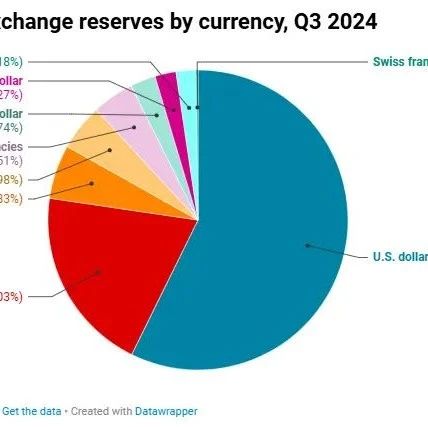
Core Viewpoint - The article discusses the rising trend of "de-dollarization" in Asia, driven by various factors including geopolitical tensions and the desire to reduce reliance on the US dollar for trade and investment [1][2]. Group 1: De-dollarization Trend - ASEAN has committed to promoting the use of local currencies in trade and investment through measures like local currency settlement and enhancing regional payment connectivity [1]. - The trend of de-dollarization is gaining momentum as individuals and businesses in ASEAN begin to convert dollar savings back to local currencies, and large investors actively hedge foreign investments [2]. - The share of the US dollar in global foreign exchange reserves has decreased from over 70% in 2000 to 57.8% in 2024, indicating a global reduction in reliance on the dollar [4]. Group 2: Market Reactions and Implications - The uncertainty surrounding US trade policies has led to a significant decline in the dollar, with the dollar index dropping over 8% since the beginning of the year, marking its worst performance in the first five months [6]. - Analysts suggest that while many countries are reducing their dependence on the dollar, replacing it as the primary reserve currency remains challenging [6][7]. - The potential implementation of punitive tax measures against countries perceived as having unfavorable tax policies could further accelerate the de-dollarization trend [6]. Group 3: Currency Hedging and Investment Strategies - Asian investors are increasingly hedging against dollar exposure, with notable increases in hedging ratios among Japanese and Taiwanese insurance companies [3]. - The trend of hedging is seen as a response to the volatility of the dollar, with investors selling dollars and buying local or other currencies, which may lead to a rise in non-dollar currencies [3]. - Despite the ongoing de-dollarization, the dollar remains dominant in global trade, with over half of global trade still settled in dollars as of April [7].