外骨骼助行器

Search documents
“浙江有礼”见证浙江文化创新品牌魅力
Huan Qiu Wang· 2025-10-21 09:15
Core Insights - The event "Zhejiang You Li · World Good Gifts" successfully concluded, showcasing 11 representative brands from Zhejiang across various sectors, emphasizing cultural heritage, technological innovation, and health consumption [1][15] Cultural Heritage - Brands emphasized the importance of cultural heritage and innovation, with Zhang Bojian, founder of Hu Shang Xiang Ju, setting the tone by engaging the audience through scent tasting to convey the essence of Hangzhou [3][5] - The brand Gong Mei Ji serves as a bridge between traditional craftsmanship and modern life, aligning with the philosophy of "Zhejiang You Li" to transmit culture and quality [5] - Li Zhen, a representative of a provincial intangible cultural heritage project, highlighted the integration of Longquan celadon with aerospace technology, showcasing modern applications of traditional craftsmanship [7] Internationalization - Brands are adopting innovative strategies for international expansion, such as the "cultural ice-breaking + dual-line layout" approach by the Daughter Red brand, successfully entering the Latin American market [8] - The San Guan Liu Ma Tou brand is adapting traditional snacks to modern health needs while planning to tailor products to regional taste preferences for global outreach [10] Technological Empowerment - Brands in the technology sector are leveraging advancements to create new market opportunities, with Cheng Tian Technology showcasing a groundbreaking exoskeleton assistive device that emphasizes humanistic care [12] - The Bei Ming Xing Miao brand introduced the "Hello Wali" smart bionic robot, demonstrating China's competitive edge in innovative technology [12] Health Consumption - Brands are focusing on user needs in health and daily products, with Pu Yuan Bio emphasizing research on probiotics tailored to various health requirements [14] - The Zheng Meng Leisure brand presented a nap pillow designed to meet modern consumers' quality of life demands, highlighting the importance of small products with significant quality [14] Conclusion - The event reaffirmed the comprehensive strength and market appeal of Zhejiang brands, illustrating a commitment to quality craftsmanship and innovative breakthroughs while promoting local culture on a global scale [15]

机器狗送餐、机器人叠衣拖地!赛博“养老搭子”,可以这么潮
Huan Qiu Wang Zi Xun· 2025-07-27 08:20
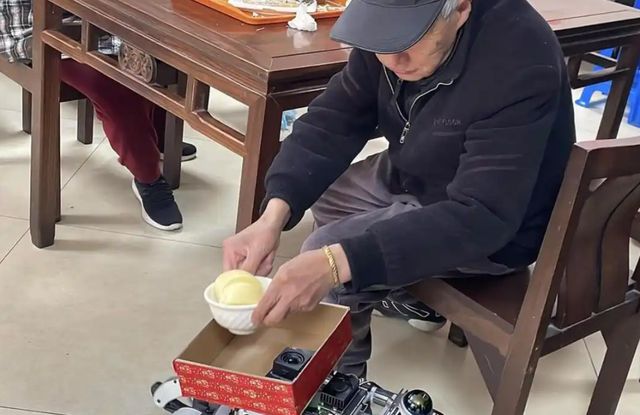
Core Insights - The article highlights the integration of advanced technologies such as artificial intelligence and flexible robotics into elderly care, showcasing various innovative solutions that address specific needs in the aging population [1][5][11]. Group 1: Robotic Innovations in Elderly Care - The "robot dog" named "Xiaoxi" in Hangzhou is capable of delivering medication and meals to elderly residents, becoming a beloved companion and providing a new solution for smart elderly care [1][3]. - "Xiaoxi" is equipped with advanced cameras to detect obstacles and monitor the movements of elderly individuals, enhancing safety by alerting staff in case of falls [3][7]. - In Shenzhen, robots are engaging with elderly residents through activities like playing table tennis and folding clothes, indicating a shift towards more interactive and supportive roles in elderly care [5][6]. Group 2: Advanced Mobility Solutions - The introduction of a self-driving wheelchair at the Shanghai Elderly Expo allows seniors to navigate both indoor and outdoor environments autonomously, with features like obstacle avoidance and remote video calling [7][9]. - Exoskeleton assistive devices are designed to help elderly individuals walk more easily by providing mechanical support, significantly reducing the effort required for movement [9][10]. Group 3: Smart Kitchen Solutions - In Gansu, a combination of human chefs and cooking robots in elderly dining facilities enhances meal preparation efficiency, allowing for quick and nutritious meals to be served [11][13]. - A community dining hall in Shanghai utilizes robotic arms for cooking, capable of preparing over 2000 dishes while ensuring nutritional balance, thus improving the dining experience for seniors [13]. Group 4: Market Context and Demand - With over 300 million people aged 60 and above in China and more than 45 million individuals suffering from disabilities or dementia, the demand for robotic caregivers is increasing, highlighting a significant gap in the current workforce of only 500,000 caregivers [11][14].

消费新蓝海丨“人工智能+消费”激活服务消费新蓝海
Yang Guang Wang· 2025-05-06 01:02
Group 1 - The core viewpoint of the articles highlights the integration of consumer-grade robots into various sectors such as healthcare, entertainment, and home services, driven by advancements in artificial intelligence and the digital transformation of the silver economy [1][2] - The development of exoskeleton robots specifically designed for elderly users is showcased, emphasizing their mechanical structure that does not require electricity and can significantly reduce the burden on users while enhancing mobility [2] - The sales of artificial intelligence robot categories have seen a remarkable increase, with a reported year-on-year growth of over 100% in transaction volume on a major e-commerce platform [2] Group 2 - The concept of "embodied intelligence" has been officially recognized in this year's government work report, indicating a growing acknowledgment of its importance in the consumer sector [2] - Experts note that the rapid development of embodied intelligence in China is supported by favorable policies, market dynamics, and practical applications, suggesting a promising future for this technology [2] - The transition from laboratory research to real-world applications in specific verticals is highlighted, with improvements in interaction capabilities and industry chain collaboration being observed [2]
15秒售罄!爬楼“神器”开卖,“连样机都卖完了”!网友:我也需要
21世纪经济报道· 2025-04-01 12:55
Core Viewpoint - The article highlights the rapid market acceptance and demand for a consumer-grade exoskeleton robot developed by Cheng Tian Technology, which sold out within 1.5 seconds of its launch, indicating a strong consumer interest in assistive technologies for mobility and physical activity [1][3][4]. Group 1: Product Launch and Demand - Cheng Tian Technology launched a consumer-grade exoskeleton robot priced at 2,500 yuan, which sold out almost instantly, with hundreds of people already queued for the next batch [2][3][4]. - The founder of Cheng Tian Technology, Zhang Jiyu, expressed surprise at the overwhelming demand, noting that the initial stock was quickly depleted and that inquiries for trials were frequent [4]. Group 2: Target Audience and Benefits - The exoskeleton robot appeals to a diverse demographic, including middle-aged individuals purchasing for elderly family members, young people with joint pain from sports injuries, and retirees who wish to maintain their mobility while traveling [4]. - The device is designed to save approximately 10% of the user's energy when walking, with a torque assistance equivalent to offsetting the weight of two large bottles of soda [4]. Group 3: Industry Trends and Innovations - The article mentions the emergence of similar assistive technologies in tourist areas, such as a smart exoskeleton device that can reduce climbing energy consumption by up to 30% and extend hiking duration by 1.5 hours [7]. - The robotics industry is experiencing significant advancements, with new products like dexterous hands and electronic skin being introduced, indicating a broader trend towards integrating robotics into everyday life [11][12]. Group 4: Government Support and Future Developments - The Guangdong provincial government has invested nearly 1.4 billion yuan in artificial intelligence and robotics since 2018, aiming to foster innovation and development in the sector [12][13]. - Future initiatives will focus on key technologies such as dexterous hands and integrated joints, with the goal of establishing Guangdong as a global hub for AI and robotics [13][14].