
多维触觉灵巧手DexH13

Search documents
瞭望 | 夏季达沃斯勾勒全球经济新动向
Xin Hua She· 2025-07-01 06:13
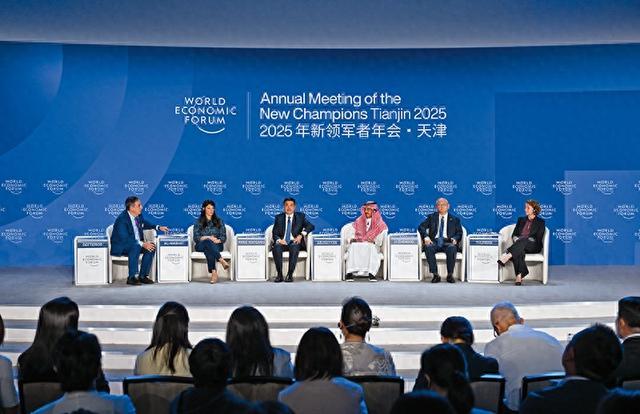
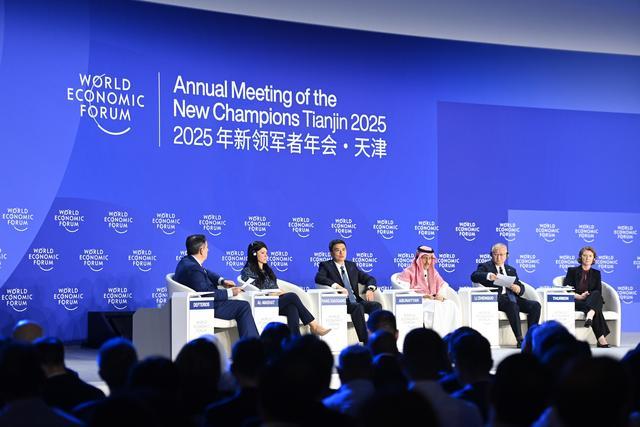
Group 1: Forum Overview - The 16th Summer Davos Forum was held in Tianjin from June 24 to 26, 2025, focusing on global economic trends and cooperation [1][4] - The forum attracted over 1,700 representatives from more than 90 countries and regions, discussing key topics such as "Global Economic Interpretation" and "China Outlook" [1][4] - Approximately 40% of the forum's topics were related to artificial intelligence, highlighting its significance in the fourth industrial revolution [3][4] Group 2: Economic Insights - The World Bank predicts a 2.3% global economic growth in 2025, down by 0.4 percentage points from earlier forecasts, due to geopolitical and technological factors [8] - The UN Conference on Trade and Development reports that global trade is expected to reach $33 trillion in 2024, a 3.7% increase from 2023, with developing economies outpacing developed ones [8] Group 3: Industry Developments - China's new energy vehicle production and sales are projected to exceed 12.8 million units in 2024, maintaining its position as the global leader for ten consecutive years [11] - China's R&D expenditure is expected to exceed 3.6 trillion yuan in 2024, reflecting an 8.3% increase, solidifying its status as the second-largest globally [11][12] - GE Healthcare's Tianjin base has been approved for global bonded maintenance of high-end medical devices, aiming to enhance resource recycling in the medical equipment industry [12]

夏季达沃斯论坛|为创新营造良好“生态系统”——来自2025夏季达沃斯论坛的“新”声
Xin Hua She· 2025-06-25 10:25
Group 1 - The 2025 Summer Davos Forum in Tianjin focuses on the theme of "innovation ecology," highlighting its importance in determining the outcomes of technological breakthroughs [3][7] - The establishment of the "Paxini Embodied Intelligent Super Data Factory" in Tianjin aims to leverage the city's educational resources and industrial applications for technological research and commercialization [1] - Companies like Huaxi Biotechnology are investing significantly in building platforms for synthetic biology, establishing collaborations with over 20 renowned research institutions to create a complete ecosystem from basic research to industrial application [3][4] Group 2 - Government support is crucial for fostering an innovative ecosystem, as it helps establish communication channels among companies and provides policy and financial support for digital transformation [6] - Companies are increasingly focusing on co-building industrial capabilities with local communities rather than just product output, as seen in TCL's approach to embracing artificial intelligence [6] - Schneider Electric has established five R&D centers across China, creating a collaborative innovation network that spans its entire business line [6]
帕西尼感知科技:以“触觉”定义人形机器人未来
Xin Hua Wang· 2025-03-28 08:15
Core Insights - The 2025 Zhongguancun Forum will focus on building a globally influential technology brand, with the theme "Technology Trading Empowers New Quality Productivity" [1] - The event unveiled the "Double Hundred List," featuring the top 100 new technologies and products, and the top 100 international technology trading innovation projects, highlighting the achievements of companies like PAXINI [1][2] - PAXINI's DexH13 multi-dimensional tactile dexterous hand has been recognized for its innovative technology, marking a significant advancement in the domestic tactile sensor market [2][3] Company Insights - PAXINI has developed the Intelligent Tactile Processing Unit (ITPU) technology, enabling the DexH13 to sense 15 different tactile dimensions, including pressure, temperature, texture, and hardness [2] - The company has achieved a breakthrough in the lifespan of tactile sensors, extending it to over 3 million uses, positioning itself as a rare player in the global market for multi-dimensional tactile sensors [2][3] - The DexH13 has demonstrated its capabilities in various applications, including medical scenarios, rehabilitation training, and precision assembly tasks in automotive manufacturing [3] Industry Insights - The reliance on imported tactile sensors has historically limited the development of domestic robotics, with less than 1% localization rate for high-end tactile sensors before 2019 [1][2] - The integration of tactile data with visual information through control algorithms allows for millimeter-level operational precision, enhancing the adaptability of robots in complex environments [3] - The Zhongguancun Forum serves as a crucial platform for technology transfer and industry development, facilitating connections between innovation and market application [4]
