
触觉技术

Search documents
真正的机器人智能,从触觉开始?
Zhong Guo Ji Jin Bao· 2026-01-16 05:04
Core Insights - The article highlights the importance of tactile technology in robotics, emphasizing that the true value lies in the robot's intelligence and operational capabilities rather than just its physical appearance [2][4][6]. Group 1: Industry Overview - Shenzhen is a hub for high-tech enterprises, with a density of 12 high-tech companies per square kilometer, fostering innovation and collaboration in the tech sector [1]. - The robotics industry is facing a challenge in transitioning from visual demonstrations to real-world operations, where the lack of tactile feedback becomes a significant bottleneck [2][4]. Group 2: Company Focus - Daimeng Robotics focuses on developing "super tactile" technology to enhance robots' operational capabilities in the physical world, addressing the critical need for tactile feedback in robotic operations [2][4][6]. - The company has developed a new technology route based on monochromatic light, which has improved communication frequency by four times and reduced costs to one-fourth of previous levels, while also increasing durability by 50 times [7]. Group 3: Market Strategy - Daimeng Robotics aims to educate the market on the value of tactile technology, providing standardized tactile sensors for clients who understand its benefits, while offering comprehensive solutions for those who do not [8][12]. - The company plans to expand its presence in the U.S. market, having already received positive feedback and numerous orders following its product launch [9]. Group 4: Future Development - The company is focused on two main areas: enhancing flexibility in industrial automation and improving data collection and training processes through high-quality tactile sensors [12][13]. - Daimeng Robotics is pursuing a "3D" development strategy, which includes hardware devices, multi-modal interaction data, and scene deployment to create a complete solution for clients [13][14]. Group 5: Long-term Vision - The company envisions becoming a key player in the development of embodied intelligence, providing a reliable tactile foundation that enhances the application of tactile sensors in the industry [17].

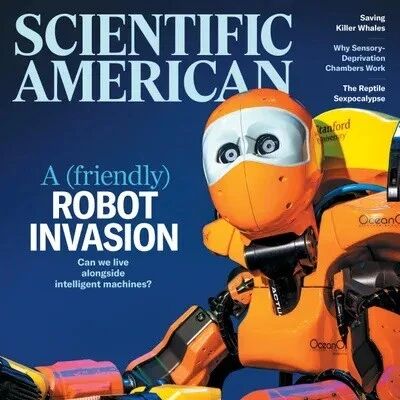
《科学美国人》2026年首期封面文章:我们能和机器人一起生活吗?
机器人大讲堂· 2026-01-05 09:21
Core Insights - The article presents a vision of a future where robots coexist with humans, assisting in daily tasks and enhancing productivity [2][5] - It emphasizes the significant challenge of tactile interaction between robots and humans, highlighting the need for robots to possess advanced touch capabilities to navigate unpredictable environments [6][8] Group 1: Tactile Challenges - The primary obstacle for robots in human environments is not computational power or vision, but rather the ability to sense and respond to touch [6][8] - Human hands are complex, composed of 27 bones and over 30 muscles, allowing for intricate tactile feedback and manipulation, which current robots struggle to replicate [9][10] - Advanced robots like Tesla's Optimus still rely on teleoperation for complex tasks, indicating the limitations of current robotic touch capabilities [10] Group 2: Technological Innovations - Researchers are developing artificial "skin" technologies to enhance robots' tactile perception, transforming touch challenges into visual analysis problems [13][15] - The DenseTact sensor from Stanford enhances robotic touch by using a silicone "skin" that captures the deformation of objects, achieving over 98% accuracy in material recognition [14] - MIT's GelSight system allows robots to identify objects through touch, demonstrating adaptive grasping capabilities that mimic human behavior [14][15] Group 3: Practical Applications - The TidyBot, a household robot, showcases the potential and current limitations of robots in domestic settings, successfully performing tasks but struggling with complex environments [18][19] - OceanOne, a humanoid underwater robot, exemplifies advanced robotic capabilities, providing real-time haptic feedback and performing delicate tasks in challenging underwater conditions [19][20] - The ongoing development of OceanOneK aims to enhance deep-sea exploration capabilities, pushing the boundaries of robotic applications [19] Group 4: Conclusion - The article concludes that while robotic technology has advanced significantly, integrating robots into the chaotic human world remains a complex challenge [23] - The key to successful human-robot interaction lies in overcoming tactile limitations, with ongoing research paving the way for a future of coexistence [23]

中国学者一作Nature论文:超声波驱动的人工肌肉,能够抓握、弯曲和游动
生物世界· 2025-10-30 04:21
Core Insights - The article discusses the emergence of flexible robotics, which aims to utilize soft materials and flexible actuators to replicate human-like tactile sensations, potentially transforming prosthetics, minimally invasive surgical robots, and wearable devices [2] Group 1: Research Development - A study published in Nature introduces ultrasound-driven artificial muscles made from flexible materials filled with microbubbles that bend when exposed to ultrasound, enabling wireless control for various movements [3] - The design utilizes over 10,000 microbubbles, each precisely sized to resonate at different frequencies, allowing for selective oscillation and distributed thrust, resulting in programmable deformation with high compactness (approximately 3000 microbubbles/mm²), lightweight (0.047 mg/mm²), high strength (about 7.6 µN/mm²), and rapid response (grasping in less than 100 milliseconds) [6][7] Group 2: Applications and Implications - The artificial muscles exhibit excellent scalability from micrometer to centimeter scales, flexibility, and multiple degrees of freedom, with potential applications in flexible robotics, wearable technology, haptic technology, and biomedical instruments [9]

又一个机器人种子明星诞生了
Hua Er Jie Jian Wen· 2025-10-16 10:30
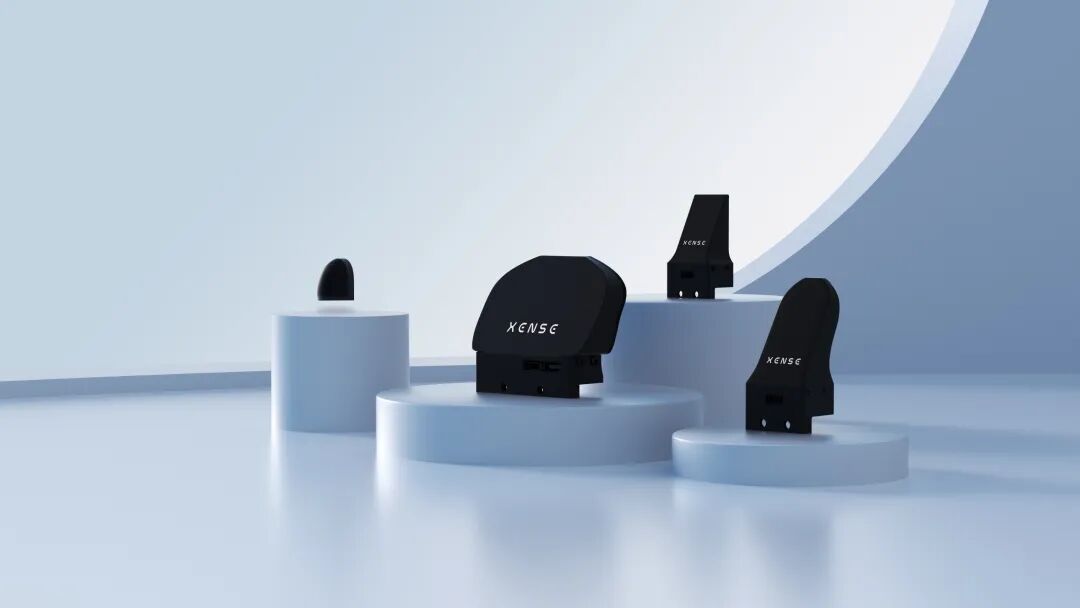
Core Insights - The article highlights the rapid development of embodied intelligence, with major companies like Tesla, Nvidia, Huawei, and Alibaba entering the field, alongside emerging domestic robotics firms such as Yushu Technology and Zhiyuan Robotics [2][12] - Xense Robotics, a leading company in embodied touch technology, recently completed a significant Pre-A funding round, marking its third financing round this year, indicating strong investor interest [4][5] Company Overview - Xense Robotics, founded in May 2024 and headquartered in Shanghai, focuses on multimodal tactile perception technology and aims to enhance intelligent agents' dexterous operations [5][6] - The company has attracted investments from notable firms including Hillhouse Capital, Ideal Auto, and others, showcasing its strong market appeal and strategic growth potential [4][5] Technology and Market Position - Xense Robotics is recognized for its innovative tactile technology, which addresses the limitations of visual perception in robotics, enabling more precise operations and interactions [6][7] - The founder, a core member of an MIT team, has pioneered a new approach to robot operation that integrates tactile sensing with spatial awareness, establishing a closed-loop system for "contact-perception-control" [7][8] Product and Application - The company has developed a comprehensive product matrix, including tactile sensors, data acquisition systems, simulators, and control systems, positioning itself as a solution provider in tactile intelligent perception [9][10] - Xense Robotics' products have been validated in various applications, including industrial assembly, tactile detection, and flexible logistics, with partnerships established with leading clients like L'Oréal and Google DeepMind [11] Industry Trends - The article notes a significant increase in interest and investment in embodied intelligence, with predictions of a $5 trillion market for humanoid robots by 2050 and a rapidly growing tactile sensor market expected to exceed $35 billion in the coming years [12][13] - The Chinese government has recognized "embodied intelligence" as a strategic direction, with multiple cities launching action plans aimed at developing a trillion-dollar industry [12][13]
上海具身基金领投、理想出手,具身触觉企业完成亿元融资|硬氪首发
3 6 Ke· 2025-10-16 01:32
Core Insights - Xense Robotics, a company specializing in embodied tactile technology, has recently completed a Pre-A round financing of over 100 million yuan, led by Foton Capital with participation from major industry players like Li Auto and Binfu Capital [1][11] - The funding will primarily be used for technology research and development, product iteration, team expansion, and market channel development, enhancing the company's full-chain business layout [1][10] - Xense Robotics aims to advance tactile perception technology in real industrial scenarios, marking its third funding round this year [1][10] Company Overview - Founded in May 2024 and headquartered in Shanghai, Xense Robotics focuses on multimodal tactile perception technology, targeting dexterous operations in intelligent agents [1][3] - The company has developed a comprehensive technology path from core hardware to system platforms, including a full range of tactile sensors, data acquisition systems, simulators, actuators, and control systems [6][10] - The founding team includes experts from top institutions such as Peking University and MIT, with a focus on applying tactile technology in operational perception [3][6] Market Potential - According to VMR, the global tactile sensor market is projected to exceed $15 billion in 2024 and could surpass $350 billion in the coming years, with the potential to exceed $1 trillion as embodied intelligence and smart perception interactions develop [4][10] - The demand for precise and flexible operations in manufacturing has increased, highlighting the necessity of tactile technology as a critical support for achieving automation in complex scenarios [3][4] Product Development - Xense Robotics has introduced a series of multimodal tactile sensors that outperform traditional capacitive, resistive, and Hall effect sensors in resolution, interference resistance, and dynamic response [6][8] - The sensors can accurately identify micron-level deviations and force changes during assembly processes, enhancing reliability in high-speed industrial environments [8][10] - The company provides a complete solution integrating sensors, data acquisition systems, and simulation tools, significantly reducing tactile data acquisition costs by up to 95% [8][10] Industry Collaboration - Xense Robotics has secured orders from leading companies such as Google and CATL, and is collaborating with Li Auto and Haier on various applications [10][11] - Investors express confidence in the company's ability to commercialize its tactile sensing technology, which is seen as a crucial breakthrough in the field of embodied intelligence [11][12]
帕西尼感知科技:以“触觉”定义人形机器人未来
Xin Hua Wang· 2025-03-28 08:15
Core Insights - The 2025 Zhongguancun Forum will focus on building a globally influential technology brand, with the theme "Technology Trading Empowers New Quality Productivity" [1] - The event unveiled the "Double Hundred List," featuring the top 100 new technologies and products, and the top 100 international technology trading innovation projects, highlighting the achievements of companies like PAXINI [1][2] - PAXINI's DexH13 multi-dimensional tactile dexterous hand has been recognized for its innovative technology, marking a significant advancement in the domestic tactile sensor market [2][3] Company Insights - PAXINI has developed the Intelligent Tactile Processing Unit (ITPU) technology, enabling the DexH13 to sense 15 different tactile dimensions, including pressure, temperature, texture, and hardness [2] - The company has achieved a breakthrough in the lifespan of tactile sensors, extending it to over 3 million uses, positioning itself as a rare player in the global market for multi-dimensional tactile sensors [2][3] - The DexH13 has demonstrated its capabilities in various applications, including medical scenarios, rehabilitation training, and precision assembly tasks in automotive manufacturing [3] Industry Insights - The reliance on imported tactile sensors has historically limited the development of domestic robotics, with less than 1% localization rate for high-end tactile sensors before 2019 [1][2] - The integration of tactile data with visual information through control algorithms allows for millimeter-level operational precision, enhancing the adaptability of robots in complex environments [3] - The Zhongguancun Forum serves as a crucial platform for technology transfer and industry development, facilitating connections between innovation and market application [4]